The pursuit of knowledge extends beyond the readily accessible, often leading humanity into environments hostile to conventional investigation. One such frontier lies beneath the vast, impenetrable ice sheets of Earth’s polar regions and celestial bodies like Europa and Enceladus. The challenges inherent in exploring these subterranean aquatic realms are monumental, spanning extreme pressure, abyssal darkness, and temperatures inimical to most technological solutions. In response to these exacting demands, the concept of “Phased Lattice” has emerged as a promising, albeit still largely theoretical, paradigm for under ice exploration. This article delves into the foundational principles, ambitious technological requirements, and profound scientific implications of this innovative approach.
The Problem of Under Ice Exploration
Exploring sub-ice oceans presents a multifaceted engineering and scientific conundrum. Traditional methods, such as remotely operated vehicles (ROVs) tethered to surface vessels or autonomous underwater vehicles (AUVs) with finite battery life and limited navigation capabilities, face severe constraints. The sheer scale of these environments, often kilometers deep and stretching over immense areas, renders point-based investigations inherently insufficient for comprehensive understanding. Explore the mysteries of the Antarctic gate in this fascinating video.
Inaccessibility and Isolation
The primary hurdle is the physical barrier of the ice itself. Drilling through kilometers of ice is a resource-intensive and time-consuming endeavor, often requiring specialized equipment and posing significant contamination risks to pristine ecosystems. Once an access point is established, maintaining communication with and controlling instruments deep within the water column becomes a signal-processing nightmare. The ice acts as a formidable insulator, attenuating radio waves and requiring alternative communication strategies.
Extreme Conditions
Sub-ice oceans are characterized by conditions that push the boundaries of materials science and sensor technology. Pressures can exceed hundreds of atmospheres, demanding robust, pressure-resistant housings for all instrumentation. Temperatures hover near freezing, requiring sophisticated thermal management systems to prevent component failure and battery degradation. The absence of light necessitates advanced imaging and sensing technologies capable of operating in complete darkness, often relying on acoustic or laser-based methods.
Navigational Challenges
Navigating vast, featureless underwater environments without the benefit of GPS or line-of-sight visual cues is another critical challenge. AUVs currently rely on inertial navigation systems (INS) prone to drift over long durations, acoustic beacons requiring prior deployment, or advanced terrain-following sonar. For truly extensive exploration, a more robust and scalable navigational solution is imperative.
The Phased Lattice Concept
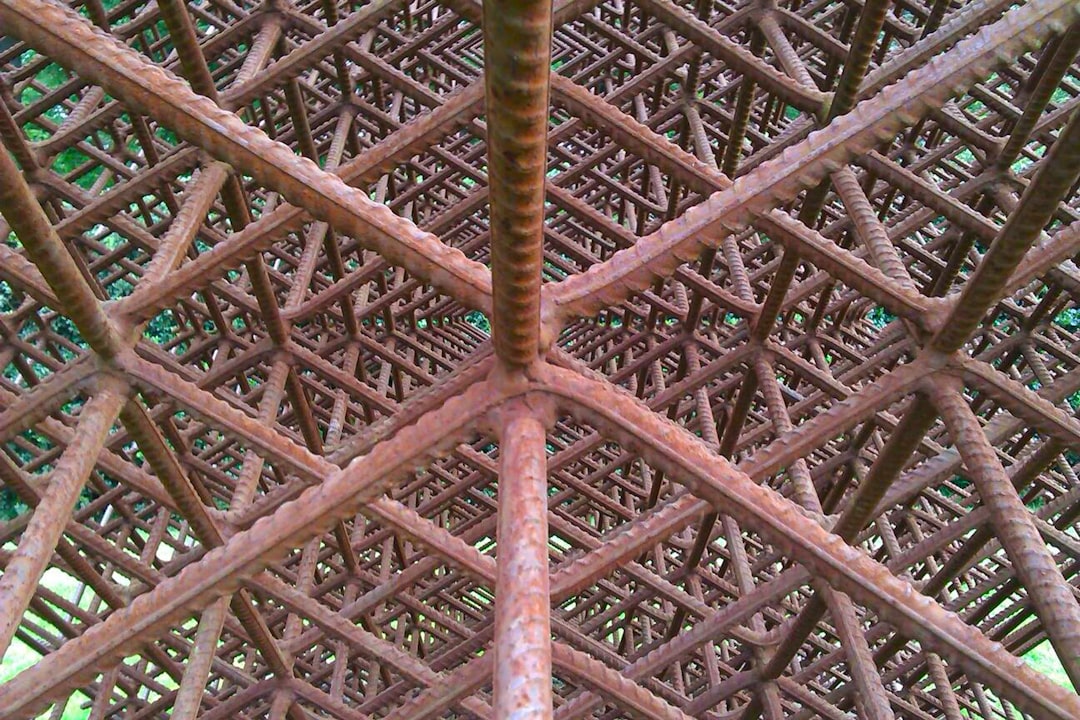
At its core, Phased Lattice envisions a distributed, self-organizing network of specialized nodes designed to operate continuously and cooperatively beneath the ice. Imagine a three-dimensional web woven through the water column, each intersection point a miniature command and control center, a sensor platform, or a communication relay. This interwoven structure allows for persistent presence, localized intelligence, and scalable data collection, overcoming many limitations of current individual vehicle architectures.
Distributed Sensing and Actuation
Instead of a single, highly complex vehicle attempting to perform all tasks, the Phased Lattice distributes these functions among its numerous nodes. Some nodes might be primarily dedicated to environmental sensing (temperature, salinity, pressure, chemical composition), while others focus on biological observation (imaging, eDNA detection). Still others could be tasked with acoustic mapping or even subtle localized manipulation of the environment. This redundancy enhances robustness; the failure of a single node does not cripple the entire system.
Self-Organization and Adaptability
A crucial aspect of the Phased Lattice is its ability to self-organize and adapt to changing conditions. Nodes would communicate with their immediate neighbors, sharing information and coordinating actions without constant human oversight. This distributed intelligence allows the lattice to detect anomalies, track dynamic phenomena (like hydrothermal plumes), and even reconfigure its topology to optimize sensing coverage or focus resources on areas of interest. Think of it as an aquatic nervous system, reacting to impulses and generating responses across a vast network.
Energy Harvesting and Longevity
The immense longevity required for comprehensive sub-ice exploration necessitates innovative energy solutions. While initial deployment might involve powered nodes, the vision for a long-term Phased Lattice includes passive energy harvesting. This could involve harnessing geothermal heat fluctuations, exploiting weak ocean currents, or even leveraging osmotic gradients. Such approaches would minimize the need for external power sources, allowing the lattice to operate for years or even decades without intervention.
Technological Underpinnings
The realization of the Phased Lattice concept hinges on the development and maturation of several key technological areas. These advancements are not merely incremental improvements but often represent paradigm shifts in underwater engineering.
Advanced Materials and Miniaturization
The construction of countless nodes, each capable of withstanding extreme pressures and temperatures, demands revolutionary advancements in materials science. Lightweight, ultra-strong composites, pressure-equalized electronics, and highly efficient thermal insulation are paramount. Furthermore, to enable dense lattice configurations and minimize environmental impact, each node must be highly miniaturized, integrating multiple functionalities into a compact form factor.
Robust Communication Networks
Establishing reliable communication within a Phased Lattice is perhaps the most formidable technological challenge. Acoustic communication, while viable over short distances, suffers from high latency and limited bandwidth over larger scales. Optical communication, using blue-green lasers, offers higher bandwidth but is severely hampered by water turbidity and absorption. Novel approaches, such as neutrino-based communication or quantum entanglement (though highly speculative for practical applications), are being explored for their potential to pierce the ice barrier and establish long-range links. Within the lattice, low-power, short-range acoustic or optical links between adjacent nodes would form the backbone of the internal network.
Artificial Intelligence and Swarm Robotics
The self-organization and adaptability of the Phased Lattice rely heavily on advanced artificial intelligence (AI) and principles of swarm robotics. Each node would incorporate embedded AI with local decision-making capabilities, allowing it to interpret sensory data, communicate with neighbors, and participate in coordinated actions. The collective intelligence of the swarm would emerge from the simple rules governing individual node behavior, much like an ant colony or a flock of birds. This distributed intelligence approach minimizes the computational burden on any single node and enhances resilience.
Autonomous Deployment and Maintenance
Deploying and maintaining a vast Phased Lattice poses significant logistical hurdles. Future visions involve autonomous deployment mechanisms, potentially utilizing custom-designed submersibles capable of intricate maneuvering beneath the ice. Furthermore, the lattice itself might incorporate self-repairing capabilities, with designated “repair nodes” or modular, interchangeable components designed for simplified replacement if a node fails. The ultimate goal is a system that can be deployed and then largely left to operate autonomously for extended periods.
Scientific Implications and Discoveries
The scientific rewards of a functional Phased Lattice are immense and could fundamentally reshape humanity’s understanding of planetary evolution, the origins of life, and the potential for extraterrestrial biology.
Unveiling Sub-Ice Ecosystems
The most immediate and profound impact would be the comprehensive characterization of sub-ice ecosystems. Current exploration methods offer tantalizing glimpses; a Phased Lattice would provide a persistent, high-resolution window into these dark, cold worlds. Scientists could track microbial populations, observe chemosynthetic communities around hydrothermal vents, and even discover larger, as-yet-unknown life forms adapted to these extreme conditions. The continuous data stream would allow for the study of ecological dynamics, metabolic pathways, and evolutionary adaptations in unprecedented detail.
Understanding Ocean Dynamics and Geochemistry
Beyond biology, the Phased Lattice would revolutionize the study of sub-ice oceanography and geochemistry. Imagine thousands of synchronized sensors meticulously mapping temperature, salinity, density, and chemical gradients across entire oceans. This data would provide critical insights into ocean currents, mixing processes, and the distribution of nutrients and chemical tracers. The ability to monitor active geological processes, such as volcanism or tectonic activity beneath the ice, would offer invaluable data for understanding planetary interior dynamics and heat flow.
Search for Extraterrestrial Life
The primary motivation for exploring icy moons like Europa and Enceladus is the search for extraterrestrial life. A Phased Lattice deployed in these extraterrestrial oceans would be the ultimate instrument for this quest. Its distributed sensing capabilities could detect subtle biosignatures—specific chemical compounds, isotopic ratios, or even microscopic structures indicative of life. The ability to track dynamic phenomena, like plume eruptions on Enceladus, and direct specific sensor arrays towards areas of interest would dramatically increase the chances of a groundbreaking discovery. The lattice acts as a vast net, patiently sifting through an alien environment for any whisper of biological activity.
Planetary Formation and Evolution
The data collected by a Phased Lattice, particularly from extraterrestrial icy moons, would also shed light on the broader processes of planetary formation and evolution. The composition of sub-ice oceans, the nature of their interaction with the rocky core, and the energy sources available can provide critical clues about the conditions prevalent during the early formation of these bodies and their subsequent geological history. By comparing data from different locations within a single ocean, and eventually from different icy worlds, scientists can build a more comprehensive picture of the diversity of ocean worlds in our solar system and beyond.
Challenges and Future Outlook
Despite the compelling promise of the Phased Lattice, significant challenges remain on the path to its realization. The technological hurdles are immense, demanding concerted international effort and substantial investment. Beyond engineering, ethical considerations surrounding the potential contamination of pristine environments and the implications of discovering extraterrestrial life will need careful deliberation.
Ethical Considerations
The deployment of any man-made system into a potentially habitable extraterrestrial environment, or even pristine terrestrial sub-ice lakes, carries an inherent risk of biological or chemical contamination. Strict protocols for planetary protection, sterilization, and waste management would need to be meticulously developed and adhered to. The scientific community and the broader public must engage in a dialogue about the responsible exploration of these sensitive environments.
Development Timeline and Funding
The development of the Phased Lattice is a long-term endeavor, likely spanning several decades. It would require sustained funding at national and international levels, bringing together experts from diverse fields including robotics, AI, materials science, oceanography, astrobiology, and planetary science. The iterative process of testing prototypes in terrestrial analog environments, followed by increasingly complex missions, would be essential to refine the technology and build confidence in its capabilities.
The Long-Term Vision
The ultimate vision for Phased Lattice extends beyond individual missions to specific ice-covered bodies. Imagine a future where a semi-permanent Phased Lattice network monitors Earth’s polar oceans, providing real-time data on climate change impacts and biodiversity. Further afield, a Phased Lattice could become the cornerstone of human exploration of the outer solar system, acting as a permanent scientific outpost in the vast, dark oceans of Europa or Enceladus, patiently waiting to answer humanity’s deepest questions about life beyond Earth. The Phased Lattice, therefore, represents not just a technological advancement, but a philosophical shift in how humanity approaches the exploration of extreme and alien environments—a shift from fleeting flybys to persistent, intelligent presence.
FAQs
What is a phased lattice under ice?
A phased lattice under ice refers to a structured arrangement of sensors or antennas placed beneath ice surfaces, often used for scientific measurements or communication purposes. The “phased” aspect typically involves controlling the timing of signals to steer or focus the array’s response.
What are the primary applications of phased lattices under ice?
Phased lattices under ice are commonly used in geophysical research, such as monitoring ice thickness, detecting sub-ice features, or studying ice dynamics. They can also be employed in underwater communication systems beneath polar ice caps.
How does a phased lattice work beneath ice?
A phased lattice operates by adjusting the phase of signals emitted or received by each element in the array. This allows the system to direct energy or focus detection in specific directions, even when placed under ice, which can affect signal propagation.
What challenges are associated with deploying phased lattices under ice?
Challenges include harsh environmental conditions, signal attenuation due to ice properties, mechanical stability of the array, and ensuring reliable data transmission through or beneath the ice.
What materials are used to construct phased lattices for under-ice environments?
Materials must be durable and resistant to cold temperatures and ice pressure. Commonly used materials include specialized plastics, composites, and corrosion-resistant metals designed to withstand sub-zero temperatures and ice movement.
Can phased lattices under ice be used for environmental monitoring?
Yes, they are valuable tools for environmental monitoring, providing data on ice thickness, movement, and sub-ice water properties, which are important for climate studies and understanding polar ecosystems.
How is data transmitted from phased lattices under ice?
Data transmission can be achieved through wired connections to surface stations, acoustic communication, or radio frequency signals adapted to penetrate ice, depending on the specific setup and environmental conditions.
Are phased lattices under ice used in military or commercial applications?
While primarily used in scientific research, phased lattices under ice may also have applications in military surveillance or underwater navigation systems in polar regions, as well as in commercial activities like resource exploration.