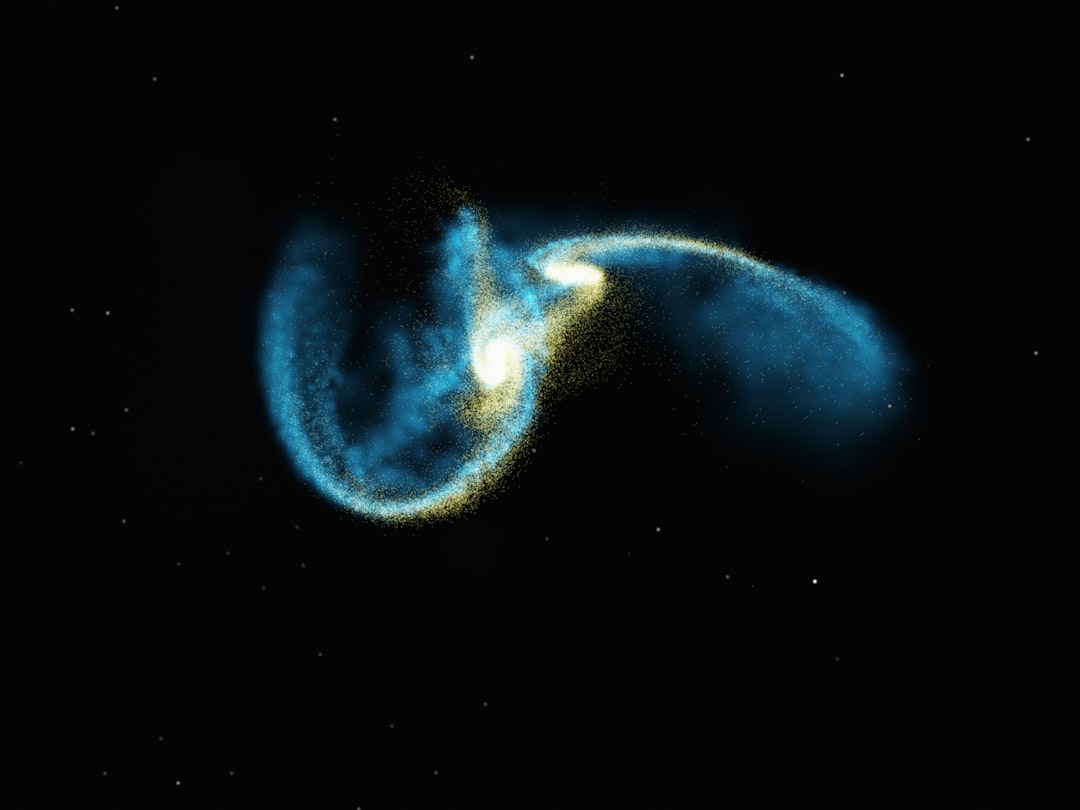
Space Force AI Detects Orbital Anomalies
The United States Space Force, a branch of the U.S. Armed Forces established in 2019, is at the forefront of protecting American interests in the increasingly crowded and complex domain of space. Its command and control operations rely heavily on sophisticated technological infrastructure, with artificial intelligence (AI) playing an increasingly vital role. Recent reports and publicly available information indicate that Space Force AI systems have been instrumental in detecting a growing number of orbital anomalies. These anomalies, ranging from unexpected debris movements to subtle shifts in satellite positioning, represent potential challenges to the secure and predictable utilization of space. Understanding these detections requires an exploration of the underlying AI technologies, the nature of orbital anomalies, and the implications for space security.
The capacity of Space Force AI to detect orbital anomalies is built upon a vast and intricate network of sensors and a robust data ingestion pipeline. Think of this network as the Space Force’s collective eye, constantly surveying the celestial theater.
Ground-Based Observational Assets
Numerous terrestrial facilities are dedicated to tracking objects in orbit. These include:
- Phased-Array Radars: These advanced radar systems, such as those at the U.S. Space Force Station in Florida and the Clear Air Force Station in Alaska, are capable of detecting and tracking a multitude of objects, including small pieces of debris, with remarkable precision. Their ability to electronically steer radar beams allows for rapid scanning of large volumes of space.
- Optical Telescopes: While radar excels at detecting objects regardless of lighting conditions, optical telescopes provide complementary information, particularly for smaller or fainter objects and for characterizing their physical properties. Networks of telescopes strategically located across the globe contribute to a comprehensive orbital picture.
- Telemetry, Tracking, and Commanding (TT&C) Stations: These stations are essential for communicating with and monitoring the health and status of active satellites. While primarily intended for command and control, the data they gather also contributes to anomaly detection by highlighting deviations from expected behavior.
Space-Based Sensor Platforms
Beyond Earth’s surface, strategically deployed satellites also contribute to the surveillance effort.
- Dedicated Space Surveillance Satellites: While specific details on current U.S. Space Force space-based sensor platforms are often classified due to national security concerns, it is understood that such assets exist. These platforms can offer a unique vantage point, free from atmospheric interference, and can provide persistent monitoring capabilities.
- Civilian and Commercial Satellite Data Integration: The Space Force is increasingly exploring and integrating data from civilian space agencies (like NASA) and commercial satellite operators. This collaborative approach broadens the overall observational coverage and provides valuable cross-validation of data, akin to having multiple independent witnesses to an event.
The Data Ingestion Engine: From Raw Signals to Actionable Insights
The sheer volume of data generated by these sensor networks is staggering. This is where the data ingestion engine, a critical precursor to AI analysis, comes into play.
- Real-time Data Streams: Sensors continuously feed information into designated processing centers. This requires high-bandwidth communication channels and fault-tolerant systems to ensure uninterrupted data flow.
- Data Preprocessing and Calibration: Raw sensor data often requires significant processing to remove noise, correct for environmental factors, and standardize it for analysis. This includes tasks like atmospheric correction for optical data and signal filtering for radar returns.
- Data Fusion: Combining data from disparate sensor types is crucial. For instance, correlating radar tracks with optical observations can improve the accuracy of an object’s trajectory and allow for better characterization. This fusion process is a complex algorithmic challenge.
In recent discussions about the challenges faced by the Space Force, the topic of orbital anomalies has gained significant attention, particularly in relation to the integration of artificial intelligence in space operations. A related article that delves deeper into these issues can be found at XFile Findings, where experts analyze how AI can help detect and mitigate the risks associated with orbital debris and other anomalies that threaten satellite operations.
Artificial Intelligence Takes the Helm: Algorithmic Approaches to Anomaly Detection
Once the data is processed and fused, it becomes the raw material for Space Force’s advanced AI algorithms. These algorithms are designed not just to track known objects but to identify patterns that deviate from established norms, serving as the Space Force’s vigilant guardians.
Machine Learning for Pattern Recognition
Machine learning (ML) is the cornerstone of how Space Force AI identifies anomalies. Instead of relying on human analysts to manually sift through terabytes of data, ML models are trained to recognize subtle deviations.
- Supervised Learning Models: These models are trained on datasets that have been labeled by human experts. For example, a supervised model might be trained on thousands of examples of normal satellite trajectories and a smaller number of examples of known anomalies (e.g., a satellite tumbling after a collision). The model then learns to classify new data into these categories.
- Unsupervised Learning Models: These algorithms excel at finding hidden patterns in data without explicit pre-labeling. They can identify clusters of similar data points and flag those that fall outside these clusters as potential anomalies. This is particularly useful for detecting novel or unexpected types of orbital events that may not have been previously categorized.
- Deep Learning Architectures: More advanced deep learning techniques, such as Recurrent Neural Networks (RNNs) and Convolutional Neural Networks (CNNs), are employed for analyzing sequential data like orbital trajectories. RNNs are adept at processing time-series data, understanding the temporal evolution of an object’s motion, while CNNs can identify spatial patterns in sensor data that might indicate unusual object behavior or configuration. For instance, an RNN could detect a gradual, uncommanded drift in a satellite’s orbit, a signal that might go unnoticed in routine human checks.
Recent developments in the realm of space exploration have highlighted the significance of understanding orbital anomalies, particularly as the Space Force increasingly relies on artificial intelligence to monitor and manage these irregularities. A fascinating article that delves into this topic can be found here, where it explores how AI technologies are being utilized to predict and analyze orbital behaviors, ensuring the safety and efficiency of satellite operations. As the landscape of space continues to evolve, the integration of advanced AI systems will play a crucial role in addressing the challenges posed by these anomalies.
Anomaly Signature Identification
AI algorithms are trained to recognize specific “signatures” associated with various orbital anomalies. These signatures are like fingerprints that distinguish one type of anomaly from another.
- Orbital Perturbation Signatures: Detecting deviations from predicted orbital paths, caused by factors like atmospheric drag, gravitational pulls from other celestial bodies, or unplanned thrust maneuvers. AI can identify subtle, cumulative changes that humans might miss over long periods.
- Kinematic Anomaly Signatures: Recognizing unusual changes in an object’s speed, direction, or orientation. This could include unexpected acceleration
FAQs
What are orbital anomalies in the context of space operations?
Orbital anomalies refer to unexpected or unusual behaviors and deviations in the trajectories or positions of objects in orbit around Earth or other celestial bodies. These can include irregular movements, unexpected changes in velocity, or deviations from predicted orbital paths.
How does the Space Force utilize AI to address orbital anomalies?
The Space Force employs artificial intelligence (AI) to monitor, detect, and analyze orbital anomalies in real-time. AI systems can process vast amounts of space situational data quickly, identify unusual patterns, predict potential collisions or threats, and assist in decision-making to maintain space security and operational integrity.
Why is detecting orbital anomalies important for space security?
Detecting orbital anomalies is crucial for preventing collisions between satellites, avoiding space debris, and identifying potential hostile actions such as anti-satellite weapon tests. Early detection helps protect valuable space assets, maintain communication networks, and ensure the safety of space missions.
What types of data are used by AI systems to monitor orbital anomalies?
AI systems use data from radar tracking, satellite telemetry, optical sensors, and space surveillance networks. This data includes positional information, velocity vectors, and environmental factors, which AI algorithms analyze to detect deviations from expected orbital behavior.
Can AI predict future orbital anomalies or threats?
Yes, AI can use historical and real-time data to model and predict potential future orbital anomalies or threats. By identifying patterns and trends, AI helps forecast possible collisions, orbital decay, or hostile activities, enabling proactive measures to mitigate risks in space operations.