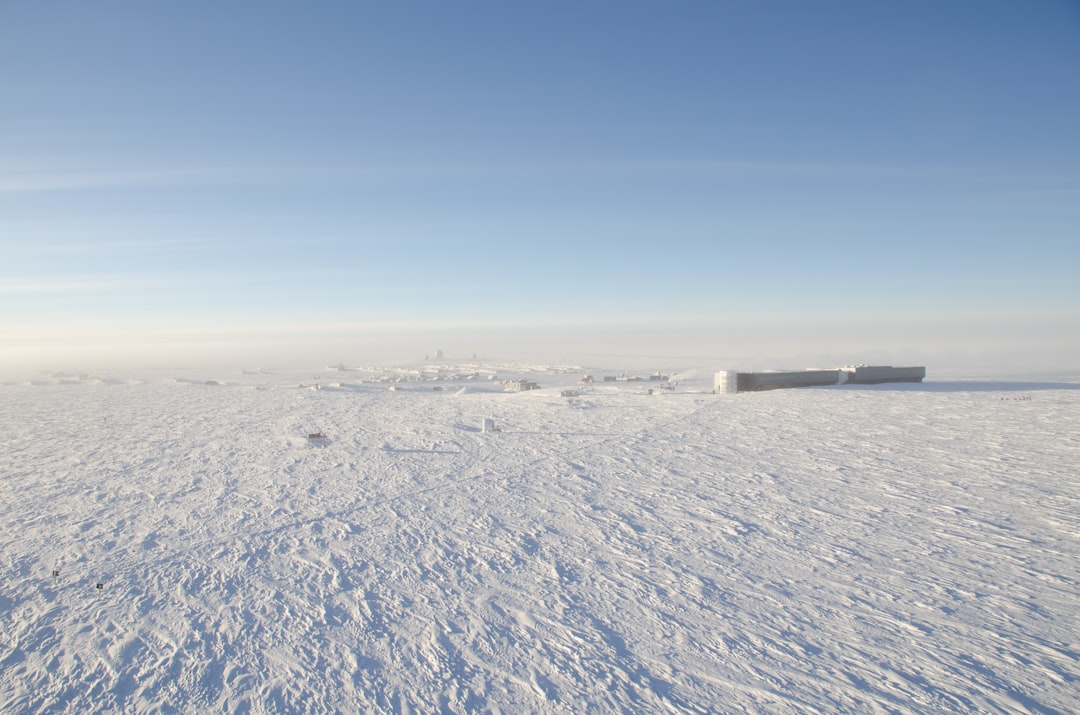
Antarctica, the Earth’s southernmost continent, remains largely unexplored and uninhabited. Its remote location, extreme climate, and vast ice sheets have long fueled speculation and theories regarding hidden government secrets, clandestine operations, and anomalous phenomena. While scientific research and environmental protection are the publicly acknowledged activities on the continent, a persistent undercurrent of suspicion suggests that more profound, and perhaps unsettling, matters unfold beneath the icy facade. This article delves into the various claims and theories surrounding Antarctica’s alleged hidden government secrets, examining them through a factual lens and exploring the historical context that has given rise to such narratives.
The international legal framework governing Antarctica, primarily the Antarctic Treaty System, plays a crucial role in shaping perceptions of secrecy on the continent. Established in 1959, the treaty designates Antarctica as a scientific preserve, prohibiting military activity and resource extraction. While seemingly promoting transparency and peaceful cooperation, some interpretations suggest the treaty inadvertently creates an environment ripe for covert operations by limiting public access and scrutiny.
The Antarctic Treaty System: A Noble Experiment or a Convenient Cover?
The Antarctic Treaty System, signed by 12 nations and since expanded to nearly 60, aims to ensure Antarctica is used exclusively for peaceful purposes. It mandates scientific cooperation, prohibits nuclear explosions and radioactive waste disposal, and freezes territorial claims. Proponents view it as a landmark achievement in international diplomacy, preventing conflict and preserving a unique ecosystem. However, critics argue that the treaty’s very provisions, particularly those concerning inspection and information exchange, inherently contain loopholes that could be exploited by resourceful actors. The absence of a strong enforcement mechanism and the reliance on self-reporting by signatory nations are often cited as potential weaknesses. This creates a regulatory landscape where clandestine activities, if undertaken, might remain undetected or unscrutinized by the wider international community.
Restricted Areas and Their Implications for Transparency
Several areas within Antarctica are designated as Specially Protected Areas (SPAs) or Sites of Special Scientific Interest (SSSIs). These zones are subject to stringent regulations regarding access and activities, primarily to protect unique ecosystems, geological features, or areas of scientific importance. While these restrictions are ostensibly for conservation and research purposes, they can also be interpreted as convenient legal frameworks for limiting unauthorized access to areas where sensitive operations might be taking place. The vastness of the continent and the inherent difficulty in monitoring all activities within these restricted zones create a significant challenge for complete transparency. Some theories posit that these designations, while scientifically justifiable, could also serve as a smokescreen, allowing certain nations or entities to conduct classified research or operations away from public gaze. The logistical hurdles of reaching and operating in such remote locations further reinforce the sense of isolation and potential for undetected activities.
For those intrigued by the mysteries surrounding Antarctica and the potential government secrets hidden beneath its icy surface, a related article can provide further insights. You can explore more about these enigmatic topics in the article titled “Unveiling the Secrets of Antarctica” found at this link. This piece delves into various theories and findings that suggest a deeper narrative about the continent’s unexplored regions and the implications for global governance.
Unexplained Anomalies and Geospatial Intrigues
Satellite imagery and remote sensing technologies have unveiled intriguing features on the Antarctic landscape, some of which defy conventional explanation. These anomalies have become fertile ground for theories suggesting hidden structures, advanced technology, or even extraterrestrial presence, often attributed to clandestine government projects.
The “Anomalous Structures” of Queen Maud Land
Satellite images of Queen Maud Land, a sector of Antarctica claimed by Norway, have occasionally revealed what appear to be unusual formations or structures beneath the ice. These highly geometric or symmetrical patterns stand in stark contrast to the natural, undulating contours of the ice sheet. While geological explanations, such as subglacial lakes or unique ice formations, are often proposed, some interpretations lean towards artificial origins. Theories range from ancient civilizations buried under the ice to clandestine research facilities built by modern governments seeking to exploit the continent’s isolation. The sheer scale and apparent regularity of some of these formations fuel speculation that they are not naturally occurring, sparking discussions about advanced engineering capabilities hidden from public knowledge. The lack of direct, unimpeded access to these locations makes conclusive identification difficult, leaving room for a wide array of speculative narratives.
Subglacial Lakes and Their Mysterious Ecosystems
Beneath Antarctica’s vast ice sheets lie numerous subglacial lakes, isolated from the Earth’s surface for millions of years. Lake Vostok, one of the largest, has garnered significant scientific interest due to its unique ecosystem, potentially hosting life forms adapted to extreme conditions. However, the scientific endeavor to access and study these lakes has also been shrouded in controversy and suspicion. Concerns have been raised about the potential for contamination during drilling operations and the proprietary nature of the discoveries. Some theories suggest that certain governments might be using the scientific exploration of these lakes as a cover for more ambitious, perhaps even military, objectives. The potential for discovering novel biological compounds, extreme extremophiles, or unique energy sources within these pristine environments could be a powerful motivator for secretive research. The inherent difficulty and expense of accessing these environments further reinforces the idea that only highly resourced, state-sponsored entities could undertake such endeavors, thus linking them to classified government programs.
Historical Precedents and Whispers of Nazi Enclaves
Antarctica’s history is not devoid of instances that lend credibility, however tenuous, to the idea of hidden government secrets. The period surrounding World War II, in particular, has become a source of enduring myths and conspiracy theories related to secret Nazi bases on the continent.
Operation Highjump and the American Expedition
In 1946-1947, the United States launched Operation Highjump, a massive naval expedition to Antarctica led by Rear Admiral Richard E. Byrd. While officially a scientific and training mission, its sheer scale – involving 13 ships, 4,700 men, and numerous aircraft – has led to intense speculation about its true objectives. Conspiracy theories often portray it as a search for a secret Nazi base, a preemptive strike against imagined adversaries, or even an encounter with advanced unknown entities. While historical records indicate the expedition faced severe weather challenges and equipment failures, the narrative of “extraordinary losses” and “unexplained events” persists in certain circles. The sudden termination of the mission, ahead of schedule, is often cited as evidence of unforeseen and classified encounters that forced a hasty retreat. This expedition serves as a historical anchor for many contemporary conspiracy theories about secret activities in Antarctica, providing a historical precedent for large-scale, potentially secretive, operations.
The Persistent Myths of Nazi Antarctica (Base 211)
The notion of a hidden Nazi base, often referred to as “Base 211” or “Neu-Schwabenland,” remains one of the most enduring and pervasive Antarctic conspiracy theories. Originating from claims of German expeditions to the continent in the late 1930s and a perceived lack of explanation for certain post-war Nazi disappearances, the theory posits that a technologically advanced secret base was established, housing Nazi scientists and advanced weaponry. While historical evidence for such a base is largely absent and often relies on circumstantial interpretation of vague historical documents or anecdotal accounts, the myth persists as a powerful symbol of hidden power and technological superiority concealed in the world’s most remote region. The allure of a secret, technologically advanced, and ideologically driven enclave in the pristine wilderness of Antarctica continues to captivate imaginations, feeding into broader narratives of deep-state conspiracies and concealed historical truths. The stark contrast between the known devastation of the Third Reich and the idea of a technologically advanced, secret stronghold also adds to its enduring appeal.
Modern Day Covert Operations and Resource Scramble
In the contemporary geopolitical landscape, the strategic importance of Antarctica is growing, particularly with concerns about resource scarcity and climate change. This renewed interest fuels suspicions that nations might be engaged in covert operations to secure future access to potential resources or to monitor global climate shifts.
The Scramble for Antarctic Resources: A Hidden Dimension?
Despite the Antarctic Treaty System’s prohibition on resource extraction, the continent is believed to hold significant, albeit largely unquantified, reserves of minerals, hydrocarbons, and fresh water. As global demand for these resources intensifies, the prospect of nations secretly surveying or mapping these reserves becomes a recurring theme in conspiracy theories. The long-term projections for resource scarcity could incentivize nations to undertake clandestine projects, gathering intelligence on potential future extraction sites or developing technologies for accessing these resources. Such activities, if they exist, would be conducted under the highest levels of secrecy due to international agreements and environmental sensitivities. The immense logistical challenges and the inherent risks of operating in Antarctica also suggest that only well-funded, state-sponsored entities would be capable of undertaking such clandestine resource assessments, thereby connecting them to hidden government agendas.
Climate Change Research as a Cover for Other Agendas
Antarctica is a critical barometer of global climate change, and numerous scientific research stations are dedicated to studying its glaciers, ice sheets, and marine ecosystems. While this research is vital for understanding planetary shifts, some theories suggest that certain governments might be using climate change research as a cover for other, more strategic or even military, objectives. For instance, the vast arrays of sensors and sophisticated equipment deployed for climate monitoring could theoretically be repurposed for intelligence gathering, surveillance, or even the testing of advanced technologies. The remote and harsh environment of Antarctica provides an ideal testing ground for equipment designed to operate in extreme conditions, which could have both scientific and military applications. The dual-use nature of many technologies and the inherent secrecy surrounding military research make it difficult to definitively separate purely scientific endeavors from those with hidden strategic dimensions.
In exploring the mysteries of Antarctica, many are intrigued by the potential government secrets hidden beneath its icy surface. A fascinating article that delves into this topic can be found at XFile Findings, where various theories and discoveries related to the continent’s enigmatic past are discussed. From ancient civilizations to unexplained phenomena, the secrets of Antarctica continue to captivate researchers and enthusiasts alike.
The Extraterrestrial Connection and Ancient Technologies
| Category | Details |
|---|---|
| Secret Research Facilities | Several rumored underground bases conducting advanced scientific and military research |
| Classified Expeditions | Unacknowledged missions reported to explore hidden ice caves and ancient artifacts |
| Military Presence | Speculated covert operations by multiple countries despite Antarctic Treaty restrictions |
| Alien Technology Theories | Conspiracy theories suggest recovered extraterrestrial technology stored in secret locations |
| Environmental Data Control | Alleged suppression of climate data related to Antarctica’s rapidly changing ice sheets |
| Declassified Documents | Limited number of documents released, mostly related to Cold War era activities |
Perhaps the most sensational of Antarctic conspiracy theories involves a connection to extraterrestrial life or ancient, highly advanced technologies. These narratives often blend elements of UFO sightings, archaeological anomalies, and alleged government cover-ups, painting a picture of Antarctica as a repository of secrets beyond human comprehension.
UFO Sightings and Classified Investigations
Throughout history, reports of unidentified flying objects (UFOs) have sporadically emerged from the Antarctic region. These sightings, often dismissed as meteorological phenomena or misidentified terrestrial objects, are a cornerstone of theories suggesting an extraterrestrial presence on the continent. Proponents of these theories argue that governments are aware of and actively concealing evidence of these encounters, possibly even engaging in covert cooperation or reverse-engineering alien technology. The vast, uninhabited expanses of Antarctica are often cited as an ideal location for extraterrestrial bases or for clandestine studies of crashed UFOs, far from prying eyes. The inherent difficulty of independent investigation and the lack of readily available, verifiable evidence contribute to the persistence of these narratives. The mystique of Antarctica, combined with the perennial fascination with extraterrestrial life, provides fertile ground for these speculative narratives.
Recovered Ancient Artifacts and “Atlantis” Theories
A more speculative category of hidden secrets revolves around the possibility of ancient, advanced civilizations thriving on Antarctica before it was covered by ice. Theories often posit the existence of ruins, artifacts, or even entire cities buried beneath the ice sheets, remnants of a forgotten “Atlantis” or another highly developed society. These narratives often intersect with claims of recovered alien technology, suggesting that these ancient civilizations were either extraterrestrial in origin or possessed knowledge far beyond contemporary human capabilities. The idea of hidden archaeological wonders and advanced ancient knowledge being secretly excavated and analyzed by governments has a strong appeal, tapping into archetypal narratives of lost worlds and forgotten grandeur. The inaccessibility of these perceived sites makes it impossible to verify these claims, perpetuating the mystery and allowing for a wide range of interpretations, often linking these discoveries to shadowy government programs and the suppression of world-altering knowledge. The constant erosion and shifting of ice could also be interpreted as a natural process that actively conceals and reveals these ancient secrets over vast geological timescales.
In conclusion, the narratives surrounding “The Hidden Government Secrets of Antarctica” are a complex tapestry woven from historical events, scientific anomalies, geopolitical anxieties, and humankind’s enduring fascination with the unknown. While many of these theories lack definitive factual evidence and often venture into the realm of speculation, they reflect a deeper societal undercurrent of distrust towards governmental transparency and a perpetual human desire to uncover hidden truths. The extreme isolation, harsh environment, and international agreements governing Antarctica create a perfect crucible for such narratives to flourish. While scientific endeavors continue to unlock the continent’s secrets, the shadow of alleged clandestine operations and concealed knowledge remains, a silent presence beneath the world’s most formidable ice cap, a continent serving as a blank slate for both scientific discovery and the wildest human speculation. The truth, in Antarctica, remains as elusive and multifaceted as the continent itself, a mirror reflecting our own fascinations and fears.
FAQs
What kind of government secrets are rumored to be hidden in Antarctica?
Government secrets related to Antarctica often involve undisclosed scientific research, military operations, and potential resource exploration. Some theories suggest hidden bases or advanced technology, but most claims remain unverified.
Are there any official government bases in Antarctica?
Yes, multiple countries maintain official research stations in Antarctica under the Antarctic Treaty System. These bases are primarily for scientific research and environmental monitoring, with no military activity allowed.
Is Antarctica governed by any single country?
No, Antarctica is not owned or governed by any single country. Instead, it is managed internationally through the Antarctic Treaty, which promotes peaceful scientific cooperation and bans military activity and mineral mining.
What is the Antarctic Treaty and how does it affect government activities there?
The Antarctic Treaty, signed in 1959, sets aside Antarctica as a scientific preserve, prohibits military activity, and suspends territorial sovereignty claims. It ensures that government activities focus on peaceful research and environmental protection.
Have any government secrets about Antarctica been officially declassified?
Some governments have declassified documents related to their Antarctic expeditions and research, but many details remain confidential due to national security or scientific sensitivity. There is no comprehensive public disclosure of all government activities in Antarctica.