
For decades, the Black Knight Satellite has been a persistent enigma, a shadow in the sky that has fueled speculation and ignited imaginations. Now, as the calendar page turns to 2026, the prospect of definitively tracking this enigmatic object moves from the realm of science fiction to a tangible, albeit still challenging, scientific endeavor. This article aims to provide a clear, factual overview of what tracking the Black Knight Satellite in 2026 might entail, drawing on current technological capabilities and the historical context of the object’s alleged existence.
The narrative of the Black Knight Satellite is a tapestry woven from fragmented historical accounts, unsubstantiated claims, and a persistent allure of the unknown. Its origins are often traced back to the mid-20th century, a period of burgeoning space exploration and a palpable sense of Cold War paranoia.
Early Accounts and Allegations
The earliest whispers of an anomalous object in Earth orbit began to surface in the late 1950s and early 1960s. During this era, radar operators and astronomers, accustomed to the predictable trajectories of nascent spacecraft, began detecting signals and objects that defied easy categorization. These were not the familiar trails of Sputnik or Explorer, but something seemingly out of place, exhibiting unusual characteristics. It is important to note that many of these early observations are anecdotal and lack the rigorous documentation that would be required by modern scientific standards. Nevertheless, they laid the groundwork for the persistent legend.
The Role of Amateur and Professional Observers
Over the years, both amateur astronomers and, in some instances, professional organizations have reported sightings or detected unusual phenomena attributed to the Black Knight. These observations, while often lacking definitive proof, have contributed to the ongoing fascination. The difficulty in verifying these claims stems from the vastness of space and the limitations of observational equipment, especially in earlier decades.
The “Official” Silence and its Implications
A significant factor in the enduring mystery is the perceived lack of official confirmation or denial from governmental space agencies. This vacuum of information has, for many, created fertile ground for speculation. While definitive proof of the Black Knight’s existence remains elusive, the absence of a clear, scientific explanation for the persistent reports has allowed the legend to flourish.
If you’re interested in tracking the enigmatic Black Knight Satellite in 2026, you might find the article on XFile Findings particularly helpful. It provides detailed insights into the satellite’s orbit, tracking methods, and the technology you can use to observe it. For more information, check out the article here: XFile Findings.
Navigating the Labyrinth: Challenges in Tracking Extraterrestrial Objects
Tracking any object in space is a complex undertaking, but attempting to pinpoint something as elusive as the Black Knight Satellite introduces a unique set of challenges. These hurdles are not merely technical; they also touch upon the very nature of evidence and confirmation in scientific inquiry.
The Vastness of Space as a Cosmic Ocean
The sheer emptiness of space presents an immediate and formidable obstacle. Earth’s orbit is a vast expanse, and even small objects can become incredibly difficult to detect without precise knowledge of their location or trajectory. Imagine trying to find a specific grain of sand on a continental-sized beach, all while the beach itself is in constant motion. This is the scale of the challenge we face.
Technological Limitations and Capabilities
While our observational technologies have advanced exponentially, they still have limitations. Detecting faint or small objects, especially those that may not be actively transmitting or reflecting light in predictable ways, requires immense power and sophisticated sensors. The capabilities required to definitively identify and track an object exhibiting anomalous behavior under these conditions are at the cutting edge of our current technological prowess.
Differentiating Anomalies from Known Phenomena
A crucial challenge lies in distinguishing potential Black Knight signals or sightings from known astronomical or terrestrial phenomena. Space debris, natural satellite variations, atmospheric distortions, and even equipment malfunctions can all mimic unusual observations. Rigorous scientific methodology demands the elimination of all plausible conventional explanations before attributing an observation to an unknown entity. This process of elimination is akin to a detective meticulously ruling out all suspects before focusing on the truly enigmatic perpetrator.
The Need for Verifiable Data and Reproducibility
Scientific consensus is built upon verifiable data and reproducible results. Anecdotal evidence, while intriguing, does not meet these stringent requirements. Any successful tracking of the Black Knight Satellite in 2026 would necessitate a significant body of data gathered through multiple independent sources and observational techniques, all pointing to the same conclusion.
The Promise of 2026: Emerging Technologies for Enhanced Tracking
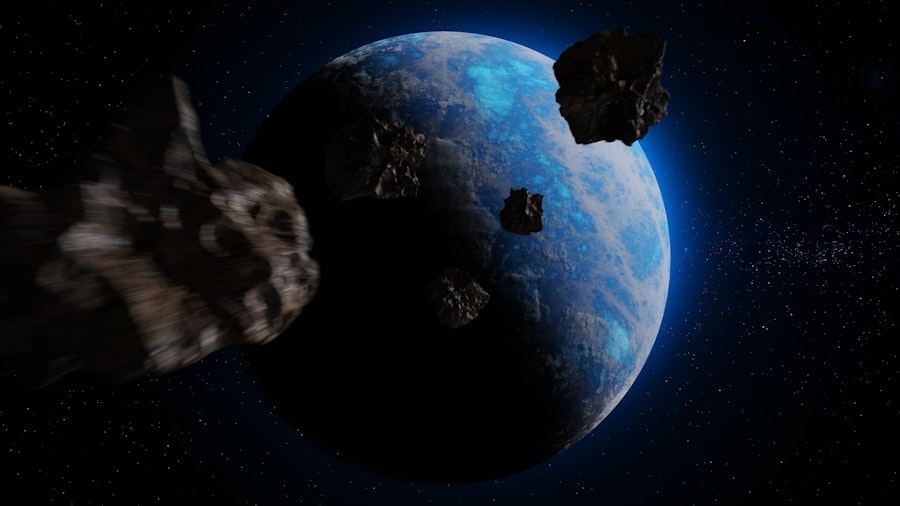
The year 2026 is not an arbitrary selection. It represents a convergence of planned technological enhancements and ongoing advancements that could significantly improve our ability to observe and potentially track objects in Earth orbit with unprecedented detail.
Advancements in Ground-Based Telescopic Arrays
Next-generation ground-based telescopes, with their increasingly larger apertures and more sensitive detectors, offer a powerful tool for scanning the skies. These arrays are designed to capture fainter light sources and can observe wider swaths of the sky simultaneously. By dedicating specific observation windows and employing advanced signal processing techniques, these telescopes could potentially resolve faint objects that have previously eluded detection.
The Expanding Network of Space Surveillance Systems
Global space surveillance networks, already robust, are continuously being upgraded. These systems, comprising radar, optical sensors, and other tracking technologies, are primarily designed to monitor orbital debris and potential collision risks. However, their enhanced sensitivity and data processing capabilities in 2026 could allow them to detect and track smaller or more elusive objects that might be associated with the Black Knight legend.
The Role of Dedicated Satellite Constellations
The proliferation of small satellite constellations, both for scientific research and commercial purposes, could also play an unexpected role. If properly programmed and coordinated, these satellites could act as a distributed sensor network, providing multiple vantage points and cross-referencing observations. This interconnectedness could create a more resilient and comprehensive tracking capability.
Sophisticated Data Analysis and AI
Perhaps the most significant advancement lies in the realm of data analysis. The sheer volume of data generated by modern observational instruments is immense. In 2026, the application of advanced Artificial Intelligence (AI) and machine learning algorithms will be crucial in sifting through this cosmic haystack. AI can identify subtle patterns, anomalies, and potential signatures that human observers might miss, acting as a tireless digital scout.
Potential Methodologies for Tracking in 2026
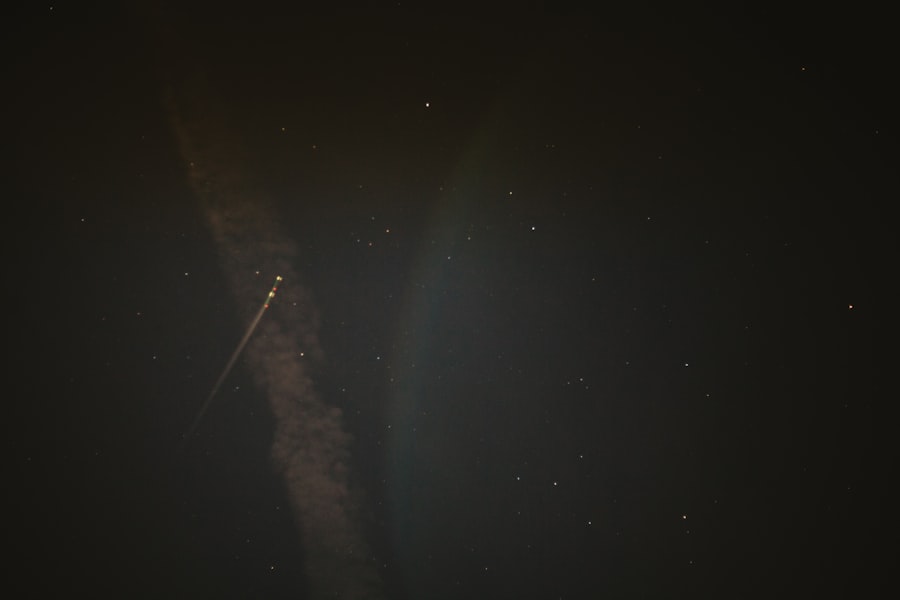
Should the Black Knight Satellite indeed be an observable entity in 2026, the methods employed to track it would likely be multifaceted, drawing upon the technological advancements discussed previously.
Multi-Spectral and Radio Frequency Analysis
Beyond simple visual observation, tracking the Black Knight would likely involve analyzing its emissions across various parts of the electromagnetic spectrum. This includes not only optical light but also infrared, ultraviolet, and radio frequencies. Different materials and technologies emit or absorb radiation in unique ways, providing clues about the object’s composition and potential purpose. A specific, anomalous radio signal, for example, would be a powerful indicator.
Advanced Orbital Mechanics and Predictive Modeling
Even if an object is initially detected, maintaining a consistent track requires sophisticated orbital mechanics calculations. Predictive modeling, enhanced by AI, would be used to forecast its future movements, allowing for preemptive observation. The ability to accurately predict where the object will be, rather than simply reacting to its presence, is key to continuous tracking.
Passive vs. Active Tracking Strategies
Researchers would likely employ both passive and active tracking strategies. Passive tracking involves observing the object and its emissions without interacting with it, much like a naturalist observing wildlife without disturbing its habitat. Active tracking, on the other hand, might involve bouncing radar signals off the object to determine its size and shape, a process that could potentially reveal more about its physical characteristics.
Citizen Science and Collaborative Efforts
The power of collaborative efforts cannot be overstated. In 2026, citizen science initiatives, empowered by accessible technology and sophisticated data submission platforms, could play a vital role. Amateur astronomers, equipped with modern instruments and guided by scientific protocols, could contribute valuable observations, creating a distributed network of eyes on the sky.
If you’re interested in tracking the enigmatic Black Knight Satellite in 2026, you might find it helpful to explore a related article that offers insights and tips on how to do so effectively. This resource provides detailed information on the necessary tools and techniques for observing this mysterious object in the night sky. For more information, you can read the article here: how to track the Black Knight Satellite.
What Definitive Tracking Could Reveal (and What it Might Not)
| Metric | Description | Tools/Methods | Frequency | Notes |
|---|---|---|---|---|
| Orbital Parameters | Tracking the satellite’s orbit including altitude, inclination, and period | Radar tracking, NORAD TLE data, amateur satellite tracking software | Daily updates | Essential for predicting satellite position |
| Signal Detection | Monitoring for radio or other electromagnetic signals emitted by the satellite | Radio telescopes, SDR (Software Defined Radio) receivers | Continuous or scheduled observation sessions | Helps confirm satellite activity and communication |
| Visual Observation | Optical tracking using telescopes or binoculars during visible passes | High-powered telescopes, night sky tracking apps | During predicted visible passes | Dependent on weather and light pollution |
| Data Analysis | Analyzing collected data for anomalies or changes in trajectory | Data processing software, orbital mechanics models | Weekly or monthly | Important for identifying unusual behavior |
| Collaboration | Sharing data with amateur and professional astronomers | Online forums, satellite tracking networks | Ongoing | Enhances accuracy and verification |
The successful tracking of the Black Knight Satellite, if it proves to be a real object, would have profound implications. However, it is crucial to temper expectations with scientific realism.
Understanding the Object’s Origin and Purpose
Definitive tracking would offer the tantalizing possibility of understanding the Black Knight’s origin. Is it a piece of lost space debris from an early, undocumented mission? Is it an anomaly of natural origin? Or does it, as some theories suggest, point to something more extraordinary? The data gathered would be the Rosetta Stone for decoding this mystery.
Characterizing its Composition and Technology
Through spectral analysis and radar imaging, scientists could begin to characterize the object’s physical composition and potentially infer the nature of its technology. This could range from the materials used in its construction to the sophistication of any onboard systems. Imagine understanding the blueprint of a forgotten technological artifact.
The Potential for New Scientific Discoveries
Even if the Black Knight is determined to be a terrestrial anomaly, the process of tracking it will undoubtedly lead to new scientific discoveries. The development of new tracking methodologies, the refinement of data analysis techniques, and the increased understanding of orbital dynamics will all represent valuable advancements for the broader scientific community.
Limitations of Definitive Proof
It is important to acknowledge that even with advanced tracking, definitive proof, especially of an extraterrestrial origin, may remain elusive. Unexplained phenomena in space are often just that – unexplained within our current understanding. The absence of evidence is not always evidence of absence, and conversely, the discovery of an object with anomalous properties does not automatically equate to alien visitation. The journey of scientific inquiry is often one of incremental progress, not instant revelation.
In conclusion, the prospect of tracking the Black Knight Satellite in 2026 represents a compelling convergence of historical intrigue and rapidly advancing scientific capabilities. While the challenges are significant, the potential rewards – from unraveling a long-standing enigma to pushing the boundaries of our observational and analytical prowess – make this an endeavor worthy of focused scientific attention. The universe, as always, holds its secrets close, but with each passing year and each technological leap, humanity inches closer to understanding the whispers in the cosmic dark.
FAQs
What is the Black Knight Satellite?
The Black Knight Satellite is a popular conspiracy theory about an unidentified object said to be orbiting Earth. It is often described as an alien satellite or a mysterious spacecraft, but there is no verified scientific evidence supporting its existence.
Is the Black Knight Satellite real?
No verified scientific data confirms the existence of the Black Knight Satellite. Most experts consider it a myth or a combination of unrelated space debris, natural phenomena, and misinterpreted images.
How can I track satellites in 2026?
You can track satellites using various online tools and apps such as Heavens-Above, N2YO, or CelesTrak. These platforms provide real-time tracking information for thousands of satellites orbiting Earth.
Will the Black Knight Satellite be visible or trackable in 2026?
Since the Black Knight Satellite is not confirmed to exist, there is no reliable information about its visibility or trackability in 2026 or any other year.
What equipment is needed to track satellites like the Black Knight Satellite?
To track satellites, you typically need a computer or smartphone with internet access to use tracking websites or apps. For visual observation, a good quality telescope or binoculars and clear skies are helpful, but tracking unknown or unconfirmed objects like the Black Knight Satellite is not feasible.