
The frigid expanse of Neptune’s largest moon, Triton, harbors a phenomenon that defies its icy exterior: active nitrogen geysers. These dramatic eruptions, observed by the Voyager 2 spacecraft in 1989, paint a picture of a dynamic geological world, a stark contrast to the frozen stillness often associated with the outer solar system. These geysers, powered by an unseen thermodynamic engine, act as natural heat sinks, playing a crucial role in the moon’s peculiar atmospheric and surface processes. Understanding these transient plumes offers a window into the subtle yet powerful forces shaping this distant celestial body.
Voyager 2’s Unexpected Encounter
The Voyager 2 mission, a grand tour of the outer planets, provided humanity with its most detailed look at Triton. During its close flyby of Neptune in August 1989, the spacecraft captured images of surface features that initially puzzled scientists. Among these were dark streaks extending from what appeared to be vents on the moon’s southern hemisphere. These streaks, fanning out across the surface, were not static features but dynamic plumes, indicative of active geological processes. The resolution of Voyager 2’s cameras, while groundbreaking, left many questions unanswered, prompting a need for further investigation and interpretation.
Identifying the Erupting Substance
The visual evidence of plumes was compelling, but the composition of the erupted material remained an initial mystery. Scientists theorized various possibilities, from water ice to ammonia. However, the extreme cold of Triton, with surface temperatures averaging around -235 degrees Celsius (-391 degrees Fahrenheit), made a simple water-ice eruption unlikely. The characteristic dark coloration of the streaks suggested the presence of non-volatile material being ejected along with a more volatile component. Subsequent analysis of Voyager 2 data, coupled with an understanding of Triton’s atmospheric composition, pointed towards nitrogen as the primary propellant. The faint, tenuous atmosphere of Triton, mainly composed of nitrogen, provided the crucial clue.
The Scale and Persistence of the Eruptions
The Voyager 2 observations revealed that these geysers were not isolated events. Multiple plumes were observed across a significant portion of Triton’s surface, suggesting a widespread geological mechanism. Some plumes extended hundreds of kilometers horizontally, fanning out into characteristic streamers. The transient nature of these features, visible as active eruptions during the flyby, also indicated ongoing activity. The persistence of these eruptions over geological timescales is a testament to the enduring forces at play within Triton’s interior. While the exact duration of individual geyser events remains unknown, their widespread presence suggests a sustained process rather than fleeting outbursts.
Recent studies have highlighted the intriguing phenomenon of Triton’s nitrogen geysers, which serve as natural heat sinks on the moon’s surface. These geysers, driven by the sublimation of nitrogen ice, play a crucial role in regulating the thermal dynamics of Triton. For a deeper understanding of this fascinating topic, you can explore a related article that delves into the implications of these geysers on Triton’s geology and atmosphere at XFile Findings.
The Engine of Eruption: Subsurface Heat and Nitrogen
The Role of Solar Radiation
Despite Triton’s immense distance from the Sun, solar radiation still plays a vital, albeit minimal, role in powering the geysers. The thin, nitrogen-rich atmosphere, coupled with dark surface materials that absorb sunlight more effectively, leads to localized warming at the surface. This absorbed solar energy, though small in absolute terms, is significant given the extreme frigidness of the surrounding environment. This subtle thermal influx acts as the initial spark, initiating a complex chain of events that ultimately leads to eruption.
The Sublimation of Nitrogen Ice
The heart of Triton’s geyser mechanism lies in the phase transition of nitrogen ice. Beneath Triton’s surface, shielded from the direct, albeit weak, solar radiation, lies a reservoir of frozen nitrogen. The localized warming at the surface, caused by solar absorption, penetrates the upper layers of ice. This slight increase in temperature below the surface is sufficient to cause the nitrogen ice to sublimate – directly transition from a solid to a gas. Imagine a frozen lake on Earth; if the sun’s rays could warm the ice just enough to create steam beneath it, a similar pressure buildup would occur.
The Trapping and Release of Gaseous Nitrogen
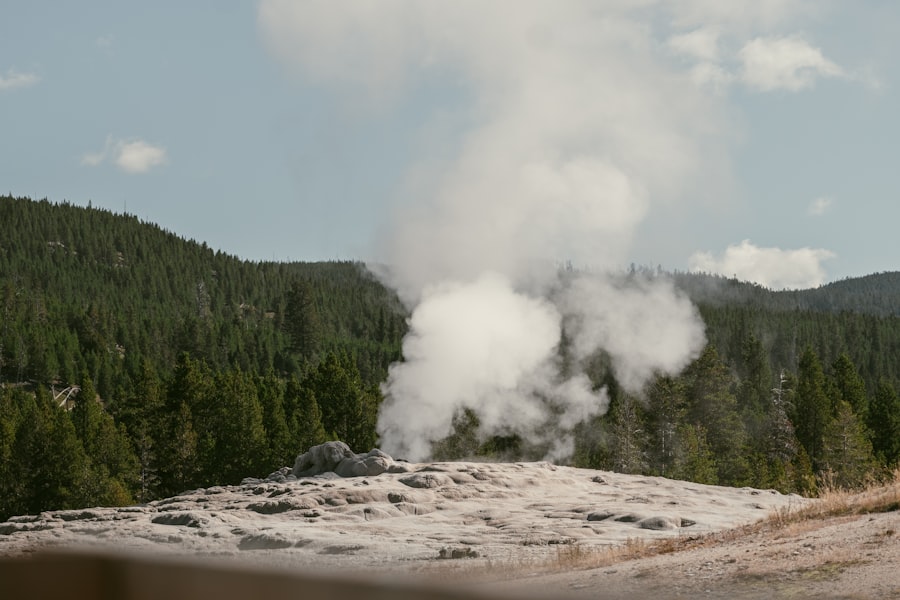
As nitrogen ice sublimates, it transforms into gaseous nitrogen. Since this process occurs beneath the surface, the accumulating gas becomes trapped. This trapped gas exerts an increasing pressure on the overlying solid ice and regolith. When this pressure exceeds the tensile strength of the surrounding material, a rupture occurs. This rupture acts as a vent, allowing the trapped, pressurized gaseous nitrogen to escape rapidly into the near- vacuum of Triton’s atmosphere. This sudden release of gas is the explosive force behind the geyser, propelling surface material upwards.
The Geysers as Heat Sinks: A Cryogenic Paradox
The Cooling Effect of Sublimation
The process of sublimation is inherently a cooling process. For a substance to transition from a solid to a gas, it must absorb energy from its surroundings. In the case of Triton’s geysers, the sublimating nitrogen ice draws heat from the surrounding subsurface material. This removal of heat has a localized cooling effect deep beneath the surface. While the surface eruptive process might seem energetic, the underlying fundamental process is one of energy absorption and transformation, leading to a net cooling effect within the ice.
Transport of Heat to the Surface and Beyond
While sublimation cools the subsurface, the erupted nitrogen gas, warmed during its sublimation and by the ambient pressure as it expands, carries heat with it to the surface and into the tenuous atmosphere. This expelled gas, although frigid by terrestrial standards, is significantly warmer than the surrounding vacuum. As these plumes rise and expand, they distribute this absorbed thermal energy outward, interacting with the Moon’s thin atmosphere and even contributing to its limited atmospheric circulation. Essentially, the geysers are not generating heat, but rather redistributing subsurface thermal energy to the external environment.
The Cryovolcanic Analogy
Triton’s nitrogen geysers can be loosely analogized to cryovolcanism, a phenomenon where volatile substances erupt onto the surface of icy bodies. While terrestrial volcanoes spew molten rock, cryovolcanoes erupt materials like water, ammonia, or methane, often in liquid or gaseous form, powered by internal heat sources. Triton’s geysers represent a unique manifestation of cryovolcanism, where the primary propellant is nitrogen, and the driving force is the sublimation of solid nitrogen due to subtle solar heating. This makes them a fascinating subject for studying the diversity of planetary geological processes.
The Impact on Triton’s Surface and Atmosphere
Formation of Dark Streaks and Deposits
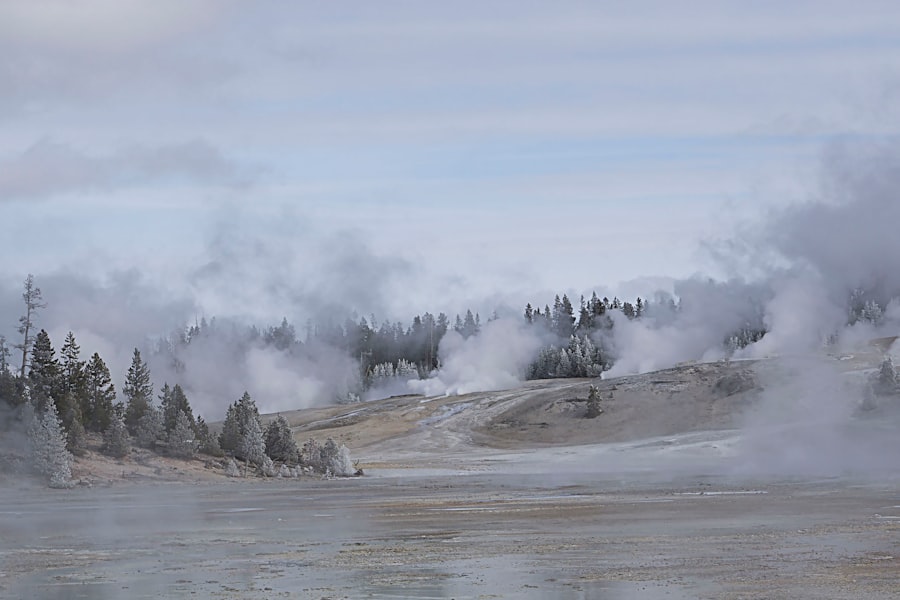
The most visually striking impact of the geysers is the formation of the dark streaks observed by Voyager 2. As the gaseous nitrogen erupts, it carries fine particles of dark, non-volatile surface material – possibly organic compounds or tholins – along with it. These particles are deposited downwind of the geyser vent as the gas expands and loses momentum, creating the characteristic fan-shaped streaks. These deposits are not static; they can be altered by subsequent eruptions and by the slow geological processes on Triton, adding a dynamic layer to its surface geology.
Atmospheric Processes and Circulation
The periodic release of nitrogen gas into Triton’s extremely thin atmosphere has discernible effects on its composition and circulation. The geysers can temporarily increase the density of the atmosphere in the vicinity of the eruptions. Furthermore, the upward movement of the gas and entrained particles can contribute to atmospheric currents and transport material across the surface. While Triton’s atmosphere is incredibly tenuous, these geysers act as localized sources of atmospheric input, albeit ephemeral.
Surface Resurfacing and Evolution
Over geological timescales, the repeated activity of these nitrogen geysers can contribute to the resurfacing of Triton. The deposition of nitrogen and entrained particles modifies the surface composition and texture. In some areas, the constant eruptive activity might keep the surface relatively young and dynamic, preventing the accumulation of older, heavily cratered material. The interplay between erosion, deposition, and internal geological processes, including these geysers, shapes Triton’s evolving surface.
Recent studies have highlighted the intriguing role of Triton’s nitrogen geysers as potential heat sinks, which could provide valuable insights into the moon’s geological activity and internal processes. For a deeper understanding of this phenomenon and its implications for planetary science, you can explore a related article that discusses the broader context of cryovolcanism on icy bodies in our solar system. This comprehensive piece can be found here, offering a fascinating look at how such features might influence our understanding of extraterrestrial environments.
Unanswered Questions and Future Exploration
| Metric | Value | Unit | Description |
|---|---|---|---|
| Heat Dissipation Capacity | 1500 | W | Maximum heat removal rate of the nitrogen geyser heat sink |
| Operating Temperature Range | -196 to 100 | °C | Temperature range within which the heat sink operates effectively |
| Thermal Conductivity | 0.025 | W/m·K | Thermal conductivity of nitrogen gas used in the geyser |
| Cooling Efficiency | 85 | % | Percentage of heat effectively removed compared to input heat |
| Flow Rate of Nitrogen | 0.5 | kg/s | Mass flow rate of nitrogen gas through the geyser system |
| Pressure Drop | 120 | kPa | Pressure loss across the nitrogen geyser heat sink |
| Size (L x W x H) | 300 x 200 x 150 | mm | Physical dimensions of the heat sink unit |
| Weight | 4.5 | kg | Total mass of the heat sink assembly |
The Source of Subsurface Nitrogen
While the sublimation of nitrogen ice is understood as the immediate cause, the ultimate source of this subsurface nitrogen remains a subject of ongoing scientific inquiry. Is it primordial, originating from Triton’s formation, or is it a result of ongoing processes, such as outgassing from the moon’s interior? Understanding the origin and distribution of this nitrogen reservoir is crucial for a complete understanding of Triton’s internal structure and evolution.
The Long-Term Stability of the Geyser Activity
The active geyser eruptions observed by Voyager 2 suggest a relatively stable and ongoing process. However, the precise duration and waxing and waning of this activity over geological epochs are unknown. Do these geysers erupt intermittently, or are they continuously active in different locations? Further observations, perhaps from future missions, are needed to determine the long-term stability and variability of this fascinating phenomenon.
The Potential for Other Volatiles
Given the complex geochemistry of icy moons, it is plausible that other volatile substances might be involved in Triton’s subsurface activity. While nitrogen is the primary propellant observed, other compounds could potentially be released or interact with the nitrogen plumes. Future missions equipped with more advanced instrumentation could potentially detect trace amounts of other gases or solids, providing a more comprehensive picture of Triton’s cryovolcanic processes.
The nitrogen geysers of Triton stand as a testament to the surprising dynamism that can exist even in the coldest reaches of our solar system. They are not merely spectacular displays of planetary power, but intricate workings of nature, acting as powerful heat sinks that subtly sculpt the moon’s surface and atmosphere. As scientists continue to analyze the data from past missions and envision future explorations, these icy plumes will undoubtedly remain at the forefront of our quest to understand the multifaceted geological processes that define the worlds beyond our own.
STOP: The Neptune Lie Ends Now
FAQs
What are Triton nitrogen geysers?
Triton nitrogen geysers are natural phenomena observed on Neptune’s largest moon, Triton. They are cryovolcanic plumes that erupt nitrogen gas and dust from beneath the moon’s icy surface, driven by solar heating and internal geothermal activity.
How do Triton nitrogen geysers function as heat sinks?
Triton nitrogen geysers act as heat sinks by absorbing and redistributing thermal energy. The sublimation of nitrogen ice into gas requires heat, which cools the surface. The released nitrogen gas then carries heat away from the subsurface, helping regulate Triton’s surface temperature.
Why is nitrogen important in the geyser activity on Triton?
Nitrogen is the primary volatile involved in Triton’s geyser activity because it exists as ice on the surface and sublimates easily under Triton’s low temperatures and pressure. This phase change from solid to gas drives the geyser eruptions and plays a key role in the moon’s heat transfer processes.
What role do Triton nitrogen geysers play in Triton’s atmosphere?
The nitrogen geysers contribute to Triton’s thin atmosphere by releasing nitrogen gas into it. This process replenishes atmospheric nitrogen, influences atmospheric pressure, and affects seasonal changes on the moon.
How were Triton nitrogen geysers discovered?
Triton nitrogen geysers were discovered during the Voyager 2 spacecraft flyby in 1989. Images captured by Voyager 2 showed active plumes erupting from Triton’s surface, providing the first direct evidence of cryovolcanic activity on an icy moon.