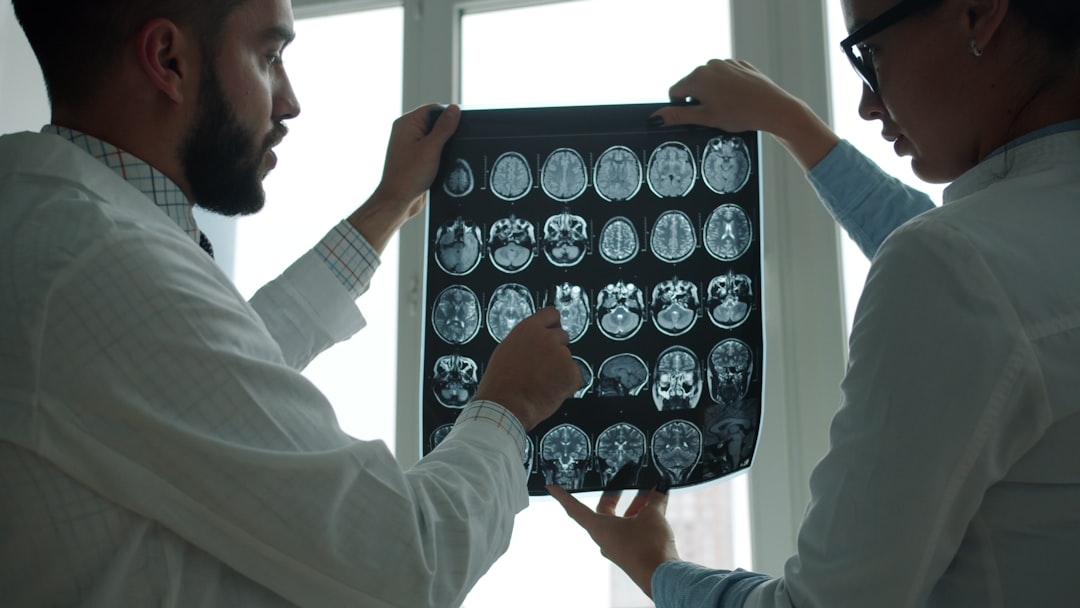
The human brain, a complex and dynamic organ, constantly processes information from the external world and internal states. This processing, however, is not always instantaneous or perfectly synchronous. Instead, the brain often exhibits what are referred to as “neurological time gaps,” phenomena where perceived events or actions do not align precisely with their objective occurrence or where the brain itself introduces delays in its operations. These temporal discrepancies, far from being mere anomalies, offer profound insights into the brain’s construction of reality and its mechanisms of perception, cognition, and action. This article delves into the multifaceted nature of neurological time gaps, exploring their various manifestations and the underlying neural substrates.
Our intuitive experience often suggests a seamless, real-time interaction with the environment. However, this perception of simultaneity is frequently an illusion, a carefully constructed narrative by the brain. Various perceptual processes introduce measurable delays and asynchronies, revealing the brain’s active role in shaping our temporal awareness. You can watch a fascinating documentary about the concept of lost time and its impact on our lives.
Sensory Transduction and Neural Transmission
Before any sensory information can be consciously perceived, it must first be transduced into electrical signals by sensory receptors (e.g., photoreceptors in the eye, hair cells in the ear). This transduction process itself takes time. Subsequently, these neural signals must travel along neural pathways to various brain regions for further processing. The speed of conduction varies depending on the type of neuron and myelination, but these journeys are not instantaneous. For example, a visual stimulus registered by the retina must travel through the optic nerve, optic chiasm, and thalamus before reaching the visual cortex, a journey that can take tens of milliseconds.
Modality-Specific Delays
Different sensory modalities have inherent processing delays. Auditory information, for instance, typically reaches the brain faster than visual information due to the direct nature of sound wave transmission through the ear compared to the photochemical processes involved in vision. This difference explains why, in certain multisensory illusions like the ventriloquism effect, the perceived location of a sound can be “pulled” towards a misleading visual cue. The brain’s attempt to synchronize potentially disparate sensory inputs results in a temporal recalibration, demonstrating its active role in reconciling these delays.
The Flash-Lag Effect
A classic example of a perceptual time gap is the flash-lag effect. When a moving object is viewed alongside a briefly flashed stationary object, the moving object is perceived to be ahead of its actual physical position at the moment of the flash. This intriguing phenomenon suggests that the brain extrapolates the position of moving objects, anticipating their future location, while the processing of the stationary flash is delayed. The brain, in its effort to provide a coherent and up-to-date representation of a dynamic world, prioritizes predicting motion over precise static registration.
The Tau Effect and Kappa Effect
These effects demonstrate how the perceived duration of intervals can be influenced by the spatial distance or number of intervening stimuli. The Tau effect refers to the perception that, for a constant temporal interval, a longer spatial distance between two stimuli makes the duration appear longer. Conversely, the Kappa effect describes how, for a constant spatial distance, a longer temporal interval between stimuli can make the spatial distance appear longer. These phenomena highlight the interconnectedness of spatial and temporal processing in the brain, suggesting that our perception of time is not solely an internal clock but is actively shaped by external contextual cues.
Neurological time gaps, which refer to the discrepancies in our perception of time due to various cognitive processes, have been the subject of extensive research in neuroscience. A related article that explores this fascinating topic in greater detail can be found at XFile Findings, where the implications of these time gaps on memory and decision-making are discussed. Understanding these phenomena can provide valuable insights into how our brains process experiences and the subjective nature of time itself.
The Temporal Binding Problem: Integrating Disparate Information
Another critical aspect of neurological time gaps lies in the “temporal binding problem,” which refers to the challenge the brain faces in integrating spatially distributed and temporally desynchronized neural activities into a unified conscious experience.
Feature Integration Theory
Anne Treisman’s Feature Integration Theory proposes that different features of an object (e.g., color, shape, motion) are processed in parallel in specialized brain areas. For these features to be unified into a coherent object perception, they must be “bound” together. This binding process is thought to involve focused attention and occurs in a subsequent stage, inevitably introducing a temporal delay. This delay manifests as a time gap between the initial registration of individual features and their integrated perception.
The Readiness Potential and Conscious Will
Benjamin Libet’s groundbreaking experiments on the readiness potential (Bereitschaftspotential) brought to light a significant neurological time gap concerning conscious will. He found that a measurable brain activity (the readiness potential) precedes a conscious decision to act by several hundreds of milliseconds. Participants reported consciously deciding to move a finger after this brain activity had already begun. This finding sparked considerable debate about free will, suggesting that conscious intention might be a “veto power” over actions already initiated non-consciously, rather than the original instigator. This temporal discrepancy between neural initiation and conscious awareness of intent profoundly challenges our understanding of agency.
Multisensory Integration Windows
The brain constantly integrates information from multiple sensory modalities to build a robust and coherent understanding of the environment. However, this integration is not instant but occurs within specific “temporal windows.” If sensory inputs from different modalities arrive too far apart in time, they are perceived as separate events rather than as originating from the same source. For example, if a visual flash and an auditory beep are presented with a sufficiently large delay, they will be perceived as distinct events, even if they physically originate from the same source. These temporal windows represent a neurological time gap, defining the boundaries within which the brain attempts to bind multisensory information.
Anticipation and Prediction: Bridging Temporal Gaps
Rather than simply passively reacting to stimuli, the brain is a highly predictive organ. It constantly generates expectations about future events, actively anticipating outcomes and filling in temporal gaps. This predictive capacity is crucial for efficient interaction with a dynamic world.
Predictive Coding
Predictive coding is a prominent theoretical framework suggesting that the brain constantly generates internal models of the world and uses these models to predict incoming sensory information. Any discrepancy between the predicted input and the actual input generates a “prediction error,” which is then used to update the internal models. This process inherently involves temporal aspects, as the brain attempts to predict future states based on past and present information. The time lag between prediction and actual outcome is a critical component of this feedback loop.
Motor Control and Sensory Feedback
When we perform an action, our brain not only sends motor commands but also generates “efference copies” of these commands. These efference copies are used to predict the sensory consequences of our actions. This internal prediction allows the brain to anticipate sensory feedback and distinguish between self-generated sensations (e.g., the feeling of touching oneself) and externally generated sensations. The temporal gap between issuing a motor command and receiving sensory feedback is thus effectively bridged by this internal predictive mechanism, preventing us from constantly being surprised by our own movements.
Speech Perception and Coarticulation
In speech perception, the brain constantly anticipates upcoming phonemes and words based on the context and preceding sounds. This is evident in coarticulation, where the articulation of a phoneme is influenced by the articulation of preceding and succeeding phonemes. The brain uses these subtle cues, which inherently involve temporal spread, to predict and disambiguate speech sounds, effectively reducing the perceptual time gap between individual phonemes.
The Temporal Horizon of Consciousness: The Specious Present
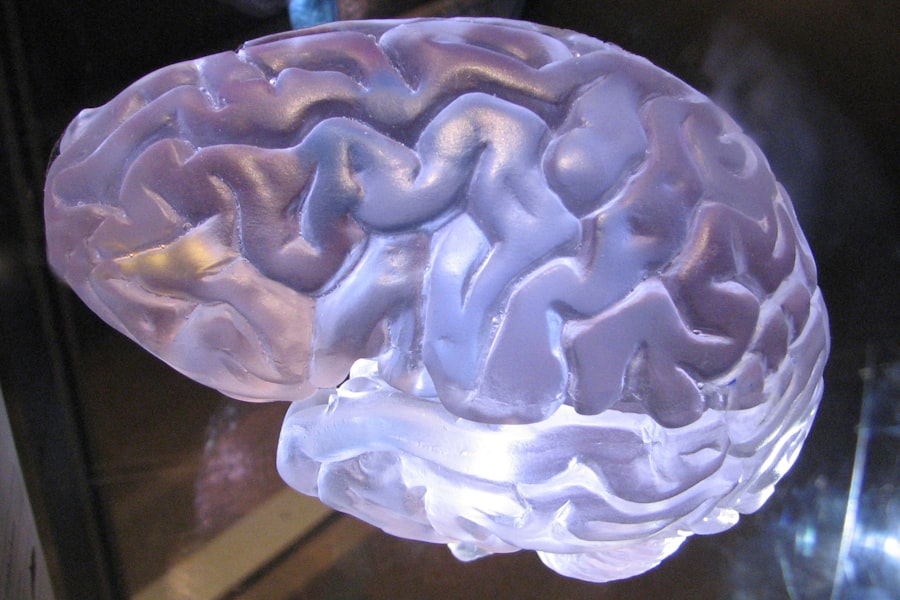
Our conscious experience of time is not a point-like instant but rather a fleeting window known as the “specious present” or the “temporal horizon of consciousness.” This subjective experience of “now” is a constructed phenomenon, encompassing a brief duration that allows for the perception of continuity and change.
The Subjective Present
The precise duration of the specious present is still a subject of active research, but it is generally thought to be on the order of a few hundred milliseconds to a few seconds. Within this subjective “now,” events are integrated and perceived as occurring simultaneously, even if they are objectively sequential within a short timeframe. This temporal “smearing” is a fundamental neurological time gap, enabling us to perceive smooth motion and coherent narratives rather than a series of disconnected, instantaneous snapshots.
Sensory Memory and Working Memory
The brain utilizes short-term memory systems, such as sensory memory and working memory, to maintain information over brief periods, thereby contributing to the specious present. Sensory memory briefly holds unprocessed sensory information, acting as a buffer that allows for further processing. Working memory actively maintains and manipulates information for a short duration, allowing us to connect sequential events and maintain a sense of continuity. These memory systems effectively bridge short temporal gaps, contributing to the coherence of our conscious experience.
Neural Oscillations and Temporal Coherence
Neural oscillations, rhythmic fluctuations in brain activity, are thought to play a crucial role in coordinating neural activity across different brain regions and thus in temporal binding. Different frequency bands of oscillations (e.g., theta, alpha, gamma) are associated with various cognitive functions and are believed to contribute to the temporal organization of information. The precise timing and synchronization of these oscillations across disparate brain areas are critical for integrating information and creating a coherent conscious experience, effectively minimizing the disruptive effects of inherent neurological time gaps.
Recent studies have shed light on the phenomenon of neurological time gaps, which refer to the brain’s ability to perceive time differently under various conditions. This intriguing topic is explored in greater detail in an article that discusses the implications of these time gaps on our understanding of consciousness and perception. For more insights, you can read the full article on this subject here. Understanding these neurological processes could lead to significant advancements in both psychology and neuroscience.
Pathological Time Gaps: When Temporal Processing Goes Awry
| Metric | Description | Typical Range | Measurement Method | Relevance |
|---|---|---|---|---|
| Reaction Time | Time interval between stimulus presentation and response initiation | 150-300 ms | Computerized reaction tests | Assesses sensorimotor processing speed |
| Interstimulus Interval (ISI) | Time gap between two consecutive stimuli | 10-1000 ms | Experimental task design | Used to study temporal processing and sensory gating |
| Neural Conduction Delay | Time taken for nerve impulses to travel along neurons | 1-50 ms (varies by nerve type) | Electrophysiological recordings (e.g., nerve conduction studies) | Indicates nerve health and myelination status |
| Synaptic Delay | Time between arrival of action potential and neurotransmitter release | 0.5-2 ms | Electrophysiology (patch clamp) | Reflects synaptic transmission efficiency |
| Event-Related Potential (ERP) Latency | Time from stimulus onset to specific ERP component peak | 100-300 ms (varies by component) | EEG recordings | Measures cognitive processing speed |
| Interhemispheric Transfer Time | Time for information to transfer between brain hemispheres | 10-30 ms | Behavioral tasks and EEG | Assesses corpus callosum function |
While neurological time gaps are often adaptive and fundamental to normal brain function, their dysfunction can lead to a range of neurological and psychological disorders, highlighting their critical role in maintaining a stable and coherent perception of reality.
Schizophrenia and Temporal Disintegration
Individuals with schizophrenia often exhibit profound disturbances in their sense of time and temporal processing. They may experience a fragmentation of experience, difficulty distinguishing between past, present, and future, and a distorted perception of the duration of events. These “temporal disintegrations” can manifest as disordered thought, difficulties in sequencing actions, and impaired social interactions, suggesting that the integrity of temporal binding mechanisms is severely compromised.
ADHD and Impulsivity
Attention-Deficit/Hyperactivity Disorder (ADHD) is characterized by difficulties in sustained attention, hyperactivity, and impulsivity. Research suggests that individuals with ADHD may have impairments in internal timing mechanisms, leading to a diminished ability to estimate and regulate time intervals. This can manifest as an inability to delay gratification, difficulties with planning and organization, and an overemphasis on immediate rewards, all of which reflect a disruption in the brain’s ability to effectively manage temporal gaps and future planning.
Parkinson’s Disease and Motor Timing
Parkinson’s disease, a neurodegenerative disorder affecting motor control, often involves disturbances in motor timing. Patients may exhibit difficulties in initiating movements, maintaining rhythm, and accurately estimating the duration of motor sequences. These deficits are thought to be linked to disruptions in basal ganglia circuits, which are crucial for temporal processing and motor planning, leading to a profound impact on the execution and timing of movements.
The study of neurological time gaps offers a window into the intricate temporal dynamics of the human brain. From the subtle delays in sensory processing to the profound implications for conscious will and pathological states, these temporal discrepancies are not merely artifacts but fundamental characteristics of how the brain constructs our reality. By continuing to unravel these temporal mysteries, we gain deeper insights into the very nature of perception, cognition, and our subjective experience of time itself. These investigations push the boundaries of neuroscience, revealing the brain not as a passive receiver of information, but as an active, predictive, and exquisitely timed orchestrator of our inner and outer worlds.
WATCH THIS 🔥LOST 8 HOURS: What Hospitals Won’t Tell You About Missing Time
FAQs
What are neurological time gaps?
Neurological time gaps refer to brief interruptions or delays in the brain’s processing of sensory information or motor responses. These gaps can affect perception, cognition, and coordination.
What causes neurological time gaps?
Neurological time gaps can be caused by various factors including neurological disorders, brain injuries, disruptions in neural pathways, or abnormalities in brain function such as those seen in epilepsy or multiple sclerosis.
How are neurological time gaps detected?
They are typically detected through neurological examinations, brain imaging techniques like MRI or EEG, and cognitive or motor function tests that assess the timing and coordination of brain activity.
Can neurological time gaps affect daily life?
Yes, depending on their severity and location in the brain, neurological time gaps can impact activities such as speech, movement, attention, and memory, potentially leading to challenges in everyday tasks.
Are neurological time gaps treatable?
Treatment depends on the underlying cause. Some neurological time gaps may improve with medication, therapy, or rehabilitation, while others may require ongoing management to reduce symptoms and improve quality of life.