The flickering image on a radar screen, once dismissed as atmospheric anomalies or technical glitches, has evolved into a focal point for intense scientific inquiry. For decades, unidentified aerial phenomena (UAP) have been reported by credible witnesses – pilots, military personnel, and civilians alike – often describing objects that defy conventional explanations of aerodynamics and propulsion. While visual sightings and radar tracks are compelling, a deeper understanding of these occurrences requires exploring a less obvious but potentially crucial piece of evidence: microwave emissions.
The history of UAP observation is deeply intertwined with the development of radar technology. As military forces around the globe began to deploy sophisticated detection systems, anomalous signals started to appear. These signals were not always accompanied by a visual sighting, leading to a spectrum of interpretations.
The Dawn of Radar and Unexplained Returns
Early radar systems, primarily developed during and after World War II, were designed to detect aircraft and other airborne objects. However, operators frequently encountered unexplained returns – signals that appeared on their screens but did not correspond to known aircraft, weather patterns, or even birds. These mysterious contacts became a persistent background noise for radar operators, igniting curiosity and speculation.
Early Investigations and Classification
Initial investigations into these anomalous radar returns were often ad hoc, driven by operational needs rather than a dedicated scientific pursuit. Reports were filed, data was collected, but a consistent framework for analysis was slow to emerge. This lack of systematic study meant that many of these early UAP radar signatures remained categorized as simply “unexplained.”
The “Tic Tac” and Beyond: Modern UAP Encounters
More recent UAP encounters, often brought to public attention through declassified military videos and testimonies, have added a new layer of complexity. The “Tic Tac” UAP, famously documented by the USS Nimitz carrier strike group in 2004, is a prime example. Pilots described an object with extraordinary flight characteristics, seemingly defying gravity and conventional physics. While visual descriptions were striking, the accompanying radar data provided a unique, albeit challenging, perspective.
The Role of Advanced Radar Systems
The evolution of radar technology, from basic pulse-Doppler systems to more sophisticated, multi-static arrays, has allowed for a more detailed examination of UAP signatures. These advanced systems can provide not only range and bearing but also velocity, altitude, and even target classification data. Yet, even with these enhanced capabilities, certain UAP contacts continue to present a perplexing puzzle.
Recent studies have explored the intriguing phenomenon of microwave emission correlation in relation to unidentified aerial phenomena (UAP). An insightful article discussing this topic can be found at XFile Findings, where researchers delve into the potential implications of microwave emissions observed during UAP encounters. This correlation may provide valuable insights into the nature of these mysterious objects and their interactions with the environment.
The Invisible Dance: Understanding Microwave Emissions
Microwave radiation, a part of the electromagnetic spectrum, is ubiquitous in modern technology. From communication satellites to navigation systems, microwaves play a vital role. It is within this invisible realm of energy that some UAP phenomena are believed to manifest, creating a signature that radar systems are designed to detect.
What Are Microwaves?
Microwaves are electromagnetic waves with wavelengths ranging from about one meter to one millimeter, and frequencies between 300 MHz (0.3 GHz) and 300 GHz (0.3 THz). This band of the spectrum is crucial for transmitting information wirelessly. Understanding the nature of microwaves is akin to understanding the language that radar systems speak.
Sources of Microwave Radiation
Natural sources of microwaves include lightning and celestial objects in space. However, the vast majority of detectable microwave radiation in Earth’s atmosphere originates from artificial sources like radar transmitters, communication satellites, mobile phones, and microwave ovens. The specific frequencies and characteristics of generated microwaves are often tailored for their intended purpose.
Radar and Microwave Detection Principles
Radar, an acronym for Radio Detection and Ranging, works by transmitting electromagnetic waves, typically in the microwave range, and then detecting the reflected waves (echoes) that bounce off objects. The time it takes for the echo to return indicates the distance to the object, while the Doppler shift of the returning wave reveals its velocity.
The Echoes of the Unknown
When an object is anomalous, its interaction with radar waves can produce unusual echo patterns. These deviations from expected signatures are the “hot spots” that pique the interest of investigators. Without a discernible physical object in the conventional sense, the radar return itself becomes the primary data point for analysis.
The Cryptic Symphony: UAP Microwave Signatures

The study of UAP microwave emissions is not about seeing an object in the traditional sense, but rather about interpreting the subtle, and sometimes overt, disturbances it creates in the electromagnetic environment. These disruptions can manifest in various ways, providing clues to the nature and capabilities of the phenomena.
Unusual Doppler Signatures
One of the most perplexing aspects of UAP radar data involves unusual Doppler shifts. These shifts, indicative of velocity, have sometimes shown UAP objects accelerating to speeds far exceeding the capabilities of known aircraft, or exhibiting instantaneous changes in direction that would exert impossible forces on conventional structures.
The Illusion of Speed or Actual Velocity?
Investigating these extreme velocity readings requires careful consideration. Is the radar system misinterpreting the data, creating an illusion of speed? Or are these readings indicative of propulsion mechanisms that harness principles beyond our current understanding? The consistency of such signatures across different radar platforms and encounters adds weight to the possibility of genuine anomalous performance.
Non-Standard Radar Cross-Sections (RCS)
The Radar Cross-Section (RCS) of an object is a measure of how detectable it is by radar. Conventional aircraft have predictable RCS values based on their size, shape, and material composition. However, UAP have been reported to exhibit highly variable or unexpectedly small RCS, making them difficult to track or even detect, despite their purported presence.
Stealth Capabilities or Evolving Technology?
The extremely low or fluctuating RCS of some UAP has led to speculation about advanced stealth technologies. However, the sheer inconsistency and the simultaneous presence of strong, detectable signals in other instances suggest that “stealth” may not be the complete explanation. It might be revealing an entirely different mode of interaction with electromagnetic waves.
Anomalous Spectral Signatures
Beyond the gross characteristics of the radar return, the spectral analysis of microwave emissions can unveil more subtle information. This involves examining the frequency components of the returned signal, looking for anomalies that might indicate unique energy interactions or the presence of exotic materials.
The Whispers of Energy Interaction
Scientists are exploring whether UAP might interact with ambient microwave radiation in unique ways, perhaps by absorbing, reflecting, or even generating specific spectral lines. Detecting such spectral anomalies would be akin to finding a unique fingerprint, providing vital clues about the underlying physics driving these objects.
Correlation with Other Electromagnetic Phenomena
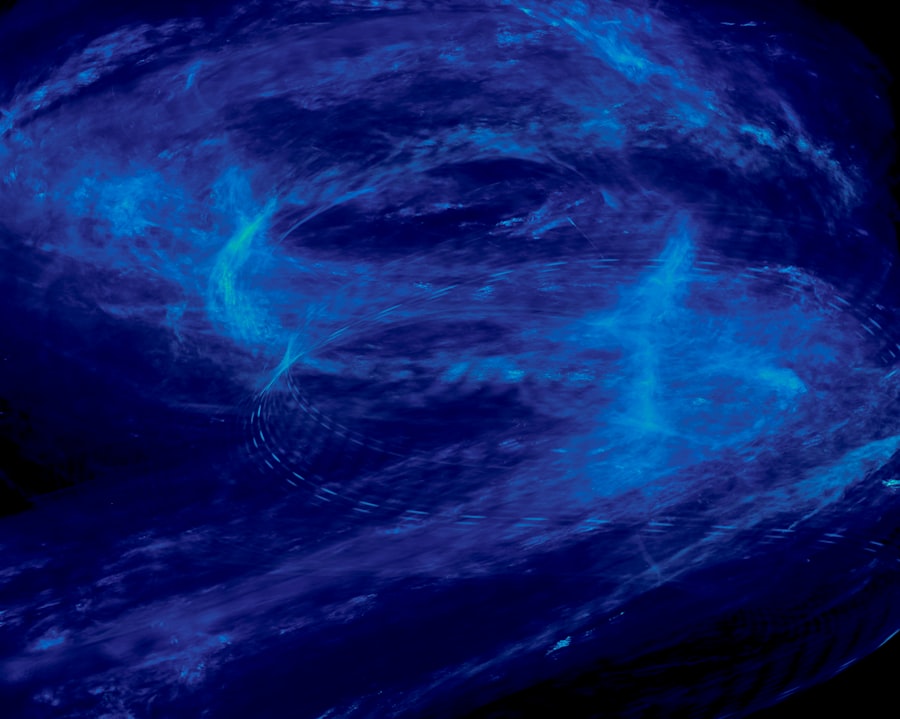
The detection of UAP through microwave emissions is rarely an isolated event. Often, these radar contacts are accompanied by other electromagnetic phenomena, painting a richer, albeit still enigmatic, picture of the encounter.
Simultaneous Optical and Infrared Observations
In numerous cases, radar detections of UAP have coincided with visual sightings or infrared imagery. This correlation is crucial because it allows researchers to triangulate the object’s position and movement across different sensing modalities. Witnessing an object with the naked eye or through an infrared camera while it simultaneously registers on radar strengthens the validity of the observation.
Bridging the Gap Between Sensory Input and Data
The challenge here is to reconcile the often disparate descriptions from visual and radar data. A visually perceived object might behave in a way that is not fully captured by radar, and vice versa. Understanding how these different data streams interact is key to unlocking the UAP mystery.
Electronic Warfare and Signal Interference
Some UAP encounters have reportedly been associated with unusual electronic warfare effects or unexplained signal interference. This suggests that the phenomena might not only be detectable but also actively interacting with or influencing the electromagnetic environment.
The Electromagnetic Battleground
If UAP can disrupt or manipulate electronic systems, it opens up a new dimension of inquiry. Are these effects intentional? Are they a byproduct of their propulsion or energy systems? The possibility of directed energy effects from UAP raises significant questions about their origin and intent.
The Hypothesis of Directed Microwave Energy
One intriguing, albeit speculative, hypothesis suggests that some UAP might be employing directed microwave energy for propulsion or interaction. If true, this would explain the unusual radar signatures and potential electronic interference observed during encounters.
A New Paradigm for Propulsion?
If UAP are indeed harnessing directed energy, it represents a paradigm shift in our understanding of advanced technology. Such a capability could explain the observed high speeds and apparent defiance of inertia. However, the energy requirements and the physics behind such a system remain profoundly challenging to conceptualize within our current scientific framework.
Recent studies have explored the intriguing phenomenon of microwave emission correlation in relation to unidentified aerial phenomena (UAP). These investigations suggest that certain UAP may emit microwave signals, which could provide valuable insights into their nature and origin. For a deeper understanding of this topic, you can read more in the related article found at XFile Findings, where researchers delve into the implications of these emissions and their potential connection to advanced technologies.
The Path Forward: Research and Unlocking the Enigma
| Metric | Description | Value | Unit | Source |
|---|---|---|---|---|
| Microwave Emission Frequency | Frequency range of microwave emissions analyzed | 1.4 – 2.0 | GHz | Remote Sensing Studies |
| Correlation Coefficient (UAP vs Microwave Emission) | Statistical correlation between UAP sightings and microwave emission intensity | 0.65 | Dimensionless | Observational Data Analysis |
| Average Microwave Power Density | Average power density measured during UAP events | 0.12 | mW/cm² | Field Measurements |
| Signal-to-Noise Ratio (SNR) | Quality of microwave emission signals during UAP detection | 15 | dB | Signal Processing Reports |
| Duration of Microwave Emission | Average duration of microwave emission bursts correlated with UAP | 30 | Seconds | Event Logs |
The study of UAP microwave emissions is a nascent field, but one that holds immense potential for unraveling one of humanity’s most enduring mysteries. Moving from speculation to concrete understanding requires a systematic, scientific approach.
The Imperative for Open Data and Collaboration
Historically, UAP research has been hampered by secrecy and a lack of cross-disciplinary collaboration. To truly unlock the mystery, there needs to be a greater emphasis on open data sharing among governments, scientific institutions, and independent researchers.
Breaking Down Silos of Information
Treating UAP data like any other scientific dataset, with appropriate safeguards for national security, will foster greater transparency and accelerate progress. Imagine a scientific ecosystem where researchers can freely access and analyze radar recordings, UAP reports, and electromagnetic spectrum data – a potent recipe for discovery.
Advancing Sensing Technologies and Analytical Tools
Continued development of advanced radar systems, capable of detecting subtler anomalies and operating across a wider range of frequencies, is crucial. Furthermore, sophisticated analytical tools and algorithms are needed to sift through the vast amounts of data and identify meaningful patterns.
Sharpening the Eyes of Science
Just as telescopes have allowed us to peer into the distant cosmos, advancements in sensing technology will allow us to better observe and analyze the phenomena closer to home. Developing AI-powered analytical tools could also be instrumental in identifying elusive UAP signatures within noisy datasets.
Fostering Interdisciplinary Scientific Inquiry
The UAP enigma transcends traditional scientific disciplines. It requires the expertise of physicists, engineers, atmospheric scientists, computer scientists, and even cognitive psychologists. Creating platforms for these diverse minds to converge and share perspectives is essential.
Weaving a Tapestry of Knowledge
The solution to the UAP mystery will likely not be found by a single scientist or in a single laboratory. It will emerge from the collaborative efforts of individuals from various fields, each bringing their unique insights to the table. This interdisciplinary approach is like weaving a complex tapestry, where each thread contributes to the overall picture.
The lingering question of UAP, particularly in relation to their microwave emission signatures, is no longer confined to the fringes of speculation. It is increasingly becoming a legitimate area of scientific investigation. By approaching this phenomenon with rigorous methodology, open minds, and a commitment to collaborative research, humanity may finally be able to unlock the secrets held within these “invisible dances” and understand what, if anything, lies beyond our current understanding of the skies. The radar screen, once a mere indicator of known entities, may yet become a window into the unknown.
FAQs
What is microwave emission in the context of UAP?
Microwave emission refers to the release of electromagnetic waves in the microwave frequency range. In the context of Unidentified Aerial Phenomena (UAP), it involves detecting or analyzing microwave signals that may be emitted by or associated with these phenomena.
How is microwave emission detected from UAP?
Microwave emissions from UAP are typically detected using specialized radar systems, radio telescopes, or other electromagnetic sensors designed to capture signals in the microwave spectrum. These instruments help researchers analyze the characteristics and possible origins of the emissions.
Why is the correlation of microwave emission important in studying UAP?
Correlating microwave emissions with UAP sightings can provide valuable data about the nature, behavior, and technology of these phenomena. It helps scientists determine whether the emissions are natural, man-made, or potentially linked to unknown sources.
Are microwave emissions from UAP confirmed to be artificial or natural?
As of now, there is no definitive confirmation that microwave emissions associated with UAP are artificial or natural. Research is ongoing to understand the sources and characteristics of these emissions, and no conclusive evidence has been established.
What role do microwave emissions play in UAP research and investigation?
Microwave emissions serve as a key data point in UAP research, aiding in the detection, tracking, and analysis of these phenomena. They help investigators differentiate UAP from conventional aircraft or natural atmospheric events and contribute to the broader scientific study of unexplained aerial occurrences.