The complex interplay between human-induced electrical systems and naturally occurring telluric currents poses a significant challenge to critical infrastructure worldwide. Understanding this phenomenon, known as electrification and telluric flow interference, requires a multidisciplinary approach encompassing geophysics, electrical engineering, and materials science. This article delves into the mechanisms of this interference, its ramifications, and ongoing efforts to mitigate its impact.
Telluric currents, often referred to as Earth currents, are naturally occurring electrical currents that flow through the Earth’s crust and mantle. Their genesis lies primarily in the interaction between the solar wind and Earth’s magnetosphere, a dynamic process that creates fluctuating geomagnetic fields. Imagine the Earth’s magnetosphere as a protective shield, constantly being buffeted by the solar wind, a stream of charged particles emanating from the sun. These interactions induce electrical potentials within the Earth.
Geomagnetic Activity and Induced Currents
The strength and direction of telluric currents are directly linked to geomagnetic storm activity. During periods of heightened solar activity, such as coronal mass ejections (CMEs), the Earth’s magnetic field experiences rapid and intense fluctuations. These changes, in accordance with Faraday’s law of electromagnetic induction, induce powerful electric fields within the Earth, driving the flow of telluric currents. The Earth itself acts as a massive, albeit imperfect, conductor.
Factors Influencing Telluric Current Strength
The magnitude and spatial distribution of telluric currents are influenced by several geological and geophysical factors:
- Geoelectric Conductivity: Different rock formations possess varying levels of electrical conductivity. Sedimentary basins, often rich in saline groundwater, are generally more conductive than crystalline basement rock. This variability creates preferred pathways for telluric current flow, much like water flowing through a landscape, favoring paths of least resistance.
- Geomagnetic Latitude: Telluric currents tend to be stronger at higher geomagnetic latitudes, where the Earth’s magnetic field lines are more vertical, allowing for greater coupling with geomagnetic disturbances.
- Time of Day and Season: Diurnal and seasonal variations in solar radiation and magnetospheric activity also contribute to fluctuations in telluric current strength.
Recent studies have explored the intricate relationship between electrification and telluric flow interference patterns, shedding light on how natural electrical currents can influence geological formations and environmental conditions. For a deeper understanding of this phenomenon, you can refer to a related article that discusses these concepts in detail. To read more, visit this article.
Electrification: The Human Footprint
Human society’s ever-increasing reliance on electrical power has led to an ubiquitous network of power transmission lines, pipelines, and other metallic structures. These systems, while essential for modern life, inherently introduce large-scale electrical potentials into the Earth, creating an intricate web of artificial electrical landscapes. This is where the potential for interference begins.
Power Grid Harmonics and Stray Currents
The operation of alternating current (AC) power grids, particularly those with unbalanced loads or non-linear components (e.g., rectifiers, inverters), generates harmonic currents. These harmonics can propagate through the Earth, creating stray currents that interact with other buried metallic infrastructure. Think of it as ripples spreading from a stone dropped in a pond, but in this case, the ripples are electrical.
Cathodic Protection Systems
To prevent corrosion, many buried metallic structures, such as pipelines and storage tanks, employ cathodic protection (CP) systems. These systems introduce a direct current (DC) into the surrounding soil, making the protected structure cathodic relative to the Earth. While effective in combating corrosion, CP systems can contribute to local telluric interference by creating steady-state impressed currents that can interact with, or be disrupted by, natural telluric flows.
Railway Electrification
Electrified railway systems, particularly those using DC traction power, are another significant source of earth-bound electrical currents. The return currents from trains often flow through the rails and the surrounding ground, creating localized electric fields that can interfere with sensitive equipment or other buried infrastructure.
The Nexus of Interference: How They Meet
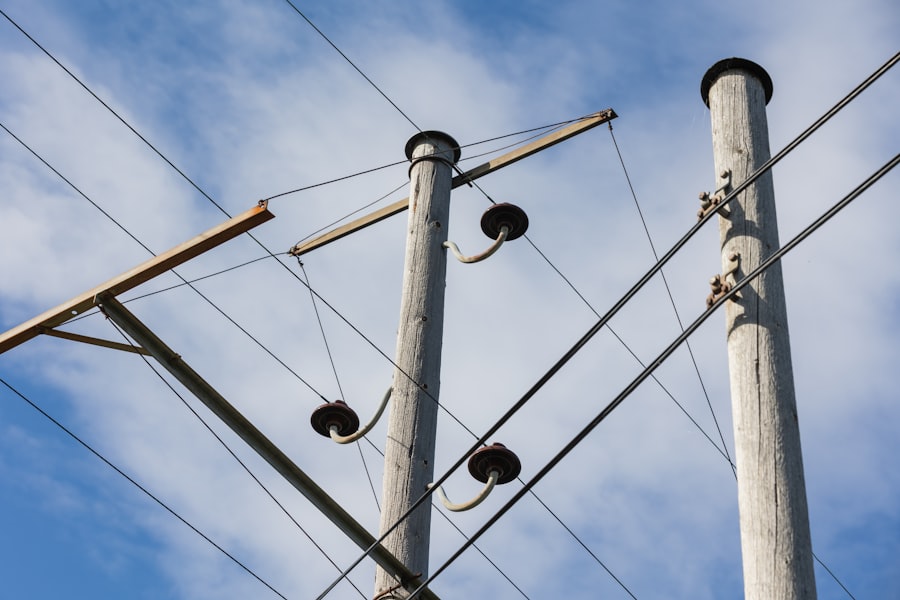
The crux of the problem lies in the superimposition and interaction of these two distinct, yet omnipresent, electrical phenomena. When strong telluric currents encounter conductive metallic infrastructure, they can induce substantial voltages and currents within these structures. Simultaneously, human-generated electrical currents can influence the pathways and magnitudes of telluric flows.
Geoelectrically Induced Currents (GICs)
One of the most consequential manifestations of this interference is the generation of geomagnetically induced currents (GICs) in long, grounded conductors such as power transmission lines and pipelines. When fluctuating telluric electric fields encounter these conductors, they induce unwanted DC currents. Imagine a giant bar magnet sweeping over a metal wire; it induces a current. The Earth’s fluctuating magnetic field acts as that sweeping magnet for our infrastructure.
- Impact on Power Grids: GICs can push power transformers into saturation, leading to waveform distortion, increased reactive power consumption, and ultimately, widespread power outages. Historical events, such as the 1989 Quebec blackout, serve as stark reminders of the disruptive potential of GICs.
- Impact on Pipelines: GICs can accelerate corrosion in pipelines by interfering with the cathodic protection systems designed to prevent it. This can lead to localized “hot spots” of accelerated material degradation, compromising pipeline integrity.
Corrosion and Material Degradation
Beyond GICs, the general interaction between telluric currents and human-made electrification can exacerbate corrosion processes in buried metallic structures. Stray currents from electrified railways or poorly grounded power systems can combine with telluric potentials to create localized galvanic corrosion cells, leading to premature failure of infrastructure. The Earth acts as a vast electrolyte, and differences in electrical potential drive these corrosive reactions.
Disruption of Sensitive Equipment
The fluctuating magnetic fields associated with both telluric currents and large-scale electrical installations can interfere with sensitive electronic equipment, including navigation systems, geophysical instruments, and even medical devices. This is particularly relevant in areas with high levels of both natural and artificial electrical activity.
Detecting and Monitoring Interference
Effective management of electrification and telluric flow interference necessitates robust detection and monitoring capabilities. Understanding the spatial and temporal characteristics of both phenomena is crucial for predicting and mitigating their impacts.
Geomagnetic Observatories
A global network of geomagnetic observatories continuously monitors the Earth’s magnetic field. Data from these observatories provide essential real-time and historical information on geomagnetic activity, which is a primary driver of telluric currents. This data is the raw feed for understanding the incoming solar weather.
Telluric Field Measurements
Direct measurement of telluric electric fields involves deploying pairs of electrodes into the ground and measuring the voltage difference between them. These measurements provide insights into the local telluric current density and its variability. This is like placing an ear to the ground to hear the subtle hum of the Earth’s electrical activity.
Monitoring GICs in Infrastructure
Power companies employ specialized sensors to monitor GICs in their transmission lines and transformers. These sensors provide critical data for operational adjustments and risk assessment during geomagnetic storms. For pipelines, monitoring the effectiveness of cathodic protection systems, often through potential surveys, can indirectly indicate the presence of telluric interference.
Recent studies on electrification have revealed intriguing connections to telluric flow interference patterns, highlighting the complex interactions between the Earth’s electromagnetic fields and subsurface geological structures. For a deeper understanding of these phenomena, you can explore a related article that delves into the implications of these findings on environmental science and geophysics. The article provides valuable insights into how electrification can influence telluric currents, which are essential for various applications in earth sciences. To read more about this fascinating topic, visit this article.
Mitigating the Impact
| Parameter | Unit | Typical Range | Description |
|---|---|---|---|
| Electrification Voltage | Volts (V) | 0 – 1000 | Voltage applied in electrification processes |
| Telluric Current Intensity | Amperes (A) | 0.1 – 10 | Natural earth current intensity affecting interference |
| Frequency of Interference | Hertz (Hz) | 0.01 – 10 | Frequency range of telluric flow interference patterns |
| Interference Amplitude | Millivolts (mV) | 0 – 500 | Amplitude of voltage fluctuations due to interference |
| Phase Shift | Degrees (°) | 0 – 180 | Phase difference between electrification signal and telluric flow |
| Signal-to-Noise Ratio (SNR) | Decibels (dB) | 10 – 60 | Ratio of desired signal to interference noise |
| Ground Resistivity | Ohm-meters (Ω·m) | 10 – 1000 | Resistivity of earth affecting telluric current flow |
Addressing the challenges posed by electrification and telluric flow interference requires a multi-pronged approach, encompassing engineering solutions, operational strategies, and proactive planning.
Engineering Solutions for Power Grids
- Transformer Design: Designing transformers with enhanced resistance to GIC saturation, often by incorporating features like non-linear resistors or improved core materials, can significantly reduce their vulnerability.
- Series Capacitors: Inserting series capacitors into transmission lines can block the DC component of GICs, thereby preventing them from flowing into transformers. However, this approach has its own operational complexities.
- Neutral Grounding Resistors: Installing neutral grounding resistors at transformer substations can limit the magnitude of GICs flowing through the transformer windings.
Protecting Pipelines and Buried Infrastructure
- Enhanced Cathodic Protection: Designing and maintaining robust cathodic protection systems that can withstand the influence of telluric currents is paramount. This may involve increasing the impressed current or optimizing anode placement.
- Insulating Joints: Strategically placed insulating joints in pipelines can break the electrical continuity, thereby limiting the path for GICs and other stray currents. However, these joints introduce their own maintenance and monitoring requirements.
- Advanced Coatings: Applying high-quality dielectric coatings to pipelines provides an additional layer of protection against external corrosion, including that exacerbated by electrical interference.
Operational Strategies
- Space Weather Forecasting: Utilizing space weather forecasts allows operators of power grids and pipelines to anticipate severe geomagnetic storms and implement pre-emptive measures, such as temporarily adjusting system configurations or increasing monitoring vigilance.
- Dynamic System Adjustments: During geomagnetic storm events, power grid operators can implement dynamic adjustments, such as switching out vulnerable transformers or rerouting power, to minimize GIC impacts.
- Corrosion Management Programs: Comprehensive corrosion management programs for pipelines, incorporating regular inspections and timely repairs, are essential for maintaining integrity in the face of electrical interference.
Future Research and Development
Continued research is crucial to deepen our understanding of these complex phenomena and develop more effective mitigation strategies.
- Improved Earth Conductivity Models: Developing more accurate and high-resolution models of Earth’s geoelectric conductivity will enhance the prediction of telluric current pathways and magnitudes. This is like refining a map of the electrical veins within the Earth.
- Advanced GIC Forecasting: Integrating real-time geomagnetic data with sophisticated modeling techniques will lead to more precise and localized GIC forecasts, enabling targeted mitigation efforts.
- Smart Grid Technologies: The evolution of smart grid technologies, with their enhanced monitoring and control capabilities, offers opportunities for more adaptive responses to telluric interference.
- Material Science Innovation: Research into novel materials with superior electrical breakdown strength and corrosion resistance could lead to the development of more resilient infrastructure components.
The intertwining of natural telluric flows and human-generated electrification presents a persistent and evolving challenge. By diligently pursuing a multifaceted approach encompassing robust engineering, proactive operational management, and continuous research, humanity can strive to safeguard its critical infrastructure against the subtle yet powerful forces of electrical interference. This ongoing endeavor underscores the intricate relationship between human technological advancement and the dynamic, sometimes unpredictable, forces of the natural world.
FAQs
What is electrification in the context of telluric flow?
Electrification refers to the process by which electrical charges accumulate or are generated in the Earth’s subsurface, often influenced by natural phenomena such as telluric currents—natural electric currents flowing through the Earth.
What are telluric flow interference patterns?
Telluric flow interference patterns are variations or disturbances in the natural electric currents (telluric currents) caused by geological structures, human-made installations, or electromagnetic phenomena, which can affect the distribution and intensity of these currents.
How do electrification and telluric flows interact?
Electrification can influence telluric flows by altering the local electric field, while telluric currents can induce or modify electrification patterns in the Earth’s crust, leading to complex interference effects that are important in geophysical studies.
Why is understanding telluric flow interference important?
Understanding these interference patterns is crucial for geophysical exploration, earthquake prediction, and minimizing electromagnetic interference in sensitive equipment, as well as for improving the accuracy of electrical surveys of the Earth’s subsurface.
What methods are used to study electrification and telluric flow interference?
Researchers use a combination of ground-based sensors, magnetotelluric surveys, satellite data, and computer modeling to analyze electrification processes and telluric flow interference patterns, helping to map subsurface structures and monitor geophysical phenomena.