
The ability to intercept and analyze digital signals is a cornerstone of modern surveillance and intelligence gathering. However, the increasing sophistication of communication technologies has led to the development of methods and technologies designed to make these signals inherently difficult, if not impossible, to trace. This field, often referred to as “Untraceable Digital Signal Intercept,” explores the techniques and countermeasures employed to both conceal and uncover digital transmissions. For the observer, understanding these processes is akin to deciphering the whispers in a crowded room, where each sound is carefully modulated and masked.
The fundamental nature of digital communication involves the encoding of information into a series of binary digits (bits) and their transmission across various mediums. Historically, this transmission was often straightforward, relying on wired connections or radio frequencies that were relatively predictable and therefore easier to intercept. However, the advent of the internet, mobile networking, and a multitude of wireless protocols has transformed this landscape into a complex, multi-layered ecosystem.
Evolution of Transmission Mediums
The raw materials of digital communication have evolved significantly. From the early days of copper wires, carrying signals with a discernible electromagnetic footprint, to the fiber optic cables that transmit light pulses, and the invisible waves of radio frequencies that permeate the air, each medium presents its own challenges and opportunities for interception.
Wired Communications
Early wired networks, such as those utilizing Ethernet or traditional telephone lines, offered a relatively contained environment for signal transmission. The physical infrastructure provided tangible points for interception, often requiring direct physical access or the exploitation of vulnerabilities in network hardware. However, the move towards fiber optics has introduced a new paradigm.
Fiber Optics and Light-Based Transmission
Fiber optic cables transmit data as pulses of light, a phenomenon that is intrinsically more difficult to tap into without disrupting the signal itself. While sophisticated taps can theoretically be created by bending the fiber to bleed off a small amount of light, these methods are often detected by the associated signal degradation. The sheer speed and volume of data transmitted through fiber also present a formidable challenge for real-time interception and analysis.
Wireless Communications
Wireless communication, by its very definition, involves the broadcast of signals through the air. This ubiquity makes it both convenient for users and a potential target for interception. However, modern wireless technologies are far from the simple broadcasts of the past.
Radio Frequency Spectrum Management
The radio frequency spectrum is a finite resource, carefully allocated and regulated by authorities. Understanding this spectrum, including its various bands and their intended uses, is crucial for identifying and intercepting specific signals. Jamming, spoofing, and spread spectrum techniques are all employed to complicate this process.
Mobile Network Generations (2G, 3G, 4G, 5G)
Each generation of mobile network technology has brought increased complexity, speed, and security features. Early 2G networks were more susceptible to interception due to less robust encryption. 3G and 4G introduced stronger encryption and more complex network architectures. 5G, with its focus on low latency and massive device connectivity, further complicates interception due to its dynamic network slicing and the use of higher frequency bands. It’s like trying to catch a swarm of highly organized, miniaturized drones as they weave through an ever-changing forest.
In the realm of digital communications, the concept of non-attributable digital signal intercept is gaining significant attention due to its implications for privacy and security. A related article that delves deeper into this topic can be found at XFile Findings, where it explores the technological advancements and ethical considerations surrounding the interception of digital signals without revealing the source. This discussion is crucial for understanding the balance between surveillance and individual rights in our increasingly connected world.
Stealth and Obfuscation Techniques
The core of untraceable signal intercept lies in the techniques employed to mask the origin, destination, and content of digital communications. These methods aim to make a signal disappear into the digital noise, like a phantom ship sailing through fog.
Encryption and Data Obscurity
Encryption is the digital equivalent of locking away sensitive information in a secure vault. Without the correct key, the contents remain unreadable. However, the strength and implementation of encryption vary, presenting opportunities for exploitation.
Symmetric vs. Asymmetric Encryption
- Symmetric Encryption: Uses the same key for both encryption and decryption. While computationally efficient, secure key exchange is a significant challenge.
- Asymmetric Encryption: Utilizes a pair of keys: a public key for encryption and a private key for decryption. This method is widely used in secure communication protocols like TLS/SSL but can be computationally intensive.
Homomorphic Encryption
A more advanced form of encryption that allows computations to be performed on encrypted data without decrypting it first. While still largely in the research phase and computationally expensive, it represents a future frontier in data privacy and potentially untraceable operations.
Network-Level Obfuscation
Beyond encrypting the data itself, techniques are employed to disguise the routing and origin of communication packets across networks.
Virtual Private Networks (VPNs)
VPNs create an encrypted tunnel between a user’s device and a VPN server. All internet traffic is routed through this tunnel, effectively masking the user’s IP address and making it appear as if the traffic originates from the VPN server.
Multi-Hop VPNs and Anonymity Networks (Tor)
To further obscure origin, multi-hop VPNs route traffic through multiple VPN servers sequentially, making it exponentially more difficult to trace. The Onion Router (Tor) is a well-known example, employing a layered encryption approach where data is passed through a volunteer overlay network consisting of thousands of relays. Each relay decrypts a single layer of encryption to reveal the next relay’s location. This creates a decentralized, anonymous browsing experience, akin to passing a secret message through a chain of trusted couriers, each only knowing the next step.
Proxy Servers
Proxy servers act as intermediaries between a user’s device and the internet. They can mask an IP address and filter traffic, but unlike VPNs, they don’t always encrypt the traffic between the user and the proxy.
IP Address Masking and Spoofing
Techniques to hide or falsify the originating IP address of a packet. This can involve using dynamic IP addresses that change frequently or employing specialized software to inject fabricated IP addresses into network traffic.
Covert Channels
Covert channels exploit existing communication protocols or systems to transmit information in a way that is not intended by the system designers. This is like using the air vents in a building to whisper messages, bypassing the intended intercom system.
Steganography
Steganography is the art and science of hiding information within other non-secret data. This can involve embedding text within images, audio files, or even video streams. The existence of the hidden message is itself concealed, making it a powerful tool for discreet communication.
Timing and Resource Covert Channels
These channels exploit the timing of network events or the usage of system resources to convey information. For example, the pattern of network requests or the processor load on a system can be modulated to encode data.
Interception and Analysis Challenges

Despite obfuscation techniques, the desire to intercept and analyze digital signals persists. This requires specialized tools and methods to overcome the layers of protection.
Signal Eavesdropping and Passive Interception
Passive interception involves listening to or capturing signals without actively interfering with them. This requires being in proximity to the transmission source or having access to the communication medium.
Radio Frequency Spectrum Analysis
This involves monitoring the radio frequency spectrum for unusual or targeted signals. Specialized equipment can detect and analyze various types of radio emissions, from Wi-Fi signals to cellular transmissions.
Direction Finding and Triangulation
Techniques used to determine the physical location of a signal source. By taking measurements from multiple locations, a signal can be triangulated, narrowing down its origin.
Network Traffic Interception
This refers to capturing data packets as they traverse a network. This can be done at various points, such as on a local network, at an internet exchange point, or through compromise of network infrastructure.
Packet Sniffing and Deep Packet Inspection (DPI)
Packet sniffing tools capture all data packets passing through a network interface. Deep Packet Inspection goes further by analyzing the content of these packets, looking for specific patterns, keywords, or types of data, even within encrypted streams if certain vulnerabilities are exploited.
Active Interception and Man-in-the-Middle Attacks
Active interception involves actively participating in the communication flow, often by intercepting and retransmitting data.
Man-in-the-Middle (MitM) Attacks
In a MitM attack, an attacker secretly relays and possibly alters the communication between two parties who believe they are directly communicating with each other. This can involve intercepting network traffic and presenting a falsified secure connection to both parties.
SSL/TLS Interception
This is a specific type of MitM attack targeting secure web traffic (HTTPS). It involves an attacker impersonating a legitimate server, forcing the client to connect to the attacker, who then establishes a separate, legitimate connection to the actual server. The attacker can then decrypt, inspect, and re-encrypt the traffic.
Exploitation of Vulnerabilities
The digital world is not without its flaws. Interception often relies on exploiting weaknesses in protocols, software, or hardware.
Software and Firmware Exploits
Vulnerabilities in operating systems, applications, or the firmware of network devices can be exploited to gain unauthorized access and intercept communications.
Protocol Weaknesses
Certain communication protocols, especially older ones, may have inherent weaknesses that can be exploited for interception.
Countermeasures and Evasion Strategies
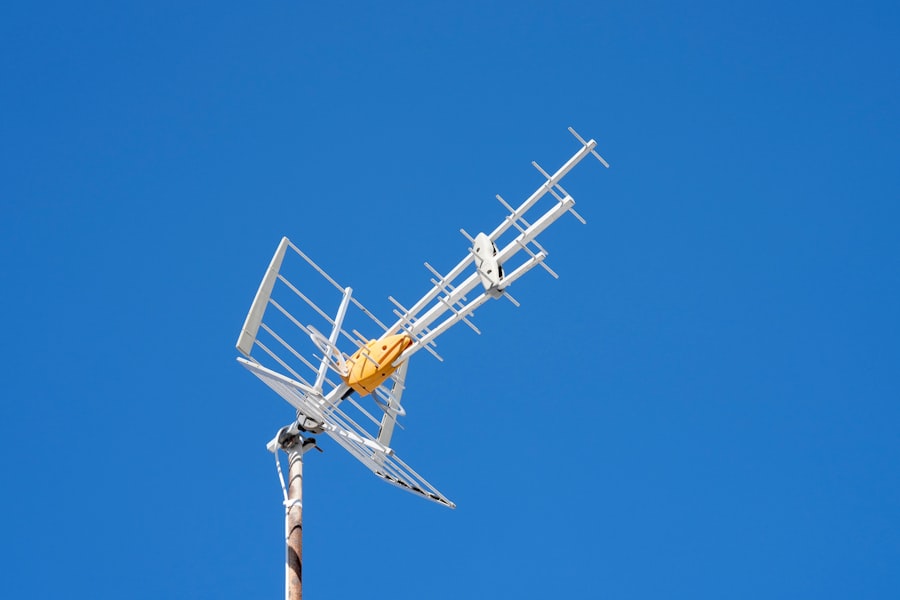
For those seeking untraceability, a robust set of countermeasures is essential. This is the art of the digital ghost, leaving no trace.
Advanced Cryptographic Techniques
Beyond standard encryption, more advanced cryptographic methods are constantly being developed to enhance privacy.
Zero-Knowledge Proofs (ZKPs)
ZKPs allow one party to prove to another that a given statement is true, without revealing any information beyond the validity of the statement itself. This could be used to prove identity or the possession of certain information without disclosing the underlying data.
Quantum-Resistant Cryptography
As quantum computing advances, current encryption methods may become vulnerable. Quantum-resistant cryptography aims to develop algorithms that are secure against quantum computer attacks.
Network Anonymization Tools and Practices
Beyond VPNs and Tor, users can employ a combination of tools and practices to enhance their anonymity.
Disposable Email Addresses and Virtual Phone Numbers
Using temporary or virtual services for communication registration can prevent the linking of online activities to a permanent identity.
Secure Operating Systems and Browsers
Operating systems like Tails or Qubes OS are designed with security and privacy as primary considerations. Specialized browsers and browser extensions can also enhance anonymity by blocking trackers and scripts.
Operational Security (OpSec)
OpSec is a process of analyzing friendly and enemy activities to prevent sensitive information from being discovered. For digital communications, this translates to careful management of everyday digital habits.
Avoiding Metadata Leaks
Metadata, such as timestamps, sender/recipient information, and location data, can be just as revealing as the content of a message. Minimizing the generation and sharing of metadata is crucial.
Physical Security and Device Hardening
Even the most sophisticated digital obfuscation can be undermined by physical access to devices or the exploitation of vulnerabilities in the surrounding physical environment.
In the realm of cybersecurity, the challenges posed by non-attributable digital signal intercepts have garnered significant attention from researchers and professionals alike. A related article that delves deeper into this topic can be found at XFile Findings, where various methodologies and implications of such intercepts are explored. Understanding these complexities is crucial for developing effective countermeasures and enhancing digital communication security.
The Future of Untraceable Digital Signal Intercept
| Metric | Description | Typical Values | Measurement Unit |
|---|---|---|---|
| Signal-to-Noise Ratio (SNR) | Ratio of signal power to noise power in the intercepted signal | 10 – 30 | dB |
| Intercept Duration | Length of time the digital signal is intercepted | Seconds to Hours | Time |
| Data Throughput | Rate at which data is captured from the intercepted signal | 1 – 1000 | kbps |
| Frequency Range | Range of frequencies over which the signal is intercepted | 100 MHz – 6 GHz | Hz |
| Bit Error Rate (BER) | Rate of errors in the intercepted digital data | 10^-3 to 10^-6 | Ratio |
| Encryption Status | Whether the intercepted signal is encrypted or not | Encrypted / Unencrypted | N/A |
| Attribution Confidence | Confidence level in identifying the source of the signal | Low (Non-attributable) | Percentage |
The ongoing arms race between those seeking to intercept and those seeking to remain untraceable will undoubtedly continue to evolve. New technologies and techniques on both sides will emerge, shaping the future of digital communication and surveillance.
The Impact of Artificial Intelligence and Machine Learning
AI and ML are poised to play a significant role in both interception and evasion. AI can be used to analyze vast datasets of intercepted traffic to identify patterns and anomalies that would be missed by human analysts. Conversely, ML can be used to develop more sophisticated obfuscation techniques and to identify and evade detection systems.
The Rise of Decentralized and Encrypted Systems
Future communication systems are likely to be built on decentralized architectures and incorporate end-to-end encryption by default. This will make mass surveillance and wholesale interception increasingly difficult.
Blockchain and Distributed Ledger Technologies
While not directly communication protocols, these technologies can offer secure and tamper-proof ways to manage identities and transactions, potentially contributing to more secure communication infrastructure.
The Ethical and Legal Implications
The pursuit of untraceable digital signal intercept raises profound ethical and legal questions. The balance between national security, law enforcement needs, and individual privacy is a continuous societal debate. As technology advances, so too must the legal frameworks and ethical considerations surrounding digital eavesdropping and personal anonymity. The very definition of what constitutes an “untraceable” signal is a moving target, constantly redefined by human ingenuity and technological progress. Understanding this evolving landscape is not just a matter of technical curiosity, but a crucial aspect of navigating the digital age responsibly.
FAQs
What is a non-attributable digital signal intercept?
A non-attributable digital signal intercept refers to the capture or monitoring of digital communications or signals in a manner that prevents the identification of the source or recipient. This means the intercepted data cannot be traced back to a specific individual or device.
How is non-attributable digital signal intercept achieved?
It is typically achieved through advanced encryption, anonymization techniques, or the use of intermediary systems that mask the origin and destination of the digital signals. Technologies such as proxy servers, VPNs, and specialized interception tools can contribute to making the intercept non-attributable.
What are the common uses of non-attributable digital signal intercepts?
These intercepts are often used in intelligence gathering, cybersecurity investigations, and law enforcement operations where anonymity is crucial. They help in monitoring communications without revealing the identity of the parties involved, which can be important for protecting sources or operational security.
Are non-attributable digital signal intercepts legal?
The legality varies by jurisdiction and context. In many countries, intercepting digital signals without consent is illegal unless authorized by law enforcement or intelligence agencies under specific legal frameworks. Non-attributable intercepts may raise additional legal and ethical concerns due to their anonymous nature.
What challenges are associated with non-attributable digital signal intercepts?
Challenges include ensuring the accuracy and reliability of intercepted data, maintaining operational security, and navigating legal restrictions. Additionally, the use of strong encryption and anonymization technologies by users can make it difficult to perform effective non-attributable intercepts.