
The vast, dark expanse beyond the orbit of Uranus has long held within its depths the enigmatic ice giant, Neptune. Discovered through mathematical prediction rather than direct observation in 1846, Neptune remains one of the least explored planets in the Solar System. Its immense distance from Earth, coupled with its turbulent atmosphere and intricate ring system, presents significant challenges to even the most ambitious professional astronomical endeavors. However, a nascent movement, spearheaded by the Cadence Ledger initiative, is beginning to bridge these observational gaps, harnessing the collective power of citizen scientists to unlock Neptune’s enduring mysteries. This article delves into the intersection of advanced computational frameworks, amateur enthusiasm, and the scientific pursuit of knowledge, illustrating how citizen science is revolutionizing our understanding of this distant world.
For centuries, scientific discovery was largely confined to professional institutions and a select few brilliant individuals. The advent of the internet and sophisticated computational tools, however, has democratized scientific inquiry, inviting a global community to participate actively in research. Citizen science, at its core, embodies this democratizing spirit, allowing individuals from all walks of life to contribute meaningful data, analysis, and insights to ongoing scientific projects.
The Power of Distributed Computing
Consider the sheer volume of data generated by modern telescopes and planetary probes. Analyzing this ocean of information requires computational power and human discernment on a scale that often exceeds the capabilities of professional teams alone. This is where distributed computing, a cornerstone of many citizen science projects, proves invaluable.
- Tackling Big Data: Projects like the Cadence Ledger leverage the collective processing power of thousands, or even millions, of individual computers. Imagine a complex puzzle with an innumerable number of pieces. Instead of a single team working on it, thousands of individuals are each given a small section to solve, drastically accelerating the completion time.
- Human Pattern Recognition: While algorithms excel at certain tasks, the human eye and brain possess an unparalleled ability to recognize subtle patterns, anomalies, and unexpected features that might elude automated systems. This qualitative advantage is particularly crucial in fields like astronomy, where novel phenomena are constantly being sought.
Cultivating a Global Community of Astronomers
The Cadence Ledger is more than just a data processing platform; it is a burgeoning community. Participants, ranging from seasoned amateur astronomers to curious novices, contribute their time and intellect, fostering a global network dedicated to unraveling cosmic secrets.
- Educational Outreach: Engagement in such projects naturally leads to an increased understanding of scientific methodologies and astronomical concepts. Participants learn about planetary dynamics, atmospheric science, and the intricate processes that shape our Solar System.
- Democratic Science: By allowing anyone to contribute, citizen science projects break down traditional barriers to entry in scientific research, making discovery an inclusive endeavor. This inclusivity not only broadens the pool of potential contributors but also enriches the perspectives brought to bear on complex scientific questions.
Citizen science plays a crucial role in advancing our understanding of celestial bodies, and the recent article on the Neptune Cadence Ledger highlights the collaborative efforts of amateur astronomers and professional scientists in tracking the movements of Neptune. This innovative project not only enhances data collection but also fosters community engagement in astronomical research. For more insights into citizen science initiatives and their impact on our knowledge of the universe, you can read the full article at XFile Findings.
The Cadence Ledger: A Framework for Exploration
The Cadence Ledger is not a telescope, nor is it a spacecraft. Instead, it is a sophisticated computational framework designed to process and analyze vast quantities of astronomical data, specifically focusing on observations of Neptune and its surrounding environment. Its architecture is built upon principles of distributed processing and user-friendly interfaces, making it accessible to a wide range of citizen scientists.
Origin and Development
The theoretical groundwork for the Cadence Ledger was laid in the early 2020s, stemming from a recognized need for more efficient and comprehensive analysis of planetary data. Initial funding came from a consortium of astronomical observatories and philanthropic organizations, driven by the desire to accelerate research into the outer Solar System.
- Pioneering Architecture: The development team opted for a blockchain-inspired ledger system to ensure data integrity and transparency. While not a cryptocurrency, the “ledger” in its name alludes to this immutable record-keeping characteristic, guaranteeing that every analysis and observation contributed by a citizen scientist is securely logged and verifiable.
- Iterative Design: The platform has undergone several iterations, continuously refining its user interface and analytical tools based on feedback from its growing community. This commitment to user experience has been instrumental in its widespread adoption.
Data Pipelines and Analysis Tools
The core functionality of the Cadence Ledger lies in its ability to ingest data from various professional astronomical sources, process it, and then present it in a digestible format for citizen scientists to analyze.
- Ingestion from Professional Observatories: Data streams from ground-based telescopes, such as the Keck Observatory and the Very Large Telescope, along with archival data from space missions like Hubble Space Telescope and potentially future missions, are fed into the Cadence Ledger. These datasets often include images in various light spectra, photometric readings, and spectrographic data.
- User-Friendly Interfaces: Recognizing that not all participants are astrophysics PhDs, the platform provides intuitive graphical interfaces. For example, anomaly detection involves highlighting potential atmospheric storms in Neptune’s methane clouds, while orbital tracking tasks might involve identifying subtle shifts in the paths of its distant moons.
- Validation and Consensus Mechanisms: To ensure the accuracy of citizen science contributions, the Cadence Ledger employs various validation mechanisms. Multiple users may be tasked with analyzing the same data set, and only observations with a high degree of consensus among independent analyses are flagged for further professional review. This “wisdom of the crowd” approach significantly reduces the risk of erroneous findings.
Unveiling Neptune’s Dynamic Atmosphere
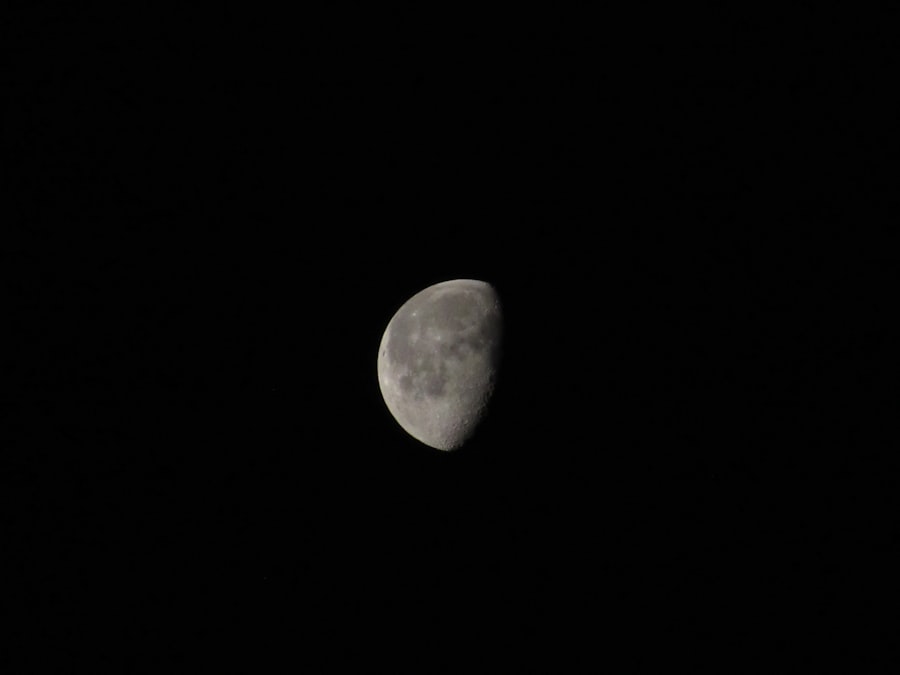
Neptune’s atmosphere is a tumultuous realm, characterized by swift winds, colossal storms, and enigmatic cloud features. Unlike the relatively stable bands of gas giants closer to the sun, Neptune’s deep blue hue is a testament to its atmospheric composition and the complex interplay of methane, hydrogen, and helium.
Tracking Storm Systems and Vortexes
The most prominent features of Neptune’s atmosphere are its colossal storm systems, such as the Great Dark Spot observed by the Voyager 2 spacecraft in 1989. While these features are transient, their appearance, dissipation, and movement provide crucial insights into the planet’s atmospheric dynamics.
- Citizen-Powered Anomaly Detection: Citizen scientists using the Cadence Ledger are regularly presented with image sequences of Neptune’s atmosphere. Their task often involves identifying new storm formations, tracking the trajectory of existing ones, and estimating their size and longevity. This painstaking work, often tedious for a single professional, becomes manageable when distributed across thousands of users.
- Modeling Atmospheric Circulation: By compiling data on storm movements over long periods, professional researchers can refine their models of Neptune’s global atmospheric circulation, understanding the energy transfer mechanisms and the forces driving these powerful weather systems. This is akin to observing countless leaves swirling in a vast, unseen current, eventually mapping the currents themselves.
Characterizing Cloud Features and Stratospheric Changes
Beyond the dramatic storms, Neptune’s atmosphere exhibits a delicate interplay of high-altitude clouds, hazes, and variations in stratospheric temperature. These subtle features offer clues about the planet’s internal heat engine and its interaction with solar radiation.
- Long-Term Monitoring: Professional observatories have limited time resources. The Cadence Ledger, however, operates continuously, allowing for long-term monitoring of minute changes in Neptune’s cloud patterns. Participants might be asked to identify subtle changes in brightness or morphology of specific cloud bands over weeks or months.
- Identifying Stratospheric Warmings: Recent observations have suggested unexpected stratospheric warmings on Neptune. Citizen scientists, by diligently analyzing thermal infrared images provided by the Cadence Ledger, can help pinpoint regions of unusual heating or cooling, providing critical data for understanding these anomalous phenomena. This is like detecting a flicker in a distant lamp that was thought to be steady, revealing an unseen perturbation.
The Ring System and Moons: Echoes of Formation
Neptune’s faint and fragmented ring system, along with its retinue of irregular moons, offers a fossil record of its formation and subsequent evolutionary history. These smaller bodies are not merely aesthetic adornments but dynamic components of the Neptunian system, constantly interacting through gravitational forces.
Monitoring Ring Dynamics and Arc Stability
Unlike the iconic, dense rings of Saturn, Neptune’s rings are characterized by distinct arcs – localized concentrations of material within continuous, yet faint, rings. The stability and evolution of these arcs are subjects of intense scientific interest.
- Identifying Ring Changes: Citizen scientists can scrutinize images of Neptune’s rings, looking for subtle changes in the brightness, shape, or position of the arcs. Are they dispersing, concentrating, or perhaps even forming new structures? Even minute variations over extended periods can be highly significant.
- Investigating Shepherd Moons: The presence of small “shepherd moons” is believed to be responsible for confining and maintaining the stability of ring arcs. By carefully tracking the positions of Neptune’s inner moons, citizen scientists can help verify and refine models of these gravitational interactions. This is akin to observing invisible hands guiding a string of pearls.
Discovering New Moons and Asteroids
Despite decades of observation, the outer Solar System is still a frontier for discovery. Neptune’s gravitational influence extends far beyond its visible sphere, potentially harboring undiscovered small moons and gravitationally captured asteroids.
- Low-Resolution Image Scrutiny: Some tasks involve sifting through vast quantities of low-resolution images, often taken at different times and angles. Citizen scientists, with their keen eyes and patience, are adept at identifying faint, moving specks that could turn out to be previously unknown objects.
- Orbital Parameter Estimation: Once a potential candidate is identified, follow-up observations are initiated. Citizen scientists might then be tasked with plotting multiple observations of the candidate object over time, providing initial estimates of its orbital parameters. This iterative process allows for the gradual refinement of a new celestial body’s characteristics.
Citizen science has gained significant traction in recent years, particularly in projects like the Neptune Cadence Ledger, which harnesses the power of public participation to enhance our understanding of celestial phenomena. For those interested in exploring the broader implications of citizen science and its impact on astronomical research, a related article can be found at this link. This resource delves into various initiatives that empower everyday individuals to contribute to scientific discoveries, showcasing the collaborative spirit that defines modern research.
The Future of Neptunian Exploration: A Collaborative Frontier
| Metric | Description | Value | Unit |
|---|---|---|---|
| Number of Participants | Total active citizen scientists contributing to Neptune Cadence Ledger | 1,250 | people |
| Data Entries Logged | Total number of observations or data points recorded | 48,500 | entries |
| Average Cadence | Average frequency of data submissions per participant | 3.2 | entries/week |
| Ledger Update Frequency | How often the Neptune Cadence Ledger is updated with new data | Daily | interval |
| Data Accuracy Rate | Percentage of data entries verified as accurate | 95 | % |
| Project Duration | Length of time the citizen science project has been active | 18 | months |
The Cadence Ledger and similar citizen science initiatives represent a paradigm shift in how scientific research is conducted. For Neptune, a world that remains largely a blank slate compared to its inner Solar System counterparts, this collaborative approach is particularly crucial.
Synergies with Professional Missions
Citizen science is not intended to replace professional astronomers or spacecraft missions; rather, it acts as a powerful complement. The data generated and analyzed by citizen scientists can directly inform and enhance professional endeavors.
- Targeting for Future Missions: Insights gained about Neptune’s atmospheric dynamics or the stability of its ring arcs could help future mission planners identify optimal targets for flybys or orbit insertions, maximizing scientific return.
- Pre-analysis and Data Curation: Ahead of major data releases from missions like the proposed Neptune Orbiter with Probes (NOP), citizen scientists can help “pre-analyze” archival data, identifying areas of interest and anomalies, effectively streamlining the professional research process. This is like preparing the ground and planting the seeds before the professional gardener arrives to tend the crops.
Expanding the Scope: Beyond Neptune
The success of the Cadence Ledger initiative could serve as a blueprint for similar projects focusing on other distant, poorly understood celestial bodies. The principles of distributed computing, human pattern recognition, and community engagement are universally applicable.
- Uranus and the Kuiper Belt: Uranus, Neptune’s often-overshadowed twin, presents similar challenges and opportunities for citizen science exploration. Beyond the known planets, the vast Kuiper Belt, home to countless icy bodies, beckons with its own array of mysteries.
- Exoplanet Transit Analysis: Though not directly related to Neptune, the methodology of identifying subtle patterns in light curves, a core task in exoplanet research, could be significantly advanced by citizen science projects modeled after the Cadence Ledger.
As we continue our journey of cosmic discovery, the role of the individual, armed with curiosity and computational access, will only grow. The Cadence Ledger stands as a testament to this evolving landscape of scientific endeavor, demonstrating that even a world as distant and enigmatic as Neptune is not beyond the reach of collective human intellect. The secrets of the ice giant are slowly being unveiled, not by a select few, but by a global community of dedicated citizen scientists, each playing their part in the grand orchestration of discovery. The era of democratic astronomy has truly dawned, casting a new light on the farthest reaches of our Solar System.
STOP: The Neptune Lie Ends Now
FAQs
What is the Citizen Science Neptune Cadence Ledger?
The Citizen Science Neptune Cadence Ledger is a project or platform that tracks and organizes observational data related to Neptune, contributed by citizen scientists. It helps coordinate and document the timing and frequency of Neptune observations.
Who can participate in the Citizen Science Neptune Cadence Ledger?
Anyone with an interest in astronomy and access to appropriate observational tools can participate. The project encourages amateur astronomers and citizen scientists to contribute their Neptune observation data.
What kind of data is recorded in the Neptune Cadence Ledger?
The ledger records observational details such as the date and time of observation, equipment used, observational conditions, and any notable findings or changes observed on Neptune.
How does the Neptune Cadence Ledger benefit scientific research?
By aggregating data from multiple observers over time, the ledger provides a comprehensive timeline of Neptune’s atmospheric and surface changes. This collective data supports professional astronomers in monitoring Neptune’s weather patterns and other phenomena.
Where can I access the Citizen Science Neptune Cadence Ledger?
The ledger is typically hosted on dedicated citizen science platforms or astronomy community websites. Interested participants can find it through astronomy forums, citizen science project directories, or by contacting organizations involved in planetary observation projects.