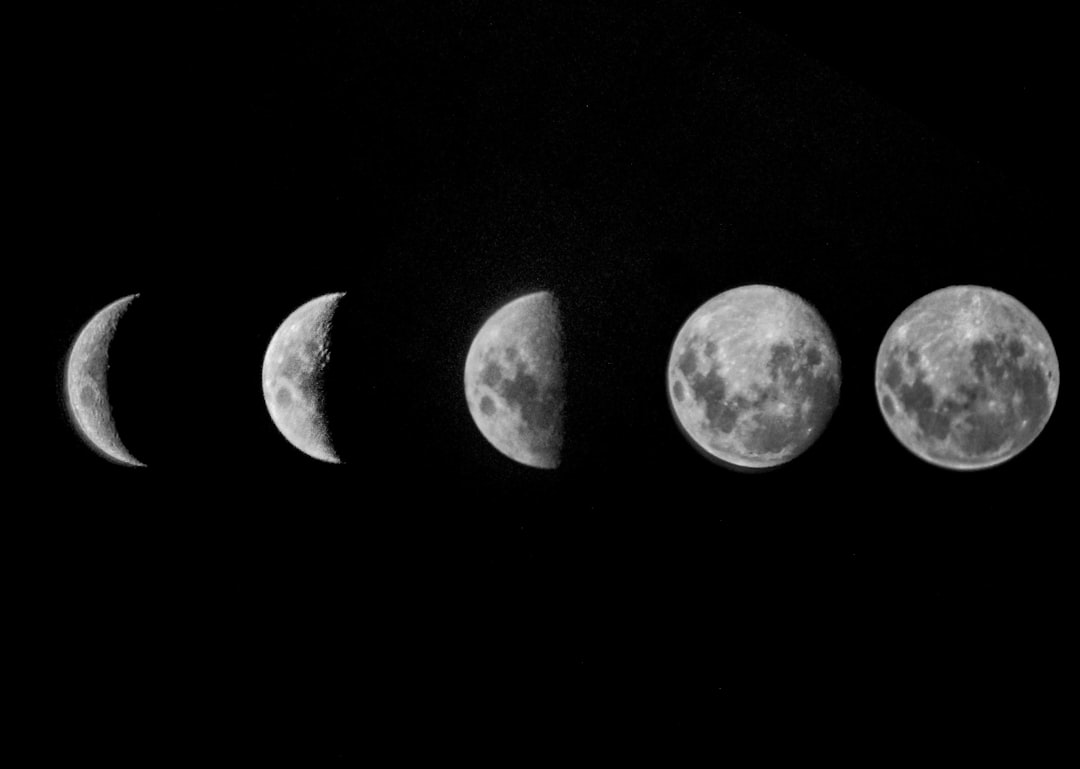
The Moon, Earth’s celestial companion, adorns our night sky with a captivating spectacle: its ever-changing phases. These cyclical transformations are not a whim of some cosmic artist, but rather a predictable dance dictated by the interplay of the Sun, Earth, and Moon. To truly understand these celestial ballets, one must delve into the fundamental geometry of our solar system and appreciate the subtle yet profound ways these three bodies interact. Observing the night sky without grasping the mechanics behind the lunar phases is akin to watching a magnificent play unfold without understanding the script; the beauty is apparent, but its deeper meaning remains elusive. This article aims to demystify these phases, providing a factual and accessible guide to understanding the luminous journey of our Moon.
The Moon itself does not produce light. It is a celestial mirror, reflecting the brilliant radiance of the Sun. The phases we observe are a direct consequence of how much of this sunlit portion of the Moon is visible from Earth at any given time. Imagine the Moon as a sphere bathed in light from one direction (the Sun). As the Moon orbits Earth, its position relative to the Sun and Earth shifts. From our vantage point on Earth, we are essentially looking at different angles of this illuminated sphere. This continuous movement creates the illusion of the Moon waxing and waning, growing and shrinking in its visible form. Think of it like holding a ball and walking around a lamp; the amount of the ball illuminated by the lamp that you can see changes with your perspective. The Moon’s orbit is not perfectly circular, but rather elliptical, which slightly affects the distance between the Earth and Moon, and consequently, the apparent size of the Moon in the sky. However, the primary driver of the phases is the geometric arrangement of the Sun, Earth, and Moon.
The Sun as the Source of Light
The Sun, a colossal star, is the engine powering the illumination of the Moon. Its light travels vast distances to reach our solar system, bathing planets and their moons in its glow. Understanding the Sun’s role is crucial because it is the constant source of illumination. Without the Sun’s consistent output of light, the Moon would be perpetually dark, and the concept of lunar phases would cease to exist. The Sun’s immense energy output is the ultimate reason the Moon is visible to us at all.
The Moon’s Orbit Around Earth
The Moon is not stationary; it embarks on a continuous journey around our planet, completing one orbit in approximately 27.3 days. This orbital motion is the engine behind the changing phases. As the Moon traverses its path, its position changes in relation to the Sun and Earth. This constant repositioning means that the angle from which we view the sunlit portion of the Moon is perpetually shifting.
Earth’s Perspective: The Viewer’s Standpoint
From our perspective on Earth, we are the observers. The phases are not inherent qualities of the Moon itself, but rather our interpretation of the illuminated portion as seen from our unique vantage point. The Earth’s rotation also plays a role in our daily experience of the Moon, but the overall phases are determined by the Moon’s orbital position relative to the Sun.
Understanding moon phases can greatly enhance our appreciation of the night sky and its influence on various natural phenomena. For those interested in exploring this topic further, a related article can be found at this link, which delves into the significance of lunar cycles in different cultures and their impact on agriculture and tides.
The Lunar Cycle: A Month of Transformation
The complete cycle of lunar phases, from one New Moon to the next, takes approximately 29.5 days. This period is known as a synodic month, and it is a fundamental unit of time. This cycle is not arbitrary; it is a precisely orchestrated sequence of illumination. Each phase has a specific name and characterizes a distinct segment of the Moon’s journey around Earth.
New Moon: The Invisible Beginning
The New Moon marks the beginning of the lunar cycle. During this phase, the Moon is positioned between the Earth and the Sun. The side of the Moon facing Earth is not illuminated by the Sun, making it appear invisible in the sky. It’s as if the Moon has momentarily slipped behind the curtain of sunlight. While we cannot see the Moon directly, it is still present in its orbit.
Waxing Crescent: A Sliver of Hope
Following the New Moon, the Moon begins to move away from the Sun in its orbit. A small sliver of the sunlit side becomes visible from Earth, appearing as a thin crescent. The term “waxing” refers to the increasing illumination. This phase is characterized by a delicate, curved sliver of light, often visible shortly after sunset. This sliver gradually grows larger each night.
First Quarter: A Half-Illuminated Landmark
Approximately one week after the New Moon, the Moon has completed about one-quarter of its orbit. At this point, half of the Moon’s disc appears illuminated from Earth. This is known as the First Quarter. It’s a visually striking phase, offering a clear display of the Moon’s curved edge against the darkness of space. The illuminated portion is precisely one-half of the visible disc.
Waxing Gibbous: Approaching Fullness
As the Moon continues its journey, more than half of its disc becomes illuminated. This phase, where the illuminated portion is greater than half but not yet completely full, is called the Waxing Gibbous. The word “gibbous” refers to a shape that is convex or bulging. During this time, the Moon appears to be swelling with light, growing ever closer to its peak illumination.
Full Moon: The Radiant Apex
The Full Moon occurs when the Earth is positioned between the Sun and the Moon. In this alignment, the entire disc of the Moon facing Earth is illuminated by the Sun. This is the most conspicuous phase, often casting a bright glow across the night sky. It represents the peak of the lunar cycle, a moment of complete radiance. The Full Moon is a familiar and often admired sight, a dependable beacon in the night.
Waning Gibbous: The Gradual Diminution
After the Full Moon, the illuminated portion of the Moon begins to decrease. This phase, where more than half of the disc is illuminated but decreasing, is known as the Waning Gibbous. The term “waning” signifies a reduction in light. The gibbous shape persists, but the illuminated area is now shrinking, signaling the next stage of the cycle.
Last Quarter: Another Half-Illuminated Perspective
About three weeks after the New Moon, the Moon reaches its Last Quarter. Similar to the First Quarter, half of the Moon’s disc appears illuminated, but on the opposite side. This marks another significant geometric moment in the lunar cycle, where the illuminated portion has diminished by half.
Waning Crescent: The Fading Glow
In the final stages of the lunar cycle, the illuminated portion continues to shrink, appearing as a dwindling crescent. This is the Waning Crescent. The light recedes each night until the Moon once again becomes invisible, preparing for the return of the New Moon. This phase is often visible in the early morning sky, a faint echo of its former glory.
Eclipses: Rare Alignments of Cosmic Significance

While lunar phases are a daily and nightly occurrence, eclipses represent rare and dramatic events when the Sun, Earth, and Moon align in a specific configuration. These celestial spectacles occur when one celestial body casts a shadow on another. They are not part of the regular phase cycle but are rather special alignments that break the routine.
Solar Eclipses: The Sun’s Dazzling Eclipse
A solar eclipse happens when the Moon passes directly between the Sun and Earth, casting its shadow on Earth. During a total solar eclipse, the Moon completely covers the Sun, briefly plunging the sky into darkness. This is a relatively rare event for any observer in a specific location, as the Moon’s shadow is quite small. The corona of the Sun, its outer atmosphere, becomes visible around the dark disc of the Moon.
Lunar Eclipses: Earth’s Shadow Play
A lunar eclipse occurs when the Earth passes directly between the Sun and the Moon, casting its shadow on the Moon. During a total lunar eclipse, the Moon can appear to turn a reddish or coppery color. This is because sunlight is refracted through Earth’s atmosphere, filtering out blue light and allowing red light to reach the Moon. Lunar eclipses are more broadly visible than solar eclipses because Earth’s shadow is much larger than the Moon’s.
Types of Eclipses: Partial, Annular, and Penumbral
Eclipses are not always total. A partial solar eclipse occurs when the Moon only partially obscures the Sun. An annular solar eclipse happens when the Moon is farther from Earth and appears smaller than the Sun, leaving a ring of sunlight visible around the Moon’s silhouette. Similarly, lunar eclipses can be partial, where only a portion of the Moon enters Earth’s dark umbra, or penumbral, where the Moon passes through the Earth’s fainter outer shadow, the penumbra, causing a subtle dimming.
The Moon’s Influence: More Than Just a Pretty Face

The Moon’s phases and its gravitational pull have significant effects on Earth, extending beyond the visual spectacle in our night sky. The most apparent influence is on our planet’s tides.
Tidal Forces: The Moon’s Gravitational Tug
The gravitational pull of the Moon is the primary driver of Earth’s tides. As the Moon orbits Earth, its gravity stretches the planet, most noticeably in the oceans. This pull creates bulges of water on the side of Earth facing the Moon and on the opposite side. As Earth rotates, different locations pass through these bulges, experiencing high tide. The Sun also exerts a gravitational influence on tides, but the Moon’s proximity makes its effect more pronounced.
Spring Tides and Neap Tides: The Combined Forces
When the Sun and Moon are aligned, their gravitational pulls combine, resulting in higher high tides and lower low tides. These are known as spring tides, and they occur during New Moons and Full Moons. When the Sun and Moon are at right angles to each other relative to Earth, their gravitational forces partially cancel each other out, leading to less extreme tidal ranges. These are called neap tides and occur during the First and Last Quarter Moon phases.
Biological Rhythms: Subtle Connections
Some scientific research suggests that the lunar cycle may have subtle influences on the biological rhythms of certain organisms. While not as dramatic as tidal forces, these connections highlight the intricate relationship between Earth and its celestial companion. These influences are often subtle and complex, subject to ongoing scientific investigation.
Understanding the various phases of the Moon can enhance our appreciation of its beauty and influence on Earth. For those interested in exploring this topic further, a related article can be found at XFile Findings, which delves into the scientific significance of lunar cycles and their effects on tides and wildlife behavior. By learning more about these celestial changes, we can gain a deeper insight into the natural world around us.
Understanding the Cosmos: The Moon as a Celestial Clock
| Moon Phase | Description | Illumination (%) | Duration (Days) | Visibility |
|---|---|---|---|---|
| New Moon | The Moon is between Earth and the Sun; not visible from Earth. | 0% | 1 | Not visible |
| Waxing Crescent | Moon starts to show a sliver of light on the right side. | 1% – 49% | 6.4 | Visible in the western sky after sunset |
| First Quarter | Half of the Moon is illuminated on the right side. | 50% | 1 | Visible in the afternoon and early evening |
| Waxing Gibbous | More than half illuminated, growing toward full moon. | 51% – 99% | 6.4 | Visible in the evening and early night |
| Full Moon | Entire face of the Moon is illuminated. | 100% | 1 | Visible all night |
| Waning Gibbous | Illumination decreases after full moon. | 99% – 51% | 6.4 | Visible late night to morning |
| Last Quarter | Half of the Moon is illuminated on the left side. | 50% | 1 | Visible late night to morning |
| Waning Crescent | Sliver of light decreases on the left side before new moon. | 49% – 1% | 6.4 | Visible before sunrise in the eastern sky |
The predictable nature of lunar phases makes the Moon an ancient and invaluable celestial clock. Throughout history, civilizations have used the Moon’s cycles to mark time, develop calendars, and understand agricultural seasons. The Moon’s journey is a constant, reliable rhythm in the vast expanse of the cosmos.
Ancient Calendars: Tracking Time by the Moon
Many ancient cultures developed lunar calendars, meticulously charting the phases to organize their lives. These calendars were essential for agriculture, religious observances, and social structures. The moon was a dependable navigator in the darkness of the night, providing a framework for human activity.
Modern Astronomy: A Foundation for Understanding
Even in our technologically advanced age, the study of lunar phases remains fundamental to understanding orbital mechanics and astronomical principles. The Moon serves as a readily observable model for celestial motion, a stepping stone for comprehending more complex astronomical phenomena. Its familiar cycle provides a tangible starting point for exploring the vastness of the universe. By mastering the simple dance of the Moon’s phases, we unlock a deeper appreciation for the profound and intricate workings of our solar system and the universe beyond.
FAQs
What causes the different phases of the Moon?
The phases of the Moon are caused by the changing angles of sunlight hitting the Moon as it orbits the Earth. As the Moon moves around Earth, we see varying portions of its illuminated half, resulting in different phases.
How many primary phases does the Moon have?
The Moon has eight primary phases: New Moon, Waxing Crescent, First Quarter, Waxing Gibbous, Full Moon, Waning Gibbous, Last Quarter, and Waning Crescent.
How long does it take for the Moon to complete one full cycle of phases?
It takes approximately 29.5 days for the Moon to complete one full cycle of phases, known as a lunar month or synodic month.
Why does the Moon sometimes appear larger or smaller during its phases?
The apparent size of the Moon can vary due to its elliptical orbit around Earth. When the Moon is closer to Earth (perigee), it appears larger, and when it is farther away (apogee), it appears smaller. This effect is independent of the Moon’s phases.
Can the Moon phases affect tides on Earth?
Yes, the Moon phases influence tides. During the New Moon and Full Moon phases, the Sun, Earth, and Moon are aligned, causing higher high tides called spring tides. During the First and Last Quarter phases, the tides are lower and called neap tides.