
The whispers of the moon, once confined to poets and dreamers, began to echo in the hushed corridors of military strategy long before the thunderous roar of rockets became a familiar sound. While the Apollo program is etched into collective memory as humanity’s triumphant stride towards the lunar surface, a less-heralded, yet profoundly significant, chapter in this celestial ambition lies in the early, often overlooked, planning within the United States Army. These were not fanciful notions for science fiction novels, but meticulously conceived, albeit nascent, blueprints for a permanent human presence beyond Earth’s atmosphere, a lunar foothold that predated Apollo’s dramatic race against time.
The seeds of a lunar base were sown not out of a desire for national prestige in the face of a Cold War rival, but from a more fundamental assessment of future strategic landscapes. The post-World War II era, with its burgeoning technological capabilities and the dawn of the space age, fostered a unique environment where even the most ambitious ideas could be contemplated. For the Army, this contemplation was rooted in the evolving nature of warfare and the potential for extraterrestrial advantage.
The “What If” Scenario: Cold War Tensions and Space
The Cold War provided a potent backdrop against which military planners evaluated every conceivable frontier. While the Soviet Union’s early successes in space, particularly Sputnik, certainly spurred American efforts, the Army’s interest in a lunar base predated the most intense phases of the space race. Their thinking was less about beating the Soviets to the moon for a symbolic victory, and more about establishing a strategic presence that could offer long-term benefits, regardless of who got there first.
Early Conceptualizations and Feasibility Studies
Even in the late 1940s and early 1950s, the Army’s Corps of Engineers and various research divisions were engaging in speculative studies. These were not yet detailed engineering schematics but rather high-level explorations of the fundamental challenges and potential advantages of establishing a base on the Moon. The focus was on understanding the engineering, logistical, and survival requirements for humans in an alien environment.
The “Space as a New Domain” Paradigm
Military strategists began to recognize space not just as a pathway for missiles, but as a new domain in itself. This paradigm shift meant considering how a celestial outpost could serve various military functions, from reconnaissance and early warning to potential launch points for future endeavors. The Moon, being the closest celestial body, naturally became the most logical initial target for such ambitious thinking.
In the early 1960s, the U.S. Army explored the ambitious idea of establishing a moon base, a concept that predated the Apollo program and aimed to enhance military capabilities in space. This initiative was part of a broader vision for space exploration and defense, reflecting the strategic importance of lunar territory during the Cold War. For more insights into this fascinating topic, you can read a related article at this link.
Project Horizon: The Unveiling of a Lunar Blueprint
The most concrete and comprehensive articulation of the Army’s lunar ambitions materialized in “Project Horizon.” This ambitious study, initiated in 1957, was a detailed examination of the feasibility and requirements for establishing a military base on the Moon. It was a project born out of a genuine belief that a lunar presence was not only possible but also strategically imperative.
The Scope and Objectives of Project Horizon
Project Horizon was not a mere thought experiment. It was a serious, multi-volume report that delved into every facet of establishing and sustaining a lunar outpost. The objectives were far-reaching, encompassing scientific research, psychological studies of isolation, and crucially, the potential military applications of such a base. The project aimed to determine the precise resources, technology, and personnel needed to achieve this monumental undertaking.
Scientific and Exploration Mandates
While often framed through a military lens, Project Horizon also recognized the immense scientific potential of a lunar base. The Moon offered unparalleled opportunities for astronomical observation, geological research, and the study of the universe free from Earth’s atmospheric interference. The study acknowledged that a permanent presence would unlock new frontiers of scientific discovery.
Strategic and Defensive Considerations
The military objectives of Project Horizon were varied. These included the establishment of a surveillance and early warning system, the potential for lunar-based weapons platforms (though this was a more speculative and controversial aspect), and the establishment of a staging area for future space exploration and operations. The idea was to secure a strategic advantage in the burgeoning space arena.
The Technical Hurdles: A Glimpse into the Future
Project Horizon didn’t shy away from the immense technical challenges. The study meticulously outlined the requirements for lunar habitats, power generation, life support systems, transportation, and construction. It was a testament to the foresight of the engineers and scientists involved that many of these concepts, though primitive by today’s standards, laid the groundwork for technologies that would later be realized.
Lunar Habitation and Infrastructure
The concept of self-sustaining habitats on the Moon was central to Project Horizon. The study envisioned modular structures that could be assembled on the lunar surface, providing protection from radiation and the harsh vacuum of space. It also considered the need for internal environments that could support human life, including air, water, and temperature regulation.
Power Generation and Resource Utilization
Reliable power was a critical concern. Project Horizon explored various options, including solar power and potentially even small-scale nuclear reactors. Furthermore, the study began to consider the concept of In-Situ Resource Utilization (ISRU), the idea of using lunar materials for construction and to produce essential resources like water and oxygen, a concept that remains a cornerstone of modern lunar base planning.
Beyond Apollo: The Unseen Foundation

The Apollo program, with its singular focus on landing humans on the Moon and returning them safely to Earth, often overshadows the earlier, more foundational work. However, the studies and conceptualizations undertaken by the Army, particularly Project Horizon, provided a crucial intellectual and technical bedrock upon which later space efforts could be built.
The Legacy of Army Research in Space Technology
While the public narrative of space exploration is dominated by NASA, the contributions of other branches of the military, including the Army, are undeniable. The early research and development undertaken by the Army in areas like rocketry, materials science, and guidance systems indirectly fed into the broader technological ecosystem that made Apollo possible.
Material Science and Engineering Innovations
The demands of operating in space, even in the conceptual stages, spurred innovation in material science. The Army’s research into lightweight, durable materials capable of withstanding extreme temperatures and radiation had a ripple effect, benefiting future aerospace endeavors.
Advancements in Communication and Navigation
Establishing a base on the Moon, and even just reaching it, required significant advancements in communication and navigation. Army research in these areas, driven by military needs, contributed to the development of technologies that would be essential for lunar missions.
A Different Strategic Imperative
It is crucial to understand that the Army’s moon base plans were driven by a different set of priorities than Apollo’s. Apollo was largely a civilian-led scientific and exploratory mission, fueled by national pride and a desire to demonstrate technological superiority. The Army’s vision, conversely, was rooted in long-term strategic advantage, resource acquisition, and the potential for a sustained military presence in space.
The Long-Term Vision vs. the “Race”
Project Horizon’s objective was not a sprint to the finish line but a marathon of sustained presence. It envisioned a base that would be operational for years, if not decades, facilitating ongoing research, exploration, and strategic positioning. This differed from Apollo’s more focused, time-bound objectives.
The Question of “Who Owns the Moon?”
The Army’s early planning also touched upon the nascent international legal frameworks surrounding space. While the Outer Space Treaty would later establish that space is the province of all humankind, the Army’s discussions implicitly considered the implications of establishing a sovereign, or at least a militarily significant, presence on another celestial body.
The Shift in Focus: From Military to Civilian Space Exploration

The eventual establishment of NASA in 1958 and its subsequent ascendancy as the primary agency for space exploration marked a significant shift in the trajectory of American space ambitions. While military interest in space certainly continued, the overt focus moved from military bases to scientific exploration and the civilian endeavor of reaching the Moon.
The Birth of NASA and the Civilian Mandate
The creation of NASA consolidated various governmental space research and development efforts under a single civilian agency. This allowed for a more unified and publicly palatable approach to space exploration, emphasizing scientific discovery and international cooperation rather than overt military objectives.
The Public Perception of Space
The public imagination was captivated by the romance and scientific wonder of space exploration. NASA’s mission resonated more strongly with this sentiment, portraying space as a frontier of human achievement and knowledge rather than a potential theater of conflict.
The Intertwined Nature of Early Space Efforts
It is important to recognize that the lines between military and civilian space programs were not always as sharply defined in the early days. Many technologies and personnel transitioned between organizations, and the underlying scientific and engineering challenges were shared. The Army’s early efforts undoubtedly contributed to the broader knowledge base that NASA could draw upon.
Shared Technological Inheritance
The advancements in rocketry, life support, and guidance systems that the Army pursued for its lunar base concepts found their way into the development of the Saturn V rocket and the Apollo spacecraft. The foundational research was often a shared resource.
The Evolution of Strategic Thinking
While NASA took the lead in lunar exploration, the strategic implications of a lunar presence never entirely disappeared from military considerations. The idea of satellite reconnaissance and potential future space-based assets continued to be explored, albeit with different approaches and timelines.
In the early days of space exploration, the U.S. Army had ambitious plans for a moon base that predated the Apollo missions, reflecting the military’s interest in establishing a foothold on the lunar surface. This initiative was part of a broader strategy to extend American influence in space and was driven by the desire to conduct scientific research as well as potential military applications. For more insights into these fascinating developments, you can read a related article on this topic at XFile Findings, which delves into the historical context and implications of the Army’s lunar ambitions.
The Enduring Significance of Pre-Apollo Lunar Ambitions
| Year | Planned Activity |
|---|---|
| 1959 | Army proposed a manned lunar base as part of Project Horizon |
| 1960 | Project Horizon was not approved by the US government |
The Army’s moon base plans, though largely eclipsed by the dramatic success of the Apollo program, represent a crucial and often overlooked chapter in humanity’s journey towards the stars. They demonstrate that the dream of lunar habitation was not solely a product of the space race, but a vision that emerged from a complex interplay of scientific curiosity, strategic foresight, and technological ambition.
A testament to Early Ingenuity and Vision
These early plans, conceived with limited computational power and a nascent understanding of space environments, stand as a testament to the ingenuity and visionary thinking of the engineers and scientists who dared to imagine a future beyond Earth. They grappled with challenges that would later be addressed by the Apollo program and continue to be relevant in contemporary discussions about lunar settlement.
The Roots of Lunar Habitation Concepts
The fundamental concepts of lunar habitat design, resource utilization, and life support systems explored in projects like Horizon laid the groundwork for future research and development. Many of the challenges identified by the Army remain central to current efforts to establish sustainable lunar bases.
The Shifting Landscape of Space Exploration
The story of the Army’s moon base plans serves as a reminder that the path to space exploration is rarely linear. It is shaped by evolving geopolitical landscapes, changing national priorities, and the relentless march of technological progress. The shift from military ambitions to civilian exploration did not diminish the significance of the underlying human drive to reach and inhabit other worlds.
Re-evaluating the Narrative of Lunar Exploration
Understanding the Army’s pre-Apollo lunar plans encourages a more nuanced and comprehensive understanding of the history of space exploration. It highlights the multifaceted nature of early space efforts and the contributions of various governmental and scientific bodies. It moves beyond the singular narrative of Apollo to reveal a richer tapestry of ambition and innovation.
The Importance of Unsung Contributors
The individuals and projects that were instrumental in shaping these early lunar visions deserve recognition. Their work, though perhaps less publicly celebrated than the astronauts of Apollo, provided the crucial intellectual and technical foundations for humanity’s subsequent steps into the cosmos.
A Forward-Looking Perspective
By examining these early military plans, we gain a deeper appreciation for the enduring human aspiration to establish a presence beyond Earth. The challenges and considerations raised by Project Horizon and similar initiatives continue to inform contemporary discussions about space colonization, resource utilization, and the long-term future of humanity in the solar system. The whispers of the moon, first heard in military planning rooms, continue to inspire us today.
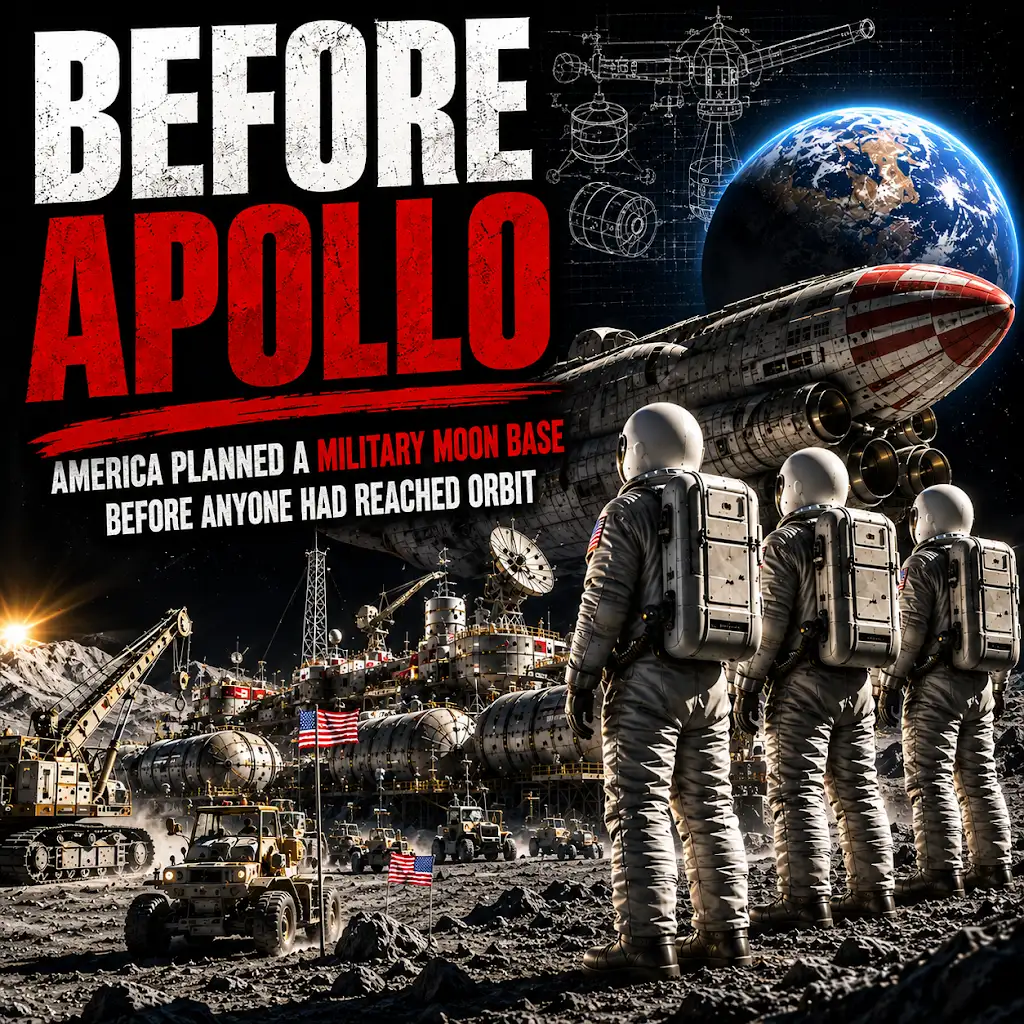
America Planned a Military Moon Base Before Anyone Had Reached Orbit
FAQs
What was the Army’s plan for a moon base before the Apollo missions?
The Army had plans to establish a manned military outpost on the moon as early as 1959, before the Apollo program began.
Why did the Army have plans for a moon base?
The Army’s interest in a moon base was driven by the Cold War competition with the Soviet Union, and the desire to establish a military presence in space.
Did the Army’s moon base plan come to fruition?
No, the Army’s plan for a moon base did not come to fruition. Instead, the United States focused on the Apollo program, which was led by NASA and resulted in the first manned moon landing in 1969.
What role did the Apollo program play in the United States’ space exploration efforts?
The Apollo program was a key part of the United States’ efforts to explore space and demonstrate technological and scientific prowess during the Cold War.
How did the Army’s moon base plan influence future space exploration efforts?
While the Army’s moon base plan did not materialize, it demonstrated the military’s interest in space exploration and contributed to the broader national conversation about the potential for human presence beyond Earth.