For centuries, the celestial dance of the aurora borealis and australis has primarily been associated with the Earth’s polar regions. Yet, a captivating and increasingly observed phenomenon involves its appearance at much lower latitudes, defying traditional expectations. These “low-latitude auroral spectaculars” are not merely faint glows in the distance but can manifest as vivid displays, visible to millions who reside far from the Arctic and Antarctic circles. This article delves into the science behind these unexpected occurrences, their historical record, and the factors contributing to their visibility.
The Earth’s magnetic field acts as a protective shield, deflecting the majority of charged particles from the solar wind. However, this field is not uniformly strong across the globe. Certain regions exhibit a weaker magnetic intensity, creating conditions conducive to auroral displays even at lower latitudes. These areas, often referred to as magnetic anomalies, play a crucial role in the propagation of auroral light.
South Atlantic Anomaly: A Gateway for Particles
The South Atlantic Anomaly (SAA) is a prime example of such a region. Located over the southern Atlantic Ocean and extending into parts of South America and Africa, the SAA is characterized by a significant depression in the Earth’s inner Van Allen radiation belt. This weaker magnetic field allows solar particles to dip closer to the Earth’s surface than in other areas, increasing the likelihood of interaction with atmospheric gases. Consequently, parts of Brazil, Argentina, and South Africa are more susceptible to low-latitude aurora when solar activity is high. The SAA behaves somewhat like a thinning in the Earth’s magnetic armor, making it more penetrable.
Other Weaker Field Regions: Secondary Contributors
While the SAA is the most prominent low-latitude anomaly, other regions with localized weaker magnetic fields can also contribute to auroral visibility. These smaller, less pronounced anomalies may not produce the same frequency or intensity of displays as the SAA, but they represent areas where the magnetic field offers less resistance to incoming solar particles. It is vital to understand that these anomalies do not cause aurora, but rather create conditions where existing geomagnetic substorms or storms can manifest auroral light at lower geographical positions.
Auroral sightings, typically associated with high-latitude regions, have become increasingly documented at low latitudes due to various solar activities. A fascinating article that explores this phenomenon in detail can be found at X File Findings, where researchers discuss the conditions that lead to these rare occurrences and share stunning visuals captured during recent events. This shift in auroral visibility not only captivates skywatchers but also raises questions about changes in Earth’s magnetic field and solar wind interactions.
Geomagnetic Storms: The Catalyst for Low-Latitude Aurora
The primary driver behind any auroral display, including those at low latitudes, is a significant disturbance in the Earth’s magnetosphere, typically caused by powerful solar events. These events release immense amounts of energy and charged particles that interact with the Earth’s magnetic field.
Coronal Mass Ejections (CMEs): The Grand Orchestrator
Coronal Mass Ejections (CMEs) are colossal eruptions of plasma and magnetic field from the Sun’s corona. When a CME is directed towards Earth, it can travel at speeds of several hundred to over a thousand kilometers per second. Upon impact, the CME’s magnetic field interacts with the Earth’s magnetosphere, causing a compression on the sunward side and a stretching on the nightside. This interaction can trigger a geomagnetic storm, a transient disturbance of the Earth’s magnetosphere. It is during the most intense phases of these storms that the auroral ovals, normally confined to polar regions, expand significantly towards the equator, bringing the aurora into view for lower latitude observers. Consider a CME as a powerful surge that overloads the Earth’s magnetic circuit.
High-Speed Solar Wind Streams (HSSs): Sustained Disturbances
While CMEs are often associated with intense, short-lived geomagnetic storms, high-speed solar wind streams (HSSs) emanating from coronal holes can also induce auroral activity. Coronal holes are regions in the solar corona where the solar wind flows outward at particularly high speeds due to open magnetic field lines. When these HSSs interact with the Earth’s magnetosphere, they can create recurrent, moderate geomagnetic activity that, over extended periods, can lead to auroral displays at lower latitudes. HSSs provide a more consistent, albeit less dramatic, push on the magnetosphere compared to the sudden impact of a CME.
Interplanetary Magnetic Field (IMF) Orientation: A Key Determinant
The orientation of the Interplanetary Magnetic Field (IMF), the continuation of the Sun’s magnetic field carried by the solar wind, plays a critical role in determining the intensity and location of auroral activity. When the IMF is oriented southward, meaning it is anti-parallel to the Earth’s northward-pointing magnetic field, the two fields can reconnect more efficiently. This magnetic reconnection allows solar wind energy and particles to more readily enter the magnetosphere, significantly enhancing the likelihood and strength of a geomagnetic storm, and consequently, the expansion of the auroral oval. A southward IMF acts as an open gate for the solar wind’s most potent influences.
Observing Low-Latitude Aurora: Challenges and Characteristics
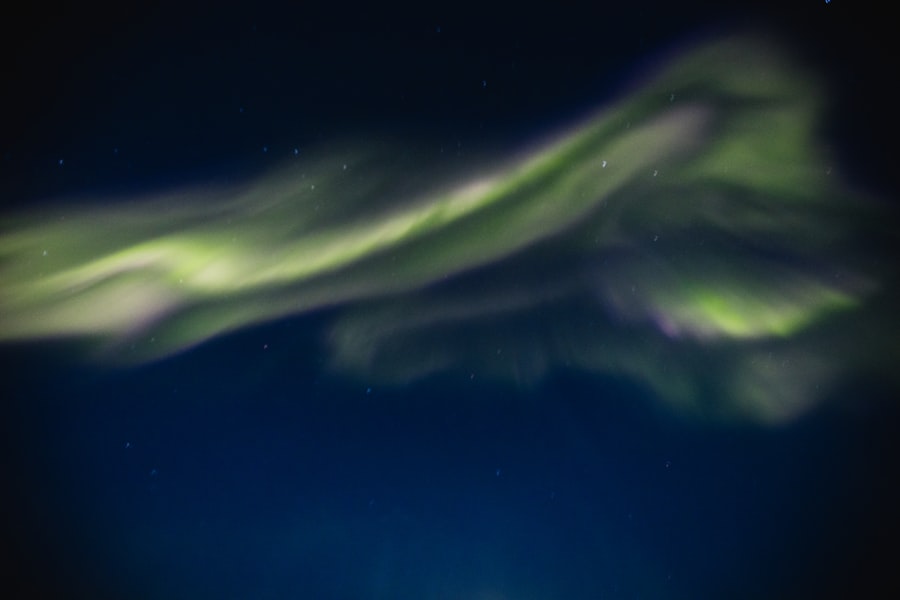
Observing low-latitude aurora presents a distinct set of challenges compared to their polar counterparts. The characteristics of these displays also differ, reflecting the unique conditions under which they occur.
Horizon-Gazing: The Perceptual Shift
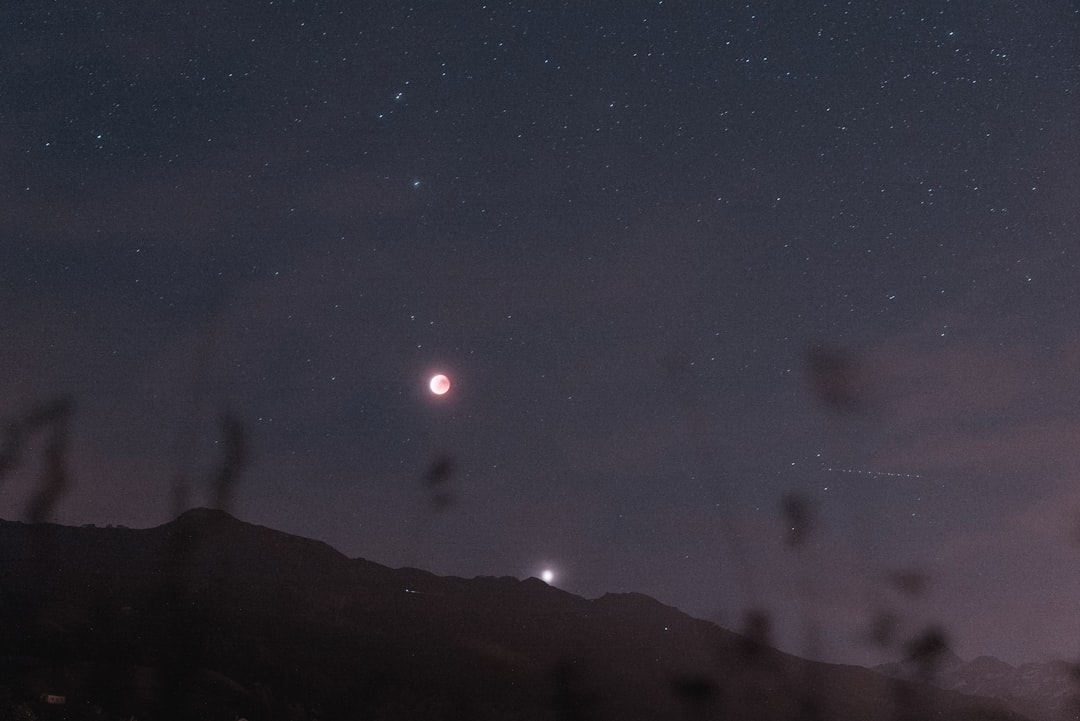
Unlike the often overhead, dynamic displays seen in polar regions, low-latitude aurora are typically observed low on the horizon, primarily towards the north for northern hemisphere observers and towards the south for southern hemisphere observers. This means that light pollution, even from distant cities, can significantly impede visibility. The aurora often appears as a diffuse, red glow, sometimes accompanied by fainter green or purple hues, struggling to overcome the atmospheric scattering and light interference. Imagine trying to see a faint candle flame from a great distance in a dimly lit room; the light is present, but masked by other factors.
Predominance of Red Hues: Atmospheric Interaction
The characteristic red color of low-latitude aurora is a direct consequence of the interaction between energetic particles and atmospheric oxygen atoms at higher altitudes (typically above 200 km). At these altitudes, the density of oxygen is lower, leading to longer excited states before emission, which primarily results in red light at a wavelength of 630 nm. Green light, produced by oxygen at lower altitudes (around 100-200 km), is less common in low-latitude displays because the energetic particles typically penetrate less deeply into the atmosphere in these regions due to the less directly aligned magnetic field lines. Nitrogen emissions, producing purple and blue light, are even rarer for similar reasons.
Optimal Viewing Conditions: Beyond Solar Activity
While solar activity is the ultimate trigger, several terrestrial factors dictate whether a low-latitude aurora will be visible. A clear, dark sky free from light pollution is paramount. Observers must seek locations far from urban centers and away from artificial light sources. A low horizon, unobstructed by mountains or tall buildings, is also crucial for maximizing the chance of seeing the aurora. Furthermore, understanding the estimated Kp index, a measure of geomagnetic activity, and remaining alert to space weather forecasts from agencies like NOAA’s Space Weather Prediction Center, significantly improves the chances of successful observation. It is a confluence of celestial power and terrestrial tranquility that allows these distant lights to be seen effectively.
Historical Accounts and Recent Resurgence
The phenomenon of low-latitude aurora is not a recent discovery; historical records attest to its observation across centuries, often sparking wonder and sometimes fear in those who witnessed these unusual sky phenomena.
Ancient Chronicles: Interpreting the Unexplained
Throughout history, low-latitude auroras have been meticulously recorded by civilizations worldwide. Ancient Chinese, Japanese, and Korean chronicles contain numerous descriptions of “red dragons,” “celestial fire,” or “heavenly lights” appearing in the night sky. These descriptions, while often imbued with mythological or astrological interpretations, bear striking similarities to modern observations of low-latitude auroras, particularly their reddish hue. European chroniclers also documented similar occurrences, often associating them with omens or divine interventions. These early records, though not scientifically detailed, provide invaluable context, demonstrating that powerful geomagnetic storms have always had the capacity to extend auroral visibility far beyond the typical polar regions. These were records from a time when the sky was a canvas for divine messages, and these red glows were interpreted with solemn weight.
The Carrington Event (1859): A Benchmark for Intensity
The Carrington Event of 1859 stands as a pivotal moment in the understanding of intense geomagnetic storms and their potential for widespread auroral displays. This solar superstorm was so powerful that auroras were reported as far south as the Caribbean and Hawaii, and as far north as Colombia. Telegraph systems across North America and Europe failed, with some operators experiencing electric shocks and telegraph papers catching fire due to induced currents. The Carrington Event serves as a stark reminder of the immense power of solar eruptions and the extent to which they can expand the auroral oval, making the aurora visible across virtually the entire Earth. It was an event that painted the skies with light and simultaneously disrupted the nascent technological advancements of the era.
Recent Notable Events: A Modern Perspective
In recent decades, several significant geomagnetic storms have once again brought low-latitude aurora into public view, rekindling interest and providing contemporary data for scientific study. The “Halloween Storms” of 2003, for instance, produced auroras visible as far south as Florida and Texas, showcasing the impact of powerful CMEs during an active solar cycle. More recently, events in 2023 and 2024 have led to numerous reports of aurora visible from countries like France, Italy, and various states in the contiguous United States, prompting a surge in public awareness and amateur astrophotography. These contemporary events, documented with high-resolution cameras and relayed through global communication networks, offer unprecedented detail and contribute significantly to our understanding of the dynamics of low-latitude auroral phenomena. Each new sighting adds another piece to the complex puzzle of space weather’s reach.
Auroral sightings, typically associated with polar regions, have recently been reported at low latitudes, captivating both scientists and enthusiasts alike. This phenomenon can be attributed to increased solar activity, which allows the mesmerizing lights to be visible in areas where they were once considered rare. For those interested in learning more about this intriguing topic, you can explore a related article that delves into the science behind these low-latitude auroras and their implications. Check it out here to gain deeper insights into this fascinating natural spectacle.
Scientific Investigation and Future Predictions
| Date | Location | Latitude | Time of Sighting (UTC) | Duration (minutes) | Intensity (Kp Index) | Notes |
|---|---|---|---|---|---|---|
| 2023-10-14 | Miami, USA | 25.8° N | 02:30 – 03:15 | 45 | 7 | Bright green aurora visible to naked eye |
| 2022-11-03 | Mexico City, Mexico | 19.4° N | 21:00 – 21:40 | 40 | 6 | Red and purple hues observed |
| 2021-12-15 | Havana, Cuba | 23.1° N | 00:15 – 00:50 | 35 | 7 | Faint auroral arcs near horizon |
| 2020-09-08 | Honolulu, Hawaii | 21.3° N | 03:00 – 03:30 | 30 | 5 | Unusual auroral glow detected |
| 2019-03-17 | San Juan, Puerto Rico | 18.5° N | 22:45 – 23:20 | 35 | 6 | Greenish aurora with intermittent flickering |
The study of low-latitude aurora is a burgeoning field, leveraging advanced satellite technology and ground-based observatories to refine our understanding of magnetospheric dynamics and solar-terrestrial interactions.
Satellite Monitoring: Unveiling the Particle Flux
Satellites equipped with particle detectors and magnetometers play a crucial role in monitoring the solar wind, the Interplanetary Magnetic Field, and the Earth’s magnetosphere. Missions such as NASA’s ACE (Advanced Composition Explorer) and DSCOVR (Deep Space Climate Observatory) provide real-time data on conditions upstream of Earth, allowing scientists to forecast geomagnetic storms and their potential for auroral displays. These space-based observatories act as the Earth’s early warning system, providing critical data points that allow researchers to track the behavior of charged particles as they approach and interact with our planet’s magnetic field. This allows for a deeper understanding of how these particles precipitate into the atmosphere at various latitudes.
Ground-Based Networks: Complementary Observations
Complementing satellite data are extensive ground-based networks of magnetometers, all-sky cameras, and spectrographs. These instruments provide detailed, localized observations of auroral emissions and disturbances in the Earth’s magnetic field. Magnetometers, for example, measure changes in the local magnetic field strength, which can be correlated with the arrival of geomagnetic storms. All-sky cameras capture wide-field images of the aurora, documenting its morphology, color, and movement. Spectrographs analyze the light emitted by the aurora, revealing the types of atoms and molecules being excited and the altitudes at which these interactions occur. Together, these ground-based tools provide a crucial “eye on the sky” that contextualizes the broad-scale satellite data with granular, terrestrial observations.
Predicting Future Events: Enhancing Preparedness
The ability to accurately predict low-latitude auroras is not merely an academic exercise; it has practical implications. Strong geomagnetic storms, while causing beautiful auroral displays, can also disrupt power grids, satellite communications, and GPS systems. By improving our understanding of the conditions that lead to these events, scientists can develop more accurate forecasting models. This allows for better mitigation strategies, such as safeguarding critical infrastructure and providing timely warnings to operators of susceptible technologies. As humanity becomes increasingly reliant on space-based assets and sensitive electrical grids, the precision of space weather forecasting, particularly for extreme events that cause low-latitude aurora, becomes a vital component of technological resilience and societal preparedness. The goal is to move from simply observing to proactively preparing for the celestial influences that can reach our everyday lives.
FAQs
What causes auroral sightings at low latitudes?
Auroral sightings at low latitudes are typically caused by strong geomagnetic storms resulting from solar activity, such as solar flares or coronal mass ejections. These events increase the flow of charged particles toward Earth’s magnetic poles, sometimes pushing the auroral oval further toward the equator.
How rare are auroral sightings at low latitudes?
Auroral sightings at low latitudes are relatively rare because the Earth’s magnetic field usually confines auroras to higher latitudes near the poles. However, during intense geomagnetic storms, auroras can be visible much closer to the equator than usual.
What colors are commonly seen in low-latitude auroras?
Low-latitude auroras often display green and red colors. Green is the most common and is caused by oxygen atoms at lower altitudes, while red auroras occur at higher altitudes. Occasionally, other colors like pink or purple may appear due to nitrogen emissions.
Can auroral sightings at low latitudes affect technology?
Yes, intense geomagnetic storms that cause low-latitude auroras can disrupt satellite communications, GPS signals, and power grids. These disturbances occur because charged particles interact with Earth’s magnetic field and atmosphere, potentially inducing electrical currents in infrastructure.
When is the best time to observe auroras at low latitudes?
The best time to observe auroras at low latitudes is during periods of high solar activity, especially around the peak of the 11-year solar cycle. Clear, dark skies away from city lights and during geomagnetic storms increase the chances of seeing auroras closer to the equator.