
Borisov, a name now etched in the annals of celestial exploration, represents a landmark discovery in our understanding of the cosmos. This interstellar comet, officially designated 2I/Borisov, is not just another fleeting visitor from the void; it is a veritable time capsule, offering an unprecedented glimpse into the primordial soup of another star system. Its journey across our solar system has captivated astronomers and ignited the public’s imagination, providing a unique opportunity to study material that has never before been exposed to the Sun’s intense radiation or the chemical processes of our own planetary neighborhood. This article delves into the remarkable nature of Borisov, exploring its origins, composition, trajectory, and the profound scientific implications of its passage.
The discovery of 2I/Borisov was, in itself, a testament to the increasing sophistication of our observational capabilities and the serendipitous nature of astronomical research. Unlike comets originating from within our solar system, Borisov’s trajectory was a clear indicator of its extragalactic origins.
A Chance Encounter: Sergei Borisov’s Keen Eye
The comet’s namesake, amateur astronomer Sergei Borisov, made the initial sighting on August 30, 2019, from his observatory in Nauchnyy, Crimea. His persistent observations, often conducted in his own time and with personal equipment, highlight the invaluable contributions that citizen scientists make to the field of astronomy. Borisov’s discovery, initially flagged as a potential asteroid, quickly revealed its cometary nature through subsequent follow-up observations.
The Tell-Tale Tail: Confirming Interstellar Identity
The presence of a visible coma and tail, hallmarks of cometary activity driven by the sublimation of ices as they approach a star, was crucial in distinguishing Borisov from an ordinary asteroid. However, it was the comet’s peculiar trajectory that truly set it apart. Initial calculations revealed an orbit that was highly hyperbolic, indicating that it was not gravitationally bound to our Sun and was therefore an object from interstellar space. This definitive characteristic led to its classification as the second confirmed interstellar object to pass through our solar system, following the enigmatic ‘Oumuamua.
Global Collaboration: Rapid Confirmation and Tracking
The news of Borisov’s potential interstellar status sent ripples through the astronomical community. Observatories worldwide rapidly turned their powerful telescopes towards the newly discovered object. This global effort was vital for confirming its interstellar origin, precisely determining its trajectory, and initiating detailed studies of its physical and chemical properties. The swift and coordinated response underscored the collaborative spirit that drives modern astronomical research.
The discovery of the Borisov interstellar comet has sparked significant interest in the scientific community, as it is only the second known object to enter our solar system from interstellar space. For those looking to delve deeper into the implications of this remarkable find, a related article can be found at this link, which discusses the characteristics of Borisov and its potential origins. This article provides insights into how studying such objects can enhance our understanding of the formation of solar systems beyond our own.
Unraveling the Origins: A Journey from Another Star System
Understanding where Borisov came from is as fascinating as studying its composition. Its interstellar origin points to a vastly different stellar nursery, a place where the building blocks of planets and comets formed under conditions potentially distinct from those in our own solar system.
Birthplace Unknown: The Vastness of Interstellar Space
While Borisov’s interstellar origin is confirmed, its specific birthplace remains unknown. It is believed to have originated from the Oort Cloud or Kuiper Belt equivalent of another star system, a vast reservoir of icy bodies located at the far reaches of that system. Gravitational perturbations, perhaps from passing stars or planets, would have ejected it from its home system, setting it on a long and solitary journey through the interstellar medium.
A Stellar Nursery Analogy: The Conditions of Formation
The composition of Borisov provides clues about the conditions under which it formed. Comets are essentially frozen relics of the early solar system, containing a mixture of ices (water, carbon dioxide, methane, ammonia) and dust. Studying the relative abundances of these materials in Borisov can offer insights into the temperature, pressure, and chemical environment of its parent star system during its formation. This allows astronomers to compare and contrast the processes that shaped planetary systems across the galaxy.
The Long Voyage: Eons in the Dark
The journey of Borisov through interstellar space would have spanned potentially millions, if not billions, of years. During this time, it would have been exposed only to the faint ambient radiation of the Milky Way. This prolonged exposure to the extreme cold and vacuum of space means that its volatile ices are likely to have been preserved in a remarkably pristine state, making it an exceptionally valuable subject for scientific study.
A Glimpse into the Primordial: Compositional Analysis of Borisov
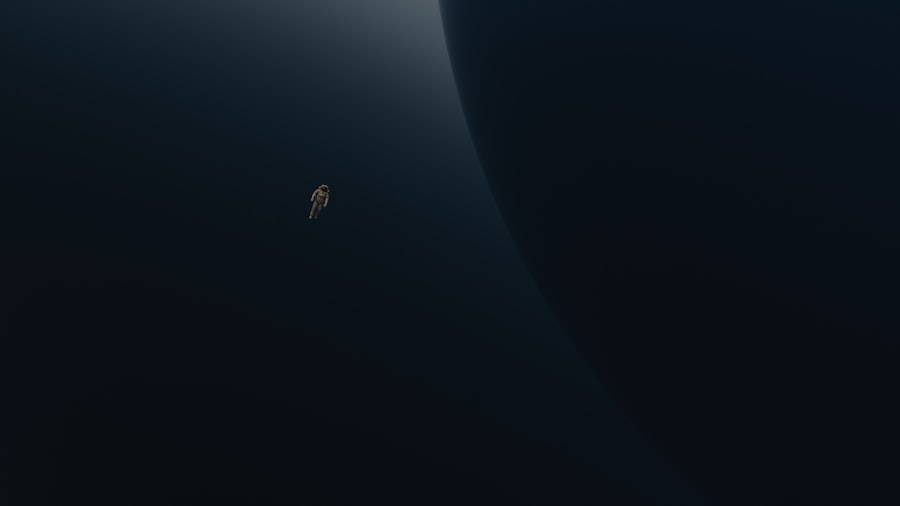
The true scientific marvel of Borisov lies in its composition. As an interstellar visitor, it offers a unique opportunity to study materials that have not been altered by the Sun’s radiation or the chemical processes within our solar system.
The Volatile Ices: A Rosetta Stone of Chemistry
The coma and tail of a comet are formed by the sublimation of volatile ices as they are heated by the Sun. Spectroscopic analysis of the light emitted by these sublimating materials allows astronomers to identify the types of molecules present. Borisov exhibited a rich array of organic molecules, including surprisingly high abundances of carbon monoxide and methane. Its water ice also showed a deuterium-to-hydrogen ratio similar to that found in comets within our own solar system, suggesting a potential commonality in the early conditions of star and planet formation across different stellar systems, or at least within a certain galactic neighborhood.
Dust Grains: Building Blocks of Worlds
Interspersed within the icy matrix are dust grains. These tiny particles, composed of silicates and carbonaceous materials, are believed to be the building blocks of planets. Analyzing the size, shape, and chemical composition of these dust grains from Borisov can provide information about the types of materials available for planet formation in its home system and how these materials may have aggregated.
Organic Molecules: The Seeds of Life?
The presence of complex organic molecules, including those containing carbon, hydrogen, oxygen, and nitrogen, has been a significant finding. While these molecules are not life itself, they are considered the precursors to life as we know it. Studying the variety and abundance of these organic compounds in Borisov can help us understand the prevalence of the chemical ingredients necessary for life to arise in other parts of the universe.
Hydrocarbons: A Common Cosmic Ingredient
The detection of various hydrocarbons, from simple methane to more complex chains, reinforces the idea that carbon-based chemistry is a fundamental aspect of cosmic evolution. These molecules are found throughout the universe, and their presence in Borisov further solidifies this observation.
Nitrogen-Bearing Compounds: Essential for Life
The identification of nitrogen-bearing compounds in Borisov is particularly exciting. Nitrogen is a key element in amino acids, the building blocks of proteins, and is essential for all known life. Its presence in interstellar comets suggests that the fundamental elements for life are widely distributed throughout the galaxy.
Unexpected Discoveries: Unforeseen Chemical Signatures
Beyond the expected, Borisov also presented surprises. The detection of certain molecules in proportions not typically seen in solar system comets has sparked intense scientific debate and investigation. These anomalies could point to unique formation pathways or evolutionary histories within its parent system.
Trajectory and Dynamics: Navigating the Cosmic Expanse
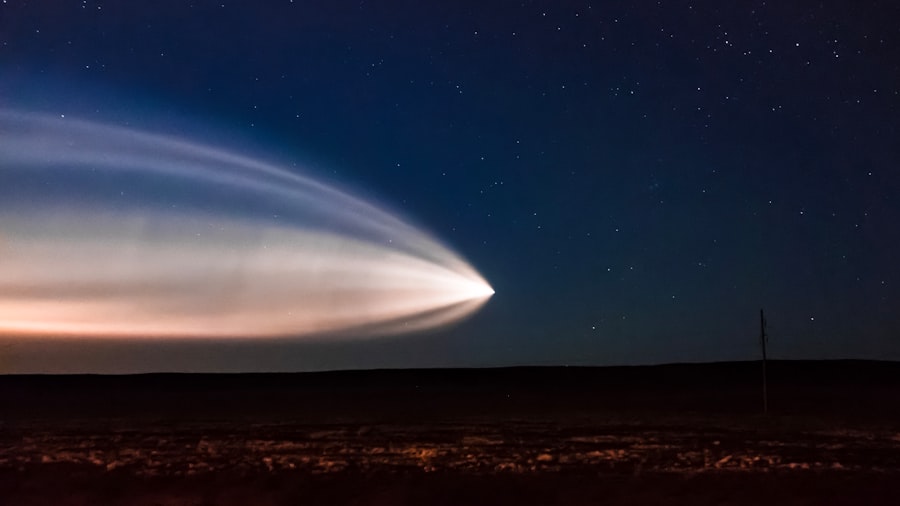
The path of 2I/Borisov through our solar system provided a unique opportunity to study its behavior under the influence of solar gravity and radiation. Its trajectory offered clues about its origins and its ultimate fate.
The Hyperbolic Embrace: A Farewell Journey
Borisov’s highly hyperbolic trajectory meant that it was on a one-way trip through our solar system. After its closest approach to the Sun, it is destined to be ejected back into interstellar space, never to return. This unique orbital characteristic was the key to identifying it as an interstellar object.
Solar Influence: The Coma and Tail Formation
As Borisov ventured closer to the Sun, its icy nucleus began to sublimate, releasing gases and dust that formed the characteristic coma and tail. The size and brightness of the coma, as well as the morphology of the tail, provided valuable information about the composition and activity of the comet’s nucleus. The tail’s direction, always pointing away from the Sun due to solar wind and radiation pressure, was a constant visual reminder of the Sun’s power.
Gravitational Encounters: A Celestial Dance
While its trajectory was primarily dictated by its initial interstellar velocity, Borisov’s path was also subtly influenced by the gravitational pull of the planets in our solar system. These gravitational interactions, though minor in the grand scheme of its hyperbolic journey, were carefully monitored to refine our understanding of its orbital parameters.
Beyond the Sun: The Interstellar Realm Awaits
After its passage through the inner solar system, Borisov continues its solitary journey. The observations made during its visit will be studied for years to come, contributing to our understanding of its past and its eventual return to the vastness of interstellar space.
The discovery of Borisov, the first known interstellar comet, has sparked significant interest in the scientific community, particularly regarding its origins and composition. Researchers are eager to compare it with other celestial objects, which could provide insights into the formation of solar systems beyond our own. For a deeper understanding of the implications of such discoveries, you can read more in this insightful article on X File Findings, which explores the mysteries of interstellar objects and their potential impact on our knowledge of the universe.
Scientific Significance and Future Implications: Lessons from an Interstellar Traveler
| Parameter | Value |
|---|---|
| Comet Name | Borisov interstellar comet |
| Discovered | August 30, 2019 |
| Discoverer | Gennady Borisov |
| Interstellar Origin | Yes |
| Closest Approach to Earth | 1.9 astronomical units (AU) |
The discovery and study of 2I/Borisov have profound implications for our understanding of planet formation, the prevalence of organic molecules in the universe, and the potential for life beyond Earth.
Comparative Planetology: Understanding Our Solar System’s Uniqueness
By studying a comet from another star system, scientists can engage in a form of comparative planetology. This allows them to assess how similar or different the processes of star and planet formation are across the galaxy. Borisov’s composition can highlight what aspects of our solar system are common and what might be unique.
The Search for Life: Clues to Extraterrestrial Biology
The abundance of organic molecules in Borisov provides compelling evidence that the chemical ingredients for life are widespread throughout the cosmos. This strengthens the argument that life could arise in other star systems, even if the specific conditions and evolutionary pathways are different from those on Earth.
Advancements in Observational Techniques: Pushing the Boundaries
The successful observation of Borisov has highlighted and driven advancements in astronomical observation techniques, particularly in the detection and tracking of faint, fast-moving interstellar objects. These advancements will be crucial for future discoveries.
The Interstellar Visitor Program: A New Era of Exploration
Borisov, along with ‘Oumuamua, has ushered in a new era of interstellar object observation. Scientists are now actively looking for these visitors, anticipating that more will be discovered and studied in the future. This suggests the possibility of a “visitor program” where we can systematically study objects from other star systems.
Future Missions and Speculation: Probing the Depths of Space
The study of Borisov has undoubtedly fueled speculation about future missions. While a rendezvous mission to capture samples from an interstellar comet is currently beyond our technological reach, the knowledge gained from Borisov provides a tantalizing preview of what such a mission might reveal. It inspires us to continue exploring the cosmos and to seek out the secrets held within these celestial wanderers.
In conclusion, 2I/Borisov is more than just a comet; it is a cosmic messenger, carrying stories from a distant star system. Its passage through our solar system has been a pivotal moment in astronomy, expanding our knowledge of the universe and reminding us of the vast, unexplored wonders that lie beyond our own celestial neighborhood. The data collected from Borisov will continue to be analyzed for years to come, offering invaluable insights into the fundamental processes that shape the cosmos and the potential for life elsewhere.

The New Interstellar Object That’s Dividing Scientists
FAQs
What is the Borisov interstellar comet?
The Borisov interstellar comet, also known as 2I/Borisov, is the first confirmed interstellar comet to pass through our solar system. It was discovered by amateur astronomer Gennady Borisov on August 30, 2019.
Where did the Borisov interstellar comet come from?
The Borisov interstellar comet originated from outside our solar system, making it the second known interstellar object to visit our solar system after ‘Oumuamua, which was discovered in 2017.
What is the significance of the Borisov interstellar comet?
The Borisov interstellar comet is significant because it provides scientists with a rare opportunity to study a comet from another star system. By analyzing its composition and behavior, researchers hope to gain insights into the conditions and processes that occur in other planetary systems.
How does the Borisov interstellar comet differ from other comets in our solar system?
The Borisov interstellar comet differs from other comets in our solar system in terms of its trajectory, speed, and composition. Its hyperbolic orbit indicates that it originated from outside our solar system, and its composition may differ from comets that formed within our own system.
What can we learn from studying the Borisov interstellar comet?
Studying the Borisov interstellar comet can provide valuable information about the diversity of planetary systems beyond our own. By comparing its characteristics to those of comets in our solar system, scientists can gain a better understanding of the processes that shape planetary systems throughout the universe.