
Before humanity even dreamt of breaking Earth’s gravitational embrace, the idea of a lunar outpost, a base on the Moon, was already taking root in the fertile soil of human imagination and scientific speculation. Long before the flickering images of Sputnik and Apollo graced television screens, writers, inventors, and scientists were sketching out blueprints for a future where humanity would not be confined to a single planet. This was a vision forged in an era of burgeoning scientific understanding, fueled by a deep-seated curiosity about the cosmos, and driven by an almost romantic aspiration to touch the stars. The concept of a moon base wasn’t merely a flight of fancy; it was a tangible, albeit ambitious, goal that captured the public imagination and spurred early scientific inquiry.
The genesis of the moon base concept lies not in engineering specifications but in the realm of storytelling. Writers, unburdened by the immediate constraints of technology, painted vivid pictures of lunar settlements, exploring the possibilities and challenges of off-world living. These narratives, while fictional, served as powerful catalysts, planting the seed of possibility in the minds of readers and, importantly, in the minds of those who would one day translate dreams into reality. The scientific community, though still grappling with the fundamental mechanics of spaceflight, began to engage with these ideas, moving them from the purely speculative to the cautiously plausible.
The Power of Narrative: Igniting the Public Imagination
The late 19th and early 20th centuries were a golden age for science fiction, and many of its most celebrated authors turned their gaze towards the Moon. Jules Verne’s “From the Earth to the Moon” and its sequel “Around the Moon” are perhaps the most iconic early examples. While Verne’s method of space travel – a colossal cannon firing a projectile at the Moon – is now understood to be scientifically impossible, his detailed descriptions of the journey, the lunar landscape, and the aspirations of the explorers resonated deeply. These stories were not just adventures; they were thought experiments, exploring what it would be like to be on the Moon, to experience its alien environment. H.G. Wells, in “The First Men in the Moon,” introduced more sophisticated (though still fantastical) concepts of lunar inhabitants and the potential for resource utilization. These literary works, widely read and discussed, did more than entertain; they normalized the idea of lunar habitation, making it feel less like an impossible fantasy and more like an inevitable, if distant, future. They sparked conversations in drawing rooms and lecture halls, inspiring a generation of young minds to consider careers in science and engineering with the ultimate goal of reaching these celestial destinations. The very act of imagining a lunar presence made it seem achievable, a necessary step in humanity’s grand cosmic journey. The meticulous detail with which these authors described lunar conditions – the thin atmosphere, the stark light and shadow, the dust – while often extrapolated from limited scientific knowledge, demonstrated an early attempt to grapple with the practicalities of living on another world.
The Dawn of Scientific Inquiry: Early Theories and Calculations
As scientific understanding advanced, so too did the theoretical frameworks for lunar exploration. Astronomers meticulously charted the Moon’s surface, identifying features that would later become familiar landmarks to us: craters, mountains, and vast plains. Early physicists and engineers began to consider the fundamental challenges of leaving Earth’s gravity. The concept of escape velocity, the minimum speed required to overcome a celestial body’s gravitational pull, was a crucial piece of theoretical work. Thinkers like Konstantin Tsiolkovsky, a Russian rocket pioneer, laid down the foundational mathematical principles for rocketry and spaceflight. While his work was largely theoretical and ahead of its time in terms of practical application, Tsiolkovsky envisioned multi-stage rockets, a concept that would prove indispensable for reaching space. He also contemplated the need for life support systems and the idea of a space-based habitat. His writings, though not widely known in the West during his lifetime, represent a remarkable foresight into the challenges and solutions for space exploration. These early scientific endeavors, often undertaken with limited resources and even less public funding, were driven by an intellectual curiosity that was a direct precursor to the ambitions of building a moon base. They moved the conversation from “if” to “how,” even if the “how” was still largely theoretical. The very act of calculating escape velocities and designing theoretical rocket trajectories was a tacit acknowledgement of the desire to go beyond Earth’s atmosphere.
Before humans reached orbit, the concept of establishing a moon base was already a topic of fascination and speculation among scientists and futurists. An insightful article discussing the early ideas and plans for lunar colonization can be found at this link: XFile Findings. This article delves into the technological advancements and theoretical frameworks that laid the groundwork for future space exploration, highlighting how visions of a moon base captured the imagination long before the first human ventured into space.
The Engineering Hurdles: Imagining the First Lunar Outposts
Translating these ambitious visions into reality presented a monumental engineering challenge. Even before humans had the capability to reach orbit, futurists and scientists were already contemplating the practicalities of building structures on the Moon. This involved not only the design of spacecraft capable of making the journey but also the very construction of habitats that could withstand the harsh lunar environment. The early ideas were diverse, reflecting the nascent understanding of lunar conditions and the available technological concepts of the time.
Shelter from the Void: Early Habitat Designs
The problem of creating a habitable environment on the Moon was paramount. Without a substantial atmosphere, humans would be exposed to vacuum, extreme temperature fluctuations, and harmful radiation. Early proposals for lunar habitats ranged from the ingenious to the wildly speculative. Some envisioned vast underground complexes, taking advantage of the Moon’s regolith for insulation and radiation shielding. Others proposed modular structures that could be prefabricated on Earth and assembled on the Moon, a concept that foreshadows modern modular construction techniques. The idea of using locally sourced materials – lunar rock and dust – for construction was also a recurring theme, hinting at the future principle of in-situ resource utilization (ISRU). Architects and engineers, even in their theoretical stages, grappled with the need for airlocks, internal atmospheric regulation, and protection from micrometeoroid impacts. These early designs were often depicted as domed structures, a common visual trope that reflected the era’s understanding of pressure vessels and aerodynamic stability, even though aerodynamics are largely irrelevant in a vacuum. The emphasis on self-sufficiency and the ability to sustain life independent of Earth was a key consideration in these early designs. They were not just shelters; they were envisioned as self-contained ecosystems, capable of supporting human life for extended periods.
Transportation and Logistics: The Lunar Shuttle Concept
The journey to the Moon and the transportation of supplies and personnel were equally daunting. Early concepts for lunar vehicles and delivery systems were varied. Some envisioned large, powerful rockets that could transport entire modules for a base in a single launch. Others proposed a more phased approach, with smaller spacecraft making multiple trips to deliver components and supplies. The idea of a dedicated lunar shuttle, capable of ferrying astronauts and cargo between Earth orbit and the lunar surface, began to emerge as a logical requirement for a sustained presence. This foresight was crucial, as it recognized that a one-off mission, while groundbreaking, was not sufficient for establishing a base. The logistics of getting materials to the Moon, assembling them, and then maintaining a continuous supply chain were complex problems that these early thinkers attempted to address. The concept of orbital assembly, where spacecraft components would be launched separately and assembled in Earth orbit before a lunar journey, also began to appear in theoretical discussions, anticipating later developments in space station construction. The challenges of landing safely on the lunar surface, given the lack of atmosphere for aerodynamic braking, also spurred early ideas about propulsion-based landing systems.
The Scientific Imperative: Why Go to the Moon?
Beyond the thrill of exploration and the romance of reaching another world, early proponents of lunar bases articulated compelling scientific reasons for establishing a permanent human presence. The Moon, a celestial body relatively close to Earth, offered a unique laboratory for scientific research, a platform for astronomical observation, and a potential stepping stone for further exploration of the solar system. These justifications provided a more grounded rationale for the immense undertaking of lunar colonization.
A Cosmic Laboratory: Unlocking Lunar Secrets
The Moon’s surface, largely undisturbed by geological activity and atmospheric erosion, promised to be a pristine archive of the early solar system. Scientists envisioned using the Moon to study the formation of planets, the history of impacts, and the composition of materials from a time before Earth’s own geological processes erased much of that evidence. The absence of a thick atmosphere also made the Moon an ideal location for astronomical observation, free from the distorting effects of Earth’s skies. Telescopes placed on the Moon could offer unparalleled clarity and access to wavelengths of light blocked by our own atmosphere. The potential for studying solar and cosmic radiation without interference was another key scientific driver. This understanding was critical not only for advancing our knowledge of the universe but also for understanding the potential hazards for future space exploration. The Moon offered a unique vantage point from which to study phenomena that were difficult or impossible to observe from Earth.
A Stepping Stone to the Stars: The Lunar Launchpad
Perhaps one of the most visionary scientific arguments for a moon base was its potential as a staging point for deeper space exploration. The Moon’s lower gravity compared to Earth would make it significantly easier and more fuel-efficient to launch spacecraft from its surface. This “lunar launchpad” concept envisioned using the Moon as a service station and assembly point for missions to Mars and beyond. Resources mined or manufactured on the Moon could fuel these journeys, drastically reducing the mass that would need to be launched from Earth. This forward-thinking idea recognized that expanding humanity’s reach into the solar system would require leveraging the unique advantages offered by different celestial bodies. The Moon, in this context, was not an end in itself but a critical intermediate step, a logistical hub that would enable more ambitious explorations. This concept also had implications for the development of technologies necessary for long-duration space travel, such as closed-loop life support systems and advanced propulsion.
The Cultural and Psychological Impact: Humanity’s Cosmic Destiny
The vision of building a moon base was not solely an engineering or scientific endeavor; it was also deeply intertwined with human culture and psychology. The idea of humans establishing a permanent presence beyond their home planet spoke to fundamental human desires for advancement, exploration, and the realization of our perceived cosmic destiny. It was a powerful symbol of human potential and progress.
The Ultimate Frontier: Expanding the Human Horizon
For centuries, the Earth’s oceans and continents were considered the ultimate frontiers. The Moon, looming large in the night sky, represented the next logical, and perhaps most awe-inspiring, frontier. The establishment of a lunar base would signify a profound shift in humanity’s perception of itself and its place in the universe. It would be a tangible testament to our ability to overcome seemingly insurmountable challenges and to extend our civilization beyond its cradle. This vision tapped into a primal human drive for exploration and discovery, a yearning to push the boundaries of what is known and achievable. It provided a potent narrative of progress and expansion, a story of humanity boldly going where no one had gone before. The psychological impact of such an achievement would be immense, fostering a sense of unity and shared purpose among humankind.
A Legacy of Ingenuity: Inspiring Future Generations
The very pursuit of building a moon base, even in its conceptual stages, served as a powerful inspiration. It spurred innovation, encouraged scientific education, and fostered a spirit of optimistic futurism. The grand ambition of such a project captured the imagination of young people, encouraging them to pursue careers in science, technology, engineering, and mathematics (STEM). The stories and early designs, however speculative, laid the groundwork for the real-world space race that would eventually unfold. They created a cultural momentum, a belief that the impossible could, with enough ingenuity and determination, become reality. This legacy of inspiration continues to resonate today, reminding us of the transformative power of bold, long-term visions. The ideas explored by early visionaries, while rooted in the limitations of their time, demonstrated a remarkable prescience that ultimately helped shape the trajectory of human space exploration.
Before humans even reached orbit, the concept of establishing a moon base was already a topic of intense speculation and research. Visionaries and scientists alike pondered the possibilities of lunar habitation, considering the moon as a stepping stone for deeper space exploration. An intriguing article that delves into the early ideas and plans for a moon base can be found here, where it explores the technological and logistical challenges that would need to be overcome. The potential for a lunar outpost has sparked imaginations and laid the groundwork for future missions beyond our planet. For more insights, you can read the full article here.
The Long Road to Reality: From Vision to Apollo and Beyond
| Metrics | Data |
|---|---|
| Distance from Earth | Approximately 384,400 km |
| Surface Temperature | Daytime: 100°C, Nighttime: -173°C |
| Gravity | 1/6th of Earth’s gravity |
| Atmosphere | Very thin and composed mostly of helium, neon, and hydrogen |
| Surface Features | Craters, mountains, valleys, and plains |
The journey from early visions of lunar bases to the actual missions of the Apollo program was a long and arduous one, fraught with technological challenges, political will, and immense financial investment. However, the groundwork laid by these early dreamers and scientists proved invaluable, providing a conceptual roadmap and fueling the ambition that would ultimately lead to humanity’s first steps on the Moon and the ongoing efforts to establish a more permanent presence.
The Space Race and the Apollo Program: A Quantum Leap
The geopolitical climate of the mid-20th century, particularly the Cold War, provided an unexpected impetus for the realization of lunar ambitions. The “Space Race” between the United States and the Soviet Union transformed abstract dreams into concrete national objectives. President John F. Kennedy’s bold declaration in 1961 to land a man on the Moon and return him safely to Earth before the end of the decade galvanized the scientific and engineering communities. The Apollo program, a testament to human ingenuity and perseverance, achieved this monumental goal. While Apollo was primarily focused on short-duration visits rather than the establishment of a permanent base, it provided invaluable practical experience in lunar operations, spacecraft design, and astronaut training. The lessons learned from Apollo, both in terms of technological successes and failures, were critical for future lunar endeavors. The program demonstrated that complex missions to the Moon were not only possible but achievable through coordinated effort and significant resource allocation.
The Modern Era of Lunar Exploration: Artemis and the Future of Bases
Today, the vision of building a moon base is experiencing a resurgence, driven by a new generation of space agencies and private companies. The Artemis program, spearheaded by NASA, aims to return humans to the Moon and establish a sustainable presence, including a lunar gateway in orbit and a surface habitat. This marks a significant shift from the Apollo era, with a clear focus on long-term habitation and scientific research. The concept of a “lunar base” is no longer a distant fantasy but an active, ongoing endeavor. The lessons learned from earlier visions, combined with advancements in technology such as reusable rockets, in-situ resource utilization, and advanced life support systems, are making this vision increasingly attainable. The early imaginings, once confined to the pages of science fiction and the sketches of futurists, are now being systematically engineered and built, paving the way for humanity’s continued expansion into the cosmos. The ongoing exploration and development on the Moon are not just about scientific discovery; they are about building a future where humanity is a multi-planetary species, a testament to the enduring power of human curiosity and the audacious vision of a moon base that began long before humans reached orbit.
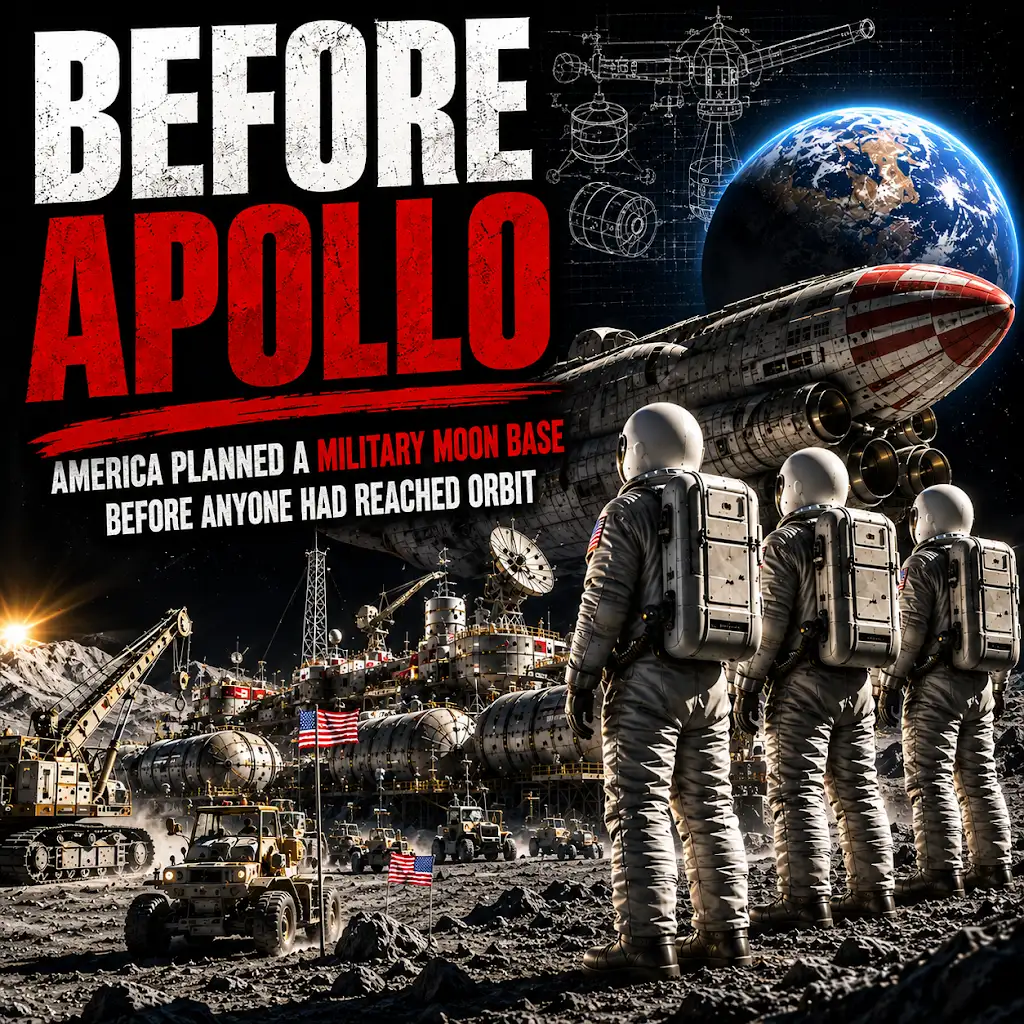
America Planned a Military Moon Base Before Anyone Had Reached Orbit
FAQs
What is a moon base?
A moon base is a structure or settlement on the surface of the moon that is designed to support human habitation and scientific research.
Why build a moon base before humans reached orbit?
Building a moon base before humans reached orbit would allow for the development of necessary infrastructure and technology to support future human missions to the moon and beyond. It would also provide valuable opportunities for scientific research and exploration.
What are the potential benefits of a moon base?
A moon base could serve as a stepping stone for future human missions to Mars and other destinations in the solar system. It could also provide opportunities for scientific research, resource utilization, and the development of new technologies.
What are the challenges of building a moon base before humans reached orbit?
Challenges of building a moon base before humans reached orbit include the development of advanced life support systems, radiation protection, and the logistics of transporting materials and equipment to the moon. Additionally, the harsh lunar environment presents challenges for construction and maintenance.
What are some proposed designs for a moon base?
Proposed designs for a moon base include inflatable habitats, underground structures, and 3D-printed buildings. These designs aim to provide safe and sustainable living environments for astronauts while minimizing the need for heavy construction materials.