
The clandestine world of intelligence gathering has long been rumored to delve into avenues far beyond conventional espionage. Among the most intriguing, and often sensationalized, of these explorations is the concept of remote viewing, and at its forefront stands the enigmatic figure of Ingo Swann. His involvement with the U.S. intelligence community, particularly the Central Intelligence Agency (CIA), and his alleged psychic abilities, led to some of the most audacious experiments in consciousness research, including an audacious, and perhaps apocryphal, “exploration” of the Moon. This article will delve into the CIA’s remote viewing program, Ingo Swann’s pivotal role within it, and the specific, almost mythical, claims surrounding his lunar insights.
The Cold War fueled an insatiable hunger for any perceived advantage, pushing the United States to explore unconventional avenues of intelligence. This era witnessed a surge of interest in parapsychology, including phenomena like telepathy, precognition, and psychokinesis. The Soviet Union was also reportedly investing heavily in such research, creating a perceived “psychic arms race.” It was within this context that the CIA, alongside other U.S. intelligence agencies, began to cautiously, and often covertly, investigate the potential military and intelligence applications of psychic phenomena.
Early Forays into the Paranormal
The early interest wasn’t entirely without precedent. Throughout history, anecdotal accounts of individuals possessing extraordinary perceptive abilities have abounded. However, it was the systematic, albeit nascent, scientific study of these phenomena in the mid-20th century that piqued the curiosity of intelligence agencies. Researchers at various universities and private institutions began designing experiments to test the limits of human consciousness and perception.
The Stanford Research Institute (SRI) and Project Grill Flame
A crucial turning point in the CIA’s involvement with remote viewing came with the funding of research at the Stanford Research Institute (SRI). Under the leadership of scientists like Harold Puthoff and Russell Targ, SRI became a hub for parapsychological research, including the development and testing of remote viewing. The CIA, along with the Defense Intelligence Agency (DIA), provided significant funding for these projects, primarily under the umbrella of programs like Project Grill Flame. The goal was straightforward: to determine if individuals could acquire information about distant or unseen targets using only their minds, and if this information could be of intelligence value.
The “Psychic Arms Race” Narrative
The prevailing narrative that spurred this investment was the fear of Soviet psychic superiority. Reports, often based on rumor and limited information, suggested that the USSR was actively developing and utilizing psychic capabilities for military and intelligence purposes. This perceived threat created a sense of urgency and justification for the U.S. to explore similar avenues, even if the scientific underpinnings were still largely speculative.
Ingo Swann, a prominent figure in the CIA’s remote viewing program, played a crucial role in exploring the potential of psychic phenomena, particularly in relation to the Moon. His groundbreaking work has sparked interest in various aspects of consciousness and perception. For those looking to delve deeper into the intriguing connections between remote viewing and lunar exploration, a related article can be found at XFile Findings, which discusses the implications of Swann’s findings and their impact on our understanding of both the mind and the cosmos.
Ingo Swann: The Prodigy of Psychic Perception
Ingo Swann was not a typical scientist or military operative. He was an artist, an author, and most notably, an individual who claimed to possess extraordinary psychic abilities. His journey into the world of remote viewing and intelligence began with his own self-exploration and eventually led him to SRI, where his purported talents were put to the test under rigorous, albeit still controversial, experimental conditions.
Early Life and the Emergence of Abilities
Details of Swann’s early life are often intertwined with his own accounts of his psychic experiences. He described a childhood marked by unusual perceptions and an innate ability to sense things beyond the ordinary. He often spoke of his skepticism towards conventional explanations and his lifelong quest to understand the nature of consciousness and its potential.
Meeting Targ and Puthoff: A Scientific Partnership
Swann’s path crossed with Russell Targ and Harold Puthoff at SRI in the early 1970s. They recognized in Swann a potential candidate for their remote viewing experiments. Unlike many other subjects who might have undergone training, Swann claimed his abilities were largely innate and that he needed little formal instruction to perform. This made him a particularly compelling subject for their research, as it seemed to bypass the need for extensive psychic training, suggesting a more natural and potentially more potent form of perception.
The “Blind” and “Double-Blind” Experiments
A cornerstone of the SRI remote viewing experiments, particularly with Swann, involved rigorously designed protocols to prevent sensory leakage and bias. These included “blind” and “double-blind” conditions. In a blind experiment, the remote viewer would receive a target identifier (e.g., a number or a code) without any prior knowledge of what the target was. In a double-blind experiment, even the experimenter interacting with the viewer might not know the nature of the target. This was crucial for establishing the validity of any information obtained.
Swann’s Unique Approach to Remote Viewing
Swann developed his own distinct methodology and terminology for remote viewing. He often spoke of “psi sensing” and emphasized the importance of detached observation. He was known for his ability to describe targets with a high degree of accuracy and detail, often including sensory impressions beyond visual information, such as smells, sounds, and even emotional atmospheres. His contributions were not just in demonstrating his abilities but also in conceptualizing and refining the very process of remote viewing.
The Apollo Program and the Lunar “Exploration”

Perhaps the most sensational and widely discussed aspect of Ingo Swann’s involvement with the CIA concerns his alleged remote viewing of the Moon, specifically in relation to the Apollo missions. While the official record of the CIA’s remote viewing program is extensive, the specific claims regarding Swann’s lunar “exploration” often venture into the realm of folklore and are subject to significant debate and scrutiny.
The “Invisible” Remote Viewing Mission
The story goes that during the height of the Apollo program, there was a need to ascertain if the Soviet Union had established any covert bases or had conducted any secret activities on the Moon. The CIA, facing limitations in conventional surveillance of the lunar surface, allegedly turned to Ingo Swann. The premise was that Swann, from his terrestrial location, could “remote view” the Moon and detect any anomalies or signs of extraterrestrial or rival human presence.
The “Singularity” and the Lunar Surface
Swann himself, in his writings and interviews, described encountering a “singularity” on the Moon during one of these purported remote viewing sessions. He detailed perceiving a complex, artificial structure or object of immense size and power, which he claimed was of non-terrestrial origin. His descriptions were often abstract and evocative, speaking of energies, geometries, and a presence that defied easy explanation.
The “Jupiter Mission” and a Broader Scope
Some accounts of Swann’s lunar insights also extend to a broader mission, sometimes referred to as a “Jupiter Mission.” This alleged mission involved him remote viewing beyond the Moon, towards Jupiter, and again encountering advanced, non-terrestrial technology. These narratives painted a picture of Swann as a conduit to cosmic secrets, offering glimpses into an advanced interstellar civilization.
Skepticism and Lack of Corroboration
It is crucial to address the significant skepticism surrounding these lunar claims. The CIA’s declassified documents, while confirming the existence and funding of remote viewing programs, do not explicitly corroborate Swann’s most extraordinary lunar encounters. Critics point to the inherent subjectivity of remote viewing, the potential for confirmation bias, and the lack of independent verification for these specific, highly detailed accounts of extraterrestrial structures on the Moon. The absence of any concrete evidence or photographic anomalies captured by the Apollo missions that align with Swann’s descriptions further fuels this skepticism.
The Declassification of Remote Viewing Programs

For decades, the CIA’s involvement in remote viewing was a tightly guarded secret. However, through Freedom of Information Act (FOIA) requests and subsequent declassifications, much of the operational history of these programs has come to light. This has provided a glimpse into the serious, albeit often clandestine, investigations undertaken by U.S. intelligence agencies.
Project Stargate: The Umbrella Program
The various remote viewing initiatives, including those involving Ingo Swann, were eventually consolidated under a larger program known as Project Stargate. This program ran for over two decades, from the early 1970s to the mid-1990s, and involved multiple agencies, including the CIA, DIA, and Army. Project Stargate aimed to explore the potential of remote viewing for intelligence gathering, reconnaissance, and even the prediction of future events.
The Findings and the “Unforeseen Utility”
The declassified documents reveal that the programs, while not definitively proving the validity of psychic phenomena in a scientific sense, did report instances of “unforeseen utility.” Remote viewers, including Swann, were sometimes able to provide information about targets that was later corroborated, albeit often through conventional intelligence means. This led to a continued, albeit fluctuating, level of interest and funding from the intelligence community.
The CIA’s Position: “No Definitive Proof”
Despite the intriguing results and the continued research, the official stance of the CIA and other intelligence agencies, as reflected in their declassified reports, has generally been cautious. They have acknowledged the existence of the programs and the reported successes but have stopped short of declaring remote viewing a proven and reliable intelligence-gathering tool. The conclusion often drawn is that while some interesting correlations were observed, there was “no definitive proof” that remote viewing could consistently provide actionable intelligence.
Ingo Swann, a key figure in the CIA’s remote viewing program, made headlines not only for his psychic abilities but also for his intriguing claims about the Moon. His experiences and assertions have sparked interest in various conspiracy theories and discussions about extraterrestrial life. For those looking to delve deeper into this fascinating topic, a related article can be found at XFile Findings, which explores the implications of Swann’s work and its connection to the broader realm of paranormal research.
Legacy and the Enduring Mystery of Ingo Swann
| Metrics | Data |
|---|---|
| Remote Viewer | Ingo Swann |
| Organization | CIA |
| Subject | Moon |
Ingo Swann’s legacy within the realm of remote viewing and parapsychology is undeniable. He remains a central figure in the history of these investigations, lauded by some as a pioneer and criticized by others as a purveyor of pseudoscience. His alleged lunar explorations, whether factual or embellished, have captured the public imagination and continue to fuel speculation about the hidden capabilities of the human mind and the secrets of the cosmos.
The Art of the Psychic Witness
Swann’s impact extends beyond his purported psychic abilities. He was a skilled communicator, able to articulate complex and often abstract concepts in a way that resonated with both scientific researchers and the general public. His artistic background likely contributed to his unique descriptive abilities, allowing him to paint vivid mental pictures of the targets he “viewed.” He was, in many ways, the ultimate psychic witness, capable of translating the unseen into tangible descriptions.
The Continued Debate: Science vs. Pseudoscience
The debate surrounding Ingo Swann and remote viewing continues to this day. Supporters point to the anecdotal evidence, the perceived accuracies, and the sheer persistence of the phenomena as indicators of something real. Critics, however, emphasize the lack of rigorous scientific proof, the susceptibility to bias, and the potential for misinterpretation. The scientific community largely remains skeptical, demanding repeatable, verifiable results under strict experimental conditions before accepting remote viewing as a legitimate phenomenon.
The Myth of the Moon Man
The story of Ingo Swann’s remote viewing of the Moon, especially his claims of encountering alien structures, has become a potent myth. It speaks to our innate curiosity about the unknown, our desire for extraterrestrial contact, and the lingering possibilities of hidden technologies and realities. Whether these lunar visions were genuine psychic insights or vivid creations of an imaginative mind, they have cemented Swann’s place in the annals of paranormal inquiry.
The Unanswered Questions
Ultimately, the true extent of Ingo Swann’s lunar “exploration” and the overall effectiveness of the CIA’s remote viewing programs remain subjects of intrigue and speculation. The declassified documents offer a fascinating, albeit incomplete, picture of a clandestine effort to probe the limits of human perception. Ingo Swann, with his extraordinary claims and his unique place in this history, continues to be a compelling figure, reminding us that the boundaries of our understanding are constantly being challenged, both by scientific inquiry and by the enduring mysteries of consciousness itself. The Moon, once a distant celestial body, became a canvas for Swann’s extraordinary claims, forever linking him to its silent, enigmatic surface.
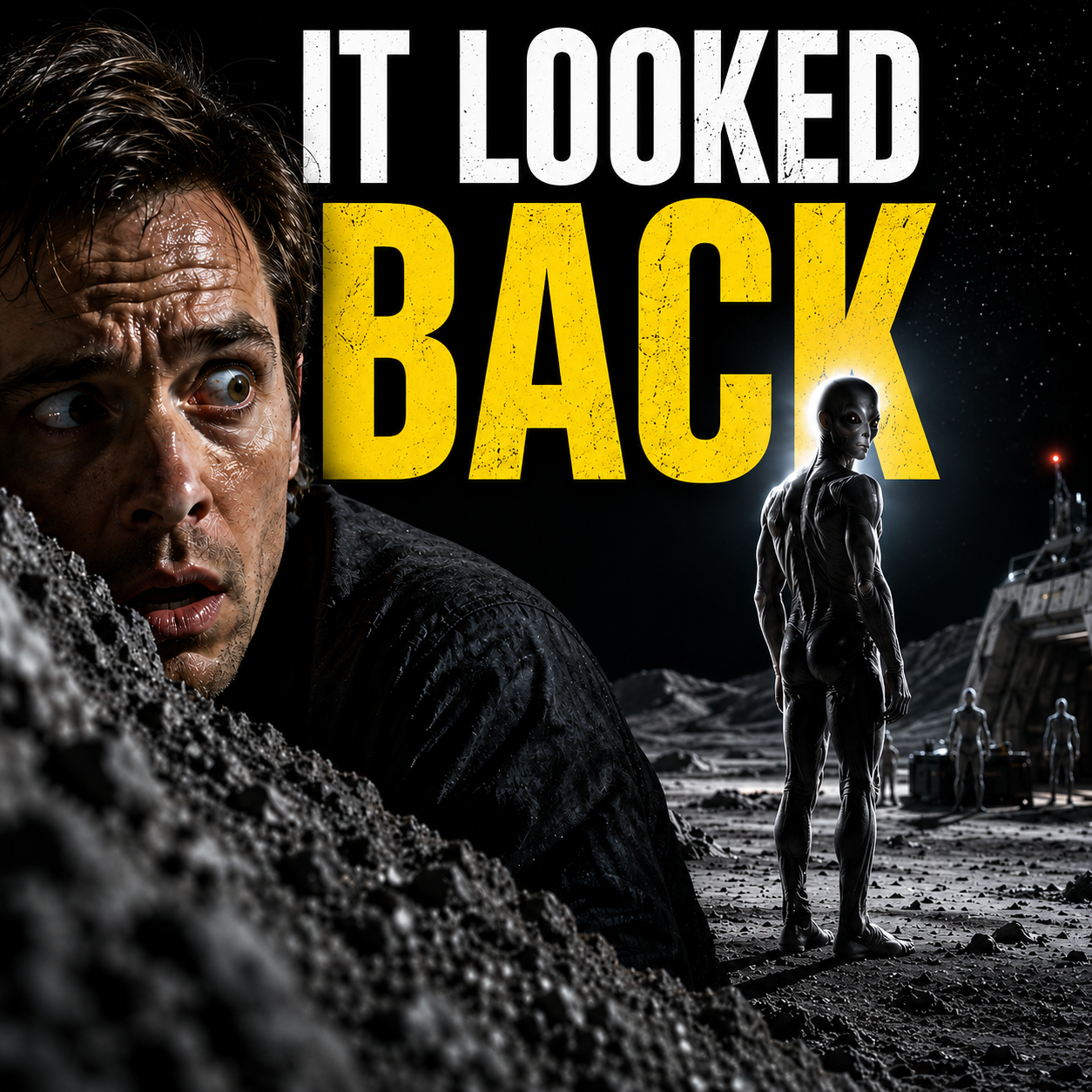
He Remote Viewed the Moon. Then Something Saw Him.
FAQs
What is CIA remote viewing?
CIA remote viewing is a practice in which individuals attempt to gather information about a distant or unseen target using extrasensory perception (ESP) or “anomalous cognition.”
Who is Ingo Swann?
Ingo Swann was a parapsychology researcher and artist who is known for his involvement in the CIA’s remote viewing program in the 1970s. He is considered one of the pioneers of remote viewing.
What is the significance of the CIA’s remote viewing program?
The CIA’s remote viewing program, also known as Project Stargate, was a classified program that aimed to investigate the potential military and intelligence applications of remote viewing. It operated from the 1970s to the 1990s.
What is the connection between Ingo Swann and the Moon?
Ingo Swann claimed to have been involved in remote viewing sessions focused on the Moon, during which he reported anomalous and unexplained phenomena. These claims have sparked interest and speculation among researchers and enthusiasts.
What is the current status of remote viewing research?
Remote viewing continues to be a topic of interest for researchers and enthusiasts in the field of parapsychology and unconventional research. While the CIA’s program has been declassified, the scientific community remains divided on the validity and potential applications of remote viewing.