
Comparing Triton’s Nitrogen Frost Cycles to Venting
Triton, Neptune’s largest moon, presents a unique and dynamic environment shaped by its remarkably active nitrogen frost cycle. Understanding this cycle offers a fascinating glimpse into planetary atmospheric processes, and a comparison with more familiar phenomena, such as terrestrial volcano venting, illuminates both the distinct mechanisms at play and the underlying principles of mass and energy transfer in celestial bodies. This article will delve into the intricacies of Triton’s nitrogen frost cycle, contrasting its characteristics with volcanic venting on Earth, and explore the implications of these processes for our understanding of Triton’s climate and geological history.
Triton’s atmosphere is predominantly composed of nitrogen, with trace amounts of methane. Unlike Earth’s water-based weather systems, Triton’s climate is driven by the sublimation and condensation of nitrogen. The surface temperature of Triton is extremely low, averaging around -235°C (-391°F). At these frigid temperatures, nitrogen exists as a solid (frost) and, under specific atmospheric conditions, can transition directly from solid to gas (sublimation) or from gas to solid (deposition).
Sublimation and Deposition Explained
Sublimation is the process where a solid turns directly into a gas, bypassing the liquid phase. On Triton, solar radiation, though weak due to Neptune’s distance from the Sun, provides enough energy to sublimate the surface nitrogen frost. This “lifts” nitrogen gas into the atmosphere. Conversely, deposition is the reverse process, where gaseous nitrogen transforms directly into a solid frost. As atmospheric nitrogen cools, it condenses onto the surface, forming the frost that is the hallmark of Triton’s cryogenic climate.
The Role of Solar Insolation
The amount of solar energy Triton receives fluctuates seasonally due to its eccentric and inclined orbit. This variation in solar insolation is a primary driver of the nitrogen frost cycle. During Triton’s long summer, higher incident solar radiation leads to increased sublimation, thickening the atmosphere and potentially driving atmospheric circulation. As seasons change and solar input decreases, the atmosphere cools, leading to deposition and the formation of new frost layers. The thinness of Triton’s atmosphere also means that even small amounts of energy can have a significant impact on its phase transitions.
Atmospheric Pressure and its Influence
Triton’s atmospheric pressure is exceedingly low, approximately 14 microbars, which is less than 1% of Earth’s sea-level atmospheric pressure. This low pressure is crucial. It means that the triple point of nitrogen, the temperature and pressure at which solid, liquid, and gaseous states can coexist, occurs at a sufficiently low temperature that liquid nitrogen is not typically observed on the surface. Instead, the transition is primarily between solid and gas. The atmospheric pressure is directly linked to the amount of gaseous nitrogen present, which in turn is controlled by the balance between sublimation and deposition.
In exploring the intriguing phenomena of Triton’s nitrogen frost cycles and venting, a related article that delves deeper into the geological and atmospheric processes of this unique moon can be found at this link. The article discusses how Triton’s dynamic surface features and seasonal changes are influenced by its thin atmosphere and the potential implications for understanding similar processes on other icy bodies in the solar system.
Contrasting with Earth’s Volcanic Venting
While Triton’s nitrogen frost cycle is a phenomenon of phase transitions driven by solar energy and atmospheric conditions, Earth’s volcanic venting is a process driven by internal geological heat and the release of molten rock and gases from the planet’s interior. Despite these fundamental differences, comparing them can highlight universal principles of material outgassing and atmospheric influence.
The Driving Forces: Internal Heat vs. Solar Energy
The fundamental dichotomy lies in the energy source. Volcanic venting on Earth is a product of a geologically active planet with a molten core. Heat generated from radioactive decay and residual heat from planetary formation drives magmatic processes, leading to eruptions. In stark contrast, Triton’s atmosphere and surface processes are sculpted by the comparatively feeble energy of the distant Sun. It is a testament to the efficiency of sublimation and deposition at extremely low temperatures that such dynamic atmospheric activity can occur.
Composition of Ejected Material: Gases and Solids
Volcanic eruptions on Earth release a complex mixture of gases, including water vapor, carbon dioxide, sulfur dioxide, and nitrogen, along with ash and molten rock (lava). These emissions can significantly alter atmospheric composition and climate, even on a global scale, as seen with major eruptions. Triton, on the other hand, primarily cycles nitrogen. While trace amounts of methane exist, the dominant material involved in its atmospheric processes is nitrogen itself, transitioning between solid and gaseous states.
Scale and Frequency of Events
Major volcanic eruptions on Earth are relatively infrequent but can be cataclysmic, releasing vast quantities of material rapidly. Smaller, more continuous venting occurs at many volcanoes. Triton’s nitrogen frost cycle, while less dramatic in any single event, is a continuous and pervasive process happening across vast regions of the moon’s surface. The scale is planetary, with frost forming and sublimating over large latitudinal bands, and the frequency of these phase changes is dictated by diurnal and seasonal cycles.
Impact on the Atmosphere: Local vs. Global
Volcanic eruptions can have both immediate, localized impacts (ashfall, pyroclastic flows) and long-term, global effects (climate change due to atmospheric aerosols and greenhouse gases). Triton’s nitrogen frost cycle, by its very nature of atmospheric gas turnover, contributes to the overall atmospheric dynamics. The sublimation and deposition directly thicken and thin the atmosphere, influencing pressure gradients and potentially driving wind patterns. The “plumes” observed by the Voyager 2 spacecraft, which are thought to be nitrogen geysers, represent localized events within this broader cycle.
Triton’s Geysers: A Manifestation of the Frost Cycle

The discovery of active geysers erupting from Triton’s surface by the Voyager 2 spacecraft in 1989 was a pivotal moment in our understanding of this moon. These geysers are widely believed to be a direct consequence of the nitrogen frost cycle, providing a visible and dramatic link between the surface and the atmosphere.
The Mechanism of Nitrogen Geysers
The prevailing theory suggests that sunlight penetrates the translucent nitrogen frost layer and heats the underlying substrate. This heated substrate then warms trapped nitrogen gas and possibly nitrogen ice pockets. As the gas expands, pressure builds. When this pressure exceeds the strength of the overlying frost, an eruption occurs, expelling nitrogen gas and entrained particles into the atmosphere. This is akin to a natural pressure cooker releasing its contents.
Visible Plumes and Their Composition
The plumes observed by Voyager 2 were dark and appeared to be composed of nitrogen gas and fine dust particles. The dark color suggests the entrainment of surface material, likely organic compounds or dark heterotrophic compounds that have accumulated on Triton’s surface over eons. These plumes can reach altitudes of several hundred kilometers, creating transient atmospheric phenomena.
The Role of Dark Spots and Wind Patterns
The geysers are often associated with regions of dark spots on Triton’s surface, which are thought to be areas where surface material has been deposited by these eruptions. The prevailing winds on Triton, which are believed to be driven by the temperature gradients associated with the subsolar point, then stretch these plumes into streaks, creating elongated dark patches. This visual evidence strongly supports the geysers as an active element of Triton’s atmospheric circulation.
Analogy to Terrestrial Geothermal Activity
While the energy source is different, the concept of pressure buildup leading to expulsion can be loosely analogized to certain types of geothermal activity on Earth, such as geysers like Old Faithful. In both cases, trapped fluids or gases are heated, build pressure, and are eventually released through surface vents. However, the cryogenic nature of Triton’s system and the composition of the ejected material are fundamentally distinct.
Seasonal Variations and Atmospheric Dynamics
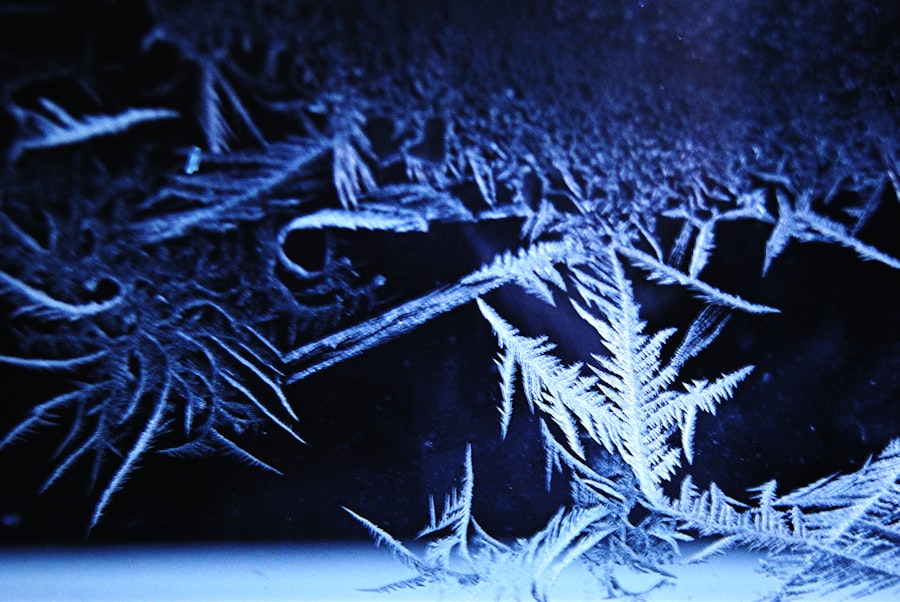
Triton’s orbit around Neptune is highly eccentric, meaning its distance from the Sun varies considerably throughout its 165-year orbital period. This eccentricity, combined with Neptune’s axial tilt, leads to dramatic seasonal changes on Triton, which profoundly influence its nitrogen frost cycle and atmospheric dynamics.
The Impact of Axial Tilt and Orbit Eccentricity
Neptune has an axial tilt of approximately 28.3 degrees, similar to Earth’s. This tilt causes seasonal variations in solar insolation at different latitudes. Coupled with Triton’s eccentric orbit, which can bring it closer or farther from the Sun during its slow journey around Neptune, these effects create extreme seasonal shifts. During Triton’s long summer at one pole, that hemisphere receives significantly more direct sunlight for an extended period.
Seasonal Thickening and Thinning of the Atmosphere
During Triton’s summer, increased sublimation leads to a substantial increase in atmospheric nitrogen. The atmosphere literally “inflates” as solid frost turns into gas. This thickening significantly raises atmospheric pressure. Conversely, during the long winter, temperatures plummet, leading to widespread deposition of nitrogen frost and a corresponding thinning of the atmosphere. The atmospheric pressure can vary by orders of magnitude between summer and winter.
Formation of Polar Caps and Transitory Features
The seasonal influx of nitrogen leads to the formation of large polar caps of nitrogen frost. During the summer, the polar cap on the hemisphere experiencing sunlight will shrink as its frost sublimates, while the opposite pole, in winter darkness, will see its frost cap grow. The dynamic nature of these caps and the associated atmospheric changes are the “weather” of Triton, driven by the ebb and flow of nitrogen.
Potential for Global Atmospheric Circulation
The large temperature gradients created by these seasonal changes, particularly between the sunlit summer pole and the frigid winter hemisphere, are thought to drive global atmospheric circulation. Winds are predicted to flow from the cold regions towards the warmer regions, completing a vast atmospheric cycle. The geysers likely play a role in this circulation by injecting nitrogen and particles into the upper atmosphere.
Recent studies have shed light on the intriguing nitrogen frost cycles occurring on Triton, Neptune’s largest moon, and how they compare to the moon’s venting activities. These cycles, which involve the sublimation and deposition of nitrogen frost, play a crucial role in shaping Triton’s surface and atmosphere. For a deeper understanding of these phenomena, you can explore a related article that discusses the implications of Triton’s unique geological features and their connection to its venting processes. Check out the article here for more insights: Triton Nitrogen Frost Cycles and Venting.
Implications for Understanding Cryovolcanism and Exoplanet Atmospheres
| Parameter | Frost Cycles | Venting | Notes |
|---|---|---|---|
| Temperature Range (°C) | -210 to -195 | -210 to -195 | Typical Triton surface temperature range |
| Cycle Duration | ~1 Triton day (6 Earth days) | Continuous or periodic | Frost cycles correspond to diurnal changes |
| Nitrogen Frost Thickness (cm) | 0.1 to 1.0 | Variable | Thickness changes with frost deposition and sublimation |
| Surface Pressure Variation (μbar) | 5 to 14 | Up to 14 | Pressure increases during sublimation, decreases during frost deposition |
| Gas Release Rate (g/m²/day) | 10 to 50 | Up to 100 | Venting events can release trapped gases rapidly |
| Effect on Surface Albedo | Increase during frost deposition | Decrease after venting | Frost brightens surface; venting exposes darker material |
| Impact on Atmospheric Composition | Moderate seasonal variation | Localized spikes in nitrogen and trace gases | Venting can inject gases into atmosphere suddenly |
The study of Triton’s nitrogen frost cycle and its geysers holds significant implications for our understanding of cryovolcanism on other icy bodies and for characterizing exoplanet atmospheres. Triton serves as a real-world laboratory for processes that may be widespread throughout the solar system and beyond.
Cryovolcanism Beyond Triton
Triton is not the only icy moon in our solar system exhibiting cryovolcanic activity. Enceladus, Saturn’s moon, famously erupts plumes of water ice and other volatiles from its south polar region. While the composition differs (water ice vs. nitrogen frost), the underlying principle of internal heat or tidal forces driving the expulsion of subsurface material into space bears resemblance. Studying Triton helps us generalize our models of cryovolcanism.
Atmospheric Modeling on Icy Worlds
Understanding the complex feedback loops between surface frost, solar insolation, atmospheric pressure, and temperature on Triton is crucial for developing predictive models of atmospheres on other icy moons and terrestrial planets. Triton’s extreme cryogenic conditions push our models to their limits, forcing us to account for phase transitions and outgassing in ways that are less pronounced on warmer worlds.
Searching for Biosignatures
The presence of active geysers that entrain surface material raises intriguing possibilities for astrobiology. If Triton or other icy moons harbor subsurface oceans and have organic molecules present, then geyser activity could potentially transport these molecules to the surface, or even eject them into space where they could be detected by future missions. While speculation, the mechanisms at play on Triton inform our strategies for searching for life beyond Earth.
Lessons for Exoplanet Characterization
As we discover more exoplanets, particularly those orbiting dimmer, cooler stars, we will encounter worlds with conditions that bear a closer resemblance to Triton than to Earth. Understanding Triton’s atmospheric processes, where nitrogen plays such a dominant role and phase transitions occur at extremely low temperatures, provides a valuable framework for interpreting the spectra and atmospheric signatures of these distant worlds. It reminds us that “weather” can take on many forms beyond the familiar water cycle.
In conclusion, Triton’s nitrogen frost cycle is a remarkable testament to the dynamic processes that can occur on worlds far from the Sun. By comparing it to terrestrial volcanic venting, we highlight the contrasting energy sources and material compositions, while simultaneously recognizing the universal principles of atmospheric interaction and material transport. The geysers of Triton serve as visible manifestations of this cycle, offering a tantalizing glimpse into the ongoing geological and atmospheric evolution of this intriguing Neptunian moon, and providing invaluable insights for understanding the diverse and often surprising nature of celestial bodies throughout the cosmos.
STOP: The Neptune Lie Ends Now
FAQs
What is nitrogen frost cycling on Triton?
Nitrogen frost cycling on Triton refers to the seasonal process where nitrogen ice sublimates (turns from solid to gas) during the warmer months and re-condenses as frost during the colder months. This cycle affects Triton’s surface pressure and atmosphere.
How does venting occur on Triton?
Venting on Triton happens when solar heating causes subsurface nitrogen ice to sublimate, building pressure beneath the surface until it breaks through, releasing gas and dark material in geyser-like plumes. This process contributes to surface changes and atmospheric dynamics.
What are the main differences between nitrogen frost cycles and venting on Triton?
Nitrogen frost cycles involve gradual seasonal sublimation and deposition of nitrogen ice across Triton’s surface, while venting is a more localized, sudden release of gas and material through geysers. Frost cycles affect large-scale atmospheric pressure changes, whereas venting creates surface features and transient plumes.
How do nitrogen frost cycles impact Triton’s atmosphere?
The sublimation of nitrogen frost during warmer periods increases atmospheric pressure by adding nitrogen gas to the atmosphere, while re-condensation during colder periods reduces atmospheric pressure. This seasonal variation drives weather patterns and atmospheric dynamics on Triton.
Why is studying nitrogen frost cycles and venting important for understanding Triton?
Studying these processes helps scientists understand Triton’s climate, geological activity, and atmospheric behavior. It also provides insights into similar processes on other icy bodies in the outer solar system, contributing to broader planetary science knowledge.