
The exploration of consciousness has long been a subject of intrigue, straddling the realms of philosophy, psychology, and neuroscience. However, recent advancements in quantum physics have opened new avenues for understanding this complex phenomenon. The intersection of consciousness and quantum mechanics has led to groundbreaking experiments that challenge traditional notions of reality and perception.
These physics-breaking experiments not only question the fundamental principles of the universe but also invite a reevaluation of the role consciousness plays in shaping human experience. As researchers delve deeper into the mysteries of consciousness, they encounter a myriad of questions that blur the lines between science and philosophy. What is consciousness?
How does it interact with the physical world? Can it influence quantum events? These inquiries have sparked a wave of innovative experiments designed to probe the relationship between consciousness and the fabric of reality itself.
By examining phenomena such as the observer effect, entanglement, and superposition, scientists are beginning to unravel the intricate tapestry that connects consciousness with the quantum realm.
Key Takeaways
- Consciousness may play a fundamental role in quantum phenomena such as the observer effect and measurement problem.
- The double-slit experiment highlights how conscious observation can influence particle behavior.
- Quantum entanglement suggests a non-local connection that could be linked to consciousness.
- Consciousness might affect time perception and challenge classical views of time in physics.
- Physics-breaking experiments imply that understanding consciousness could require new physics beyond current quantum theory.
The Quantum Consciousness Theory
The Quantum Consciousness Theory posits that consciousness is not merely a byproduct of neural processes but may play a fundamental role in the workings of the universe at a quantum level. This theory suggests that consciousness could be intertwined with quantum mechanics, influencing the behavior of particles in ways that challenge conventional understanding. Proponents argue that consciousness might be a non-local phenomenon, existing beyond the confines of space and time, thus allowing it to interact with quantum systems in unique ways.
One of the most compelling aspects of this theory is its potential to bridge the gap between subjective experience and objective reality. If consciousness is indeed a quantum phenomenon, it could provide insights into how individual perceptions shape the universe. This perspective invites a radical rethinking of the nature of reality itself, suggesting that consciousness may not simply observe the universe but actively participates in its unfolding.
As researchers continue to explore this theory, they are uncovering evidence that could fundamentally alter our understanding of both consciousness and the physical world. The chart shows a significant
The Double-Slit Experiment stands as one of the most iconic demonstrations in quantum mechanics, illustrating the peculiar behavior of particles when observed. In this experiment, particles such as electrons are fired at a barrier with two slits, creating an interference pattern on a screen behind it. However, when an observer attempts to measure which slit a particle passes through, the interference pattern collapses, and particles behave as if they are classical objects rather than waves.
This phenomenon raises profound questions about the role of consciousness in observation. The implications of this experiment extend far beyond mere curiosity; they suggest that consciousness may play a pivotal role in determining the outcome of quantum events. The act of observation appears to influence reality itself, leading some theorists to propose that consciousness is an integral component of the measurement process.
This challenges the traditional view that observation is merely a passive act, instead positing that conscious awareness actively shapes the behavior of particles at a fundamental level. As scientists grapple with these revelations, they are compelled to reconsider the nature of reality and the extent to which consciousness influences it.
Entanglement and Consciousness
Entanglement is another cornerstone of quantum mechanics that has profound implications for understanding consciousness. When two particles become entangled, their states become interdependent regardless of the distance separating them. A change in one particle’s state instantaneously affects its entangled partner, defying classical notions of locality.
This phenomenon raises intriguing questions about the nature of interconnectedness and whether consciousness itself can be entangled in similar ways. Some researchers speculate that entangled states may provide a framework for understanding collective consciousness or shared experiences among individuals. If consciousness can be entangled, it could lead to a deeper understanding of phenomena such as intuition or telepathy, where individuals seem to share information without direct communication.
This perspective invites further exploration into how consciousness might transcend individual boundaries, suggesting that our experiences may be more interconnected than previously thought.
The Role of Consciousness in the Observer Effect
| Experiment Name | Researcher(s) | Year | Objective | Key Findings | Implications for Consciousness |
|---|---|---|---|---|---|
| Double-Slit Experiment with Conscious Observation | Dean Radin | 2000 | Test if conscious observation affects quantum wave function collapse | Data suggested slight changes in interference pattern when subjects focused attention | Supports hypothesis that consciousness may influence physical reality at quantum level |
| Global Consciousness Project | Roger D. Nelson | 1998–Present | Measure correlations between global events and random number generators | Statistically significant deviations during major global events | Suggests collective consciousness might have measurable physical effects |
| Libet’s Readiness Potential Experiment | Benjamin Libet | 1983 | Investigate timing of conscious intention and brain activity | Brain activity precedes conscious decision by ~350 ms | Challenges traditional notions of free will and conscious control |
| Delayed Choice Quantum Eraser | Yoon-Ho Kim et al. | 1999 | Test if future measurement affects past quantum events | Measurement choice appears to retroactively affect photon behavior | Raises questions about time, causality, and observer’s role in reality |
| Stapp’s Quantum Mind Hypothesis | Henry P. Stapp | 1990s–Present | Explore quantum mechanics as basis for consciousness | Proposes consciousness causes collapse of wave function | Integrates physics and consciousness, suggesting mind influences matter |
The Observer Effect is a fundamental concept in quantum mechanics that highlights how the act of measurement can alter a system’s state. This effect raises critical questions about the nature of reality and the role consciousness plays in shaping it. When an observer interacts with a quantum system, their conscious awareness appears to influence the outcome, leading some theorists to propose that consciousness itself is an active participant in the measurement process.
This notion challenges traditional scientific paradigms that view observation as a neutral act devoid of influence. Instead, it suggests that consciousness may be intricately woven into the fabric of reality, shaping outcomes based on awareness and intention. As researchers continue to investigate this phenomenon, they are uncovering evidence that could redefine our understanding of both consciousness and the fundamental principles governing the universe.
Consciousness and the Measurement Problem
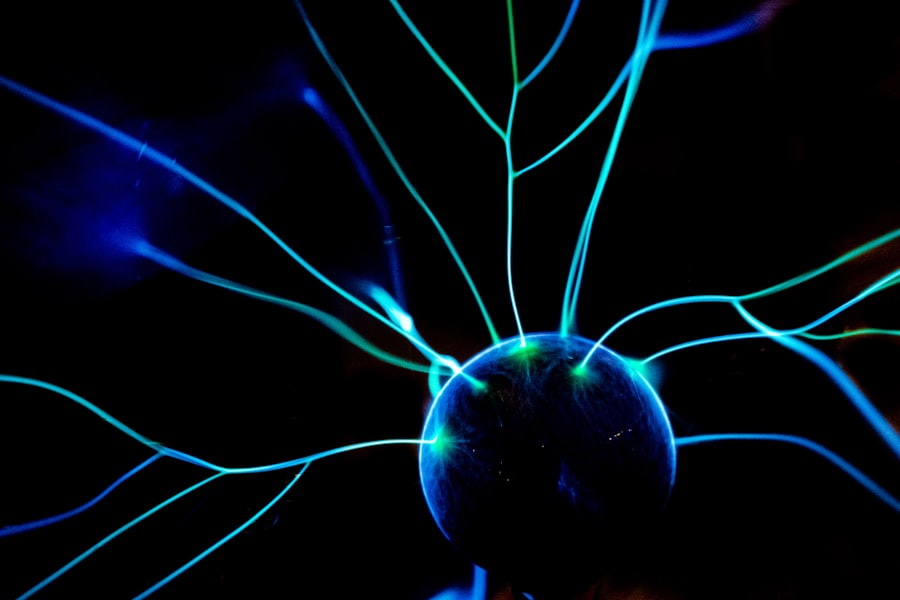
The Measurement Problem in quantum mechanics revolves around the question of how and why quantum systems transition from superposition to definite states upon measurement. This dilemma has perplexed physicists for decades, leading to various interpretations attempting to explain this transition. One compelling interpretation posits that consciousness plays a crucial role in this process, acting as a catalyst for collapse.
According to this view, when a conscious observer measures a quantum system, their awareness causes the wave function to collapse into a specific state. This perspective aligns with theories suggesting that consciousness is not merely an epiphenomenon but an active participant in shaping reality. By exploring this connection between consciousness and measurement, researchers are beginning to unravel one of the most profound mysteries in physics, potentially leading to new insights into both quantum mechanics and human experience.
Experiments on Non-Locality and Consciousness
Non-locality is a fundamental aspect of quantum mechanics that challenges classical notions of space and time. It suggests that particles can be instantaneously connected regardless of distance, leading to implications for understanding consciousness as well. Recent experiments exploring non-locality have raised intriguing questions about whether consciousness itself can exhibit non-local properties.
Some researchers have proposed that collective human consciousness may operate on non-local principles, allowing for shared experiences or insights across vast distances. This perspective invites further investigation into phenomena such as group intuition or collective decision-making processes, where individuals seem to tap into a shared pool of knowledge or awareness. By examining these connections between non-locality and consciousness, scientists are uncovering new dimensions of human experience that transcend traditional boundaries.
The Role of Consciousness in Time Perception
Time perception is another area where consciousness plays a pivotal role in shaping human experience. While time is often viewed as a linear progression from past to future, research suggests that conscious awareness can alter how individuals perceive time. Quantum mechanics introduces concepts such as superposition and entanglement that challenge conventional understandings of time, inviting exploration into how consciousness interacts with these phenomena.
Some theories propose that consciousness may allow individuals to experience time non-linearly, tapping into past memories or future possibilities simultaneously. This perspective aligns with findings in psychology suggesting that subjective experiences of time can vary significantly based on attention and awareness. By investigating these connections between consciousness and time perception, researchers are uncovering new insights into how individuals navigate their experiences within the framework of reality.
Consciousness and the Uncertainty Principle
The Uncertainty Principle is a cornerstone of quantum mechanics that asserts limitations on simultaneously knowing certain pairs of properties, such as position and momentum. This principle has profound implications for understanding consciousness and its relationship with reality. Some theorists suggest that consciousness itself may embody uncertainty, reflecting the inherent unpredictability present in quantum systems.
This perspective invites exploration into how conscious awareness navigates uncertainty and ambiguity within human experience. Just as particles exist in probabilistic states until measured, individuals may also grapple with uncertainty in their thoughts and decisions until they reach clarity through conscious reflection.
The Connection Between Consciousness and Quantum Superposition
Quantum superposition refers to the ability of particles to exist in multiple states simultaneously until measured or observed. This phenomenon raises intriguing questions about how consciousness interacts with superposition and whether it plays a role in determining which state becomes manifest upon observation. Some theorists propose that conscious awareness may collapse superpositions into definite outcomes, suggesting an active participation in shaping reality.
This connection between consciousness and superposition invites further exploration into how individuals navigate choices and possibilities within their lives. Just as particles exist in multiple states until observed, individuals may also experience various potential paths until they consciously choose one direction. By investigating these parallels between quantum superposition and conscious decision-making processes, researchers are uncovering new insights into how awareness influences both personal experiences and broader realities.
Implications of Physics-Breaking Experiments for Understanding Consciousness
The implications of physics-breaking experiments for understanding consciousness are profound and far-reaching. As researchers continue to explore the intersections between quantum mechanics and conscious experience, they are uncovering new dimensions of reality that challenge traditional paradigms. These experiments invite a reevaluation of what it means to be conscious and how individual awareness shapes not only personal experiences but also the fabric of reality itself.
By examining phenomena such as entanglement, non-locality, and the observer effect through the lens of consciousness, scientists are beginning to unravel one of humanity’s most enduring mysteries: the nature of existence itself. As these explorations unfold, they hold the potential to transform not only our understanding of physics but also our perception of what it means to be human in an interconnected universe. The journey into the depths of consciousness continues to inspire curiosity and wonder, inviting individuals to contemplate their place within the grand tapestry of existence.
Recent advancements in physics have sparked intriguing discussions around consciousness and its potential implications in the realm of quantum mechanics. One particularly thought-provoking article that delves into this intersection is found on XFile Findings, which explores various experiments aimed at understanding the nature of consciousness through a scientific lens. For more insights, you can read the article [here](https://www.xfilefindings.com/sample-page/).
WATCH THIS! The 9/11 Spike That Proves Collective Consciousness Is Real (Random Number Generators)
FAQs
What are physics breaking consciousness experiments?
Physics breaking consciousness experiments refer to scientific studies that explore the relationship between physical laws and human consciousness, often investigating phenomena that challenge or extend traditional understandings of physics.
What is the goal of these experiments?
The goal is to understand how consciousness interacts with or influences physical reality, potentially revealing new insights into the nature of reality, quantum mechanics, and the mind-body connection.
Are these experiments widely accepted in the scientific community?
While some aspects of consciousness research are mainstream, experiments claiming to “break” or challenge established physics are often controversial and subject to ongoing debate and scrutiny within the scientific community.
What methods are commonly used in these experiments?
Methods may include quantum measurement tests, studies of observer effects, brain imaging during altered states of consciousness, and experiments involving entanglement or non-locality related to conscious observation.
Can these experiments prove that consciousness affects physical reality?
Currently, there is no definitive proof that consciousness directly alters physical laws, but some experimental results suggest intriguing correlations that warrant further investigation.
Who are some notable researchers in this field?
Notable figures include physicists and neuroscientists such as Roger Penrose, Stuart Hameroff, and Dean Radin, who have contributed to theories linking consciousness with quantum physics.
What are the potential implications if these experiments are validated?
If validated, these findings could revolutionize our understanding of consciousness, physics, and reality, potentially impacting fields like quantum computing, neuroscience, and philosophy.
Are there any practical applications of this research?
While still largely theoretical, potential applications could include advancements in brain-computer interfaces, enhanced cognitive technologies, and new approaches to mental health treatment.
How can one stay updated on developments in this area?
Following scientific journals, attending conferences on consciousness and quantum physics, and engaging with reputable research institutions can help individuals stay informed about the latest findings.