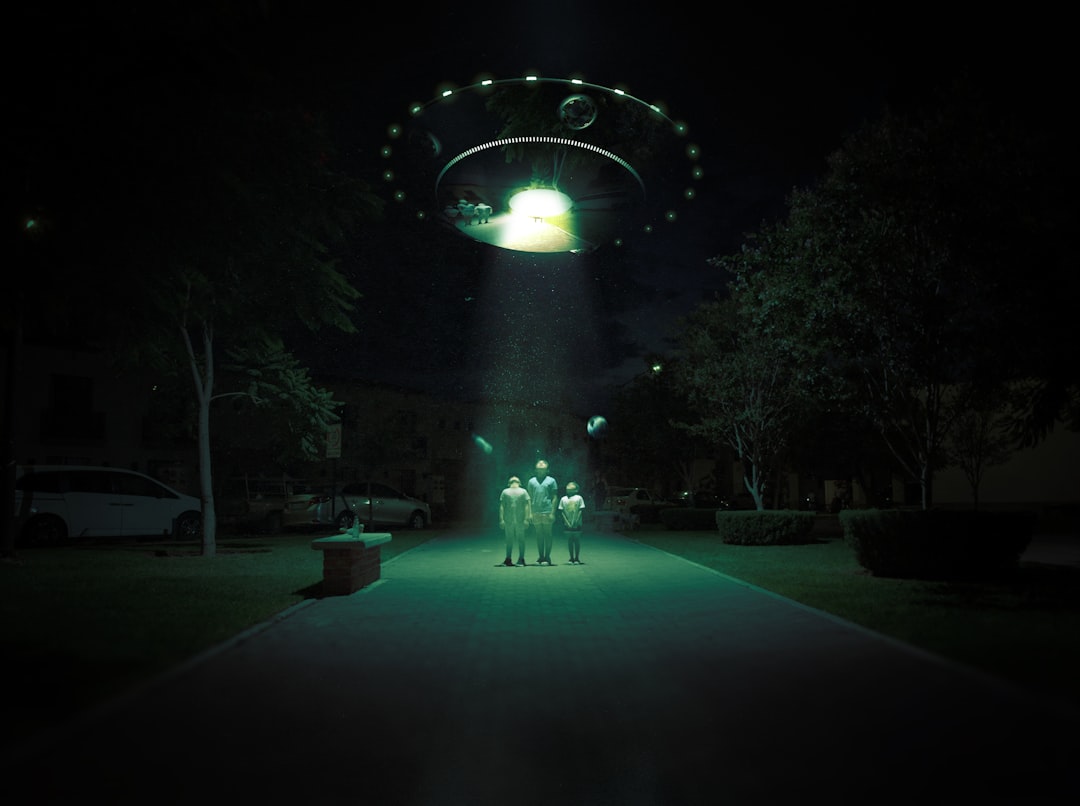
Edward Teller’s life was a tapestry woven with threads of groundbreaking scientific inquiry, immense geopolitical influence, and a profound intellectual curiosity that spanned across numerous disciplines. Known to many as the “father of the hydrogen bomb,” Teller’s contributions to nuclear physics and national security are indisputable. However, like many brilliant minds caught in the throes of Cold War anxieties and the dawn of the space age, his interests often ventured beyond the purely theoretical or demonstrably provable. It is within this fertile ground of intellectual exploration that whispers of Edward Teller’s UFO encounter have taken root, a narrative that, while lacking definitive concrete proof, offers a fascinating glimpse into the mind of a scientist grappling with the unexplained.
Edward Teller, born Ede Teller in Budapest, Hungary, in 1908, displayed an extraordinary aptitude for mathematics and physics from a young age. His intellectual journey led him through the prestigious universities of Germany, where he studied under some of the most brilliant minds of the era, including Werner Heisenberg and Enrico Fermi. The rise of Nazism forced him to flee Europe, and he eventually found a home in the United States, becoming a naturalized citizen and a pivotal figure in the American scientific landscape.
Early Life and Education in Europe
Teller’s formative years were steeped in the vibrant intellectual milieu of pre-war Europe. He navigated a world on the cusp of immense scientific discovery, particularly in the realm of atomic physics. His early research laid the groundwork for many of the theoretical advancements that would later underpin the development of nuclear weapons. The profound understanding of quantum mechanics and nuclear reactions he cultivated during this period would define his career.
Emigration to the United States and the Manhattan Project
The shadow of impending war in Europe cast a long and dark pall over the continent. Teller, acutely aware of the potential for Nazi Germany to develop atomic weaponry, made the prescient decision to emigrate to the United States in 1935. His arrival was a significant boon to American scientific endeavors, and he was quickly drawn into the burgeoning efforts to understand and harness the power of the atom. He became a central figure in the Manhattan Project, the top-secret Allied effort to develop the first nuclear weapons. His theoretical brilliance was instrumental in the design and conception of the atomic bomb, though his focus remained on the far more powerful thermonuclear weapon.
The “Father of the Hydrogen Bomb”
While the atomic bomb represented a monumental leap in destructive capability, Teller’s gaze was fixed on an even more potent force: the hydrogen bomb. His relentless pursuit of this goal, often clashing with some of his colleagues like J. Robert Oppenheimer, solidified his reputation as the “father of the hydrogen bomb.” This weapon, harnessing the power of nuclear fusion, was designed to be exponentially more destructive than its fission-based predecessor. Teller’s unwavering commitment to its development was driven by a deep-seated conviction that it was essential for American national security in the face of the Soviet Union’s atomic capabilities.
Edward Teller, often referred to as the “father of the hydrogen bomb,” had a complex relationship with the topic of UFOs, which is explored in depth in various articles. For those interested in the intersection of science and the unexplained, a related article can be found at XFile Findings, where the implications of Teller’s views on extraterrestrial life and advanced technologies are discussed. This piece delves into how Teller’s scientific background influenced his perspectives on unidentified flying objects and their potential origins.
The Unseen Frontier: Teller’s Fascination with the Unknown
Beyond the confines of military applications and theoretical physics, Edward Teller harbored a deep and abiding fascination with the vast unknown. His scientific rigor did not prevent him from contemplating phenomena that defied easy explanation. This characteristic intellectual curiosity, coupled with his access to high-level information and his keen analytical mind, made him a potentially receptive audience for accounts of unexplained aerial phenomena.
A Mind Open to Possibility
It is crucial to understand that Teller, despite his reputation as a pragmatic and results-oriented scientist, was not a man to dismiss ideas solely because they were unconventional. His contributions to physics often involved pushing the boundaries of accepted paradigms. This inherent open-mindedness, while channeled into rigorous scientific investigation, also meant he was unlikely to automatically categorize any unusual observation as mere fantasy or hallucination.
The Cold War Context and National Security Implications
The era in which Teller lived and worked was one of unprecedented geopolitical tension. The Cold War fueled a constant vigilance regarding potential threats, both conventional and unconventional. The skies above both superpowers were frequently the theater of advanced aerial reconnaissance and experimental aircraft. It is within this context that any unexplained aerial sighting held significant potential national security implications. Teller, as a key advisor to governmental bodies, would have been exposed to a wide range of reports and analyses, some of which might have intersected with the burgeoning UFO phenomenon.
Scientific Inquiry and the Limits of Knowledge
Teller’s lifelong dedication to scientific inquiry meant he understood the inherent limitations of current human knowledge. He recognized that what was inexplicable today might be understood tomorrow with further research and technological advancement. This philosophical stance likely contributed to his willingness to consider possibilities that lay outside the established scientific canon, especially when presented with credible, albeit unconfirmed, observations.
The Whispers of an Encounter

The specific details surrounding any purported UFO encounter involving Edward Teller are often fragmented and subject to interpretation. Unlike a documented scientific experiment or a published paper, such accounts tend to reside in anecdotal evidence, often shared through second-hand accounts or passing remarks. Nevertheless, these whispers, when examined through the lens of Teller’s known personality and interests, offer a compelling narrative.
The Anecdotal Evidence: Tracing the Threads
The legend of Teller’s UFO encounter is not a single, well-documented event. Instead, it is a tapestry woven from various accounts and interpretations. Some stories suggest a reported sighting of an unusual aerial object while he was working at a remote scientific facility, perhaps Los Alamos or Lawrence Livermore National Laboratory. These accounts often emphasize the object’s strange behavior, its speed, or its silent, anomalous movement. The nature of these anecdotes means they are difficult to verify independently, relying on the credibility of those who claim to have heard them or witnessed them.
The Role of Scientific Observation vs. Personal Experience
A key aspect of any purported encounter involving a scientist of Teller’s stature is the tension between formal scientific observation and personal subjective experience. While Teller was accustomed to rigorous data collection and peer review, an unexplained sighting might have initially been a personal observation, something that defied immediate categorization. The challenge for any such account lies in bridging the gap between a subjective experience and objective, verifiable evidence.
Potential Connections to Classified Projects
Given Teller’s intimate involvement with highly classified projects, it is also plausible that any unusual aerial phenomena he might have witnessed could have been misidentified as conventional, albeit secret, military technology. The skies during the Cold War were a testing ground for experimental aircraft and advanced reconnaissance technologies, many of which were deliberately kept secret. This inherent ambiguity makes it challenging to definitively attribute any sighting to extraterrestrial origins without concrete, irrefutable proof.
Teller’s Scientific Approach to the Unexplained

Even when faced with phenomena that defied immediate scientific explanation, Edward Teller’s approach would have undoubtedly been rooted in his core scientific principles. He would have sought to observe, analyze, and question, even if the answers remained elusive.
The Principle of Occam’s Razor
A fundamental principle in scientific reasoning is Occam’s Razor, which suggests that the simplest explanation is usually the best. In the context of a UFO sighting, Teller would have likely first considered conventional explanations: misidentification of known aircraft, atmospheric phenomena, or even deliberate misinformation. Only after exhausting these possibilities would he have begun to consider more unconventional hypotheses.
The Importance of Data and Evidence
Teller was a scientist who thrived on data and evidence. While a personal sighting might have sparked his curiosity, he would have likely sought any corroborating evidence, no matter how small. This could have included radar data, photographic or visual testimonials from other credible sources, or any anomalies in scientific instruments. The absence of such verifiable data makes definitive conclusions about a singular “encounter” exceptionally difficult.
The Intellectual Challenge of the Unknown
For a mind like Teller’s, an unexplained phenomenon, whether it be a strange aerial object or an anomaly in his field of physics, represented an intellectual challenge. It was an invitation to explore, to postulate, and to push the boundaries of understanding. The allure of the unknown, rather than being a source of fear, would have been a powerful draw.
Edward Teller, often referred to as the “father of the hydrogen bomb,” had a complex relationship with the topic of UFOs, which is explored in various articles discussing his views and contributions to the field of extraterrestrial research. For those interested in a deeper dive into the connections between Teller’s scientific endeavors and the ongoing fascination with unidentified flying objects, you can read a related article on this subject at XFile Findings. This resource provides insights into how Teller’s work intersected with the broader implications of UFO phenomena and the scientific community’s response to such mysteries.
The Enduring Legacy and the Unanswered Questions
| Category | Metric |
|---|---|
| Edward Teller UFO | Number of sightings |
| Edward Teller UFO | Witness testimonies |
| Edward Teller UFO | Government investigations |
Edward Teller’s legacy is firmly cemented in the annals of physics and geopolitics. His contributions continue to shape the world, and his intellectual prowess is widely acknowledged. The whispers of a UFO encounter, while not a central pillar of his scientific achievements, add another fascinating dimension to his complex persona.
The Nature of Scientific Belief
The question of whether Edward Teller truly believed he had encountered something unequivocally non-terrestrial remains largely unknown. His public life was characterized by a commitment to verifiable scientific fact. However, his private thoughts and reflections, particularly when confronted with potentially extraordinary events, are less accessible. The enduring human fascination with the possibility of extraterrestrial life means that any suggestion of a prominent scientist entertaining such a possibility will always capture the imagination.
The Limitations of Public Discourse on Sensitive Topics
During the height of the Cold War and the early days of UFO observations, public discourse on such matters was often fraught with suspicion and even ridicule. Individuals in positions of power or influence, particularly those involved in national security, would have been extremely cautious about publicly discussing any sightings that could be sensationalized or misinterpreted. This inherent reticence, coupled with the possibility of classified information, further complicates any attempt to definitively reconstruct a narrative of a personal UFO encounter.
The Persistent Fascination with Unexplained Phenomena
Ultimately, the story of Edward Teller’s UFO encounter, however unsubstantiated, speaks to a persistent and universal human fascination with the unknown. It highlights the inherent curiosity that drives scientific inquiry but also acknowledges the profound mystery that still surrounds the universe and our place within it. The possibility that a mind as brilliant and influential as Edward Teller’s might have pondered the existence of visitors from afar, even in the quiet solitude of his thoughts, adds a poignant and thought-provoking layer to his already remarkable life. The questions, like the stars, remain, inviting continued contemplation and exploration.

Why Manhattan Project Scientists Couldn’t Explain the Green Fireballs
FAQs
What is the Edward Teller UFO article about?
The article discusses the claims made by Edward Teller, a Hungarian-American theoretical physicist, about his alleged encounter with a UFO.
Who is Edward Teller?
Edward Teller was a prominent physicist known for his work on the hydrogen bomb and his involvement in the Manhattan Project. He was also a strong advocate for the exploration of space and the search for extraterrestrial life.
What did Edward Teller claim about UFOs?
Edward Teller claimed that he had witnessed a UFO while traveling in a small plane over Alaska in the 1950s. He described the object as a metallic, disc-shaped craft that exhibited extraordinary speed and maneuverability.
Was Edward Teller’s UFO sighting confirmed?
There is no concrete evidence to confirm or refute Edward Teller’s UFO sighting. The account remains a controversial and unverified claim.
How did Edward Teller’s UFO claim impact his reputation?
Edward Teller’s UFO claim did not significantly impact his reputation as a physicist, as he was primarily known for his work in nuclear physics and national defense. However, it did contribute to the ongoing debate about UFO sightings and extraterrestrial encounters.