
The reliable operation of many modern systems depends on precisely timed signals. These timing signals are often derived from highly stable oscillators, and their accuracy is critical. For applications where even minute deviations can have significant consequences, such as telecommunications, financial trading, navigation, and scientific experimentation, simply having a stable oscillator is often insufficient. These oscillators require a continuous and accurate temporal reference to maintain their precision over time. This is where Global Positioning System (GPS) disciplined oscillators (GPSDOs) come into play. A GPSDO leverages the inherent accuracy of GPS satellite signals to discipline the output frequency and phase of an internal oscillator, thereby providing a highly accurate and stable time base. However, to fully trust the output of a GPSDO, a rigorous process of signal verification is essential. This verification ensures that the disciplining process is working as intended and that the output signal meets the required specifications.
An oscillator, at its core, is an electronic circuit that produces a repetitive signal, typically a sine wave, at a specific frequency. The stability of this signal is paramount. While high-quality quartz crystal oscillators or oven-controlled crystal oscillators (OCXOs) offer good short-term stability, they are susceptible to long-term drifts caused by aging, temperature variations, and other environmental factors. This drift, however small, can accumulate over time, leading to significant timing inaccuracies.
The Role of GPS in Frequency and Time Standards
The Global Positioning System, originally developed for military purposes, has evolved into a ubiquitous navigation and timing service. The satellites in the GPS constellation transmit precisely timed signals that are synchronized with atomic clocks. These atomic clocks are among the most accurate timekeeping devices known. By receiving signals from multiple GPS satellites, a receiver can determine its position, altitude, and velocity. Crucially, it also receives a highly accurate time signal. This time signal is effectively a direct tie to Coordinated Universal Time (UTC), albeit with slight differences due to leap seconds and other adjustments.
How GPS Disciplines an Oscillator
A GPSDO functions by comparing the output of its internal, high-stability oscillator with the time information received from the GPS satellites. A dedicated GPS receiver within the GPSDO locks onto the satellite signals and extracts the precise timing data. This timing data is then fed into a control loop.
The Control Loop Mechanism
The control loop is the heart of the GPSDO’s disciplining functionality. It continuously monitors the phase and frequency difference between the oscillator’s output and the GPS-derived time reference. If a discrepancy is detected, the control loop generates a correction signal that adjusts the oscillator’s frequency and/or phase. This adjustment is typically made by fine-tuning a voltage-controlled element within the oscillator’s resonant circuit. The goal is to continuously steer the oscillator’s output to match the GPS reference, thereby achieving an accuracy far exceeding that of the oscillator alone.
Servo Control and Loop Bandwidth
The performance of the control loop is governed by several factors, including the type of servo control algorithm used and the loop bandwidth. The servo algorithm determines how aggressively the oscillator is corrected. A tighter servo loop can achieve better short-term accuracy but may also introduce more noise or be more susceptible to short-term GPS signal fluctuations. The loop bandwidth defines the range of frequencies over which the GPS signal influences the disciplined oscillator. A wider bandwidth allows the oscillator to respond more quickly to changes in the GPS reference, while a narrower bandwidth offers better attenuation of short-term noise and improves long-term stability.
Benefits of GPSDOs
The primary benefit of a GPSDO is its ability to provide a traceable and highly accurate time and frequency reference. This eliminates the need for expensive and complex atomic clock systems for many applications. The accessibility and relative affordability of GPSDOs have made high-precision timing achievable for a wider range of industries and research fields.
In the realm of GPS disciplined oscillator signal verification, a comprehensive understanding of the underlying technologies is crucial for ensuring accuracy and reliability. For further insights into this topic, you can explore a related article that delves into the intricacies of signal verification methods and their applications in various fields. To read more, visit this article.
The Imperative of Signal Verification
While the concept of a GPSDO is compelling, its efficacy hinges on the integrity and accuracy of its output signal. The disciplining process is not inherently infallible. External factors, hardware malfunctions, or software issues can compromise the accuracy. Therefore, a robust signal verification process is not merely a good practice; it is a fundamental requirement for any application relying on the precision of a GPSDO. This verification serves as a crucial validation step, ensuring confidence in the system’s timing performance.
Identifying Potential Failure Modes
Without proper verification, a GPSDO could appear to be functioning correctly while subtly deviating from its intended accuracy. Potential failure modes include:
GPS Signal Acquisition Issues
The GPSDO relies on a consistent and accurate GPS signal. Obstructions, interference, or even antenna placement issues can prevent the GPS receiver from acquiring the necessary satellite signals or lead to the reception of degraded or spoofed signals.
Antenna Placement and Environment
The GPS antenna’s location is critical. Line-of-sight to multiple satellites is essential. Indoor environments, urban canyons with tall buildings, or areas with significant electromagnetic interference can all degrade GPS signal quality.
Jamming and Spoofing Threats
While less common in everyday use, GPS signals are susceptible to intentional jamming (blocking the signal) and spoofing (transmitting false signals). A compromised GPS signal directly impacts the disciplining accuracy.
Internal Oscillator Drift or Failure
Even with GPS disciplining, the underlying oscillator can experience its own issues. Aging of components, temperature-induced drift exceeding the control loop’s capacity, or outright failure of the oscillator can all lead to an inaccurate output.
Aging and Component Degradation
Electronic components, including those within an oscillator, degrade over time. This natural aging process can shift the oscillator’s frequency and phase characteristics, potentially making it harder for the GPSDO to maintain lock.
Temperature Sensitivity
While OCXOs are designed to minimize temperature effects, extreme or rapid temperature changes can still stress the oscillator and its components, leading to temporary or permanent inaccuracies.
Control Loop Malfunctions
The sophisticated control loop that manages the disciplining process itself can encounter problems. Software bugs, hardware faults in the control circuitry, or misconfiguration can lead to incorrect adjustments or a complete loss of disciplining.
Software Glitches and Configuration Errors
Incorrect settings or unexpected behavior in the GPSDO’s firmware can disrupt the control loop. This could manifest as over-correction, under-correction, or oscillation within the control system.
Hardware Component Failures
The electronic components that constitute the control loop, such as digital-to-analog converters (DACs) or analog-to-digital converters (ADCs), can fail, rendering the disciplining ineffective.
The Goal of Verification
The overarching goal of signal verification for a GPSDO is to provide objective evidence that the device is operating within its specified accuracy limits. This evidence is crucial for operational decision-making, regulatory compliance, and maintaining the integrity of dependent systems.
Verification Methodologies
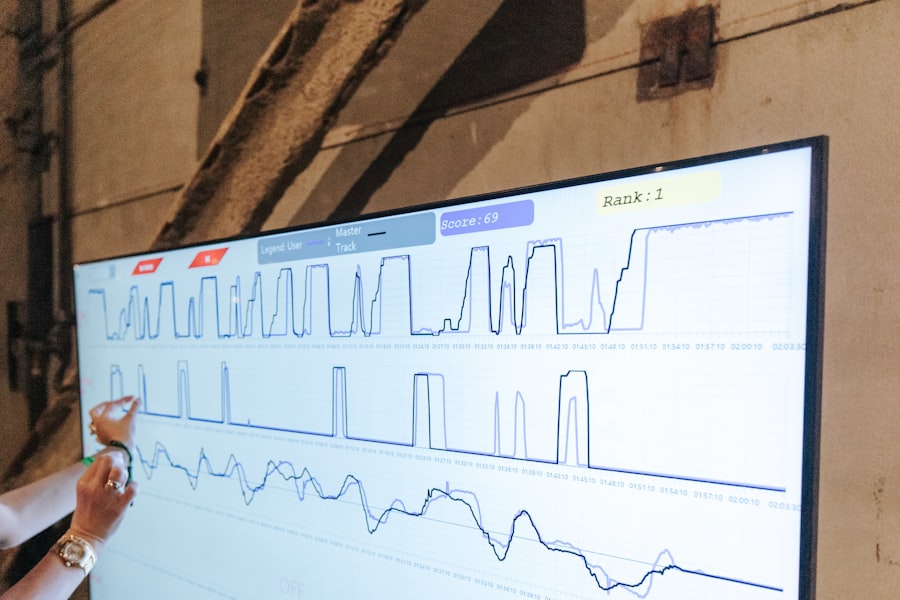
A comprehensive verification strategy for a GPSDO typically involves a combination of direct measurements, comparative analysis, and monitoring of operational parameters. These methods, when employed in conjunction, provide a multi-layered approach to ensuring signal accuracy.
Direct Measurement of Output Frequency and Phase
The most straightforward verification method involves directly measuring the output signal’s frequency and phase against a known, independent standard.
Using a Frequency Counter
A high-precision frequency counter is indispensable for verifying the output frequency. This instrument measures the number of cycles of the GPSDO’s output waveform occurring within a specific time interval.
Long-Term Averaging
For accurate frequency verification, long-term averaging is often employed. This involves counting cycles over extended periods (hours or days) to smooth out short-term fluctuations and reveal the subtle, long-term drift of the oscillator.
Dead-Time and Resolution Considerations
Care must be taken regarding the dead-time of the frequency counter (the time between measurements) and its inherent resolution. These factors can introduce small errors if not properly accounted for.
Using a Phase Detector or Phase Comparator
To assess phase accuracy, a phase detector or phase comparator is used. This instrument compares the phase of the GPSDO’s output signal with that of a reference signal.
Allan Deviation Analysis
A standard technique for characterizing the stability of oscillators is Allan deviation. This statistical measure quantifies the frequency fluctuations of the oscillator as a function of averaging time. For GPSDOs, Allan deviation analysis can reveal how well the disciplining process is suppressing noise and maintaining stability across different timescales.
Understanding Allan Variance
Allan variance, the square of Allan deviation, is a measure of the variance of the frequency differences between successive averaging intervals. Lower Allan variance indicates better oscillator stability.
Interpreting Allan Deviation Plots
Plots of Allan deviation versus averaging time provide valuable insights. A well-disciplined oscillator will typically exhibit a decrease in Allan deviation as averaging time increases, indicating increasing stability. Deviations from this expected behavior can signal issues.
Comparison Against a Trusted Reference
Another critical verification method involves comparing the GPSDO’s output against another, independently verified and highly accurate time source.
Using a Secondary GPSDO
Comparing the output of a suspect GPSDO against a known-good, secondary GPSDO can highlight discrepancies. If both devices are properly synchronized to GPS, their outputs should be virtually identical.
Synchronization and Measurement Baselines
Ensuring that both GPSDOs are properly synchronized and that the comparison is performed over a sufficient baseline is crucial for meaningful results.
Using an Atomic Clock Standard
The ultimate reference for time and frequency is an atomic clock. If available, comparing the GPSDO’s output directly against an atomic clock provides the highest level of confidence in its accuracy.
Traceability to National Metrology Institutes
Atomic clocks maintained by national metrology institutes (NMIs) serve as primary standards. Verification against such a standard provides traceability of the GPSDO’s accuracy to international timekeeping benchmarks.
Monitoring GPS Signal Health and Lock Status
The GPSDO’s internal monitoring capabilities can provide valuable real-time feedback on the health of the GPS signal and the effectiveness of the disciplining process.
Satellite Geometry and Signal Strength
The GPSDO typically reports the number of satellites it is tracking and the signal strength from each. A low number of satellites or weak signal strength can indicate potential issues that might affect accuracy.
Dilution of Precision (DOP)
Dilution of Precision (DOP) is a measure of the geometric arrangement of the satellites. High DOP values can indicate less accurate position fixes and, by extension, potentially less stable time synchronization.
Vertical DOP (VDOP) and Horizontal DOP (HDOP)
VDOP specifically relates to altitude accuracy, while HDOP relates to horizontal position accuracy. Both can be indirectly indicative of timing uncertainty if the GPS receiver is relying on a smaller set of satellites or a poor geometric configuration.
Disciplining Loop Status Indicators
Most GPSDOs provide status indicators for the disciplining loop itself. These might include parameters like lock status, correction applied, and signal-to-noise ratio on the GPS input.
Deviations from Expected Behavior
Any unusual fluctuations or persistent error messages from these indicators warrant further investigation. For instance, a loop that is constantly applying large corrections might suggest an unstable internal oscillator.
Environmental Monitoring
While not directly measuring the output signal, monitoring environmental conditions that can affect the GPSDO’s performance is an important complementary verification step.
Temperature and Humidity Logging
Significant variations in temperature and humidity can impact the performance of even the most stable oscillators. Logging these parameters alongside signal accuracy measurements can help identify correlation between environmental factors and any observed deviations.
Impact on Oscillator Stability
Extreme temperature fluctuations can cause internal stress within the oscillator components, potentially leading to transient frequency shifts or even permanent damage.
Practical Implementation of Verification
The theoretical methodologies of GPSDO signal verification must be translated into practical, repeatable procedures. This involves establishing a clear protocol, utilizing appropriate instrumentation, and maintaining diligent record-keeping.
Establishing a Verification Protocol
A detailed verification protocol is essential for ensuring consistency and thoroughness. This protocol should outline the specific tests to be performed, the required instrumentation, the frequency of verification, and the acceptable tolerance levels for deviations.
Defining Acceptance Criteria
Clearly defined acceptance criteria are paramount. These criteria specify the maximum allowable error in frequency and phase that the GPSDO can exhibit to be considered within operational specifications. These are often derived from the system’s overall timing requirements.
Regulatory and Industry Standards
In many fields, regulatory bodies or industry standards dictate the required levels of timing accuracy. The verification process must ensure that the GPSDO meets these mandates, such as those found in telecommunications (e.g., ITU-T recommendations) or financial services.
Setting Verification Frequency
The frequency with which verification is performed depends on the criticality of the application and the anticipated stability of the GPSDO. For highly sensitive applications, daily or even continuous verification might be necessary. For less critical systems, weekly or monthly checks might suffice.
Continuous Monitoring Versus Periodic Testing
Continuous monitoring offers the highest level of assurance by providing real-time alerts to any deviations. Periodic testing, while less resource-intensive, relies on the assumption that the system remains stable between checks.
Instrumentation and Test Equipment
The accuracy and reliability of the verification process depend heavily on the quality of the test equipment used.
Calibration of Measurement Tools
All measurement instruments, including frequency counters, phase comparators, and spectrum analyzers, must be regularly calibrated against traceable standards. This ensures that the measurements themselves are accurate and reliable.
Traceability of Standards
Calibration laboratories themselves must maintain traceability to national or international metrology institutes, ensuring a chain of accuracy back to fundamental standards.
Software for Data Acquisition and Analysis
Automated data acquisition and analysis software can significantly streamline the verification process. This software can collect readings from various instruments, perform statistical analysis, generate reports, and alert operators to potential issues.
Trend Analysis and Anomaly Detection
Sophisticated software can perform trend analysis on collected data, identifying gradual drifts or subtle anomalies that might otherwise go unnoticed during manual inspection of individual readings.
Documentation and Record-Keeping
Meticulous documentation of all verification activities is crucial for demonstrating compliance, troubleshooting issues, and tracking the long-term performance of the GPSDO.
Maintaining a Verification Log
A detailed log should be maintained for each verification event, including the date and time of the test, the instruments used, the readings obtained, and any observations or actions taken.
Audit Trails and Compliance
For regulated industries, comprehensive audit trails of verification activities are essential for demonstrating compliance with quality management systems and regulatory requirements.
Root Cause Analysis of Failures
When a GPSDO fails verification, a thorough root cause analysis must be performed to identify the underlying issue. This analysis might involve examining logs, reviewing environmental data, and inspecting the hardware.
Corrective and Preventive Actions
Based on the root cause analysis, appropriate corrective actions should be implemented to fix the immediate problem. Preventive actions should also be considered to mitigate the risk of recurrence.
In the realm of GPS disciplined oscillator signal verification, a comprehensive understanding of the underlying technologies is crucial for ensuring accuracy and reliability. A related article that delves into this topic can be found at XFile Findings, where it explores various methodologies and advancements in signal verification techniques. This resource provides valuable insights for professionals seeking to enhance their knowledge in the field and improve the performance of GPS systems.
Advanced Verification Techniques
| Signal Parameter | Specification | Measured Value |
|---|---|---|
| Frequency Accuracy | ±1×10^-9 | 1.2×10^-9 |
| Phase Noise | -100 dBc/Hz @ 1 Hz offset | -105 dBc/Hz @ 1 Hz offset |
| Time Error | ±100 ns | 95 ns |
| Holdover Stability | ±1×10^-8 | 8×10^-9 |
Beyond fundamental measurements, several advanced techniques can enhance the verification process, providing deeper insights into the GPSDO’s performance and potential vulnerabilities.
Real-Time Performance Monitoring
Modern GPSDOs often integrate sophisticated self-monitoring capabilities. Leveraging these features can transition verification from a periodic task to a continuous process.
Embedded Diagnostics and Health Checks
Many GPSDOs include built-in diagnostic routines that periodically check the health of internal components and the integrity of the disciplining loop. These self-checks can identify issues before they lead to significant timing inaccuracies.
Event Logging and Alerting
These systems can generate detailed event logs, documenting anomalies, errors, or deviations from normal operating parameters. Robust alerting mechanisms can then notify operators in real-time, enabling prompt intervention.
Networked Monitoring and Remote Access
For distributed systems or geographically dispersed installations, networked monitoring and remote access are invaluable. This allows for centralized oversight and management of multiple GPSDOs.
Centralized Dashboard and Reporting
A centralized dashboard can provide a consolidated view of the status and performance of all monitored GPSDOs. Automated reporting features can generate regular summaries of key performance indicators.
Integration with Larger Time and Frequency Management Systems
In complex environments, GPSDOs are often part of a larger time and frequency management ecosystem. Integrating verification procedures into these broader systems offers synergistic benefits.
Redundancy and Failover Testing
Testing the redundancy and failover mechanisms of a system that relies on GPSDOs is crucial. This involves simulating GPS signal loss or the failure of a primary GPSDO to ensure that backup systems function correctly.
Cross-Discipline Verification
If a system employs multiple, independent timing sources (e.g., an atomic clock alongside a GPSDO), cross-discipline verification can be performed. This involves comparing the outputs of these different sources to ensure they remain synchronized.
Security Considerations in Verification
With the increasing threat of cyberattacks, security aspects of signal verification must also be considered.
Authentication and Integrity of GPS Data
While not always part of routine verification, ensuring the authentication and integrity of the GPS time data itself is a critical security consideration. Techniques like Encrypted GPS (EGPS) or receiver autonomous integrity monitoring (RAIM) can play a role here.
Spoofing Detection Mechanisms
Verification protocols can be enhanced by incorporating checks for known spoofing patterns or unusual signal characteristics that might indicate malicious interference.
Simulation and Stress Testing
Deliberately simulating adverse conditions can help uncover weaknesses in the GPSDO’s robusthess and its ability to recover from disturbances.
Simulating GPS Signal Outages
Intentionally introducing periods of GPS signal loss or degradation allows for the assessment of the GPSDO’s holdover capabilities (how long it can maintain accuracy on its internal oscillator alone) and its ability to reacquire the GPS signal when it becomes available.
Holdover Performance Evaluation
The duration and accuracy of the GPSDO’s holdover period are critical parameters. Stress testing can determine if this performance meets the required specifications under various conditions.
Introducing Controlled Noise and Interference
Injecting controlled levels of noise or interference into the GPS signal path can reveal how effectively the GPSDO’s receiver and disciplining loop reject unwanted signals.
Resilience to RF Interference
Assessing the GPSDO’s resilience to various forms of radio frequency (RF) interference is important, particularly in environments with significant electronic activity.
Conclusion: Elevating Trust Through Rigorous Verification
The Global Positioning System disciplined oscillator represents a significant advancement in achieving highly accurate and traceable time and frequency references. However, the inherent complexity of these systems necessitates a proactive and systematic approach to ensure their continued accuracy and reliability. Rigorous signal verification is not an optional add-on but a fundamental component of their deployment and operation.
By implementing comprehensive verification methodologies, encompassing direct measurements, comparative analysis, and intelligent monitoring, coupled with meticulous documentation and adherence to established protocols, organizations can build a high degree of confidence in their timing infrastructure. Advanced techniques, including real-time monitoring, integration with broader management systems, and deliberate stress testing, further solidify this confidence by proactively identifying and mitigating potential issues. Ultimately, a commitment to ongoing and thorough signal verification empowers systems to operate with the precision and reliability demanded by today’s interconnected and technologically sophisticated world, transforming the potential of GPSDOs into dependable performance.
FAQs
What is a GPS disciplined oscillator (GPSDO)?
A GPS disciplined oscillator (GPSDO) is a type of oscillator that uses signals from GPS satellites to discipline its output frequency, resulting in highly accurate and stable timing signals.
How does signal verification work for a GPS disciplined oscillator?
Signal verification for a GPS disciplined oscillator involves comparing the output frequency of the oscillator with the reference signals received from GPS satellites. This comparison ensures that the oscillator is disciplined and operating within specified tolerances.
Why is signal verification important for a GPS disciplined oscillator?
Signal verification is important for a GPS disciplined oscillator to ensure that it is providing accurate and reliable timing signals. This is crucial for applications such as telecommunications, navigation systems, and precision timing in scientific and industrial settings.
What are the benefits of using a GPS disciplined oscillator?
The benefits of using a GPS disciplined oscillator include high accuracy, stability, and reliability in timing signals. It also eliminates the need for costly and complex timing distribution systems, making it a cost-effective solution for precision timing applications.
How can signal verification be performed for a GPS disciplined oscillator?
Signal verification for a GPS disciplined oscillator can be performed using specialized equipment that compares the oscillator’s output frequency with the reference signals from GPS satellites. This equipment may include frequency counters, phase detectors, and software tools for analysis and verification.