Establishing a Permanent Military Base on the Moon
The prospect of a permanent military base on the Moon has transitioned from the realm of science fiction to a tangible, albeit complex, strategic consideration. As humanity’s presence in space expands, driven by technological advancements and evolving geopolitical landscapes, the celestial body nearest to Earth presents a unique set of opportunities and challenges for military planners. The establishment of such a base would represent a significant paradigm shift in global security, necessitating a comprehensive understanding of its potential implications, the technological hurdles involved, and the ethical and legal frameworks that would govern its existence.
The Moon, with its low gravity, lack of atmosphere, and strategic location, offers a unique vantage point and potential resource hub. For any nation or coalition of nations that successfully establishes and maintains a permanent military presence there, the implications for power projection, scientific advancement, and resource control would be profound. However, the sheer scale of the undertaking, both in terms of cost and technological sophistication, means that such a venture would likely require unprecedented international cooperation or a singular, sustained national effort of immense proportion. The decision to embark on such a path is not merely a matter of engineering but a complex geopolitical calculus, weighed against potential benefits, risks, and the long-term vision for humanity’s future in space.
The rationale behind establishing a permanent military base on the Moon is multifaceted, stemming from a confluence of strategic imperatives and evolving global dynamics. The Moon’s proximity to Earth, coupled with its unique environmental characteristics, makes it an attractive location for a variety of military objectives. Understanding these motivations is crucial to appreciating the potential trajectory of lunar development and the implications for international security.
Enhanced Earth Observation and Intelligence Gathering
The Moon’s unchanging surface and high vantage point offer an unparalleled platform for Earth observation. From lunar bases, constellations of sensors could monitor terrestrial activities with a level of detail and consistency unattainable from Earth-bound or low-Earth orbit platforms. This would provide a significant intelligence advantage, enabling continuous surveillance of military movements, environmental changes, and potentially even economic activities across the globe.
Uninterrupted Surveillance Capabilities
Unlike satellites in Earth orbit, which are subject to orbital mechanics and atmospheric interference, a lunar base could provide a constant, unobstructed view of specific regions or the entire planet. This persistent presence would eliminate blind spots and allow for real-time data acquisition, crucial for early warning systems and dynamic threat assessment.
Advanced Sensor Deployment and Maintenance
A permanent base would facilitate the deployment and maintenance of sophisticated sensor arrays, including advanced optical telescopes, radar systems, and other specialized equipment. The ability to service and upgrade these instruments in situ would ensure their optimal performance and longevity, maximizing their intelligence-gathering potential.
Covert Observation and Reconnaissance
The sheer distance and the Moon’s natural shielding properties could also lend themselves to covert observation. Sensitive listening posts or reconnaissance platforms could be established on the far side of the Moon, shielded from direct Earth-based detection, offering a degree of operational security currently unimaginable.
Space Situational Awareness and Domain Control
The Moon serves as a gateway to cis-lunar space, the region between the Earth and the Moon. A military base on its surface would provide a crucial hub for monitoring and managing this increasingly contested domain, vital for protecting Earth-bound assets and future space operations.
Monitoring and Tracking of Space Objects
A lunar base could serve as a central node for tracking all objects in cis-lunar space, from active satellites and debris to potential inbound threats. This comprehensive awareness would be critical for preventing collisions, ensuring the safe passage of spacecraft, and identifying any unauthorized or hostile activities.
Interception and Defensive Capabilities
In a future where space-based conflict is a real possibility, a lunar base could house defensive systems capable of intercepting threats in cis-lunar space. This could include kinetic interceptors, directed-energy weapons, or other countermeasures designed to protect Earth and its orbital infrastructure.
Command and Control of Lunar Operations
A permanent base would offer a secure and stable platform for commanding and controlling all military and potentially civilian operations on the Moon and in its immediate vicinity. This would be essential for coordinating resource extraction, infrastructure development, and any defensive maneuvers.
Resource Extraction and Strategic Material Stockpiling
The Moon is believed to hold valuable resources, particularly water ice, helium-3, and rare earth elements. A military base could serve as the vanguard for securing and exploiting these resources, ensuring national or coalition access and potentially establishing strategic stockpiles.
Water Ice for Life Support and Propellant
Water ice, found in polar craters, is a critical resource for life support systems (drinking water, oxygen) and for producing rocket propellant through electrolysis. A military base could secure and process these ice deposits, making lunar operations more self-sufficient and reducing reliance on Earth-based resupply.
Helium-3 for Future Fusion Power
Helium-3, a rare isotope on Earth but potentially abundant in lunar regolith, is a key ingredient for future nuclear fusion power. While fusion technology is still in development, securing a source of helium-3 could represent a significant long-term strategic advantage for energy security.
Rare Earth Elements and Other Minerals
The Moon may also contain deposits of rare earth elements and other valuable minerals. A military presence could facilitate their extraction, providing crucial materials for advanced technologies and reducing dependence on terrestrial supply chains that may be vulnerable to disruption.
Forward Deployment and Power Projection
A lunar base would fundamentally alter the calculus of power projection. It would serve as a forward operating base, allowing for rapid deployment of assets and personnel to support operations in space, on Earth, or potentially even on other celestial bodies in the future.
Rapid Response Capabilities
From a lunar base, response times to events in Earth orbit or even to certain terrestrial crises could be significantly reduced. This rapid deployment capability could be a decisive factor in military contingencies.
Symbolic Presence and Deterrence
The mere establishment of a permanent military base on the Moon would be a powerful symbol of national or coalition power and technological prowess. This visible presence could serve as a significant deterrent to potential adversaries, signaling a commitment to maintaining a dominant position in space.
Stepping Stone for Deeper Space Exploration
A lunar base could also serve as a crucial staging point and logistical hub for more ambitious deep space missions, including the exploration and potential exploitation of asteroids or other planets.
The concept of establishing a permanent military base on the Moon has sparked considerable debate among experts and policymakers. For a deeper understanding of the implications and strategic considerations surrounding this initiative, you can read a related article that explores the potential benefits and challenges of lunar militarization. This article provides insights into the geopolitical landscape and the technological advancements necessary for such an endeavor. To learn more, visit this link.
Technological Challenges and Requirements
The establishment and maintenance of a permanent military base on the Moon are contingent upon overcoming a formidable array of technological challenges. These range from the fundamental requirements of survival in a hostile environment to the sophisticated systems needed for operational effectiveness and long-term sustainability.
Life Support Systems and Environmental Adaptation
The lunar environment is fundamentally inhospitable to human life, characterized by a vacuum, extreme temperature fluctuations, and high levels of radiation. Robust and reliable life support systems are therefore paramount.
Closed-Loop Life Support
Advanced closed-loop systems that recycle air, water, and waste are essential to minimize resupply needs from Earth. These systems must be highly efficient and resilient to malfunctions.
Radiation Shielding
The Moon lacks a protective atmosphere and magnetic field, exposing inhabitants to dangerous levels of cosmic and solar radiation. Effective shielding for habitats, vehicles, and operational areas is critical to astronaut health and longevity. This could involve using lunar regolith, water, or specialized materials.
Thermal Regulation
Temperatures on the Moon can swing dramatically between scorching sunlight and frigid darkness. Sophisticated thermal control systems are needed to maintain habitable internal temperatures for both humans and sensitive equipment.
Artificial Gravity
The long-term effects of lunar gravity (one-sixth of Earth’s) on human physiology are not fully understood. While not strictly necessary for initial operations, the development of artificial gravity solutions within habitats or during transit might be considered for extended stays and future crew health.
Habitat Construction and Infrastructure Development
Building a permanent base requires innovative construction techniques and the development of essential infrastructure in an alien environment.
In-Situ Resource Utilization (ISRU) for Construction
Leveraging lunar resources, such as regolith, to 3D print or construct habitats and other structures would significantly reduce the mass that needs to be launched from Earth, making the project more economically viable. This includes developing techniques for sintering, melting, or binding regolith.
Robotic Construction and Automation
Robots will play a crucial role in site preparation, excavation, material handling, and the assembly of habitat modules and other infrastructure, minimizing human exposure to hazardous conditions.
Power Generation and Distribution
Reliable and sustainable power is essential. Options include solar power (with energy storage for lunar nights), nuclear fission reactors, or potentially even future fusion power sources if helium-3 is exploited. An efficient power distribution grid will also be needed across the base.
Communications Infrastructure
Maintaining robust and secure communication links with Earth and within the lunar base is vital. This includes high-bandwidth connections for data transfer and real-time voice communication. Lunar relay satellites might also be necessary for continuous coverage.
Transportation and Logistics
Moving personnel and supplies across the lunar surface and to and from Earth presents unique logistical challenges.
Lunar Surface Mobility
Pressurized rovers for long-distance travel, unpressurized vehicles for shorter excursions, and potentially even aerial drones for reconnaissance and transport will be needed. These vehicles must be designed to operate in the lunar vacuum and on uneven terrain.
Lunar Ascent and Descent Vehicles
Reliable vehicles capable of safely landing on the Moon and returning to orbit or Earth are fundamental. These will require advanced propulsion systems and precise navigation capabilities.
Orbital Transfer and Refueling Capabilities
Establishing a regular supply chain to the Moon will necessitate efficient orbital transfer vehicles and potentially in-orbit refueling capabilities, either in Earth orbit or at lunar staging points.
Defense and Security Systems
A military base, by definition, requires robust defense and security measures to protect personnel, assets, and operational integrity.
Autonomous Defense Systems
Given potential communication delays and the need for rapid response, autonomous or semi-autonomous defense systems capable of identifying and neutralizing threats will likely be a necessity.
Surveillance and Early Warning Systems
Comprehensive sensor networks, both on the base and in the surrounding lunar environment, will be crucial for detecting any potential intrusions or hostile actions.
Countermeasures Against Space-Based Threats
Systems designed to defend against potential attacks from Earth-orbiting satellites or other space-based platforms would need to be integrated.
Long-Term Sustainability and Maintenance
Ensuring the long-term viability of a lunar base requires addressing issues of repair, resupply, and crew well-being over extended periods.
On-Site Repair and Manufacturing Capabilities
The ability to repair and even manufacture spare parts on-site using ISRU and advanced manufacturing techniques like 3D printing is crucial to reducing reliance on Earth.
Crew Health and Psychological Well-being
Long-duration missions in isolation present significant psychological challenges. Strategies for maintaining crew morale, mental health, and physical fitness, including regular communication with loved ones and opportunities for recreation, will be vital.
Redundancy and Fail-Safe Systems
All critical systems, from life support to power generation, must have multiple layers of redundancy and fail-safe mechanisms to ensure operational continuity even in the event of component failures.
Legal and Ethical Considerations

The establishment of a permanent military base on the Moon is fraught with complex legal and ethical considerations that will require careful navigation to ensure a peaceful and equitable development of lunar activities. These issues touch upon international law, the principles of responsible space exploration, and the very notion of territorial claims in an extraterrestrial context.
International Law and the Outer Space Treaty
The foundational legal framework governing space activities is the Outer Space Treaty of 1967. This treaty, to which most space-faring nations are signatories, has several key provisions that are directly relevant to lunar bases.
Non-Appropriation of Celestial Bodies
The treaty explicitly states that outer space, including the Moon and other celestial bodies, is not subject to national appropriation by claim of sovereignty, by means of use or occupation, or by any other means. This principle directly challenges the traditional concept of establishing a military base as a territorial assertion.
Peaceful Purposes Clause
The Outer Space Treaty mandates that space exploration and use shall be carried out for the benefit of all countries and in the interests of peace and security. The emplacement of military installations, particularly those with offensive capabilities, could be seen as conflicting with this spirit of peaceful use.
Registration and Liability
While the treaty requires states to register objects launched into space, it does not explicitly address the registration or governance of permanent extraterrestrial bases. Furthermore, questions of liability for damage caused by lunar base operations or activities would need to be clarified.
Military Use of Space and Arms Control
The deployment of military assets on the Moon raises significant questions about the militarization of space and the potential for an arms race.
Defining “Military Base” and “Weapons”
The precise definition of a “military base” in the lunar context and what constitutes “weapons” in space remains a subject of ongoing debate and interpretation. Any ambiguity could lead to misunderstandings and escalations.
Prevention of an Arms Race
A key objective of international space law has been to prevent the weaponization of space. The establishment of military bases could be perceived as a step towards this, potentially triggering reciprocal actions from other nations and leading to a dangerous arms race on the Moon and in cis-lunar space.
Verification and Transparency
Ensuring compliance with any arms control agreements or treaties related to lunar military activities would require robust verification mechanisms and a high degree of transparency, which could be challenging to implement in such a remote environment.
Resource Rights and Equitable Access
As the potential for lunar resource extraction grows, so too does the complexity of establishing clear and equitable access rights.
Ownership and Exploitation of Lunar Resources
The Outer Space Treaty does not explicitly address the ownership or exploitation of resources extracted from celestial bodies. This is a significant legal vacuum that needs to be addressed to avoid disputes.
Benefit Sharing and International Cooperation
Discussions are ongoing regarding frameworks for sharing the benefits derived from lunar resource exploitation, potentially through international bodies or treaties, to ensure that all nations can benefit from humanity’s expansion into space.
Environmental Protection and Sustainable Practices
Any military or civilian activity on the Moon must consider the potential for environmental damage. Establishing guidelines for responsible resource extraction, waste disposal, and the preservation of unique lunar geological sites is ethically imperative.
Ethical Implications of Lunar Colonization and Militarization
Beyond legal frameworks, the very act of establishing a permanent human presence, especially a military one, on another celestial body raises profound ethical questions.
The Sanctity of Space
Some argue that celestial bodies should be preserved in their natural state for scientific study and future generations, and that permanent human settlements, especially military ones, are an unwelcome intrusion.
The Risk of Conflict Beyond Earth
Establishing a military presence could normalize conflict in space, potentially leading to a dangerous precedent for future extraterrestrial endeavors.
Responsibility to Future Generations
Decisions made today about the Moon’s governance and development will have long-lasting consequences for humanity’s future in space. Ensuring that these decisions are made with a long-term perspective, prioritizing peace and sustainability, is a significant ethical responsibility.
Geopolitical Implications and International Relations
The establishment of a permanent military base on the Moon would profoundly reshape the global geopolitical landscape, influencing international relations, national security strategies, and the balance of power in the 21st century and beyond. It is a development that would necessitate a fundamental re-evaluation of existing alliances and rivalries.
Shifting Power Dynamics and the New Space Race
The nation or coalition that successfully establishes and maintains a dominant military presence on the Moon would gain a significant strategic advantage, potentially altering the current global power equilibrium. This could catalyze a new era of competition, akin to the Cold War space race, but with potentially higher stakes.
Dominance in Cis-Lunar Space
Control over a lunar base would translate into significant influence over cis-lunar space, a critical region for Earth observation, satellite operations, and future space-based infrastructure. This dominance could be used to assert influence over other space-faring nations.
Enhanced Global Reach and Influence
A lunar base would provide a unique platform for power projection, enabling a nation to project its influence far beyond Earth’s atmosphere. This could be leveraged through diplomatic means, economic pressure, or even through military threats.
Technological Superiority as a Diplomatic Tool
The technological prowess required to establish and sustain a lunar base would itself be a significant diplomatic asset, demonstrating a nation’s capabilities and potentially attracting new allies or reinforcing existing partnerships.
The Impact on Existing Alliances and Partnerships
The development of a lunar military base could either strengthen existing alliances or create new divisions. Nations that are not part of the leading lunar power bloc might feel compelled to form their own alliances for collective security.
Strengthening of Existing Blocs
If a major existing alliance, such as NATO, were to jointly establish a lunar base, it could significantly strengthen their collective security and deter potential adversaries. This would solidify their position on the global stage.
Emergence of New Geopolitical Alignments
Conversely, if a single nation or a smaller coalition spearheads the effort, other nations might feel marginalized and seek to form counter-alliances. This could lead to new geopolitical blocs and increased tensions.
Increased Demand for Space-Based Capabilities
The existence of a lunar military presence would likely spur increased investment and development in space-based defense and surveillance capabilities across all major powers, leading to a more militarized space environment.
The Potential for Conflict and Deterrence
While a lunar base could serve as a deterrent, it also carries the inherent risk of escalating tensions and potentially leading to conflict in space.
Deterrent Effect of a Lunar Presence
The visible and permanent nature of a lunar base could act as a powerful deterrent against aggression, signaling a nation’s commitment to defending its interests in space and its ability to project power.
The Risk of Lunar “Territorial” Disputes
Despite the Outer Space Treaty’s non-appropriation clause, disputes over resource access, operational zones, or even perceived threats could arise, potentially leading to conflicts that are difficult to resolve without a clear legal framework.
The Escalation Ladder
Any conflict that begins on the Moon or in cis-lunar space could have far-reaching implications and potentially escalate to terrestrial conflict, underscoring the need for de-escalation mechanisms and clear communication channels.
The Role of International Cooperation and Governance
The challenges and implications of lunar military bases underscore the critical need for enhanced international cooperation and the development of robust governance structures for space activities.
The Necessity of a Unified Space Governance Framework
The current legal framework is insufficient to address the complexities of permanent extraterrestrial bases. A more comprehensive and adaptable international agreement is needed to govern resource rights, military activities, and dispute resolution.
Promoting Transparency and Confidence-Building Measures
To mitigate the risks of mistrust and escalation, transparency in lunar activities and the implementation of confidence-building measures among space-faring nations are essential. This could involve joint scientific missions or shared data platforms.
The Importance of Diplomacy in Space
Ultimately, maintaining peace and security in the lunar environment will depend on effective diplomacy, open communication, and a shared commitment to responsible stewardship of space.
The concept of establishing a permanent military base on the Moon has sparked considerable debate among experts and policymakers. Proponents argue that such a base could serve as a strategic outpost for monitoring space activities and ensuring national security. For those interested in exploring the implications of lunar military presence further, a related article discusses various aspects of this topic in detail. You can read more about it in this insightful piece here.
Future Prospects and Strategic Outlook
| Aspect | Details |
|---|---|
| Location | Moon’s surface |
| Purpose | Research, defense, exploration |
| Construction | Advanced materials and technology |
| Facilities | Habitats, laboratories, communication center |
| Personnel | Military personnel, scientists, engineers |
| Sustainability | Life support systems, resource utilization |
The establishment of a permanent military base on the Moon, while a monumental undertaking, is increasingly likely to become a reality in the coming decades. The strategic calculus, driven by technological advancements, resource potential, and evolving geopolitical dynamics, points towards a future where humanity’s footprint extends beyond Earth’s atmosphere in a more permanent and purposeful way.
The Evolution of Lunar Presence
The initial phases of lunar presence will likely involve robotic exploration and temporary human outposts. However, the strategic advantages of a permanent, self-sustaining military presence will drive the transition towards more robust and long-term installations.
Phased Development and Incremental Growth
The establishment of a lunar base will not be an overnight event. It will likely involve a phased approach, beginning with robotic infrastructure deployment, followed by temporary crewed missions, and eventually leading to permanent habitation and operational capabilities.
The Role of Private Sector Involvement
While military objectives may drive the initial impetus, private sector companies will undoubtedly play a crucial role in developing the necessary technologies, logistics, and potentially even infrastructure for lunar operations. This could lead to hybrid military-civilian installations.
Long-Term Vision Beyond Earth
The Moon could serve as a stepping stone for even more ambitious endeavors, such as lunar resource utilization to support missions to Mars or other celestial bodies, or the development of a space-based industrial complex.
The Interplay of Civilian and Military Interests
The distinction between civilian and military interests on the Moon is likely to become increasingly blurred. Resource extraction, scientific research, and tourism will all require a secure and stable environment, which a military presence could help to provide.
Ensuring Access and Security for Scientific Research
A military presence could provide the necessary security and infrastructure to facilitate ambitious scientific research programs on the Moon, from astronomy to geology and astrobiology.
Protecting Economic Ventures
As private companies invest in lunar resource extraction and other economic activities, a military presence could be seen as a necessary guarantor of their security and the stability of lunar operations.
The Dual-Use Nature of Lunar Infrastructure
Many of the technologies and infrastructure developed for military purposes on the Moon will have dual-use applications, benefiting scientific and commercial endeavors, and vice-versa. This interconnectedness will likely drive further integration.
The Importance of Proactive Governance and Diplomacy
The proactive development of international governance frameworks and robust diplomatic engagement are critical to ensuring that the establishment of lunar military bases leads to increased security rather than heightened conflict.
Adapting International Law for Lunar Realities
Existing space law needs to be updated and expanded to address the unique challenges of permanent extraterrestrial bases, resource utilization, and potential territorial disputes.
Fostering a Culture of Cooperation
Prioritizing cooperation over competition in the development of lunar capabilities can lead to more sustainable and equitable outcomes, ensuring that the Moon benefits all of humanity.
Continuous Dialogue and Conflict Resolution Mechanisms
Establishing clear communication channels and effective mechanisms for conflict resolution will be paramount in navigating the complex geopolitical landscape that will emerge with permanent lunar installations.
The establishment of a permanent military base on the Moon represents a profound juncture in human history. It is a development that promises to redefine strategic capabilities, unlock new economic opportunities, and push the boundaries of human exploration. However, it also carries significant risks that demand careful consideration, international cooperation, and a commitment to peace and responsible stewardship of our nearest celestial neighbor. The decisions made today will shape the future of humanity’s presence in space for generations to come.
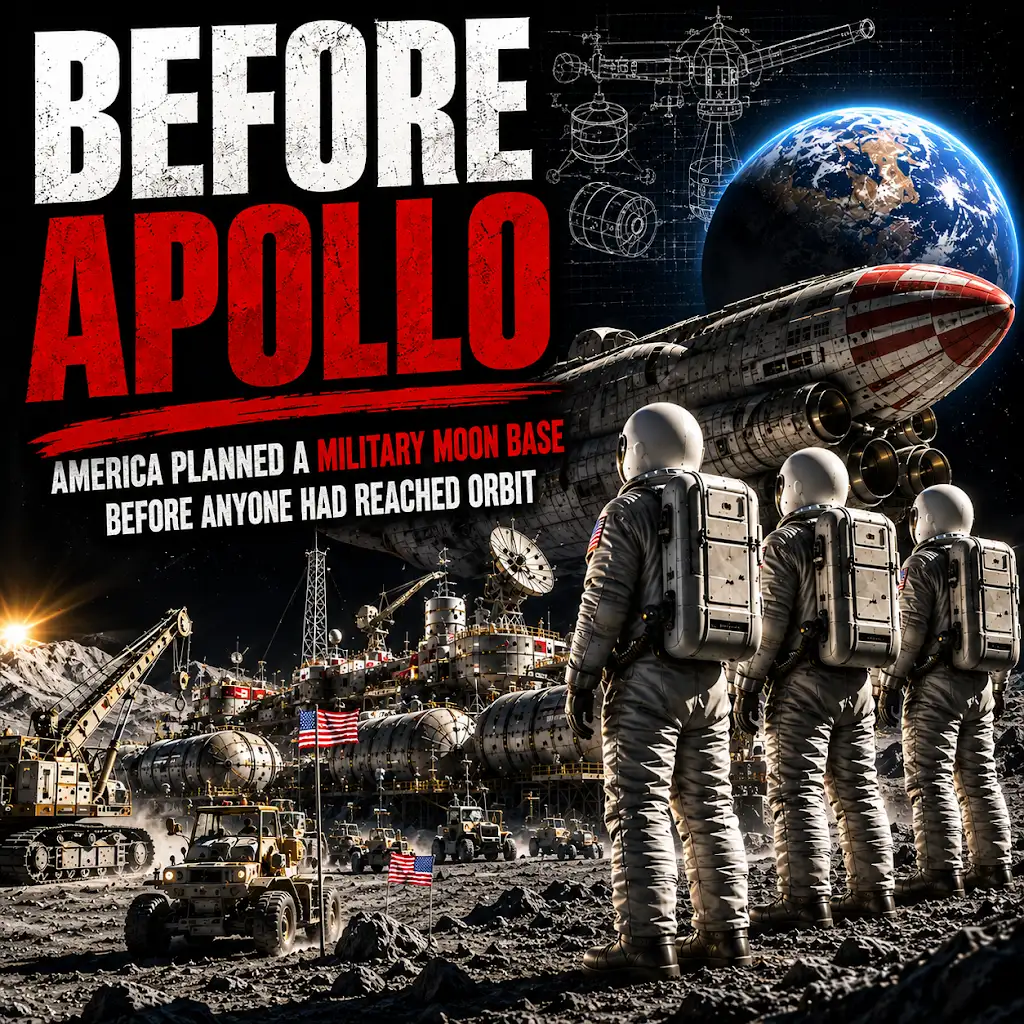
America Planned a Military Moon Base Before Anyone Had Reached Orbit
FAQs
What is a permanent military base on the Moon?
A permanent military base on the Moon refers to a facility established by a country’s military to conduct operations, research, and surveillance on the lunar surface. It would serve as a strategic outpost for national defense and security interests.
Why would a country want to establish a permanent military base on the Moon?
Countries may seek to establish a permanent military base on the Moon to gain strategic advantage, protect their national interests, and potentially control access to lunar resources. It could also serve as a platform for monitoring activities on Earth and in space.
What are the potential challenges of establishing a permanent military base on the Moon?
Challenges of establishing a permanent military base on the Moon include the high cost of space exploration and infrastructure development, technological limitations, international legal and political considerations, and the need for sustainable life support systems in a harsh lunar environment.
Which countries are currently considering or planning to establish a permanent military base on the Moon?
As of now, no country has publicly announced plans to establish a permanent military base on the Moon. However, several countries, including the United States, China, Russia, and India, have expressed interest in lunar exploration and have ongoing space programs.
What are the potential implications of a permanent military base on the Moon for international relations and space exploration?
The establishment of a permanent military base on the Moon could raise concerns about militarization of space and trigger international tensions. It may also impact collaborative efforts in space exploration and raise questions about the peaceful use of outer space as outlined in international treaties.