
The Crimson Veil: Exploring Mars with Project Starg ate Remote Viewing
The human fascination with Mars, the Red Planet, is a narrative woven through millennia of observation and speculation. From ancient astronomers charting its ruddy glow to modern scientists deploying robotic emissaries, the desire to understand our celestial neighbor persists. In the late 20th century, a unique approach emerged from the shadows of classified research: Project Stargate, a government-funded initiative exploring the potential of remote viewing. While widely recognized for its terrestrial intelligence-gathering applications, the notion of extending these capabilities to interplanetary exploration, specifically Mars, remains a subject of intense, albeit often fringe, discussion. This article delves into the theoretical framework, documented (and often disputed) findings, and inherent limitations of attempting to explore Mars through the lens of Project Stargate remote viewing.
Project Stargate was not born in a vacuum. It emerged from a Cold War milieu where unconventional intelligence gathering methods were actively explored. The premise was simple, yet profound: could certain individuals, through intense mental discipline and training, access information about distant locations or events simply by focusing their consciousness, without conventional sensory input? This discipline, often referred to as “psi,” or psychic ability, was the bedrock upon which Stargate was built.
The Role of “Sensitives”
The individuals who participated in Project Stargate were often referred to as “sensitives” or “remote viewers.” They underwent rigorous training designed to hone their ability to perceive non-local information. This training involved exercises that progressed from viewing nearby, familiar locations to increasingly distant and unfamiliar ones. The methodologies employed varied, but often included techniques such as meditation, visualization, and specific protocols for recording perceptions. The aim was to translate raw sensory impressions – colors, shapes, textures, sounds – into coherent data.
Funding and Secrecy
Funded by agencies such as the Defense Intelligence Agency (DIA) and the National Security Agency (NSA), Project Stargate operated under a veil of considerable secrecy. This secrecy, while understandable in the context of national security, has also contributed to its enigmatic status and the proliferation of unsubstantiated claims. The vast majority of declassified Stargate documents pertain to terrestrial targets, leaving the inter-planetary applications largely confined to the speculative or anecdotal.
The Leap to Extraterrestrial Targets
The transition from terrestrial targets to extraterrestrial ones, such as Mars, represented a significant escalation in the conceptual scope of remote viewing. Proponents argued that if the human mind could transcend geographical boundaries on Earth, there was no inherent theoretical impediment to it transcending astronomical distances. The fundamental question then became not “if” but “how” and “to what degree” such perceptions could be reliable and verifiable when confronting environments as alien as another planet.
Project Stargate, a controversial program exploring the potential of remote viewing, has garnered interest for its ambitious targets, including Mars. For those intrigued by the intersection of psychic phenomena and space exploration, a related article can be found at XFile Findings, which delves into the implications of remote viewing and its applications in understanding distant locations, both on Earth and beyond. This exploration not only raises questions about the nature of consciousness but also challenges our perceptions of reality and the universe.
Theoretical Frameworks: Mind Over Matter, Across the Cosmos?
The very notion of remote viewing, particularly for interplanetary targets, pushes the boundaries of our current scientific understanding. It hinges on theories that, while not mainstream, have been explored within parapsychology and theoretical physics. These frameworks seek to explain how consciousness might interact with reality in ways that defy conventional notions of space and time.
Non-Locality and Consciousness
At the heart of remote viewing lies the concept of non-locality, a principle borrowed from quantum mechanics. In quantum physics, entangled particles can remain connected in such a way that the state of one instantly influences the state of the other, regardless of the distance separating them. Propagated as a broader metaphysical principle, some theorists propose that consciousness itself might exhibit similar non-local properties, allowing it to “reach out” and perceive information without physical proximity. This is akin to suggesting that the mind can send a signal through the cosmic ether, bypassing the limitations of light speed.
The Energetic Universe Hypothesis
Another theoretical avenue explored by remote viewing proponents involves the concept of an “energetic universe.” This perspective posits that everything in the universe, including thoughts and consciousness, is essentially a form of energy. If consciousness is energy, then it is conceivable that this energy could interact with or resonate with the energetic signatures of distant objects and environments. In this model, Mars would possess a unique energetic frequency, and a trained sensitive could potentially tune into this frequency to glean information. This is not unlike tuning a radio to a specific station, but the instrument is the human mind and the broadcast is the informational fabric of the universe.
The Role of Intent and Focus
Within the community of remote viewers, the role of focused intent and rigorous mental discipline is paramount. It is believed that the “noise” of ordinary consciousness and the physical world can obscure these subtle perceptions. Therefore, specific protocols are designed to quiet the mental chatter and amplify the faint signals from a distant target. For interplanetary targets, this focus would need to be amplified to an extraordinary degree, navigating not only terrestrial distractions but also the vast electromagnetic and gravitational influences of the solar system.
Documented (and Debated) Martian Perceptions

While the majority of declassified Project Stargate documentation focuses on Earth-bound targets, there are anecdotal accounts and interpretations that suggest explorations of Mars. These are often presented by individuals who claim to have participated in or analyzed such sessions, but they are typically outside the purview of mainstream scientific verification.
Anecdotal Accounts of Martian Landscapes
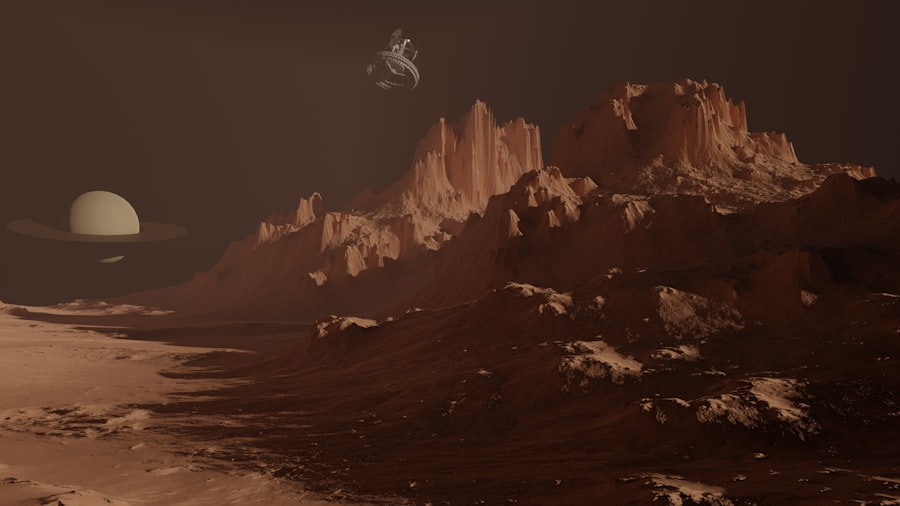
Reports from some remote viewers, often shared in forums or interviews years after the project’s operational days, describe perceptions of Martian terrain. These descriptions can include vast, desolate plains, towering rock formations, evidence of past water activity, and even structures that some interpret as artificial. The common thread in these accounts is often a sense of profound emptiness, ancientness, and a stark, alien beauty. They speak of ochre-colored skies, thin atmospheres, and a silence that is both profound and unsettling.
Perceptions of Geological Features
More specific accounts might detail perceptions of canyons, craters, and volcanic elements that align, to some extent, with scientific knowledge of Mars. However, the level of detail and accuracy varies significantly. Some viewers report seeing evidence of ancient riverbeds or vast underground cave systems. These descriptions, when they align with later scientific discoveries, are often cited as evidence of remote viewing’s efficacy. Conversely, discrepancies or wildly imaginative interpretations fuel skepticism.
The Challenge of Verification
The primary hurdle in validating these Martian perceptions lies in the inherent difficulty of objective verification. Unlike terrestrial targets where ground truth can often be established through conventional means, directly confirming remote viewing interpretations of Mars is problematic. While orbiting spacecraft and rovers provide visual data, the subjective nature of remote viewing makes it challenging to definitively map a viewer’s perception onto a specific location or feature. It’s like trying to match a dream’s landscape to a photograph without a clear legend.
Interpretation vs. Perception
A key distinction to be made is between raw perception and interpretation. A remote viewer might perceive a shape or texture. It is the viewer’s mind, drawing upon their knowledge and biases, that then assigns meaning to that perception. When viewing Mars, the interpreter’s pre-existing notions of alien worlds or even science fiction imagery can profoundly influence what they believe they are “seeing.” This subjective overlay makes it difficult to separate genuine information transmission from imaginative construction.
The Limitations and Criticisms of Martian Remote Viewing
Despite the theoretical possibilities and anecdotal claims, the application of remote viewing to Mars faces substantial limitations and significant scientific criticism. These issues are not unique to interplanetary attempts but are amplified by the sheer distance and alien nature of the target.
The Signal-to-Noise Ratio
One of the most significant challenges is the sheer “signal-to-noise ratio.” The farther the target, the fainter the perceived signal is likely to be. Imagine trying to hear a whisper across a football stadium on a windy day—the Martian environment, with its vast distances and potential cosmic interference, presents an even greater challenge. Critics argue that what might be perceived as Martian data is more likely the viewer’s subconscious processing of ambient information, cultural archetypes, or even deliberate misinterpretations driven by the desire to see something extraordinary.
Lack of Reproducibility and Corroboration
A cornerstone of scientific inquiry is reproducibility and corroboration. If an experiment or observation can be repeated by independent parties with similar results, it gains credibility. Remote viewing, especially concerning Mars, often fails this test. Sessions are typically solitary occurrences, and attempts to replicate specific Martian perceptions by different viewers invariably yield varied and often contradictory results. This lack of consistent, verifiable data makes it difficult to build a robust case for its efficacy.
Cognitive Biases and Expectation Effects
Cognitive biases, such as confirmation bias and expectation bias, play a formidable role. When a remote viewer is tasked with “seeing Mars,” their mind is already primed to expect certain things—red dust, barren landscapes, perhaps even alien artifacts. This pre-existing expectation can unconsciously shape their perceptions, leading them to interpret ambiguous sensory input in ways that align with their preconceived notions. This is a subtle but powerful form of self-deception that is difficult to guard against.
The Absence of Scientific Consensus
The scientific community, by and large, remains unconvinced by claims of successful remote viewing, particularly in its application to interplanetary exploration. The lack of a plausible, testable mechanism that explains how consciousness can transcend the known physical constraints of distance and electromagnetism is a major obstacle. Without such a mechanism and verifiable, repeatable evidence, remote viewing remains firmly in the realm of pseudoscience for most researchers.
Project Stargate, a controversial program exploring the potential of remote viewing, has sparked interest in various targets, including Mars. The implications of such research extend beyond mere curiosity, as it raises questions about the boundaries of human perception and the nature of reality. For those intrigued by the intersection of remote viewing and extraterrestrial exploration, a related article can be found at XFile Findings, which delves into the fascinating connections between these topics and the broader implications for our understanding of the universe.
Modern Perspectives: Bridging Science and Speculation
| Metric | Value | Notes |
|---|---|---|
| Project Name | Stargate | U.S. Army remote viewing program |
| Target | Mars | Remote viewing target for extraterrestrial exploration |
| Remote Viewing Sessions | 5 | Number of documented sessions focused on Mars |
| Session Duration | 30-45 minutes | Average length per remote viewing session |
| Viewers Involved | 3 | Number of remote viewers assigned to Mars target |
| Reported Observations | Unusual structures, terrain features | Descriptions from remote viewers |
| Accuracy Verification | Inconclusive | Limited ability to verify remote viewing data against Mars imagery |
| Program Duration | 1978-1995 | Overall duration of Project Stargate |
While Project Stargate officially concluded, the idea of using consciousness to explore distant realms continues to flicker in various unconventional corners of research and popular culture. Today, these ideas often intersect with emerging scientific concepts and continue to fuel speculation about the potential of the human mind.
The Influence of New Age Thought
The concept of consciousness as a fundamental aspect of reality, and its potential to interact with the universe in non-local ways, has been embraced by various New Age and esoteric philosophies. These perspectives often draw on interpretations of quantum physics and ancient mystical traditions to support the idea that consciousness can extend beyond the physical body. While distinct from the military’s pragmatic approach, these philosophies contribute to the ongoing discourse around abilities like remote viewing.
The Search for an Interplanetary “Ground Truth”
As space exploration advances, the possibility of finding verifiable “ground truth” for remote viewing claims on Mars or other celestial bodies becomes slightly more tangible. Future missions might uncover evidence that, at first glance, seems to align remarkably with historical remote viewing accounts. However, even then, the challenge of definitively linking the perception to the reality, and proving it was not a fortunate guess or a post-hoc interpretation, will remain. The ghost of a misplaced rock formation could easily be mistaken for an ancient monument.
The Enduring Human Curiosity
Ultimately, the allure of exploring Mars through remote viewing, however speculative, is an expression of humanity’s deep-seated curiosity about the cosmos and its own potential. It represents a desire to break free from the limitations of our physical senses and to seek knowledge in ways that transcend the conventional. This inherent drive, akin to a hungry mind gazing at a distant star, will likely ensure that such ideas, at the fringes of our understanding, continue to be explored and debated. The crimson veil of Mars continues to beckon, and for some, the journey of exploration no longer requires a rocket, but simply the focused power of the human mind.

SHOCKING: CIA Remote Viewer Finds “The Governor” Controlling Earth
FAQs
What was Project Stargate?
Project Stargate was a secret U.S. government program initiated during the Cold War to investigate the potential use of psychic phenomena, particularly remote viewing, for military and intelligence purposes.
What is remote viewing?
Remote viewing is the claimed ability to perceive or describe details about a distant or unseen target using extrasensory perception (ESP), without the use of the known senses.
How was Mars used as a target in Project Stargate?
Mars was one of the remote viewing targets in Project Stargate, where participants attempted to describe the planet’s surface, features, and possible signs of life or activity through psychic means.
Were the remote viewing sessions about Mars considered successful?
The results of remote viewing sessions targeting Mars were mixed and often inconclusive, with some descriptions matching known features but lacking verifiable or actionable intelligence, leading to skepticism about the program’s effectiveness.
Is Project Stargate still active today?
No, Project Stargate was officially terminated in the mid-1990s after evaluations concluded that remote viewing did not provide reliable intelligence, and the program was declassified and ended.