Philip K. Dick, a name synonymous with mind-bending science fiction, has long captivated readers and viewers with his profound explorations of reality, identity, and the very nature of existence. His oeuvre is not merely a collection of stories; it is an invitation to step through a portal into a universe where the familiar unravels, and the seemingly impossible becomes the very fabric of being. To explore Philip K. Dick’s alternate realities is to embark on a journey that challenges perceptions, questions certainties, and ultimately, reveals more about our own perceived reality than it does about the fantastical worlds he conjures.
The Fractured Mirror: Paranoia and Perceived Reality
One of the most pervasive elements in Dick’s work is the unsettling feeling of paranoia, where the protagonists are constantly questioning what is real and who can be trusted. This isn’t the simplistic fear of a monster lurking in the shadows, but a deeply existential dread, a suspicion that the entire edifice of their reality might be a carefully constructed illusion. The characters often find themselves adrift in a sea of doubt, their memories unreliable, their senses deceptive, and the very laws of physics seemingly mutable. This pervasive paranoia serves as a powerful narrative device, drawing the reader into the protagonist’s disorientation and forcing them to confront the fragility of their own grip on reality.
The Unreliable Narrator as a Cosmic Trick
Dick masterfully employs unreliable narrators, blurring the lines between their subjective experiences and objective truth. In works like “Ubik,” the reader is never quite sure if the characters are experiencing death, a drug-induced hallucination, or some other terrifying manipulation of consciousness. The protagonist, Joe Chip, is perpetually disoriented, his world dissolving around him in a series of increasingly bizarre events. The reader is left to piece together the fragmented clues, a process mirroring the character’s own struggle for comprehension. This technique forces a visceral engagement with the narrative, as the act of reading becomes an act of deciphering, of attempting to impose order on chaos. The unreliability isn’t just a character flaw; it’s a fundamental aspect of the universe Dick presents, suggesting that truth itself is not a fixed entity but a fluid, subjective construct.
The “What If” as a Catalyst for Existential Inquiry
Dick’s alternate realities often stem from a singular, seemingly minor deviation from our own timeline. What if the Nazis won World War II? What if a potent drug could preserve consciousness after death? These “what if” scenarios are not mere speculative exercises; they are meticulously crafted thought experiments designed to expose the underlying assumptions and contingencies of our own world. By presenting a world where these fundamental divergences have occurred, Dick compels the reader to examine the historical, social, and psychological forces that have shaped their own reality. The “what if” becomes a lens through which to scrutinize the seemingly immutable aspects of our existence, revealing them to be, in fact, contingent and mutable.
Philip K. Dick’s exploration of alternate realities has captivated readers and inspired countless adaptations in film and television. For those interested in delving deeper into the themes of his work, a related article can be found at X-Files Findings, which discusses the philosophical implications of alternate realities and how they resonate with Dick’s narratives. This article provides a fascinating analysis of the intersection between science fiction and existential inquiry, shedding light on why Dick’s stories continue to provoke thought and discussion today.
The Polysemous Self: Identity in Flux
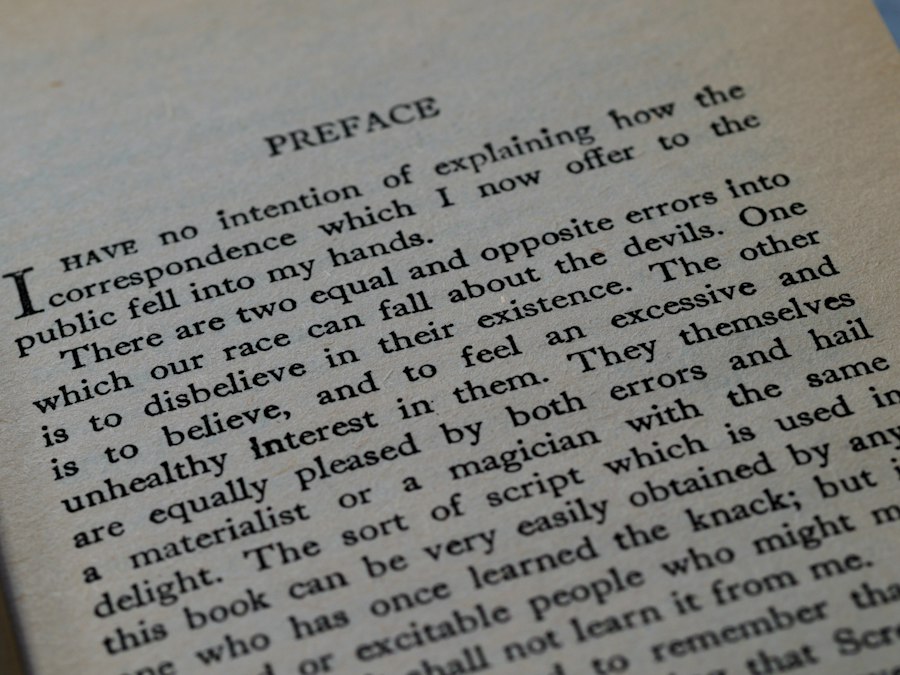
The question of “who am I?” is a central, recurring motif in Dick’s fiction. His characters are rarely static beings; their identities are often fluid, fragmented, or even deliberately manufactured. This exploration of identity in flux is intrinsically linked to his alternate realities, as the very fabric of a world can influence, distort, or even create a person’s sense of self. The malleability of identity in Dick’s worlds reflects a deeper philosophical inquiry into the nature of consciousness and individuality.
The Android as a Mirror to Humanity
Dick’s androids, particularly in “Do Androids Dream of Electric Sheep?”, are not simply metallic automatons. They are beings who strive for humanity, who exhibit emotions, and who often suffer from the same existential anxieties as their human counterparts. The Turing test, a rudimentary measure of machine intelligence, becomes a complex philosophical debate. Are the androids simply programmed to mimic human behavior, or do they possess a genuine inner life? The ambiguity surrounding their sentience forces the reader to question what truly defines humanity. Is it biology? Is it empathy? Is it the capacity for suffering? By blurring the lines between human and android, Dick challenges our anthropocentric definitions of selfhood.
The Gnostic Echo: The Search for True Reality
Dick was deeply influenced by Gnostic philosophy, which posited that the material world is an illusion created by a flawed demiurge, and that true reality lies in a spiritual realm. This Gnostic worldview permeates his fiction, manifesting as a persistent yearning for an authentic existence beyond the artificial constructs of his alternate worlds. Characters often feel a vague sense of dissatisfaction, a nagging suspicion that there is something more, something truer, just out of reach. This search for the “real” often leads them down paths of paranoia and disillusionment, as the very systems designed to maintain the illusion actively resist their quest for truth. The Gnostic undercurrent provides a metaphysical framework for Dick’s explorations of deception and enlightenment.
The Shifting Sands of Society: Social Structures Under Scrutiny

Beyond individual identity, Dick’s alternate realities are potent crucibles for examining societal structures, power dynamics, and the ways in which organized systems can both shape and oppress individuals. He frequently depicts futures where the lines between government, corporate entities, and even religious institutions have become blurred, creating oppressive regimes that manipulate perception and control behavior.
The All-Seeing Eye: Surveillance and Control
In many of Dick’s novels, advanced technology enables pervasive surveillance, creating societies where privacy is an obsolete concept. These societies are often characterized by a sense of passive compliance, where citizens are conditioned to accept constant monitoring as a necessary evil. The fear isn’t necessarily of overt persecution, but of subtle manipulation and control, where dissent is identified and quashed before it can even fully form. This resonates deeply with contemporary concerns about data collection and the erosion of privacy, making Dick’s visions feel eerily prescient. The feeling of being watched, of having one’s every action recorded and analyzed, creates a chilling atmosphere of inescapable control.
The Commodity of the Self: Marketing and Manufactured Desire
Dick often satirizes a consumerist culture where identity itself can be commodified. In some of his worlds, individuals can purchase manufactured memories, personality implants, or even artificial relationships. This raises profound questions about authenticity and the value of genuine human connection. When experiences and even identities can be bought and sold, what becomes of true selfhood? The relentless pursuit of happiness through material acquisition is exposed as a hollow endeavor, a mechanism for control rather than genuine fulfillment. The idea that our desires are not organic but are instead manufactured and marketed by unseen forces is a deeply unsettling critique of modern capitalism.
The God in the Machine: Spirituality and Transcendence
Despite the pervasive cynicism and paranoia in much of his work, there is also a profound undercurrent of spirituality and a yearning for transcendence in Philip K. Dick’s narratives. His characters, lost in their fractured realities, often stumble upon glimpses of something greater, a divine presence or a higher truth that offers a potential escape from the mundane or the malevolent.
The Divine Spark: Glimmers of Hope in the Artificial
Even in the bleakest of his imagined worlds, Dick often injects moments of profound beauty and spiritual revelation. These moments can be fleeting, difficult to grasp, and often accompanied by further disorientation, but they suggest that even within the most artificial of realities, a divine spark of true existence persists. These epiphanies can be triggered by unexpected events, a sudden moment of clarity, or even by encountering beings who possess a purer form of consciousness. They are the chinks in the armor of manufactured reality, suggesting that genuine truth and beauty are resilient.
The Matrix of Belief: Faith as a Survival Mechanism
Dick frequently explores how belief systems, whether religious, political, or even the unquestioning acceptance of a manufactured reality, function as both tools of control and potential pathways to liberation. His characters often grapple with the nature of faith, questioning whether it is a delusion or a genuine connection to something beyond the material. The act of believing, of holding onto something intangible in the face of overwhelming evidence to the contrary, can become a radical act of defiance, a way to assert agency in a world designed to strip it away. The power of shared belief, even if it’s belief in a lie, can create a powerful social force, and Dick often examines how this force can be manipulated.
Philip K. Dick’s exploration of alternate realities has captivated readers and inspired countless adaptations in film and television. His unique perspective on the nature of reality often blurs the lines between what is real and what is imagined, prompting deep philosophical questions. For those interested in delving further into this intriguing subject, a related article can be found that discusses the implications of his work on modern storytelling and perception. You can read more about it in this insightful piece on alternate realities and their impact on contemporary narratives.
The Echoes of Dick: Legacy and Lasting Impact
| Metric | Value | Description |
|---|---|---|
| Event Name | Philip K. Dick Alternate Reality Experience | Immersive event inspired by the works of Philip K. Dick |
| Location | Various (Virtual & Physical) | Held in multiple cities and online platforms |
| Duration | 3 Days | Typical length of the experience |
| Number of Participants | 500 – 1000 | Average attendance per event |
| Interactive Elements | 5 | Number of interactive installations or activities |
| Virtual Reality Usage | Yes | Incorporates VR to simulate alternate realities |
| Average Participant Rating | 4.7 / 5 | Based on post-event surveys |
| Year Established | 2018 | First year the experience was launched |
Philip K. Dick’s influence on science fiction and popular culture is undeniable. His themes and narratives have been adapted into numerous films, television shows, and video games, introducing his unique brand of philosophical inquiry to a wider audience. The enduring appeal of his work lies in its ability to tap into fundamental human anxieties and aspirations, offering a complex and often unsettling reflection of our own existence.
The Persistent Prophecy: Relevance in the Digital Age
In an era dominated by virtual reality, artificial intelligence, and the constant barrage of curated information, Dick’s explorations of manufactured realities, unreliable perceptions, and the nature of consciousness feel more relevant than ever. His work serves as a cautionary tale, prompting us to critically examine the digital worlds we inhabit and the information we consume. The questions he posed decades ago about authenticity, identity, and the potential for deception are now at the forefront of our technological and societal discourse.
The Unfinished Tapestry: The Ever-Expanding Universe of Interpretation
The beauty of Dick’s work lies in its inherent ambiguity. There are rarely easy answers, and the meaning of his stories often lies in the act of interpretation itself. His alternate realities are not closed systems but open invitations for readers and creators to continue the dialogue, to weave their own threads into the ever-expanding tapestry of his imagination. Each reading, each adaptation, offers a new perspective, a fresh glimpse into the labyrinthine depths of Philip K. Dick’s mind and the enduring mysteries of reality itself. His legacy is not a static monument, but a vibrant, evolving landscape of ideas that continues to challenge and inspire.
Philip K. Dick Remembered an America Where Nixon Never Resigned
FAQs
What is the Philip K. Dick Alternate Reality Experience?
The Philip K. Dick Alternate Reality Experience is an immersive storytelling project that allows participants to step into the world of renowned science fiction author Philip K. Dick and experience a narrative inspired by his works.
How does the experience work?
Participants in the Philip K. Dick Alternate Reality Experience engage in a series of interactive activities, puzzles, and challenges that unfold both online and in real-world locations. The experience is designed to blur the lines between fiction and reality.
Is the experience suitable for all ages?
The Philip K. Dick Alternate Reality Experience is typically designed for adults and may contain themes and content that are more suitable for mature audiences. It is recommended to check the specific age requirements and guidelines before participating.
Can participants interact with other players during the experience?
Yes, participants in the Philip K. Dick Alternate Reality Experience may have the opportunity to collaborate with or compete against other players as they progress through the narrative. Interaction with other participants can enhance the overall experience.
How can one participate in the Philip K. Dick Alternate Reality Experience?
To participate in the Philip K. Dick Alternate Reality Experience, individuals typically need to sign up or register through the official website or platform hosting the experience. Participation may require access to the internet, a mobile device, and possibly physical locations depending on the nature of the experience.