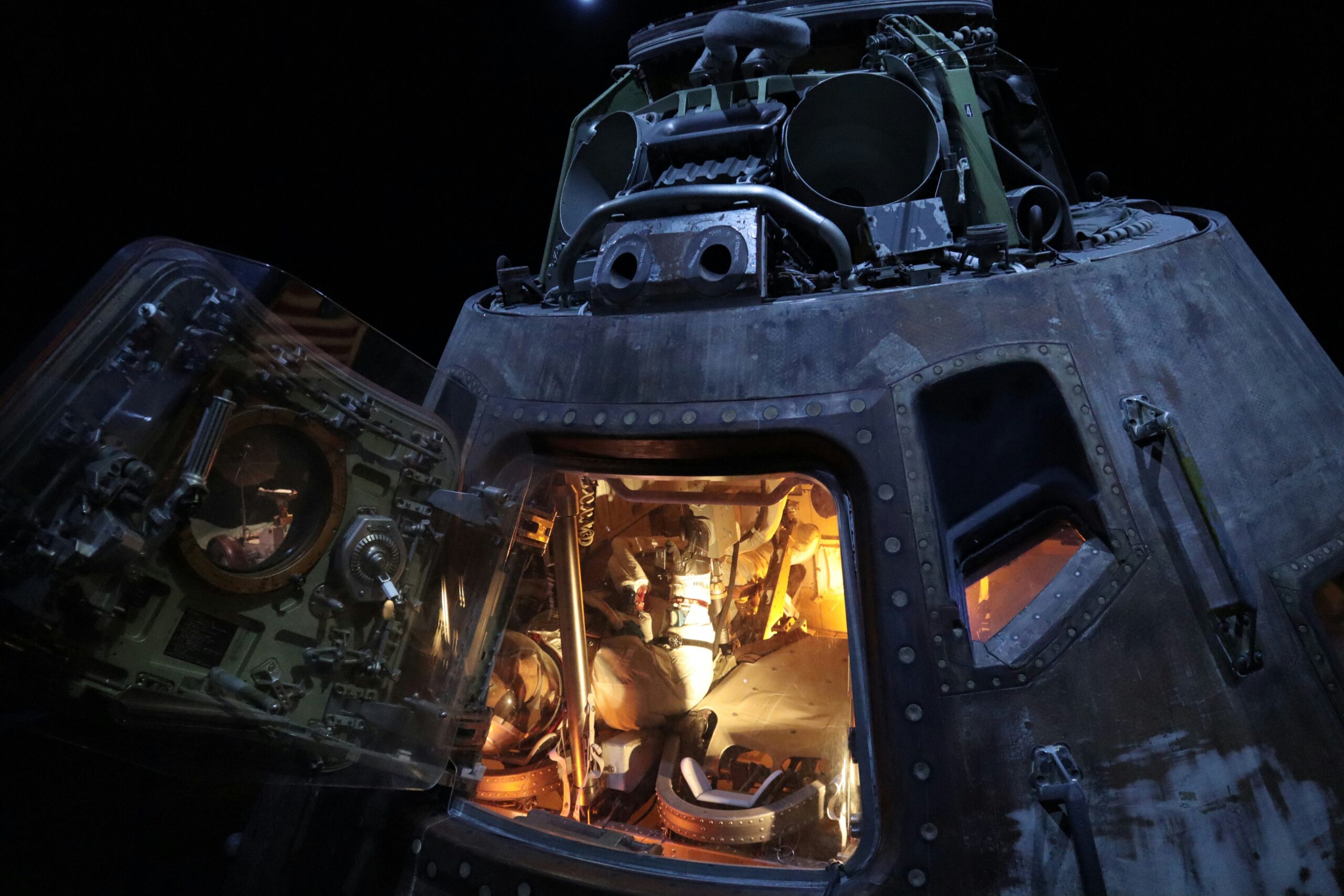
Exploring the Cosmos: A Space Investigation Documentary
The universe, a vast and enigmatic canvas, has captivated humanity since the dawn of consciousness. Its boundless expanse, dotted with celestial bodies, nebulae, and galaxies, has fueled endless curiosity and scientific inquiry. A new documentary, “Exploring the Cosmos: A Space Investigation,” promises to embark on an awe-inspiring journey, delving deep into the mysteries that lie beyond our blue marble. This groundbreaking production aims to unravel the secrets of the universe, from the fundamental building blocks of matter to the grandest cosmic structures, offering viewers an unprecedented and immersive experience.
“Exploring the Cosmos” begins by tracing the origins of the universe, transporting viewers back to the very moment of creation. The documentary employs cutting-edge visual effects and expert commentary to illustrate the Big Bang, the theoretical foundation of our current understanding of the cosmos.
The Primordial Soup: Birth of the Universe
This section meticulously details the initial moments after the Big Bang, portraying the rapid expansion of spacetime and the emergence of fundamental particles. Viewers will witness the formation of the first atoms, hydrogen and helium, the most abundant elements in the universe. The documentary emphasizes the sheer violence and energy involved in this formative phase, setting the stage for the subsequent evolution of cosmic structures. Scientists featured in the documentary explain the intricate dance of forces – gravity, electromagnetism, and the nuclear forces – that governed this nascent period. The concept of inflation, a hypothetical period of exponential expansion, is explored as a key mechanism for smoothing out the early universe.
The Dark Ages and the First Light
Following the initial expansion, the universe entered a period known as the “Dark Ages,” a time before the formation of the first stars and galaxies. “Exploring the Cosmos” illuminates this obscure era, explaining the gradual cooling of matter and the formation of gravitational seeds that would eventually coalesce into larger structures. The documentary then transitions to the momentous event of reionization, when the first stars ignited, bathing the universe in light once more and fundamentally altering its composition and evolution. The role of dark matter in this process, providing the gravitational scaffolding for galaxy formation, is a central theme, highlighting one of the universe’s most persistent enigmas.
The Cosmic Web: Formation of Galaxies and Clusters
The documentary meticulously details the formation and evolution of galaxies, the fundamental building blocks of the visible universe. Viewers are taken on a journey through the processes of gravitational collapse, mergers, and accretion that have shaped these magnificent celestial islands over billions of years.
The Milky Way: Our Galactic Home
A significant portion of this segment is dedicated to our own Milky Way galaxy. The documentary explores its spiral structure, the supermassive black hole at its center, Sagittarius A*, and the diverse population of stars, planets, and nebulae that reside within it. The intricate dynamics of our galactic neighborhood are meticulously explained, offering a profound appreciation for our place within this cosmic city. The narrative delves into the ongoing research surrounding the Milky Way’s formation and its place within the Local Group of galaxies.
Galactic Collisions and Mergers: A Cosmic Dance
The documentary vividly illustrates the dramatic and often violent process of galactic collisions and mergers. Using stunning simulations, viewers witness how galaxies interact and evolve over eons, often leading to the formation of larger, more complex galaxies. The impact of these cosmic encounters on star formation rates and the overall structure of galaxies is explored, emphasizing the dynamic and ever-changing nature of the universe. The Andromeda-Milky Way collision in billions of years is presented not as a catastrophic event, but as a destined cosmic embrace.
The Stellar Lifecycle: Birth, Life, and Death of Stars
Stars, the dazzling jewels of the night sky, are central to the narrative of “Exploring the Cosmos.” The documentary provides a comprehensive overview of their birth, life, and eventual demise, revealing the intricate processes that govern their existence.
Stellar Nurseries: The Birth of Stars
This segment takes viewers to the heart of nebulae, the vast clouds of gas and dust where stars are born. The processes of gravitational collapse, the formation of protostars, and the ignition of nuclear fusion are meticulously explained. The documentary highlights the diversity of stellar masses and the different pathways they follow. The complex interplay of gravity and radiation pressure during stellar formation is a key focus, illustrating the delicate balance that allows these celestial furnaces to ignite.
The Main Sequence: The Long and Stable Life of Stars
The documentary delves into the main sequence, the longest and most stable phase of a star’s life, where it fuses hydrogen into helium in its core. Viewers will learn about the temperature, luminosity, and spectral characteristics of stars, and how these properties are directly related to their mass and evolutionary stage. The concept of stellar evolution and the factors that influence a star’s lifespan – primarily its mass – are clearly articulated. The documentary explains why our Sun is a main-sequence star and what its future holds.
Stellar Death: From Supernovae to Black Holes
The culmination of a star’s life, its death, is portrayed in all its dramatic glory. The documentary explores the various end-points of stellar evolution, including the formation of white dwarfs, neutron stars, and the enigmatic black holes. Specific attention is given to the spectacular explosions of supernovae, the cosmic events that enrich the interstellar medium with heavy elements, crucial for the formation of planets and life. The extreme densities and gravitational forces associated with neutron stars and black holes are explained, offering a glimpse into some of the most extreme environments in the universe.
For those interested in the latest developments in space exploration, a fascinating article can be found at this link: Space Investigation Documentary Insights. This piece delves into the groundbreaking discoveries made by various space missions and highlights the importance of documentary filmmaking in bringing these scientific advancements to a broader audience. It provides a comprehensive overview of how documentaries can inspire curiosity and educate viewers about the mysteries of the universe.
The Enigmatic Realm of Dark Matter and Dark Energy
“Exploring the Cosmos” boldly tackles two of the universe’s most perplexing mysteries: dark matter and dark energy. These invisible entities, while undetectable by conventional means, exert a profound influence on the structure and expansion of the cosmos.
In the realm of space exploration, documentaries play a crucial role in educating the public about the mysteries of the universe. One particularly fascinating article that delves into the latest findings in this field can be found at XFile Findings. This resource provides insights into recent discoveries and ongoing research, making it an excellent companion for anyone interested in the wonders of space investigation.
The Invisible Hand: The Evidence for Dark Matter
This segment meticulously presents the compelling evidence for the existence of dark matter, from the unexpected rotation of galaxies to the bending of light around massive objects. The documentary explores various theoretical candidates for dark matter, from WIMPs (Weakly Interacting Massive Particles) to axions, and discusses ongoing experiments attempting to detect these elusive particles. The role of dark matter in the formation of large-scale structures, such as galaxy clusters and the cosmic web, is a central theme, underscoring its critical importance in shaping the universe we observe.
The Accelerating Universe: Unraveling Dark Energy
The documentary then shifts its focus to dark energy, the mysterious force driving the accelerating expansion of the universe. Viewers will learn about the discovery of this phenomenon, the cosmological constant proposed by Einstein, and the ongoing quest to understand its nature. The implications of dark energy for the ultimate fate of the universe are explored, presenting various scenarios, from a Big Crunch to a Big Rip. The documentary emphasizes that dark energy represents one of the most significant challenges in modern cosmology.
The Search for Life Beyond Earth: Astrobiology’s Frontier

Humanity’s enduring fascination with the cosmos is inextricably linked to the question: are we alone? “Exploring the Cosmos” dedicates a significant portion to the burgeoning field of astrobiology and the ongoing search for extraterrestrial life.
Searching the Solar System: Icy Moons and Martian Mysteries
The documentary showcases the current exploration missions targeting potentially habitable worlds within our own solar system. Mars, with its past evidence of liquid water, remains a prime candidate in the search for microbial life, both past and present. The exploration of icy moons like Europa and Enceladus, with their subsurface oceans, is highlighted as another promising avenue in the quest for life. The documentary discusses the challenges and the remarkable scientific advancements in sending probes and rovers to these distant worlds.
Exoplanets: Worlds Beyond Our Sun
The discovery of thousands of exoplanets, planets orbiting stars other than our Sun, has revolutionized our understanding of planetary systems. “Exploring the Cosmos” explores the diverse array of exoplanets discovered, from gas giants to potentially rocky worlds within the habitable zones of their stars. The documentary discusses the techniques used to detect exoplanets, such as the transit method and radial velocity, and the ongoing efforts to characterize their atmospheres for biosignatures – indicators of life. The “Habitable Exoplanet Hunting Program” and its ambitious goals are showcased.
The Drake Equation and the Fermi Paradox: Estimating Our Cosmic Neighbors
The documentary delves into theoretical frameworks that attempt to quantify the probability of extraterrestrial intelligence. The Drake Equation, a probabilistic argument used to estimate the number of active, communicative extraterrestrial civilizations in the Milky Way galaxy, is explained in detail. Furthermore, the documentary tackles the profound implications of the Fermi Paradox – the apparent contradiction between the high probability estimates for the existence of extraterrestrial civilizations and the lack of evidence for, or contact with, such civilizations. Various proposed solutions to the paradox are explored, from the Great Filter to the Zoo Hypothesis.
Humanity’s Cosmic Future: Colonization and Beyond

As humanity continues to push the boundaries of exploration, “Exploring the Cosmos” looks towards our potential future amongst the stars. The documentary considers the challenges and possibilities of interstellar travel, space colonization, and the long-term survival of our species.
The Interstellar Dream: Towards the Stars
This segment explores the current scientific and technological hurdles that must be overcome for interstellar travel to become a reality. Concepts like warp drives, generation ships, and the potential for cryosleep are discussed, alongside the immense energy requirements and vast time scales involved. The documentary highlights the pioneering work of scientists and engineers who are actively researching propulsion systems and life support technologies that could one day enable humanity to reach other star systems.
Building New Homes: The Prospects of Space Colonization
The documentary examines the feasibility and ethical considerations of establishing human settlements beyond Earth. The challenges of creating self-sustaining habitats, terraforming alien worlds, and adapting to different gravitational and atmospheric conditions are addressed. The potential locations for colonization, both within our solar system and on exoplanets, are discussed, along with the scientific and societal motivations behind such ambitious endeavors. The idea of creating a multi-planetary species is presented as a vital step for ensuring humanity’s long-term survival.
The Next Cosmic Leap: Advanced Technologies and Unforeseen Discoveries
Looking further into the future, “Exploring the Cosmos” speculates on the groundbreaking technologies and potential discoveries that lie ahead. The documentary touches upon advancements in artificial intelligence, quantum computing, and genetic engineering, and how these might play a role in our future explorations. The inherent unpredictability of scientific discovery is emphasized, with the acknowledgment that the universe may hold wonders far beyond our current comprehension. The documentary encourages a spirit of continuous inquiry and a willingness to embrace the unknown.
In conclusion, “Exploring the Cosmos: A Space Investigation” is more than just a documentary; it is an invitation to ponder our place in the grand cosmic theatre. Through stunning visuals, expert insights, and a relentless pursuit of knowledge, it demystifies the universe, ignites our imagination, and ultimately inspires awe for the magnificent and mysterious cosmos that surrounds us. Its comprehensive approach, from the birth of the universe to humanity’s potential cosmic future, makes it an essential viewing experience for anyone who has ever looked up at the night sky and wondered.

They Reopened the Wow! Signal After 48 Years—Here’s What Changed
FAQs
What is a space investigation documentary?
A space investigation documentary is a film or television program that explores and showcases the various aspects of space exploration, including missions, discoveries, technology, and the history of space exploration.
What can viewers expect to learn from a space investigation documentary?
Viewers can expect to learn about the history of space exploration, the latest advancements in space technology, the challenges of space missions, and the potential for future space exploration and colonization.
Are space investigation documentaries based on real events and scientific research?
Yes, space investigation documentaries are based on real events, scientific research, and the latest discoveries in space exploration. They often feature interviews with astronauts, scientists, and experts in the field.
Where can one watch space investigation documentaries?
Space investigation documentaries can be found on various streaming platforms, such as Netflix, Amazon Prime, and Disney+, as well as on television channels dedicated to science and exploration.
What makes space investigation documentaries popular among audiences?
Space investigation documentaries are popular among audiences due to their ability to inspire curiosity about the universe, showcase the incredible achievements of space exploration, and provide a deeper understanding of the challenges and possibilities of space travel.