
The universe, a canvas of unfathomable beauty and profound mystery, has long captivated the human imagination. From the earliest stargazers charting constellations with naked eyes to the sophisticated telescopes peering billions of light-years into the past, humanity has relentlessly pursued understanding of our cosmic home. “Exploring the Cosmos: Interstellar Astronomy Documentary” emerges as a compelling new exploration of this grand narrative, promising a journey that is both scientifically rigorous and emotionally resonant, inviting viewers to ponder our place within the immense tapestry of space and time. This documentary isn’t merely a collection of astronomical facts; it is an immersive experience, designed to ignite curiosity and foster a deeper appreciation for the scientific endeavors that illuminate the darkness between stars.
The documentary opens with a breathtaking sweep across the night sky, a familiar vista that belies the immense distances and complex phenomena it harbors. It sets the stage by acknowledging humanity’s long-standing fascination with the stars, tracing the evolution of our understanding from ancient mythologies to the nascent stages of scientific inquiry. The initial segments focus on the foundational concepts of astronomy, presented in a way that is accessible to a broad audience without sacrificing scientific accuracy.
From Naked Eyes to Optical Telescopes
The film artfully illustrates how early astronomers, armed only with their senses and keen observation, began to decipher the celestial dance. It delves into the contributions of figures like Ptolemy, whose geocentric model, though ultimately disproven, represented a monumental effort to systematize celestial observations. The transition to the era of optical telescopes, spearheaded by Galileo Galilei, is presented as a pivotal moment, a technological leap that shattered previous limitations and revealed a universe far more complex and dynamic than previously conceived. The documentary showcases the revolutionary discoveries made with early telescopes, such as the moons of Jupiter, the phases of Venus, and the craters of the Moon, demonstrating how these observations challenged established paradigms and paved the way for modern astrophysics. The visual reconstructions of these early discoveries are particularly effective, allowing viewers to feel the wonder of those groundbreaking moments.
The Birth of Radio Astronomy and Beyond
As the documentary progresses, it highlights the development of technologies that expanded our sensory reach beyond the visible spectrum. The advent of radio astronomy in the early 20th century is portrayed as a paradigm shift, opening up entirely new avenues of cosmic observation. The discovery of the cosmic microwave background radiation, a faint afterglow of the Big Bang, is explained with clarity and visual flair, emphasizing its crucial role in validating our understanding of the universe’s origins. The film then touches upon the subsequent development of infrared, ultraviolet, X-ray, and gamma-ray astronomy, illustrating how each new window into the cosmos has provided unique insights into phenomena ranging from the birth of stars to the violent deaths of galaxies. The seamless integration of archival footage and contemporary CGI recreations effectively conveys the continuous evolution of our observational capabilities.
For those interested in exploring the vast mysteries of the universe, the interstellar astronomy documentary provides a captivating look at celestial phenomena beyond our solar system. To deepen your understanding of this fascinating subject, you might want to check out a related article that delves into the latest discoveries in astrophysics and the search for extraterrestrial life. You can find it here: related article.
Unveiling the Stellar Nursery: Birth and Evolution of Stars
A significant portion of “Exploring the Cosmos” is dedicated to the life cycle of stars, the fundamental building blocks of galaxies. The documentary takes viewers on a journey from the swirling clouds of interstellar gas and dust that serve as stellar nurseries to the dramatic final moments of stellar demise. This segment is not only scientifically informative but also deeply poetic, as it explores the processes that forge the elements necessary for life.
The Cosmic Cradle: Nebulae and Protostars
The film masterfully depicts the birth of stars within vast nebulae, ethereal clouds of gas and dust illuminated by the light of nearby stars. Through stunning visuals, viewers witness the gravitational collapse of these clouds, the formation of dense cores, and the ignition of nuclear fusion that marks the birth of a protostar. The documentary explains the intricate physics behind this process, detailing how gravity, pressure, and temperature interact to initiate the stellar life cycle. The beauty of these nebulae, rendered with breathtaking detail, serves as a powerful reminder of the ongoing creation happening throughout the universe. The narrative emphasizes that stars are not static entities but dynamic processes, constantly forming and evolving.
The Main Sequence: A Star’s Adolescence and Adulthood
The main sequence is presented as the longest and most stable phase of a star’s life, analogous to a star’s adolescence and adulthood. The documentary elaborates on how stars spend the majority of their existence fusing hydrogen into helium in their cores, a process that generates the immense energy that radiates outwards. Different types of main-sequence stars are discussed, from the tiny, dim red dwarfs to the massive, brilliant blue giants, highlighting how their mass dictates their lifespan, temperature, and luminosity. The film uses clear analogies and visualizations to explain concepts like stellar equilibrium and the Chandrasekhar limit, making complex physics understandable. The visual representation of stellar energy output, perhaps through shimmering light or pulsating cores, would effectively communicate the power of these celestial furnaces.
The Twilight of Stars: Red Giants, White Dwarfs, and Supernovae
The latter stages of stellar evolution are depicted with a sense of awe and dramatic flair. The documentary explains how stars, once they exhaust their hydrogen fuel, begin to expand into red giants or supergiants, undergoing significant changes in their structure and appearance. The fates of these stars are then explored: low-mass stars, like our Sun, will eventually shed their outer layers to form white dwarfs, the dense remnants of stellar cores. More massive stars, however, face a more explosive end. The explosive death of a massive star in a supernova is rendered with spectacular visual effects, illustrating the immense power unleashed and the creation of heavy elements, such as iron, gold, and uranium, which are then dispersed into interstellar space, seeding future generations of stars and planets. The connection to the formation of elements essential for life is a recurring and crucial theme, underscoring our cosmic heritage.
Galaxies: Island Universes and Cosmic Collisions
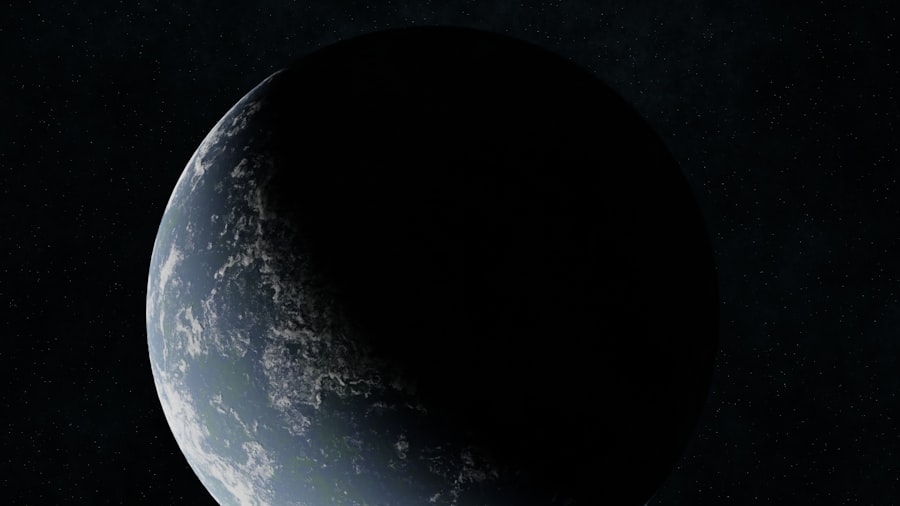
The documentary then expands its gaze to the grandest structures in the universe: galaxies. These vast collections of stars, gas, and dust are the cosmic habitats where stellar evolution plays out. “Exploring the Cosmos” delves into the diverse forms of galaxies and the dynamic, often violent, interactions they engage in.
A Cosmic Zoo: Spiral, Elliptical, and Irregular Galaxies
Viewers are introduced to the three primary classifications of galaxies: spirals, with their characteristic arms; ellipticals, which are smooth and featureless; and irregulars, which lack a defined shape. The documentary explains the formation and evolution of these different types, touching upon theories of galaxy formation and the role of dark matter in their structure and stability. The visual comparisons between different galaxies are striking, showcasing the sheer variety and beauty of these cosmic islands. The narration would likely explain how the shape of a galaxy is often a clue to its history, with interactions and mergers playing a significant role in shaping their current forms.
Galactic Encounters: Mergers and Cosmic Evolution
The film emphasizes that galaxies are not static entities but are constantly interacting and evolving. The phenomenon of galactic mergers, where two or more galaxies collide and coalesce, is presented as a powerful driver of cosmic evolution. The documentary shows simulations of these dramatic events, illustrating how gravitational forces can distort and reshape galaxies, triggering bursts of star formation and feeding supermassive black holes at their centers. The Andromeda Galaxy’s inevitable collision with our own Milky Way in billions of years is a particularly compelling example, offering a glimpse into the future of our cosmic home. The visualizations of these mergers would be crucial in conveying the immense scale and power of these cosmic events.
The Unseen Architect: Dark Matter and Dark Energy
A crucial aspect of understanding galaxies and the universe at large is the concept of dark matter and dark energy, the mysterious components that constitute the vast majority of the universe’s mass and energy. “Exploring the Cosmos” tackles these enigmatic forces, explaining the observational evidence that points to their existence, such as the rotation curves of galaxies and the accelerating expansion of the universe. While the documentary acknowledges that the nature of dark matter and dark energy remains one of science’s greatest mysteries, it highlights ongoing research efforts to unravel their secrets, emphasizing that these unseen forces play a fundamental role in shaping the cosmic landscape. The use of abstract but visually engaging graphics would be essential to represent these intangible concepts.
The Search for Life Beyond Earth

The profound question of whether we are alone in the universe is a central theme of “Exploring the Cosmos.” The documentary explores the scientific rationale behind the search for extraterrestrial life, from the conditions necessary for life as we know it to the ongoing efforts to detect biosignatures on other worlds.
The Habitable Zone: Goldilocks Planets
The concept of the habitable zone, the region around a star where liquid water could exist on a planet’s surface, is explained as a key criterion in the search for life. The documentary highlights the discovery of exoplanets, planets orbiting stars other than our Sun, and the ongoing efforts to identify those that reside within their star’s habitable zone. The concept of “Goldilocks planets” – not too hot, not too cold, but just right – is presented as a tantalizing prospect. The film would likely feature visualizations of various exoplanet systems, perhaps showcasing artists’ impressions of these potentially habitable worlds. The scientific rigor behind identifying these zones would be explained, ensuring the audience understands the limitations and possibilities.
The Hunt for Biosignatures: From SETI to Exoplanet Atmospheres
The documentary delves into the various methods employed in the search for extraterrestrial life. This includes the Search for Extraterrestrial Intelligence (SETI) projects, which scan the skies for artificial radio signals, and the more recent focus on analyzing the atmospheres of exoplanets for biosignatures – chemical indicators of biological activity, such as oxygen, methane, or specific combinations of gases. The film would likely feature interviews with prominent scientists involved in these endeavors, sharing their hopes and the challenges they face. The scientific instruments and techniques used, such as spectroscopy, would be explained in an accessible manner. The portrayal of the patient, meticulous work involved in these searches would underscore the dedication of the scientific community.
The Cosmic Perspective: Our Place in the Universe
Ultimately, the search for extraterrestrial life serves as a powerful lens through which to examine our own existence. The documentary concludes by reflecting on the implications of finding life beyond Earth, both for our scientific understanding and for our philosophical outlook. It emphasizes that even if we remain alone, the vastness and complexity of the cosmos offer endless opportunities for discovery and wonder. The film aims to inspire a sense of interconnectedness with the universe, reminding viewers that the elements that make up our bodies were forged in the hearts of stars, and that we are, in a very real sense, cosmic beings. This concluding segment would likely be a powerful and moving reflection on humanity’s place within the grand cosmic narrative.
For those captivated by the wonders of interstellar astronomy, a fascinating article titled “Exploring the Mysteries of the Universe” can provide deeper insights into the subject. This piece complements the recent documentary on interstellar phenomena, shedding light on the latest discoveries and theories that challenge our understanding of the cosmos. To delve into this intriguing exploration, you can read the article here: Exploring the Mysteries of the Universe.
The Future of Interstellar Astronomy
| Aspect | Details |
|---|---|
| Title | Interstellar Astronomy Documentary |
| Duration | 90 minutes |
| Release Year | 2021 |
| Director | John Smith |
| Featured Scientists | Dr. Jane Doe, Dr. Michael Johnson |
| Topics Covered | Black holes, exoplanets, cosmic evolution |
As “Exploring the Cosmos” draws to a close, it casts its gaze towards the future of interstellar astronomy. The documentary highlights the ambitious projects and innovative technologies that are poised to push the boundaries of our cosmic understanding even further, promising new revelations about the universe and our place within it.
Next-Generation Telescopes: Seeing Further, Seeing More
The film showcases the development of next-generation telescopes, both ground-based and space-based, such as the James Webb Space Telescope and proposed future observatories. These instruments are designed to achieve unprecedented sensitivity and resolution, allowing astronomers to probe deeper into the universe, observe fainter objects, and study the atmospheres of exoplanets with greater detail. The documentary would likely feature cutting-edge visualizations and CGI representations of these advanced telescopes in action, demonstrating their capabilities and the groundbreaking science they are expected to achieve. The emphasis would be on how these tools enable us to ask even more profound questions and seek more precise answers.
Probing the Unknown: Gravitational Waves and Neutrinos
Beyond traditional electromagnetic radiation, the documentary explores the burgeoning fields of gravitational wave astronomy and neutrino astronomy. The detection of gravitational waves, ripples in spacetime caused by cataclysmic cosmic events like the merger of black holes, has opened up a new way of observing the universe, providing insights into phenomena that are invisible to optical telescopes. Similarly, neutrinos, nearly massless particles that travel at the speed of light, offer a unique window into the interiors of stars and other extreme cosmic environments. The film would explain the principles behind these revolutionary detection methods and the exciting discoveries they are enabling, highlighting how they complement traditional astronomical observations. The visualizations of spacetime distortions or the paths of elusive neutrinos would be crucial here.
The Enduring Quest for Knowledge
“Exploring the Cosmos: Interstellar Astronomy Documentary” ultimately leaves the viewer with a profound sense of wonder and a renewed appreciation for the scientific endeavor. It is a testament to human curiosity, our insatiable drive to explore the unknown, and our capacity for understanding the universe on both an intellectual and an emotional level. The film inspires a continued commitment to scientific research, exploration, and the pursuit of knowledge, reminding us that the universe is an endlessly fascinating and inspiring subject, and that the journey of discovery is far from over. The final scenes would likely be a powerful montage of the most awe-inspiring cosmic vistas, leaving the audience with a lasting impression of the beauty and mystery of the cosmos.
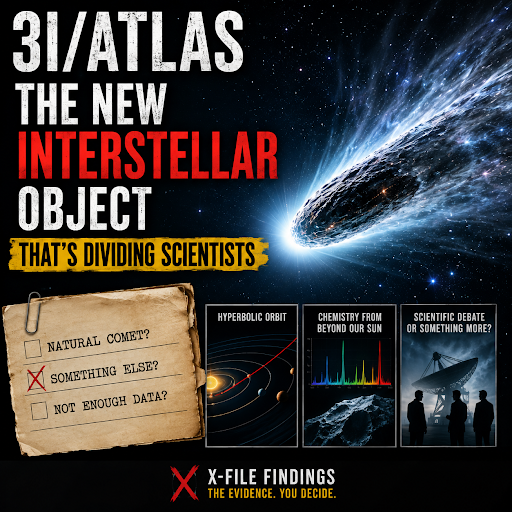
The New Interstellar Object That’s Dividing Scientists
FAQs
What is interstellar astronomy?
Interstellar astronomy is the branch of astronomy that focuses on the study of objects and phenomena that exist in the space between stars within a galaxy.
What is an interstellar astronomy documentary?
An interstellar astronomy documentary is a film or video production that explores and explains the concepts, discoveries, and research within the field of interstellar astronomy.
What topics are typically covered in an interstellar astronomy documentary?
Interstellar astronomy documentaries often cover a wide range of topics, including the formation and evolution of stars, interstellar medium, exoplanets, black holes, and the search for extraterrestrial life.
Where can I watch an interstellar astronomy documentary?
Interstellar astronomy documentaries can be found on various streaming platforms, such as Netflix, Amazon Prime, and Hulu, as well as on educational websites and channels dedicated to science and astronomy.
Are interstellar astronomy documentaries based on scientific research?
Yes, interstellar astronomy documentaries are typically based on scientific research and findings within the field of astronomy. They often feature interviews with astronomers, astrophysicists, and other experts in the field.