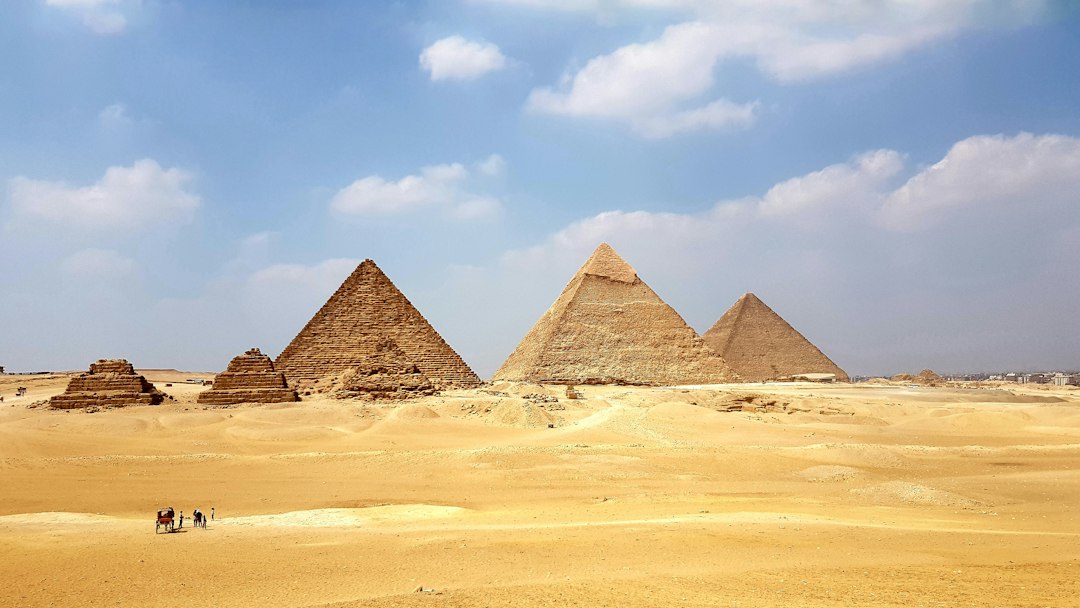
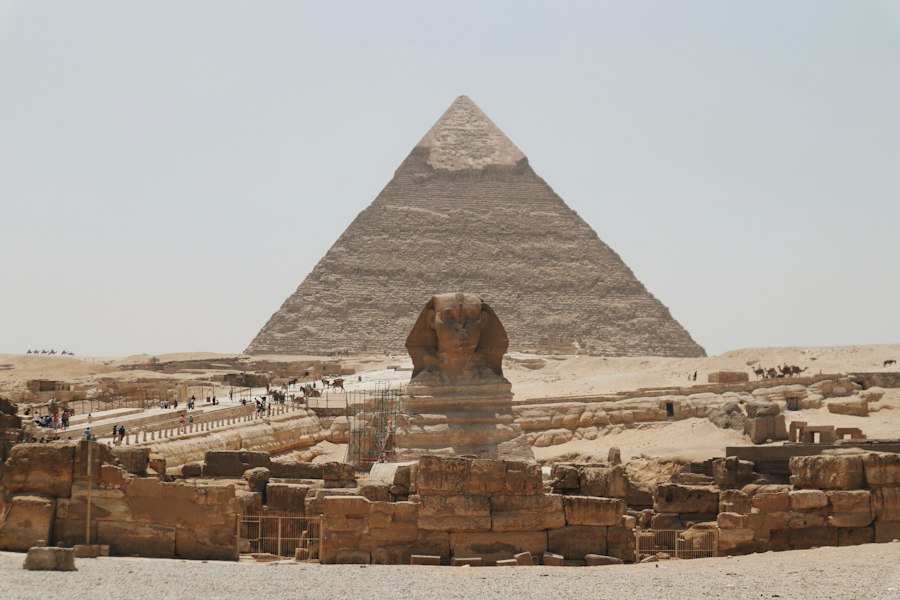
The imposing silhouette of Khafre’s Pyramid, the second largest of the Giza plateau, has long captivated the human imagination. For millennia, its stoic presence has whispered tales of pharaohs, ancient rituals, and untold secrets. While the grand pyramid itself is a marvel of engineering and history, recent geological surveys and advanced subterranean imaging technologies have begun to unveil a far more intricate and astonishing narrative: the potential existence of a hidden underground city beneath its colossal foundations. This revelation, though still in its nascent stages of exploration, promises to rewrite our understanding of ancient Egyptian civilization, its architectural prowess, and its societal structure.
The Pyramid of Khafre, an enduring testament to the power and vision of the pharaoh for whom it was built, stands sentinel beside its more famous neighbor, the Great Pyramid of Giza. While the Great Pyramid often commands the spotlight, Khafre’s monument possesses a unique allure, partly due to its apex still retaining a portion of its original casing stones, offering a glimpse into its pristine glory. However, the true fascination with Khafre has recently shifted from its visible grandeur to the enigmatic depths beneath. The initial assumptions about the pyramid’s internal structure, confined to a few known chambers and passageways, are being challenged by a growing body of evidence suggesting a far more expansive and complex subterranean network.
Unraveling the Pyramid’s Architectural Enigma
The known internal architecture of Khafre’s Pyramid, while impressive, is relatively modest compared to that of Khufu’s pyramid. It contains a main burial chamber and a smaller, unfinished chamber, accessible via a descending passage and a grand gallery. However, these known features are mere footnotes in the context of the current investigations. The sheer scale of the pyramid, estimated to contain approximately 1.2 million cubic meters of stone, suggests that the visible structure might only be the tip of a much larger iceberg, with an extensive underbelly yet to be fully comprehended.
The Enigma of the Sphinx and its Shadow
The enigmatic Sphinx, a creature of myth and legend, guards the Giza plateau, its gaze fixed eternally eastward. Situated in close proximity to Khafre’s Pyramid, some theories suggest a profound connection between the two structures, both above and below ground. The possibility of a subterranean link or an interconnected city serving both the pharaoh and the mythical guardian adds another layer of intrigue to the unfolding exploration.
The Khafre Pyramid, one of the most iconic structures of ancient Egypt, is not only renowned for its grandeur above ground but also for the intriguing underground city that lies beneath it. This subterranean network has fascinated archaeologists and historians alike, as it offers insights into the civilization that built these monumental structures. For those interested in exploring more about the mysteries surrounding the Khafre Pyramid and its underground city, you can read a related article at this link.
Echoes from the Deep: The Emergence of Subterranean Theories
The idea of hidden underground structures beneath ancient monuments is not entirely novel. Throughout history, tales of subterranean cities and forgotten complexes have surfaced, often dismissed as folklore. However, in the case of Khafre’s Pyramid, these whispers have gained significant traction due to the application of sophisticated scientific tools. These technologies have allowed researchers to peer beneath the earth’s surface, detecting anomalies that suggest deliberate construction and extensive habitation rather than natural geological formations.
The Role of Ground-Penetrating Radar (GPR)
Ground-penetrating radar (GPR) has been instrumental in the initial stages of this investigation. By emitting radio waves into the ground and analyzing the reflected signals, GPR can create subsurface profiles, revealing the presence of cavities, walls, and other man-made structures. Initial GPR scans around Khafre’s Pyramid have indicated significant subsurface anomalies, suggesting the existence of large, hollow spaces and intricate network-like features that are inconsistent with natural geological strata.
Magnetometry and Seismic Surveys: Confirming the Anomalies
Complementing GPR, magnetometry and seismic surveys have also played crucial roles in validating the initial findings. Magnetometry measures variations in the Earth’s magnetic field, which can be influenced by buried metallic objects or changes in soil composition indicative of construction. Seismic surveys, on the other hand, analyze the propagation of seismic waves through the earth, providing insights into density and structural variations. These independent surveys have corroborated the GPR data, strengthening the hypothesis of extensive underground construction.
The Quest for El-Bat’s Theory
A significant theoretical framework driving the exploration of Khafre’s underground city is attributed to the work of independent researcher and archaeologist, Dr. Zahi El-Bat. El-Bat, drawing upon a combination of ancient texts, archaeological evidence, and his own extensive field research, has proposed the existence of a vast subterranean complex that predates the pyramids themselves. His theories, though met with some skepticism from the mainstream archaeological community, have inspired a new wave of investigation focused on Khafre’s pyramid and its hidden depths.
The Blueprint of the Underworld: What the Scans Reveal
The subsurface imaging data, though still undergoing meticulous analysis, is beginning to paint a compelling picture of what lies beneath Khafre’s Pyramid. The anomalies suggest not just a simple series of chambers, but a structured and organized environment, potentially indicative of a large-scale settlement designed to serve a specific purpose. The sheer extent of these detected features has led to the groundbreaking concept of an “underground city.”
Networked Passages and Large Cavities
The most striking revelation from the surveys is the detection of an extensive network of interconnected passages and unusually large, consistently shaped cavities. These are not random voids; their dimensions and regularity suggest deliberate excavation and construction. The sheer volume of these detected spaces hints at a scale far beyond that of typical tomb complexes or simple subterranean storage areas.
Potential for Residential and Administrative Areas
The patterns observed in the subsurface imaging have led some researchers to speculate about the presence of distinct zones within the underground complex. These might include areas for living quarters, administrative functions, storage facilities, and perhaps even religious or ceremonial spaces. The potential for such diverse functions within a single subterranean network challenges conventional understandings of ancient Egyptian life, suggesting a more layered and multifaceted society than previously envisioned.
The Enigmatic Shafts and Vertical Connections
Another intriguing aspect of the subsurface data is the identification of what appear to be vertical shafts and connecting passages. These suggest a multi-level subterranean city, with potential access points and internal circulation systems. The presence of such sophisticated vertical connectivity further underscores the complexity and intentionality of the underground construction.
Speculations on Purpose and Inhabitants: A City in the Shadows
The existence of a vast underground city beneath Khafre’s Pyramid naturally leads to a multitude of questions regarding its purpose and the people who might have inhabited it. The answers, if found, could fundamentally alter our understanding of ancient Egyptian society, its beliefs, and its organizational capabilities.
A Refuge from the Elements or a Sacred Space?
One of the primary speculations revolves around the potential purpose of such a large subterranean complex. Could it have served as a refuge from the harsh desert climate, offering a controlled environment for living and working? Alternatively, its deep subterranean location could suggest a strong religious or ceremonial significance, perhaps related to beliefs about the afterlife or the underworld. The sheer scale might also indicate a need for extensive storage or defense.
The Pharaoh’s Hidden Domain or a Pre-Dynastic Legacy?
The question of who built and utilized this underground city is equally captivating. Was it an extension of the pharaoh’s monumental undertaking, a hidden domain designed for specific functions related to his reign or afterlife preparations? Or could it represent a pre-dynastic civilization, a forgotten precursor to the pyramid builders, whose advanced engineering skills have only now begun to be revealed? Dr. El-Bat’s theories lean towards the latter, suggesting a far older and more complex civilization than currently understood.
The Role of the Scribes and Artisans
If the underground city was indeed inhabited, it would have required a substantial workforce. Speculation suggests that it could have been a hub for scribes, artisans, and laborers involved in the construction and maintenance of the pyramid and its associated temples. The underground environment might have offered a protected and controlled space for their specialized work, away from the prying eyes of the outside world or the elements.
A City of the Dead or a Living Metropolis?
The prevailing narrative of Egyptian pyramids often focuses on tombs and the afterlife. However, the concept of a subterranean “city” implies a living, breathing community. The possibility of a thriving underground metropolis, perhaps active during the construction phases or even for extended periods, presents a radical departure from current understanding. This could indicate a level of societal organization and resource management previously unimagined for the ancient Egyptians.
The discovery of the underground city beneath the Khafre pyramid has sparked significant interest among archaeologists and historians alike. This hidden network of tunnels and chambers offers a glimpse into the ancient civilization that thrived in the region. For those looking to delve deeper into similar findings, an intriguing article can be found on the topic at XFile Findings, which explores other remarkable archaeological discoveries that continue to reshape our understanding of history.
The Path Forward: Unearthing the Truth
| Metric | Details |
|---|---|
| Location | Giza Plateau, Egypt |
| Associated Pyramid | Khafre Pyramid (Second Pyramid of Giza) |
| Type | Underground chambers and tunnels |
| Purpose | Burial and ceremonial functions |
| Estimated Construction Date | Circa 2570 BC (4th Dynasty) |
| Length of Tunnels | Approximately 100 meters (varies by chamber) |
| Main Chamber Dimensions | About 10m x 5m x 6m (height) |
| Material | Limestone and granite |
| Notable Features | Air shafts, sarcophagus chamber, subsidiary rooms |
| Current Accessibility | Restricted; limited archaeological access |
The exploration of Khafre’s Pyramid’s hidden underground city is a journey into the unknown, fraught with challenges but brimming with the potential for monumental discovery. The current phase is largely one of detection and hypothesis, but the next steps will involve more invasive, yet carefully controlled, methods to confirm the findings and understand the true nature of this subterranean marvel.
Non-Invasive Exploration Techniques: The Next Frontier
While GPR, magnetometry, and seismic surveys have been crucial for initial detection, future investigations will likely involve more advanced non-invasive techniques. These could include refined subsurface imaging with higher resolution, as well as the potential use of specialized sensors capable of detecting organic materials or atmospheric changes that might indicate ancient habitation. The focus will remain on minimizing any potential impact on the pyramid and its surroundings.
The Delicate Dance of Excavation
Should the evidence overwhelmingly support the existence of significant underground structures, the question of excavation will inevitably arise. This would be a highly sensitive and carefully planned endeavor, requiring collaboration between archaeologists, geologists, engineers, and conservation experts. The primary goal would be to preserve the integrity of the ancient structures while meticulously documenting any discoveries.
Collaboration and International Cooperation
The scale and significance of such a discovery would necessitate a global effort. International collaboration among research institutions, universities, and government bodies will be essential to pooling resources, expertise, and funding. A unified approach will ensure that the exploration is conducted with the highest scientific and ethical standards.
The Ethical Imperative: Preservation Above All
As the exploration progresses, the paramount ethical imperative will be the preservation of the pyramid and any discovered subterranean complexes. Any intervention must be undertaken with the utmost care, ensuring that the historical and archaeological integrity of these sites is maintained for future generations. The goal is not to exploit, but to understand and protect.
The journey into the hidden underground city beneath Khafre’s Pyramid is a testament to humanity’s enduring curiosity and our relentless pursuit of knowledge. What began as an observation of a grand monument has evolved into a profound investigation into the potential for a forgotten civilization, a hidden world that has lain dormant for millennia. The echoes from the deep are growing louder, and with each new technological advance and careful observation, we move closer to uncovering the secrets that lie beneath the stoic shadow of the Khafre Pyramid, potentially redefining our understanding of the ancient world.

Did Radar Really Find a City Beneath the Giza Pyramid?
FAQs
What is the Khafre pyramid underground city?
The Khafre pyramid underground city is a complex network of tunnels and chambers located beneath the Khafre Pyramid in Giza, Egypt.
When was the Khafre pyramid underground city discovered?
The underground city beneath the Khafre Pyramid was discovered in 2017 by a team of archaeologists using advanced scanning technology.
What is the purpose of the Khafre pyramid underground city?
The purpose of the underground city is still a subject of debate among archaeologists and historians. Some believe it served as a burial site or a storage area, while others suggest it may have had religious or ceremonial significance.
How large is the Khafre pyramid underground city?
The underground city beneath the Khafre Pyramid is estimated to cover an area of approximately 100 square meters, with tunnels and chambers extending to various depths beneath the pyramid.
Is the Khafre pyramid underground city open to the public?
As of now, the Khafre pyramid underground city is not open to the public for exploration. Excavations and research are ongoing to uncover more about this mysterious underground complex.