
Exploring the Mysteries of Deep Space: A Captivating Documentary
In the vast and enigmatic expanse of the cosmos, humanity has always found a profound source of wonder and an insatiable thirst for knowledge. The deep space, a realm of unimaginable distances and breathtaking phenomena, beckons with its secrets, inviting us to unravel its mysteries. A recent captivating documentary, Cosmic Whispers: Echoes from the Abyss, has embarked on this very journey, offering viewers an unprecedented glimpse into the formation of galaxies, the birth and death of stars, and the persistent questions surrounding the universe’s origins and evolution. This cinematic exploration is not merely a visual spectacle; it is a meticulously crafted narrative that blends cutting-edge scientific discovery with compelling storytelling, making the unfathomable accessible and profoundly human.
The documentary’s initial hours are dedicated to the monumental task of tracing the universe’s genesis. It plunges viewers into the primordial soup that existed in the moments after the Big Bang, a concept that has long resided at the forefront of cosmological inquiry. Cosmic Whispers eschews dry scientific jargon, opting instead for vivid analogies and breathtaking CGI to illustrate the universe’s incredibly rapid expansion and the subsequent formation of fundamental particles.
The Echoes of Creation: The Cosmic Microwave Background
One of the most compelling segments focuses on the Cosmic Microwave Background (CMB) radiation, often described as the afterglow of the Big Bang. The documentary meticulously explains how scientists like Penzias and Wilson stumbled upon this faint microwave radiation emanating from all directions in space. Through stunning visual representations, viewers witness how the subtle temperature fluctuations within the CMB, as captured by advanced telescopes, provide crucial clues about the early universe’s density and composition. The film highlights the contributions of missions like the Planck satellite, showcasing how its precise measurements have refined our understanding of the universe’s age, its geometry, and the relative proportions of dark matter and dark energy. The narrative artfully connects these abstract measurements to the very fabric of existence, imbuing the CMB with a narrative of cosmic birth.
The First Light: The Epoch of Reionization
The documentary then transitions to the “Epoch of Reionization,” a critical period when the universe, previously shrouded in a neutral hydrogen fog, began to clear. Cosmic Whispers employs imaginative visualizations to depict how the first stars and galaxies, energized by nuclear fusion, emitted ultraviolet radiation. This radiation, the documentary explains, gradually stripped electrons from hydrogen atoms, rendering the universe transparent and paving the way for the formation of larger structures. The film underscores the significance of this era, emphasizing that without reionization, the universe as we know it, with its stars, galaxies, and ultimately, life, would not have been possible. The visual journey through this cosmic dawn is both awe-inspiring and educational, illustrating the long and arduous path from a formless void to a universe filled with nascent light.
For those intrigued by the mysteries of the universe, a fascinating article titled “Exploring the Unknown: The Secrets of Deep Space” can be found at this link: https://www.xfilefindings.com/. This article delves into the latest discoveries in deep space exploration, complementing the insights presented in the recent deep space documentary. It offers a comprehensive overview of the technologies used in space missions and the groundbreaking findings that continue to reshape our understanding of the cosmos.
Stellar Nurseries and Cosmic Spectacles: The Life Cycle of Stars
From the universe’s inception, Cosmic Whispers expertly guides its audience through the dynamic and often violent journey of stars. The documentary portrays stars not as static points of light, but as celestial engines that shape galaxies and produce the very elements that constitute life.
Birth of a Star: Nebulae and Protostars
The film delves into the serene yet powerful process of star formation. It transports viewers to colossal nebulae, vast clouds of gas and dust, where gravity begins its patient work. Through stunning imagery, the documentary illustrates how denser regions within these nebulae coalesce, drawing in more matter and generating immense heat and pressure. The birth of a protostar, the nascent stage of a star, is depicted with a blend of scientific accuracy and artistic interpretation, showing the swirling accretion disk and the fiery jets emanating from its poles. The narrative emphasizes the delicate balance of forces at play, where gravity pulls inwards and outward pressure from fusion battles for dominance.
The Stellar Main Sequence: Our Sun’s Dominance
The documentary then focuses on the main sequence, the longest and most stable phase of a star’s life, using our own Sun as a prime example. It explains the process of nuclear fusion, where hydrogen is converted into helium in the star’s core, releasing the immense energy that powers its brilliance. Cosmic Whispers cleverly illustrates the different types of stars, from the diminutive red dwarfs to the colossal blue giants, and how their mass dictates their lifespan and eventual fate. The film’s narrative highlights that our Sun, while seemingly ordinary, is a crucial factor in the existence of life on Earth, providing the precise amount of energy needed for our planet to remain habitable.
In exploring the mysteries of the universe, deep space documentaries offer a captivating glimpse into the vastness beyond our planet. For those interested in delving deeper into this fascinating subject, a related article can provide additional insights and perspectives. You can find more information in this informative piece that discusses recent discoveries and the technology used in space exploration. These resources together enhance our understanding of the cosmos and the wonders it holds.
The Dramatic Endings: Supernovae and White Dwarfs
The dramatic demise of stars is presented with both scientific rigor and a sense of cosmic grandeur. The documentary dedicates significant time to the cataclysmic events of supernovae, the explosive deaths of massive stars. Through awe-inspiring visual effects, viewers witness the shockwaves propagating through space, scattering the elements forged within the star across the cosmos. The film connects these explosions to the creation of heavier elements, such as carbon, oxygen, and iron, essential building blocks for planets and life. Less dramatic, but equally significant, are the quiescent endings of smaller stars, which shed their outer layers to form beautiful planetary nebulae, leaving behind a dense white dwarf.
Galactic Architects: The Marvels of Cosmic Structures
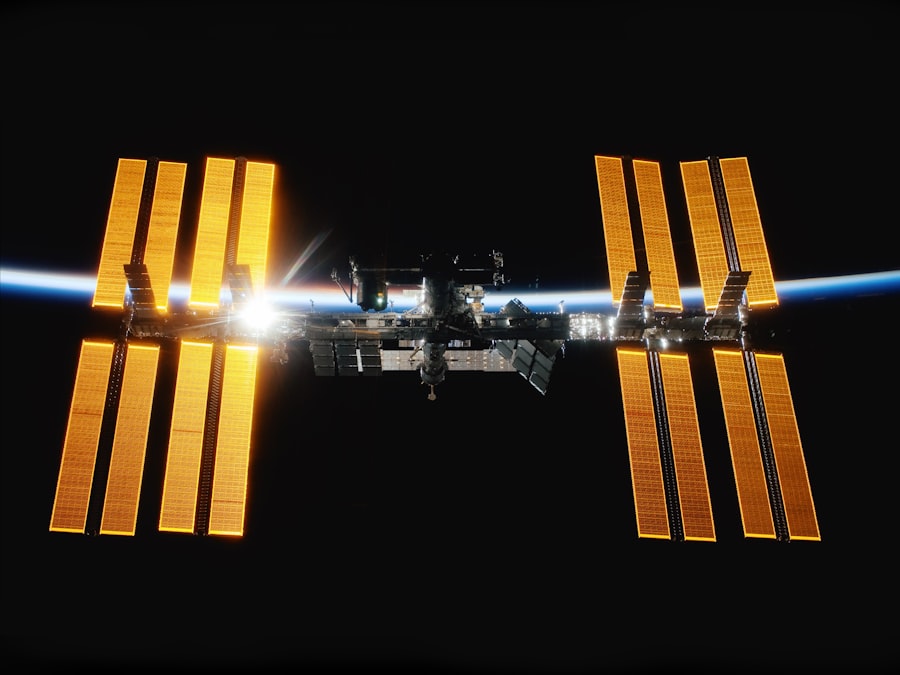
The documentary’s scope expands to encompass the grandest structures in the universe: galaxies. Cosmic Whispers illustrates how these colossal collections of stars, gas, dust, and dark matter are not static entities but dynamic systems shaped by gravity and cosmic evolution.
The Dance of Galaxies: Collisions and Mergers
One of the most fascinating aspects of galactic evolution explored is the phenomenon of galactic collisions and mergers. The documentary uses sophisticated simulations to depict how galaxies, driven by gravitational forces, interact and eventually coalesce. Viewers witness the breathtaking spectacle of galaxies merging, their stellar populations intermingling, and the intense bursts of star formation that often result from these cosmic encounters. The film uses examples like the Andromeda-Milky Way collision, predicted to occur billions of years in the future, to illustrate the ongoing evolution of our local galactic neighborhood. This segment emphasizes that the universe is a constantly changing place, with even behemoths like galaxies undergoing transformative processes.
The Invisible Hand: The Role of Dark Matter
A significant portion of Cosmic Whispers is dedicated to the enigmatic substance known as dark matter. The documentary explains that despite its invisible nature, its gravitational influence is profoundly evident in the rotation of galaxies and the clustering of matter in the universe. Through clear visualizations, the film demonstrates how the observed speeds of stars in galactic halos are far too high to be explained by visible matter alone, pointing to the presence of unseen mass. The narrative explores the ongoing scientific quest to directly detect dark matter particles and understand their fundamental properties, highlighting this as one of the most pressing mysteries in modern cosmology. The documentary skillfully portrays the scientific process of inferring the existence of something based on its measurable effects.
Black Holes: Cosmic Monsters and Galactic Catalysts
The documentary also explores the extreme gravitational landscapes of black holes, celestial objects with a gravitational pull so strong that not even light can escape. Cosmic Whispers uses stunning visualizations to depict the accretion disks surrounding supermassive black holes at the centers of galaxies, feeding on surrounding matter and emitting powerful jets of energy. The film discusses how these seemingly destructive entities can also play a crucial role in regulating galaxy formation and evolution. The narrative touches upon the groundbreaking work of the Event Horizon Telescope, which has provided the first direct images of black hole shadows, bringing these theoretical constructs into tangible reality for the audience.
The Quest for Meaning: Extraterrestrial Life and the Search for Answers

As Cosmic Whispers progresses, it shifts its focus from the physical universe to humanity’s enduring questions about our place within it, particularly regarding the potential for life beyond Earth.
The Habitable Zone: Finding Earth-like Worlds
The documentary introduces the concept of the “habitable zone,” the region around a star where temperatures are suitable for liquid water to exist on a planet’s surface. Through visualizations of exoplanet discovery missions like Kepler and TESS, viewers are shown how astronomers are identifying thousands of planets orbiting distant stars. The film highlights the discovery of potentially Earth-like planets within these habitable zones, fueling speculation and scientific endeavors to search for biosignatures. The narrative conveys a sense of optimism, suggesting that the universe may be teeming with life, even if it is in microbial forms.
The Fermi Paradox: Where is Everybody?
Cosmic Whispers grapples with the profound implications of the Fermi Paradox—the apparent contradiction between the high probability of extraterrestrial civilizations existing and the lack of evidence for or contact with such civilizations. The documentary presents various theories, from the “Great Filter” hypothesis, suggesting that civilizations face insurmountable challenges, to the idea of vast cosmic distances making interstellar communication impractical. The film avoids offering definitive answers, instead encouraging viewers to ponder the implications and the sheer scale of the universe, fostering a sense of humility and continued inquiry.
The Future of Exploration: Towards the Stars
The documentary concludes by looking towards the future of human space exploration. It showcases the ambitious plans for new telescopes, advanced propulsion systems, and the ongoing development of robotic and potentially human missions to explore our solar system and beyond. Cosmic Whispers inspires hope and a sense of shared human endeavor, emphasizing that the quest to understand the universe is a continuous journey, pushing the boundaries of our knowledge and our capabilities. The film leaves viewers with a profound sense of awe and a renewed appreciation for the extraordinary cosmos we inhabit.
A Legacy of Wonder
Cosmic Whispers: Echoes from the Abyss is more than just a documentary; it is a testament to human curiosity and ingenuity. It artfully blends scientific discovery with captivating storytelling, making the complexities of deep space accessible and profoundly moving. The film’s dedication to visual splendor, coupled with its insightful narrative, ensures that it will inspire a new generation of stargazers and scientists. By exploring the genesis of everything, the life cycle of stars, the architecture of galaxies, and the enduring questions about extraterrestrial life, this documentary has indeed captured the very essence of exploring the mysteries of deep space, leaving an indelible legacy of wonder.

They Reopened the Wow! Signal After 48 Years—Here’s What Changed
FAQs
What is a deep space documentary?
A deep space documentary is a film or video presentation that explores and showcases the wonders of outer space, including distant galaxies, nebulae, stars, and other celestial phenomena. These documentaries often feature stunning visuals captured by telescopes and spacecraft, as well as expert commentary from astronomers and astrophysicists.
What can viewers expect to learn from a deep space documentary?
Viewers can expect to learn about the latest discoveries and scientific theories related to the universe, as well as the history of space exploration and the technology used to study deep space. They may also gain a better understanding of the scale and complexity of the cosmos, as well as the potential for future space exploration and discovery.
Are deep space documentaries based on real scientific research?
Yes, reputable deep space documentaries are typically based on real scientific research and observations. They often feature contributions from leading astronomers, astrophysicists, and other experts in the field, and strive to accurately convey the current state of knowledge about the universe.
Where can one watch deep space documentaries?
Deep space documentaries can be found on various streaming platforms, such as Netflix, Amazon Prime Video, and Disney+, as well as on television networks dedicated to science and nature programming. They may also be available for purchase or rental through online stores and digital platforms.
Who are some notable producers and directors of deep space documentaries?
Notable producers and directors of deep space documentaries include Brian Cox, Neil deGrasse Tyson, and Stephen Hawking, among others. These individuals are known for their expertise in astrophysics and their ability to communicate complex scientific concepts to a broad audience.