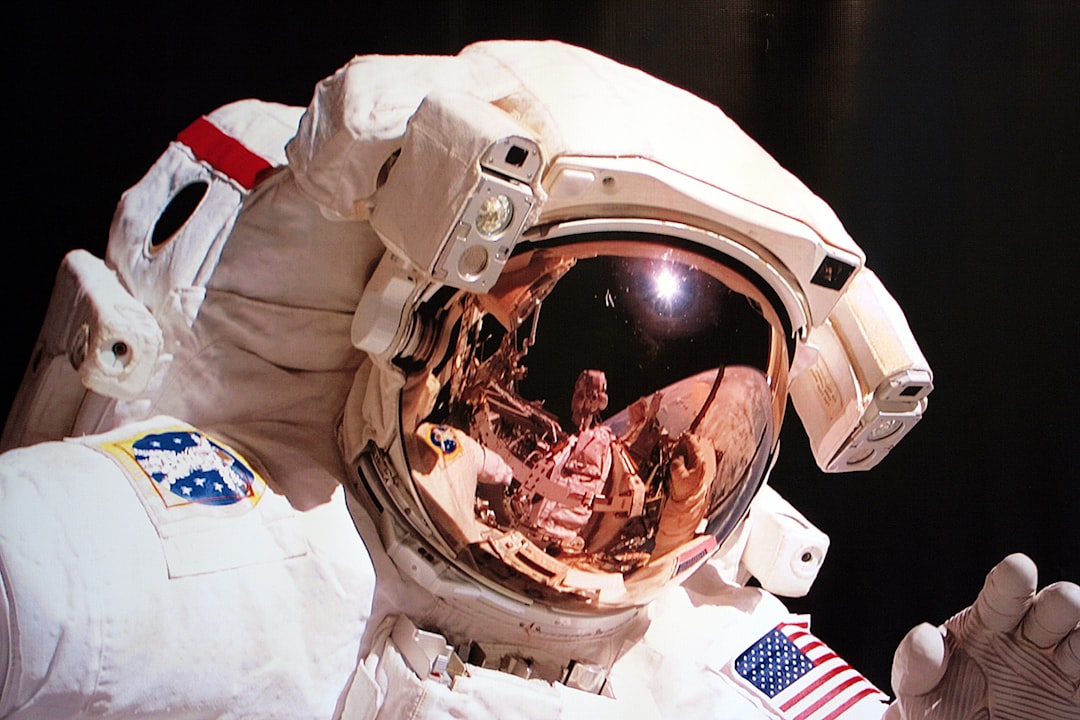
The screen flickered to life, revealing a tapestry of celestial wonders. Exploring the Universe: A Space Science Documentary promised a journey beyond our terrestrial confines, and from its opening moments, it delivered. The film embarked on a grand expedition, weaving together cutting-edge scientific discovery with breathtaking visual artistry to illuminate the vastness and mystery of the cosmos. This documentary was more than just a collection of facts and images; it was an invitation to ponder humanity’s place within the grand cosmic narrative, a quest to understand the origins, evolution, and potential future of everything we know.
The documentary’s initial segment dedicated itself to painting a vivid picture of the universe as we currently understand it. It began with a sweeping overview, leaving no stone unturned in showcasing the sheer scale and diversity of celestial bodies. The filmmakers masterfully employed CGI, archival footage, and interviews with leading astronomers and astrophysicists to create a compelling narrative.
The Big Bang: A Genesis of Everything
A significant portion of this exploration was dedicated to the prevailing cosmological model: the Big Bang theory. The documentary didn’t just present it as a scientific hypothesis; it recreated the nascent moments of the universe with astonishing visual fidelity. The rapid expansion, the cooling plasma, and the eventual formation of the first atoms were depicted in a way that made these abstract concepts tangible.
Evidence of Expansion: Hubble’s Legacy
The film highlighted the crucial role of Edwin Hubble’s observations in establishing the expansion of the universe. Viewers were treated to explanations of redshift and blueshift, presented through engaging animations and clear, concise narration. The concept of galaxies moving away from each other, with the more distant ones receding at a faster rate, was illustrated with compelling visual metaphors, making it understandable for a lay audience.
Cosmic Microwave Background Radiation: The Universe’s Baby Picture
The discovery and significance of the Cosmic Microwave Background (CMB) radiation were another key focus. The documentary explained how this faint afterglow of the Big Bang acts as a relic from a time when the universe was a mere 380,000 years old. The subtle temperature fluctuations within the CMB were presented as the seeds from which galaxies and larger structures would eventually form, a profound insight into the universe’s early homogeneity and subsequent evolution.
Galaxies: Islands in the Cosmic Ocean
The documentary then shifted its gaze to the grand structures that populate the universe: galaxies. It presented a breathtaking array of these celestial cities, from the familiar spiral arms of our own Milky Way to the elliptical behemoths and the irregular cosmic debris.
Our Milky Way: A Galactic Home
The film offered an intimate perspective on our home galaxy, the Milky Way. Viewers learned about its spiral structure, the bustling activity at its core, and the vast population of stars it contains. The segment included stunning visualizations of the galactic disk, the central bulge, and the halo, providing a sense of our place within this immense structure. The narrative also touched upon the ongoing research into the Milky Way’s supermassive black hole, Sagittarius A*, and its influence on the galaxy’s evolution.
Galaxies in Collision and Merger: Cosmic Dramas
The dynamic nature of galaxies was brought to life through depictions of galactic collisions and mergers. These spectacular events, often occurring over billions of years, were presented as fundamental drivers of galactic evolution. The documentary illustrated how gravitational forces can distort galaxies, trigger bursts of star formation, and ultimately lead to the creation of larger, more massive structures. The Andromeda galaxy’s inevitable collision with the Milky Way was discussed, offering a glimpse into a future cosmic drama on an unimaginably grand scale.
Stars: The Cosmic Furnaces
The documentary naturally moved to the fundamental building blocks of galaxies: stars. It delved into the life cycles of stars, from their fiery birth in nebulae to their eventual demise, a process that enriches the universe with heavy elements.
Stellar Nurseries: Where Stars Are Born
The birth of stars was depicted with awe-inspiring visuals of stellar nurseries, vast clouds of gas and dust within nebulae. The documentary explained how gravitational collapse within these clouds triggers nuclear fusion, igniting the stars and setting them on their evolutionary paths. The vibrant colors and intricate structures of nebulae like the Orion Nebula were showcased, emphasizing their role as cosmic cradles.
The Lives and Deaths of Stars: A Cycle of Creation and Destruction
The film meticulously traced the diverse life cycles of stars, differentiating between low-mass stars like our Sun and their more massive counterparts. The stages of stellar evolution, including the red giant phase, planetary nebulae, and the dramatic supernovae of massive stars, were explained in detail. The ultimate fate of stars, whether white dwarfs, neutron stars, or black holes, was presented as a testament to the immense forces at play within the universe. The role of supernovae in seeding the universe with elements essential for life, such as carbon and oxygen, was a particularly poignant point.
If you’re interested in exploring the wonders of space science further, you might want to check out this fascinating article that delves into the latest discoveries in astrophysics and the search for extraterrestrial life. It provides an in-depth analysis of recent missions and the technology being used to explore our universe. For more information, visit this article.
The Search for Life Beyond Earth
A significant portion of Exploring the Universe was dedicated to humanity’s enduring fascination with the possibility of life beyond our planet. This segment was characterized by scientific rigor, tempered with a sense of wonder and cautious optimism.
Exoplanets: Worlds Among Worlds
The recent explosion of exoplanet discoveries was a central theme. The documentary showcased the innovative techniques used to detect these distant worlds, such as the transit method and the radial velocity method. Telescopes like Kepler and TESS were highlighted for their groundbreaking contributions.
Habitable Zones: The Sweet Spot for Life
The concept of the habitable zone, the region around a star where liquid water could exist on a planet’s surface, was explained in detail. The documentary explored how astronomers are identifying exoplanets within these zones, and the criteria that make them potential candidates for harboring life. The diversity of exoplanetary systems, from hot Jupiters to super-Earths, was illustrated, underscoring the vast possibilities that exist.
The Search for Biosignatures: Signs of Life in Distant Atmospheres
The ongoing efforts to detect biosignatures – indicators of biological activity – in exoplanet atmospheres were a key focus. The role of advanced telescopes like the James Webb Space Telescope in analyzing the chemical composition of these atmospheres was discussed. The documentary explained how astronomers look for the presence of gases like oxygen and methane, which, in certain combinations, could suggest the presence of life.
The Mystery of Mars: A Neighborly Quest
Mars, our closest planetary neighbor, received substantial attention as a prime target in the search for extraterrestrial life. The documentary reviewed the history of Mars exploration, from early telescopic observations to the sophisticated rovers and orbiters of today.
Evidence of Past Water: A Wet and Wild Past
The compelling evidence for Mars’s past watery environment was a recurring theme. Viewers saw images of ancient riverbeds, deltas, and mineral deposits that strongly suggest that Mars once harbored liquid water on its surface. The implications of this for the potential of ancient Martian life were thoroughly explored.
Current Mars Missions: Robots on the Red Planet
The documentary showcased the impressive capabilities of current Mars missions, such as the Perseverance rover. The search for signs of ancient microbial life, the collection of rock and soil samples for future return to Earth, and the ongoing exploration of the planet’s geology were all covered, offering a glimpse into the immediate future of Martian exploration.
Exploring Our Solar System: A Cosmic Backyard

While the documentary gazed outwards at distant galaxies and exoplanets, it also dedicated significant time to the wonders within our own cosmic neighborhood. This segment highlighted the diversity and scientific importance of the planets, moons, and other celestial bodies that orbit our Sun.
The Inner Planets: Rocky Worlds and Volcanic Fury
The terrestrial planets—Mercury, Venus, Earth, and Mars—were explored in considerable detail. The documentary contrasted their unique characteristics, from Mercury’s extreme temperature swings and Venus’s runaway greenhouse effect to Earth’s vibrant biosphere and Mars’s arid, frigid landscape.
Venus: A Hellish Inferno
The intense heat and crushing atmospheric pressure of Venus were vividly depicted. The documentary discussed the planet’s extreme volcanism and its dense, toxic atmosphere, explaining why it remains an unlikely candidate for life as we know it, despite its similar size to Earth.
Earth: The Jewel of the Solar System
Naturally, Earth was presented as a unique and precious planet. The documentary elaborated on the delicate balance of its atmosphere, the role of liquid water, and the incredible diversity of life that has evolved over billions of years. The interconnectedness of Earth’s systems was emphasized, underscoring its significance as a haven for life.
The Gas Giants and Their Families: Worlds of Wonder
The colossal gas giants—Jupiter, Saturn, Uranus, and Neptune—and their extensive systems of moons were explored with a sense of grandeur. The documentary delved into the immense scale of these planets, their swirling atmospheric bands, and the powerful magnetic fields they generate.
Jupiter’s Great Red Spot: A Storm Without End
The colossal storms of Jupiter, particularly the Great Red Spot, were a visual highlight. The documentary explained the atmospheric dynamics that fuel these enduring tempests, offering insights into the complex weather patterns of gas giants.
Saturn’s Rings: A Celestial Spectacle
Saturn’s iconic rings were presented in all their glory. The film explained their composition, primarily ice particles and dust, and their dynamic structure, revealing them to be a constantly evolving and mesmerizing celestial phenomenon. The exploration of Saturn’s diverse moons, such as Titan with its dense atmosphere and Enceladus with its subsurface ocean, was also a captivating part of this segment.
The Outer Reaches: Icy Worlds and Untold Mysteries
The documentary ventured into the frigid outer reaches of the solar system, exploring the Kuiper Belt and the Oort Cloud. The dwarf planets like Pluto and the icy comets and asteroids that populate these regions were discussed.
Pluto and the Kuiper Belt: A Realm of Dwarf Planets
The reclassification of Pluto and the growing understanding of the Kuiper Belt as a vast reservoir of icy bodies were explained. The films showcased recent images and data from missions like New Horizons, revealing the surprising complexity and geological activity of these distant worlds.
Comets and Asteroids: Remnants of the Solar System’s Birth
The documentary underscored the scientific importance of comets and asteroids as remnants from the early formation of the solar system. Their composition provides invaluable clues about the conditions present when our Sun and planets first coalesced. The potential for these bodies to deliver water and organic molecules to nascent planets was also discussed.
The Mysteries of the Cosmos: Unanswered Questions
Despite humanity’s remarkable scientific progress, Exploring the Universe acknowledged that the cosmos remains a realm of profound mystery, brimming with questions that continue to drive scientific inquiry. This segment was characterized by a sense of intellectual humility and an anticipation of future discoveries.
Dark Matter and Dark Energy: The Invisible Architects
The documentary dedicated substantial time to the enigmatic concepts of dark matter and dark energy. These pervasive, yet invisible, components of the universe are estimated to make up over 95% of its total mass-energy content.
The Gravitational Influence of Dark Matter
The evidence for dark matter, primarily its gravitational effects on visible matter such as galaxies and galaxy clusters, was explained. The documentary presented how the rotation of galaxies points to the presence of unseen mass, a concept that has revolutionized our understanding of cosmic structure.
The Accelerating Expansion of the Universe: The Role of Dark Energy
The phenomenon of the accelerating expansion of the universe was discussed as the prime indicator of dark energy. The film explained how this mysterious force appears to be counteracting gravity on cosmic scales, driving galaxies further apart at an ever-increasing rate. The ongoing efforts to understand the nature and origin of dark energy were a key takeaway.
The Search for Extraterrestrial Intelligence (SETI): Are We Alone?
The age-old question of whether humanity is alone in the universe was addressed through the lens of SETI. The documentary featured interviews with scientists involved in the search for intelligent extraterrestrial life.
Radio Telescopes and Signal Detection: Listening to the Cosmos
The documentary explained how radio telescopes are used to scan the skies for artificial signals that might originate from alien civilizations. The challenges and methodologies of SETI were discussed, highlighting the immense distances involved and the statistical probabilities.
The Fermi Paradox: The Silence That Puzzles
The Fermi Paradox, which highlights the apparent contradiction between the high probability of extraterrestrial life and the lack of observed evidence, was a central point of discussion. Various potential explanations for this paradox, ranging from the rarity of intelligence to self-destruction of advanced civilizations, were explored.
In the fascinating realm of space science, documentaries play a crucial role in educating the public about the mysteries of the universe. A particularly engaging article that delves into recent discoveries and advancements in this field can be found at XFile Findings. This resource offers insights into various topics, including the latest missions to Mars and the search for extraterrestrial life, making it a must-read for anyone interested in the wonders of space exploration.
The Future of Space Exploration: Our Cosmic Destiny
| Documentary Title | Release Year | Duration (minutes) | IMDb Rating |
|---|---|---|---|
| The Farthest: Voyager in Space | 2017 | 120 | 8.2 |
| Cosmos: A Spacetime Odyssey | 2014 | 557 | 9.3 |
| Into the Universe with Stephen Hawking | 2010 | 240 | 8.6 |
The documentary concluded by looking towards the future, envisioning the next steps in humanity’s ongoing exploration of the universe. This segment was filled with a sense of optimism and the bold aspirations that underpin our desire to venture beyond Earth.
Interstellar Travel: The Next Frontier
The challenges and potential pathways for interstellar travel were a key topic. The film touched upon concepts like warp drives and generation ships, while also acknowledging the immense technological hurdles that must be overcome. The long-term vision of humanity becoming a multi-planetary or even interstellar species was explored.
Colonization of Other Worlds: A New Era for Humanity
The possibility of human colonization of other planets, such as Mars, was discussed as a crucial step in ensuring the long-term survival and expansion of our species. The documentary highlighted the ethical, logistical, and technological considerations involved in establishing self-sustaining communities beyond Earth.
Advancements in Space Technology: Pushing the Boundaries
The film showcased the rapid advancements in space technology that are making ambitious future missions a reality. From next-generation telescopes and propulsion systems to advanced robotics and life support systems, the documentary emphasized the ingenuity and determination driving space exploration forward. The role of private space companies in accelerating innovation was also noted.
The Endless Quest for Knowledge: Our Inherent Drive to Explore
Ultimately, Exploring the Universe: A Space Science Documentary served as a powerful testament to humanity’s inherent drive to explore and understand. It left viewers with a profound sense of awe at the vastness and complexity of the cosmos, and a renewed appreciation for our place within it. The documentary was more than just an educational film; it was an inspiring call to continue our cosmic journey, to keep asking questions, and to never stop reaching for the stars. The final scenes, a breathtaking panorama of the Milky Way, served as a poignant reminder of the boundless wonders that await us, urging us to continue our exploration of the universe.

They Reopened the Wow! Signal After 48 Years—Here’s What Changed
FAQs
What is a space science documentary?
A space science documentary is a film or television program that explores various aspects of space science, including astronomy, astrophysics, cosmology, and space exploration. These documentaries often feature interviews with scientists, stunning visuals of space, and explanations of complex scientific concepts.
What are some popular space science documentaries?
Some popular space science documentaries include “Cosmos: A Spacetime Odyssey,” “The Planets,” “The Universe,” “Into the Universe with Stephen Hawking,” and “Apollo 11.” These documentaries have garnered critical acclaim for their engaging storytelling and informative content.
How are space science documentaries made?
Space science documentaries are typically produced by a team of filmmakers, scientists, and experts in the field of space science. The process involves extensive research, interviews with scientists, the creation of visual effects and animations, and the narration of the documentary by a well-known personality or expert in the field.
What can viewers learn from space science documentaries?
Viewers can learn about the latest discoveries in space science, the history of space exploration, the formation and evolution of the universe, the search for extraterrestrial life, and the future of space exploration. These documentaries often present complex scientific concepts in an accessible and engaging manner.
Where can I watch space science documentaries?
Space science documentaries can be found on streaming platforms such as Netflix, Amazon Prime Video, Disney+, and National Geographic, as well as on television channels dedicated to science and nature programming. Additionally, many documentaries are available for purchase or rental on digital platforms.