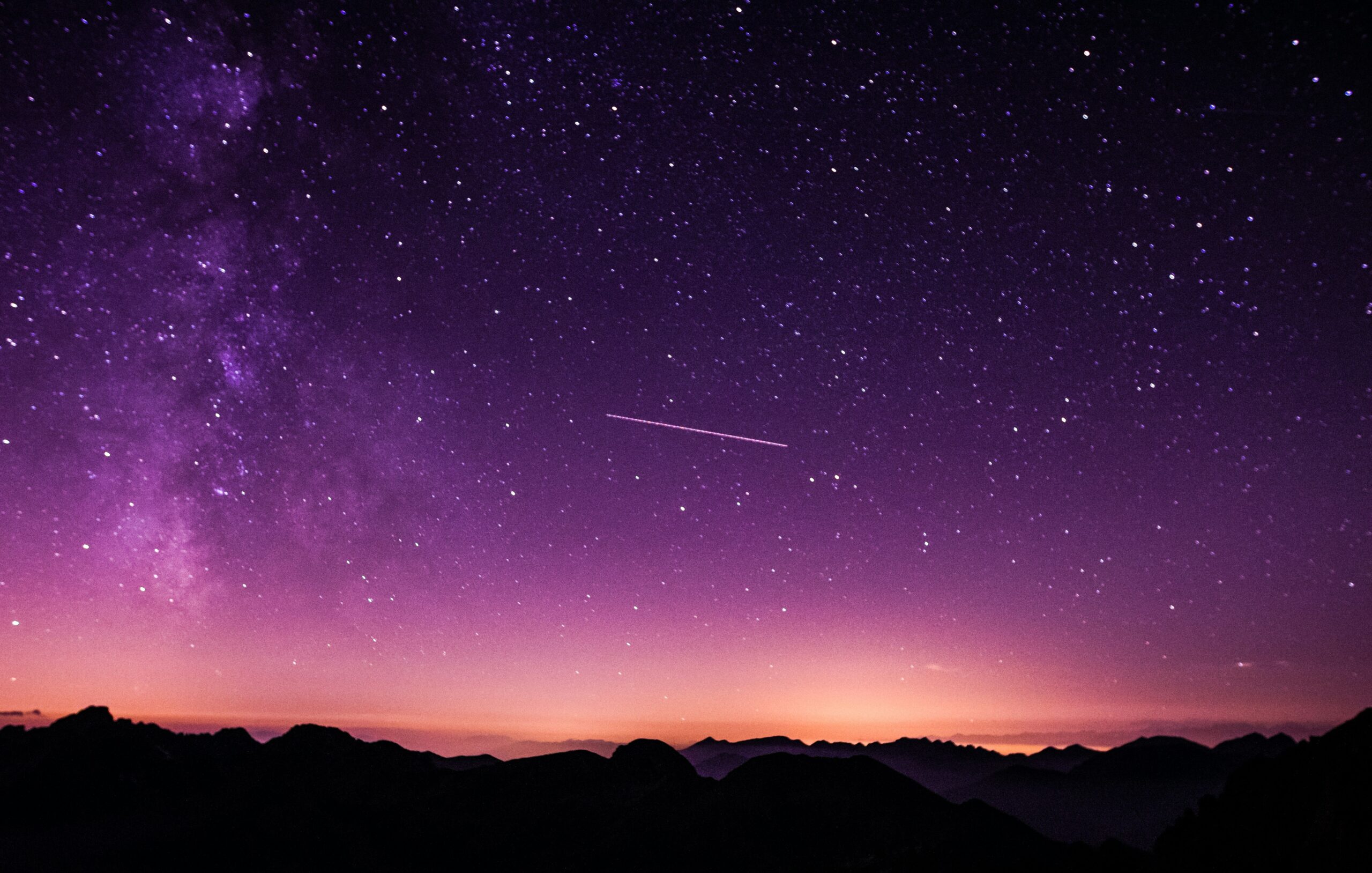
The flickering projector light cast a celestial glow across the hushed audience, signaling the beginning of an odyssey. “Exploring the Universe: An Astronomy Documentary” promised a journey beyond Earth’s atmosphere, a deep dive into the cosmic tapestry that has captivated humanity for millennia. As the opening notes of the evocative score swelled, a voice, both authoritative and full of wonder, began to narrate, guiding viewers through the vastness of space. This documentary was not merely a collection of stunning visuals; it was an expertly crafted narrative, weaving together scientific understanding, historical context, and the enduring human drive to comprehend our place in the cosmos.
The documentary opened with a breathtaking visualization of the Big Bang. Gone were sterile diagrams and dry equations; instead, the screen pulsed with energy, a primordial spark expanding outwards, giving birth to the very fabric of space and time. This visual symphony was accompanied by explanations that, while scientifically accurate, were rendered accessible to a lay audience. The narrator spoke of the infinitesimally small point from which everything began, the rapid inflation, and the subsequent cooling that allowed for the formation of fundamental particles.
Echoes of the Beginning: The Cosmic Microwave Background
The film immediately delved into the tangible evidence supporting these monumental theories. The Cosmic Microwave Background (CMB) radiation was introduced not as a scientific anomaly, but as a baby picture of the universe, a faint afterglow of that initial explosive event. Stunning visuals of the CMB maps, with their subtle temperature fluctuations, were displayed, and the narrator explained how these variations were the seeds of future galaxies and stars. The documentary highlighted the meticulous work of scientists who have dedicated their careers to studying this faint radiation, revealing the universe’s earliest moments. The significance of Planck and WMAP missions was underscored, showcasing how these space telescopes have provided unprecedented detail about the composition and evolution of the early cosmos. The audience was encouraged to appreciate the fact that by observing this ancient light, humanity is, in essence, looking back in time, witnessing events that transpired billions of years ago.
The Inflationary Epoch: A Cosmic Expansion
A critical, yet often abstract, concept like cosmic inflation was brought to life. The documentary employed clever animations to depict this period of exponential expansion, a brief but crucial phase that smoothed out the universe and laid the groundwork for the large-scale structures we observe today. The narrator, with carefully chosen words, addressed the scientific consensus surrounding inflation, while also acknowledging the ongoing research and theoretical developments attempting to further refine our understanding of this enigmatic period. The visual representation of this rapid stretching of spacetime, far exceeding the speed of light, was both awe-inspiring and conceptually challenging, a testament to the documentary’s ability to tackle complex physics with relatable imagery. The narrative emphasized that without this rapid expansion, the universe might have remained a chaotic, homogenous soup, incapable of forming the intricate cosmic structures we now marvel at.
If you’re interested in exploring more about the wonders of the universe, you might find the article on the latest discoveries in exoplanet research particularly intriguing. It delves into how astronomers are using advanced technology to identify potentially habitable worlds beyond our solar system. For more insights, check out this related article on astronomy documentaries at XFile Findings.
The Stellar Factories: Forge of Elements and Light
From the nascent universe, the documentary transitioned to the birth and life cycles of stars, the true architects of cosmic beauty and chemical diversity. The visuals shifted from abstract energy to the fiery spectacle of stellar nurseries.
Starbirth in Nebulae: Cosmic Clouds of Creation
The birth of stars was depicted with a vivid portrayal of vast nebulae, swirling clouds of gas and dust. The narrator explained the gravitational collapse within these clouds, igniting nuclear fusion and giving rise to protostars. The visuals here were rich and immersive, showcasing the vibrant colors of emission nebulae like Orion, where new stars are actively being born. The audience was invited to witness the raw power and immense scale of these stellar birthplaces. The documentary explained the role of gravity as the primary sculptor, drawing in material and initiating the chain reaction that leads to stellar ignition. The concept of accretion disks, the swirling disks of gas and dust surrounding young stars, was also introduced, highlighting their importance in the formation of planetary systems.
The Stellar Life Cycle: From Birth to Death
The concept of stellar evolution was presented as a grand, dramatic narrative. The documentary traced the life of stars, from their stable main-sequence phase to their eventual demise. Different types of stars – from small, red dwarfs to massive, blue giants – were showcased, each with its unique lifespan and end-of-life scenario. The powerful imagery of supernovae, the spectacular explosions of dying massive stars, was particularly captivating. The narrator explained how these events are not just destructive but also crucial for the creation and dispersal of heavy elements, the very building blocks of planets and life. The understanding that the iron in our blood and the calcium in our bones were forged in the hearts of long-dead stars brought a profound sense of connection to the cosmos. The documentary elaborated on the concepts of stellar mass as the primary determinant of a star’s fate, discussing how smaller stars will eventually become white dwarfs, while more massive stars will end their lives in dramatic supernovae or collapse into neutron stars and black holes.
The Fusion Furnace: Powering the Cosmos
The underlying physics of nuclear fusion was explained in a clear and engaging manner. The documentary used analogies and simplified visuals to illustrate how hydrogen atoms are fused together to form helium, releasing immense amounts of energy in the process. This energy, the narrator explained, is what makes stars shine and is responsible for the heat and light that permeate the universe. The profound implications of this process – how it sustains life on Earth and powers distant galaxies – were emphasized. The documentary further detailed the different fusion processes that occur in stars of varying masses and ages, showcasing the intricate chemical transformations that occur within these celestial furnaces.
Worlds Beyond: The Dance of Planets and Moons

The focus of the documentary then shifted outwards, to the diverse planetary systems that orbit stars, painting a picture of a universe teeming with worlds.
Our Cosmic Neighborhood: The Solar System in Focus
A detailed exploration of our own solar system served as a familiar entry point. Stunning high-resolution imagery from space probes provided intimate glimpses of familiar planets like Mars and Jupiter, as well as the icy moons of Saturn. The narrator highlighted the unique characteristics of each planet, from the swirling storms of Jupiter to the rings of Saturn, and the geological wonders of moons like Europa and Titan. The scientific missions that have transformed our understanding of our solar system were lauded, showcasing the ingenuity of human exploration. The documentary emphasized the diverse geological processes that shape these worlds, from volcanic activity on Io to the potential for subsurface oceans on several icy moons.
Exoplanets: Searching for New Earths
The excitement of discovering planets outside our solar system, exoplanets, was palpable. The documentary showcased the groundbreaking work of missions like Kepler and TESS, explaining the methods used to detect these distant worlds. The sheer number of exoplanets discovered – thousands and counting – was presented as evidence of the commonality of planetary formation throughout the galaxy. The quest for habitable exoplanets, worlds that might harbor life, was presented as one of the most compelling frontiers in astronomy. The narrator explained the transit method and the radial velocity method, the primary techniques used for exoplanet detection, and discussed the challenges and triumphs associated with characterizing the atmospheres of these distant worlds. The emerging field of astrobiology and its implications for finding life beyond Earth were also touched upon.
The Unseen Architects: Asteroids and Comets
The documentary also acknowledged the often-overlooked members of planetary systems: asteroids and comets. These celestial bodies, remnants from the early formation of solar systems, were presented as invaluable sources of information about the conditions present billions of years ago. The narrator discussed the role of asteroids and comets in delivering water and organic molecules to early Earth, potentially playing a crucial role in the origin of life. The potential hazards posed by near-Earth objects were also addressed, highlighting the ongoing efforts to track and understand these celestial wanderers. The documentary emphasized the scientific value of studying these smaller bodies, noting that they serve as living fossils of the early solar system, offering clues to our own origins.
Cosmic Structures: Islands of Stars and the Fabric of Space

The perspective broadened once more, to encompass the grand architecture of the universe, showcasing galaxies, clusters, and the invisible forces that hold them together.
Galaxies: Islands in the Cosmic Ocean
The majestic beauty of galaxies was a central theme. The documentary featured awe-inspiring images of spiral galaxies like Andromeda, elliptical galaxies, and the chaotic beauty of interacting galaxies. The narrator explained the different types of galaxies and the processes that govern their formation and evolution, including mergers and collisions. The sheer scale of these galactic islands, containing billions or even trillions of stars, was emphasized, fostering a sense of humility and wonder. The Hubble Space Telescope’s iconic deep field images were presented as windows into the universe’s past, revealing the faintest and most distant galaxies. The documentary explored the concept of galactic cannibalism, where larger galaxies absorb smaller ones, and the role of dark matter in shaping galactic structures.
The Invisible Hand: Dark Matter and Dark Energy
The documentary bravely tackled the mysteries of dark matter and dark energy, the enigmatic components that make up the vast majority of the universe’s mass-energy content. While concrete visuals for these invisible entities are impossible, the filmmakers explained their effects through visualizations of gravitational lensing and the accelerating expansion of the universe. The narrator conveyed the scientific consensus on their existence, while acknowledging the ongoing research to finally understand their true nature. This segment underscored that our current understanding of the universe is still incomplete, fueling curiosity and the drive for further scientific inquiry. The documentary explained how astronomers infer the presence of dark matter by observing its gravitational influence on visible matter, and how dark energy is deduced from the observed acceleration of the universe’s expansion.
Cosmic Web: The Large-Scale Structure of the Universe
The concept of the cosmic web, the filamentary structure of galaxies and galaxy clusters spread across the universe, was visualized with stunning complexity. The narrator explained how gravity had organized matter into these vast filaments and voids over billions of years, creating a cosmic tapestry on the largest scales. This segment provided a profound sense of order within the apparent chaos of the universe, revealing a hidden interconnectedness. The documentary illustrated how the early universe’s slight density fluctuations grew over time due to gravity, leading to the formation of this intricate cosmic web. The role of galaxy clusters as nodes within this web was also discussed, highlighting their immense gravitational influence.
If you’re fascinated by the wonders of the universe, you might enjoy exploring a related article that delves into the latest discoveries in astronomy. This insightful piece discusses groundbreaking research and the implications it has for our understanding of the cosmos. To learn more about these exciting developments, check out the article here.
The Quest for Answers: Our Place in the Cosmos
| Documentary Title | Release Year | Director | Duration |
|---|---|---|---|
| The Universe | 2007 | Douglas J. Cohen | 45 minutes per episode |
| Cosmos: A Spacetime Odyssey | 2014 | Brannon Braga | 60 minutes per episode |
| Into the Universe with Stephen Hawking | 2010 | N/A | 60 minutes per episode |
The documentary concluded by bringing the focus back to humanity, reflecting on our innate curiosity and the ongoing scientific endeavor to understand our origins and our place in the grand cosmic narrative.
The Enduring Human Spirit of Exploration
The final segment celebrated the human drive to explore, from ancient stargazers to modern-day astronauts and astronomers. The documentary highlighted the collaborative nature of scientific discovery, emphasizing that our understanding of the universe is the result of generations of dedicated work. The narrator spoke of the profound philosophical implications of our cosmic discoveries, prompting viewers to contemplate their own existence in the face of such immensity. The journey from simple awe to complex scientific understanding was presented as a testament to the power of human intellect and curiosity.
The Future of Astronomy: New Frontiers and Unanswered Questions
The documentary cast a visionary gaze towards the future of astronomical research. It highlighted upcoming telescopes like the James Webb Space Telescope and the Square Kilometre Array, promising even deeper insights into the universe. The narrator posed lingering questions about the existence of extraterrestrial life, the ultimate fate of the universe, and the fundamental laws of physics, leaving the audience with a sense of anticipation for the discoveries that lie ahead. The documentary concluded by reinforcing that the exploration of the universe is not a destination but an ongoing, ever-evolving journey, a testament to humanity’s insatiable desire to know. The final imagens of Earth viewed from space served as a poignant reminder of our singular home within this magnificent, boundless expanse, underscoring the importance of both scientific curiosity and our responsibility to protect our own celestial outpost.

They Reopened the Wow! Signal After 48 Years—Here’s What Changed
FAQs
What is an astronomy documentary?
An astronomy documentary is a film or video production that explores and explains various aspects of astronomy, including the study of celestial objects, space exploration, and the universe as a whole.
What topics are typically covered in astronomy documentaries?
Astronomy documentaries often cover a wide range of topics, including the history of astronomy, the formation and evolution of stars and galaxies, the search for extraterrestrial life, and the latest discoveries and advancements in the field of astronomy.
How are astronomy documentaries created?
Astronomy documentaries are typically created by a team of filmmakers, scientists, and experts in the field of astronomy. They may include stunning visuals from telescopes and space probes, interviews with astronomers and researchers, and computer-generated imagery to illustrate complex astronomical concepts.
Where can I watch astronomy documentaries?
Astronomy documentaries can be found on various streaming platforms, such as Netflix, Amazon Prime, and Hulu, as well as on educational websites and channels dedicated to science and astronomy.
Why are astronomy documentaries important?
Astronomy documentaries play a crucial role in educating and inspiring people about the wonders of the universe, fostering a greater understanding of our place in the cosmos, and promoting scientific literacy and curiosity about the world beyond our planet.