
Exploring Theories of Human Evolution
The story of humankind is a vast tapestry woven from threads of time, beginning with the earliest flicker of life and culminating in the complex societies of today. Understanding this journey, the evolutionary path that led to Homo sapiens, is a cornerstone of scientific inquiry. It’s a quest to decipher the biological blueprint that makes us who we are, to trace the lineage from ape-like ancestors to the bipedal, tool-making creatures that dominate the planet. This exploration delves into the various scientific theories that attempt to explain the intricate and often surprising transformations our species has undergone.
Before hominins emerged, the Earth was a crucible of chemical reactions, a primordial soup where the basic building blocks of life began to coalesce. The journey of human evolution is inextricably linked to the broader story of life’s origins.
Abiogenesis: The Unfolding of the First Spark
The prevailing scientific theory for the origin of life on Earth is abiogenesis, the process by which life arises from non-living matter. This is not a singular event but a complex series of chemical steps that occurred billions of years ago. Early Earth’s atmosphere, vastly different from today’s, likely contained gases like methane, ammonia, water vapor, and hydrogen. Energy sources such as lightning, volcanic activity, and ultraviolet radiation would have provided the impetus for complex organic molecules to form.
The Miller-Urey Experiment: A Glimpse into the Past
A seminal experiment in this field was conducted by Stanley Miller and Harold Urey in 1952. They simulated the conditions of early Earth by passing electrical sparks through a mixture of gases, mimicking lightning. This experiment produced a variety of amino acids, the fundamental building blocks of proteins, providing empirical support for the idea that organic molecules could form spontaneously under prebiotic conditions. While the precise atmospheric composition of early Earth is still debated, the Miller-Urey experiment remains a powerful illustration of how life’s components could have emerged from inorganic precursors.
RNA World Hypothesis: A Stepping Stone to DNA
Before the dominance of DNA, scientists hypothesize that RNA played a more central role in early life. The RNA world hypothesis suggests that RNA molecules served as both the genetic material (like DNA) and the catalytic molecules (like proteins) in early life forms. RNA’s ability to perform both these functions makes it a plausible candidate for the first self-replicating molecules. Over time, DNA, with its greater stability, would have taken over the role of genetic storage, and proteins, with their greater diversity of functions, would have become the primary catalysts.
The Rise of Prokaryotes: The First Architects of Life
The earliest forms of life were simple, single-celled organisms called prokaryotes, which lacked a nucleus and other membrane-bound organelles. These microscopic powerhouses were the sole inhabitants of Earth for billions of years, shaping the planet’s environment.
Photosynthesis: A Game-Changer for the Atmosphere
The evolution of photosynthesis by some prokaryotes, like cyanobacteria, was a monumental event. This process allowed organisms to harness sunlight as an energy source, converting carbon dioxide and water into glucose and oxygen. The release of oxygen had profound consequences, gradually transforming Earth’s atmosphere and paving the way for more complex life forms that could utilize oxygen for respiration. This was akin to a planetary air purifier, fundamentally altering the conditions for all subsequent life.
Human evolution theories have long fascinated scientists and researchers, as they seek to unravel the complex history of our species. A related article that delves deeper into this subject can be found at XFile Findings, where various hypotheses and discoveries are explored, shedding light on the evolutionary journey of humans and our ancestors. This resource provides valuable insights into the ongoing debates and emerging evidence in the field of anthropology and genetics.
The Great Leap: The Emergence of Mammals and Early Primates
As the Earth’s environment changed and became more oxygen-rich, opportunities arose for more complex life to evolve. This period saw the diversification of life, with mammals eventually emerging as a dominant group. Within this diverse mammalian class, primates began their evolutionary trajectory.
The Age of Mammals: Adapting to a Changing World
Following the extinction of the dinosaurs, mammals, which had previously been small and often nocturnal creatures, underwent a rapid diversification. They adapted to a wide range of ecological niches, from marine environments to aerial spaces. This adaptive radiation, driven by new opportunities and the absence of their reptilian competitors, laid the groundwork for the evolution of many familiar animal groups, including our own ancestors.
The Primate Lineage: Charting Our Ancestral Path
Primates, characterized by their grasping hands and feet, forward-facing eyes, and enlarged brains, represent a distinct branch of the mammalian family tree. Their evolutionary history is crucial for understanding human origins, as our species belongs to this order. Fossil evidence suggests that the earliest primates appeared in the Paleocene epoch, around 66 to 56 million years ago.
Early Primate Adaptations: Life in the Trees
The arboreal lifestyle of early primates likely played a significant role in their evolutionary development. Grasping hands and feet provided the dexterity needed to navigate tree branches, while forward-facing eyes offered stereoscopic vision, essential for judging distances and coordinating movements in a three-dimensional environment. The development of a larger brain relative to body size may have been advantageous for processing sensory information and navigating complex forest ecosystems.
The Hominin Journey: The Split from Other Apes
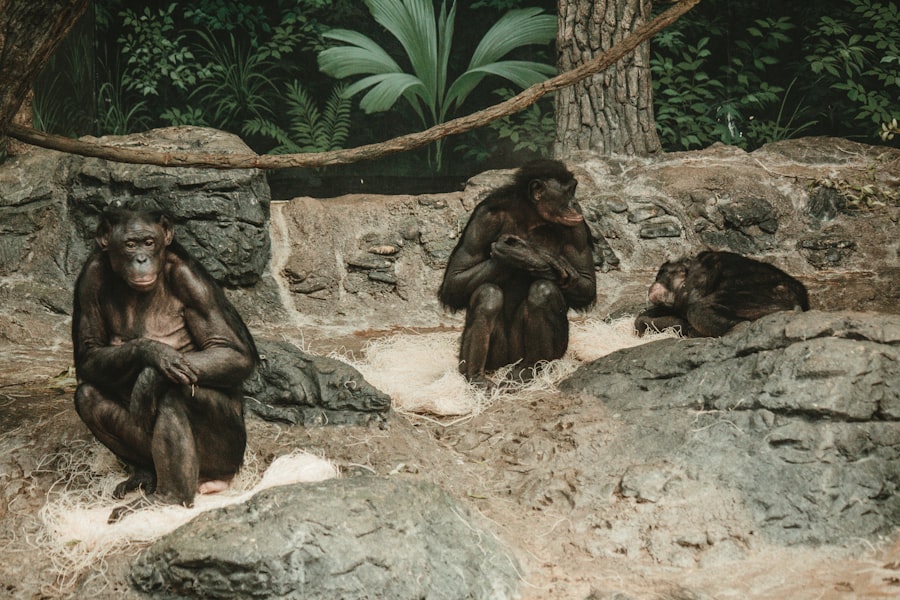
The divergence of the human lineage from other ape ancestors is a pivotal moment in our evolutionary story. This split led to the development of unique traits that define hominins, the group that includes modern humans and our extinct bipedal ancestors.
The Great Ape Connection: Our Closest Relatives
Modern humans are part of the ape superfamily, Hominoidea. Our closest living relatives are the chimpanzees and bonobos, with whom we share a common ancestor. Genetic studies estimate that the lineage leading to humans diverged from the lineage leading to chimpanzees approximately 6 to 7 million years ago. This shared ancestry is a testament to the gradual nature of evolution, where small changes accumulate over vast stretches of time.
Bipedalism: Standing Tall and Moving Forward
One of the most defining characteristics of hominins is bipedalism, the ability to walk on two legs. The transition from quadrupedalism (walking on four limbs) to bipedalism was a gradual process, with early hominins likely exhibiting a facultative bipedalism, meaning they could walk upright but also spent time on all fours. The reasons for the evolution of bipedalism are multifaceted and continue to be a subject of scientific debate.
Theories on the Origin of Bipedalism: A Multifaceted Explanation
Several hypotheses attempt to explain why early hominins adopted bipedalism.
- Savanna Hypothesis: This long-standing theory suggests that as African forests receded and savannas expanded, bipedalism became advantageous for traversing open grasslands, spotting predators, and carrying resources over longer distances. Standing upright would have allowed early hominins to see further over tall grasses.
- Thermoregulation Hypothesis: Another idea posits that bipedalism helped early hominins regulate their body temperature. Standing upright exposes less surface area to the direct sun during the hottest parts of the day and engages areas of the body with more access to cooling breezes.
- Carrying Hypothesis: Bipedalism would have freed up the hands, allowing early hominins to carry food, tools, and infants more efficiently. This could have been crucial for provisioning families and sharing resources.
- Energy Efficiency Hypothesis: Some research suggests that for certain gaits, bipedalism might be more energy-efficient for long-distance travel compared to quadrupedalism, especially at moderate speeds.
The development of bipedalism was not a single, instantaneous event but rather a mosaic of anatomical adaptations that occurred over millions of years.
Cranial Capacity and Brain Evolution: The Growing Mind
Another significant evolutionary trend in hominins is the increase in cranial capacity, leading to larger brains. This expansion of the brain is associated with the development of more complex cognitive abilities, including language, tool-making, and social behavior.
The Australopithecines: Sturdy Walkers with Smaller Brains
The genus Australopithecus, which lived from about 4 million to 2 million years ago, represents an important transitional group. Famous examples include “Lucy” (Australopithecus afarensis). These hominins were clearly bipedal but had brains that were still relatively small, comparable in size to those of modern chimpanzees. Their fossil remains reveal a blend of ape-like and human-like features.
The Genus Homo: The Emergence of Greater Intelligence
The genus Homo, which includes modern humans, emerged around 2.8 million years ago. Early members like Homo habilis (“handy man”) are associated with the earliest stone tools. Over time, species within the Homo genus, such as Homo erectus and later Homo sapiens, showed progressive increases in brain size and sophistication. This brain expansion was not just about volume but also about the reorganization of brain structures, leading to enhanced cognitive functions.
The Dawn of Tool Use and Fire: Shaping the Environment and Ourselves
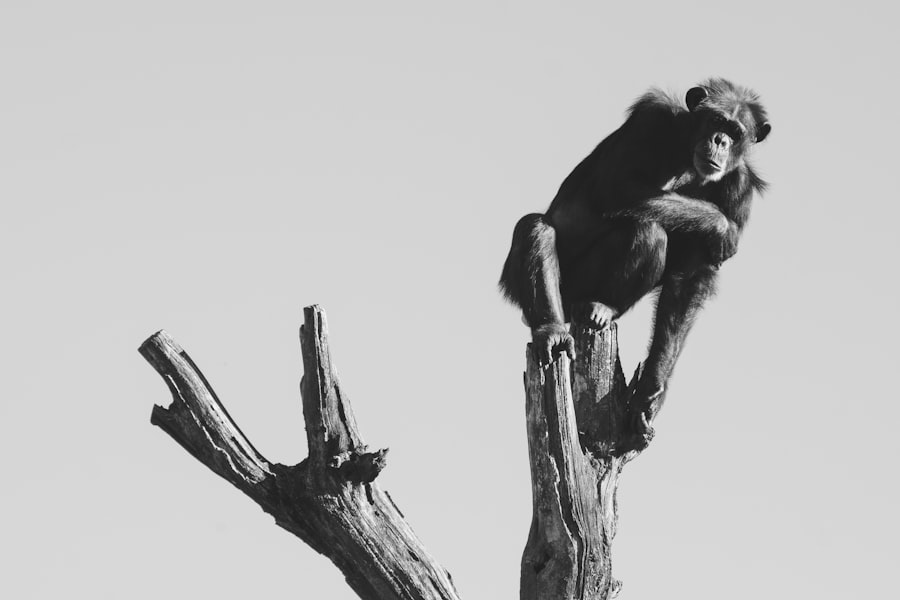
The ability to create and use tools, and later to control fire, marked crucial milestones in human evolution, profoundly altering our ancestors’ relationship with their environment and each other.
Early Stone Tools: The First Extensions of the Hand
The earliest widely accepted stone tools date back to around 3.3 million years ago, predating the emergence of the genus Homo. These were relatively simple, consisting of flakes and cores, used for tasks like butchering carcasses, processing plants, and scraping hides. The development of tool-making, known as the Oldowan tradition, demonstrated an increasing capacity for problem-solving and planning.
The Hand-Axe Tradition: More Sophisticated Technology
Later, around 1.7 million years ago, Homo erectus developed more sophisticated stone tools, such as the bifacial hand-axe. These tools required more skill and planning to manufacture and were versatile, used for a wider range of tasks. The refinement of tool technology reflects a growing understanding of materials and a more complex cognitive ability to conceptualize and execute multi-step manufacturing processes.
The Mastery of Fire: A Transformative Innovation
The control of fire, appearing around 1 million to 400,000 years ago, was a monumental turning point in human evolution. Fire provided a host of benefits that had far-reaching consequences.
Benefits of Fire: Cooking, Warmth, and Protection
- Cooking: The ability to cook food made it more digestible and nutritious, unlocking more calories and essential nutrients. This may have contributed to brain growth and reduced the need for extensive chewing, potentially leading to changes in jaw structure.
- Warmth: Fire provided warmth, allowing early humans to survive in colder climates and expand their geographic range. It also extended the period of activity into the night.
- Protection: Fire offered a deterrent to predators, providing a safer environment.
- Social Hub: Fireplaces likely served as central gathering places, fostering social interaction, storytelling, and the transmission of knowledge.
The mastery of fire was not merely a technological advancement; it was a cultural and social revolution that profoundly influenced the development of human societies and biology.
Human evolution theories continue to spark intense debate and research within the scientific community, shedding light on our origins and the various factors that have shaped our development. A fascinating article that delves deeper into this topic can be found at XFile Findings, where it explores the latest discoveries and insights related to human ancestry. By examining fossil records and genetic evidence, researchers are piecing together the complex puzzle of how early hominins adapted to their environments, ultimately leading to the emergence of modern humans.
The Spread of Humanity: Migrations and Diversification
| Theory | Proponent(s) | Time Period Proposed | Key Concept | Supporting Evidence | Criticism |
|---|---|---|---|---|---|
| Out of Africa Theory | Chris Stringer, Rebecca Cann | 1980s | Modern humans evolved in Africa and migrated outwards, replacing other hominins | Genetic studies, fossil records showing African origin | Some argue for interbreeding with local populations |
| Multiregional Evolution | Milford Wolpoff, Alan Thorne | 1980s | Modern humans evolved simultaneously in different regions with gene flow | Regional continuity in fossil traits | Genetic evidence favors African origin |
| Replacement Hypothesis | Allan Wilson, Rebecca Cann | 1987 | Modern humans replaced archaic humans without interbreeding | Mitochondrial DNA studies | Evidence of Neanderthal DNA in modern humans |
| Neutral Theory of Molecular Evolution | Motoo Kimura | 1968 | Most evolutionary changes are due to genetic drift of neutral mutations | Molecular data showing neutral mutations | Does not explain adaptive evolution fully |
| Sexual Selection Theory | Charles Darwin | 1871 | Traits evolve based on mate preference rather than survival advantage | Observations of mating behaviors and traits | Hard to quantify mate preferences in fossil record |
Once our ancestors developed the capabilities to adapt to diverse environments and overcome obstacles, they began to spread across the globe, an epic journey of migration and diversification.
Out of Africa Theory: The Genesis of Global Populations
The “Out of Africa” theory, also known as the Recent African Origin model, is the prevailing scientific model for the geographic origin and early migration of anatomically modern humans (Homo sapiens). It posits that Homo sapiens evolved in Africa and then migrated out of the continent in multiple waves, eventually populating the rest of the world.
Genetic Evidence: Tracing Ancestral Footprints
Genetic studies, particularly analysis of mitochondrial DNA and Y-chromosome DNA, have provided strong support for the Out of Africa theory. These studies show that the greatest genetic diversity exists within African populations, indicating that Africa is the cradle of humankind. As humans migrated out of Africa, genetic bottlenecks occurred, leading to reduced diversity in descendant populations. This genetic data acts like an ancient roadmap, revealing the paths our ancestors took.
Fossil Evidence: Supporting the Exodus
Fossil discoveries corroborate the genetic evidence. The oldest fossils of Homo sapiens are found in Africa, dating back to around 300,000 years ago. As time progressed, fossils of Homo sapiens begin to appear in the Middle East, Europe, Asia, and eventually the Americas and Australia, supporting the idea of gradual dispersal from the African homeland.
Adapting to New Environments: Biological and Cultural Innovations
As humans moved into different geographic regions, they encountered a wide array of environmental challenges, from Arctic cold to tropical heat. This led to both biological adaptations and the development of diverse cultural practices.
Phenotypic Adaptations: Skin Color and Body Shape
Natural selection favored different traits in different environments. For instance, populations living in high-UV regions developed darker skin pigmentation to protect against sunburn and skin cancer. Conversely, populations in less sunny regions evolved lighter skin to facilitate vitamin D synthesis. Likewise, body shapes tended to adapt, with populations in colder climates often having stockier builds (reducing surface area to volume ratio for heat retention) and those in warmer climates having more linear builds.
Cultural Adaptations: Innovation and Ingenuity
Beyond biological changes, humans have demonstrated an extraordinary capacity for cultural adaptation. The development of diverse technologies, such as specialized clothing, housing styles, and hunting and gathering techniques, allowed humans to thrive in virtually every terrestrial environment on Earth. This cultural flexibility is a hallmark of our species.
The exploration of human evolution is an ongoing endeavor, with new discoveries constantly reshaping our understanding. From the primordial soup to the global tapestry of humanity, the story of our evolution is a testament to the enduring power of adaptation, innovation, and the relentless march of time. It is a story that continues to unfold, inviting us to look back and understand the incredible journey that brought us to where we are today.
FAQs
What is the theory of evolution in relation to human origins?
The theory of evolution explains how humans and other species have changed over time through natural selection and genetic variation. It suggests that modern humans evolved from common ancestors shared with other primates.
Who proposed the most influential theory of human evolution?
Charles Darwin is the most influential figure associated with the theory of evolution. His work, particularly the book “On the Origin of Species,” laid the foundation for understanding how species, including humans, evolve over time.
What are some key stages in human evolution?
Key stages include the emergence of early hominins like Australopithecus, the development of the genus Homo (such as Homo habilis and Homo erectus), and the appearance of anatomically modern humans (Homo sapiens) around 300,000 years ago.
How do scientists study human evolution?
Scientists study human evolution through fossil evidence, comparative anatomy, genetic analysis, and archaeological findings. These methods help reconstruct the physical and behavioral changes in human ancestors over millions of years.
Are there different theories about how humans evolved?
Yes, while the general framework of evolution is widely accepted, there are various hypotheses about specific aspects, such as the role of climate change, migration patterns, and interbreeding with other hominin species like Neanderthals.