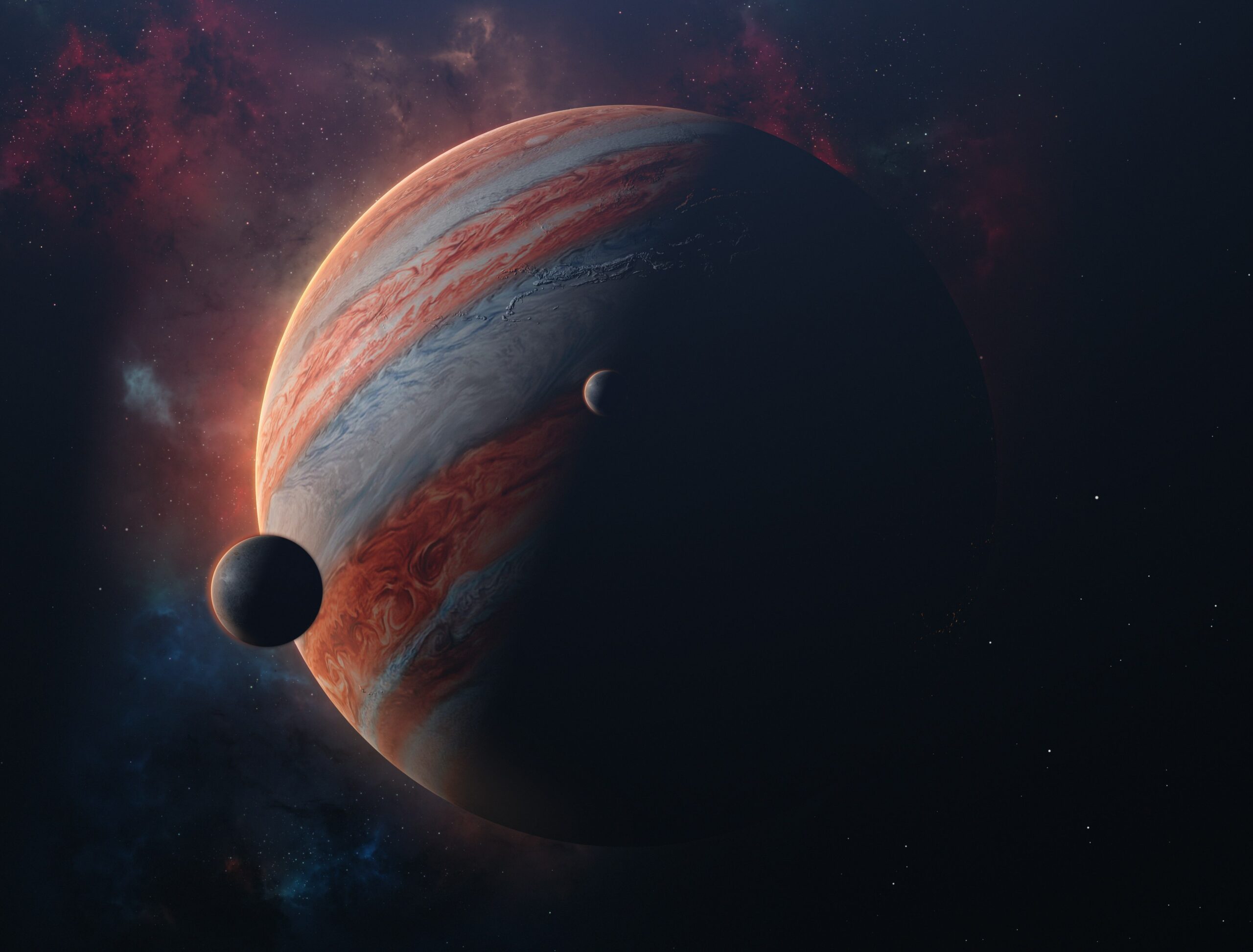
The day the sky tore open was not marked by thunder or seismic upheaval, but by a silent, impossible unfolding. It began as a shimmering distortion, a heat haze on a perfectly clear afternoon, but it grew, expanding with a grace that defied physics, coalescing into a form that defied comprehension. Humanity, caught between awe and terror, watched as a vessel, unlike anything conceived by terrestrial minds, descended. This was First Contact.
The initial detection was subtle, a ripple in the vast ocean of cosmic background radiation, flagged by the most sensitive of Earth’s radio telescopes. Astronomers, accustomed to deciphering whispers from the void, initially dismissed it as a novel form of interstellar noise, perhaps a previously unobserved pulsar or a strange nebular emission. Yet, the anomaly persisted, its signature growing in complexity and, more disturbingly, exhibiting patterns that suggested intelligent design.
Early Observations and Growing Puzzlement
For weeks, a clandestine effort by a consortium of international space agencies focused on this singular point of interest. Data streamed in, each transmission raising more questions than it answered. The object, which had no discernible propulsion systems in the conventional sense, was not accelerating or decelerating; it simply moved. Its trajectory was precise, deliberate, and seemingly indifferent to the gravitational wells of planets and stars. The sheer speed at which it covered interstellar distances, without any observable exhaust or energy expenditure, was a profound challenge to established physics.
The First Glimpse: A Spectacle of Light and Shadow
As the object entered the Sol system, its true nature began to reveal itself, not through radio waves, but through visible light. It was not a metallic craft, nor a crystalline structure, but something akin to a woven tapestry of light and shadow, constantly shifting and reforming. Its surface seemed to absorb and re-emit ambient starlight, creating an effect that was both dazzling and disorienting. The sheer scale of it was breathtaking, dwarfing even the largest terrestrial spacecraft ever conceived. It was a celestial body, yet it moved with purpose, a cosmic vessel navigating the dark.
In recent discussions about the possibility of extraterrestrial visitors, an intriguing article titled “The Implications of Contact: What Would a Visitor from Another Solar System Mean for Humanity?” explores the potential consequences and societal impacts of such an encounter. This thought-provoking piece delves into the scientific, philosophical, and ethical considerations that would arise if we were to make contact with intelligent life beyond our planet. For more insights on this fascinating topic, you can read the full article here: The Implications of Contact.
The Descent: A World Holds Its Breath
The approach to Earth was agonizingly slow, a deliberate, unhurried descent that allowed the planet’s inhabitants ample time to grapple with the unprecedented reality. Global communication networks, usually a cacophony of disparate voices, fell into an almost universal hush, punctuated only by bewildered pronouncements and hushed prayers. Governments convened, militaries were placed on high alert, and scientific communities scrambled to assemble any shred of knowledge that might offer insight.
Global Reactions: From Panic to Profound Wonder
The initial reaction was, predictably, a surge of panic. News channels, initially hesitant, broadcast grainy, often speculative footage, fueling anxieties about invasion and annihilation. Stock markets plummeted, and cities emptied as populations sought refuge in perceived safety. Yet, as the days turned into weeks, and the visitor made no aggressive moves, a different emotion began to take root: profound, overwhelming wonder. Children pointed to the sky, their faces alight with a curiosity that transcended fear. Artists attempted to capture the impossible beauty of the descending entity. Scientists, once fearful, found themselves invigorated by the ultimate research opportunity.
The Landing Site: A Neutral Ground
The visitor did not descend upon a major city or a military base. Instead, it chose a vast, uninhabited desert plain in a geographically neutral region, a place where the earth met the sky in an uninterrupted expanse. The landing was as silent and graceful as its arrival. The shimmering distortion resolved into a solid, yet fluid, structure that seemed to exhale a soft, ethereal light. No impact tremors shook the ground, no roar of engines rent the air. It simply was.
The First Contact: A Bridge of Silence

The hours following the landing were filled with an unbearable tension. The world waited, straining for any sign of communication, any indication of intent. The vessel remained inert, a silent monolith against the vastness of the desert. Then, slowly, a section of its luminous surface began to ripple, to part, not like a door opening, but like liquid parting, revealing an aperture into its interior.
The Emergence: A Figure of Light
From this opening emerged a being, or perhaps a collection of beings, that defied all terrestrial biological classification. It was not carbon-based, nor did it seem to possess organs as humans understood them. It appeared as a coalesced form of pure energy, a pulsating luminescence that shifted through a spectrum of colors unknown to the human eye. It moved with an effortless fluidity, its form adapting to the arid environment without any visible discomfort. Its presence radiated a profound sense of peace, a quiet authority that silenced the remaining tremors of fear.
The Initial Exchange: A Symphony of Non-Verbal Cues
There were no spoken words, no audible sounds. The initial exchange was a complex interplay of light, subtle shifts in form, and what humans would later describe as a “feeling” of understanding. The visitor projected patterns of light and color that seemed to convey concepts, emotions, and abstract ideas. Human scientists, equipped with advanced sensory equipment, struggled to interpret this new form of communication, but the overall sentiment was clear: curiosity, observation, and a desire for peaceful interaction. It was a bridge built not of language, but of shared consciousness and intent.
Understanding the Unknown: A New Paradigm of Science
The arrival of the visitor shattered the foundations of human scientific understanding. The very laws of physics as they were known seemed to be mere suggestions to this alien civilization. The vessel’s propulsion, its energy generation, and even its very composition defied explanation within the existing scientific framework. This was not simply a discovery; it was a revolution.
The Visitors’ Technology: Beyond Human Comprehension
The technology exhibited by the visitor was not merely advanced; it operated on principles that were entirely alien. The vessel itself seemed to be a living entity, or at least an extension of its inhabitants’ consciousness, capable of self-repair and adaptation. Its internal environment was a testament to a civilization that had mastered the manipulation of energy and matter at a fundamental level. Devices that appeared to be tools or instruments emitted fields that could analyze matter without physical contact, or project localized pockets of altered gravity. The concept of “machines” as separate entities seemed to be obsolete.
Redefining Physics: A Leap in Cosmic Understanding
The visitor’s ability to traverse vast interstellar distances in what, from an Earth perspective, seemed like mere moments, pointed to a profound understanding of spacetime and its manipulation. Theories of wormholes and warp drives, once confined to the realm of science fiction, were now being re-examined with a desperate urgency. The energy signatures emanating from the visitor’s vessel suggested a power source that tapped into forces far beyond anything humanity had conceived, perhaps manipulating dark energy or harnessing the vacuum itself. The implications for physics were staggering, opening up entirely new avenues of research and fundamentally altering humanity’s perception of the universe.
In recent discussions about the possibility of extraterrestrial visitors, an intriguing article has emerged that explores the implications of a visitor from another solar system. This piece delves into the scientific and societal ramifications of such an encounter, highlighting both the excitement and the challenges that would arise. For those interested in a deeper understanding of this fascinating topic, you can read more in the article found at XFile Findings, which offers insights into the potential technologies and motivations behind interstellar travel.
The Message and the Mission: Seeds of Interstellar Cooperation
| Year | Visitor Name | Distance from Earth (in light years) | Speed (in km/s) |
|---|---|---|---|
| 2017 | ‘Oumuamua | 0.16 | 26.3 |
| 2020 | 2I/Borisov | 2.0 | 32.2 |
The visitor’s purpose was not conquest or resource acquisition, but something far more profound: knowledge sharing and the fostering of a galactic community. Their arrival was not an invasion, but an invitation.
The Universal Language of Science and Empathy
Through their sophisticated methods of communication, the visitors began to convey information. It was a gradual process, a slow unveiling of their history, their understanding of the cosmos, and their observations of humanity. They shared not just scientific data, but also insights into their philosophical and ethical frameworks. Their concept of a universal language, built on fundamental truths of physics and mathematics, coupled with an inherent empathy, resonated deeply with humanity’s own nascent aspirations for unity. They demonstrated that true communication transcended mere words, existing in shared understanding and mutual respect.
A Call to Galactic Harmony: Beyond Sol
The visitors revealed that they were part of a vast network of sentient species, a loose confederation bound by shared curiosity and a commitment to maintaining the delicate balance of the galaxy. Their mission was to guide emerging civilizations, to offer assistance and knowledge, and to encourage peaceful development. Humanity, they indicated, was at a crucial juncture, poised to either ascend to a higher level of cosmic citizenship or succumb to its own internal divisions. The message was clear: the future of Earth, and its place in the wider universe, rested on its ability to embrace cooperation and to move beyond its terrestrial conflicts.
The days that followed the initial contact were a whirlwind of discovery and adaptation. The visitor, now known colloquially as “The Emissary,” remained on Earth, a silent, luminous guardian. Its presence spurred a global Renaissance, not just in science and technology, but in philosophy, art, and human consciousness itself. The fear that had initially gripped the planet gradually receded, replaced by a shared sense of purpose and a boundless hope for the future. First Contact was not an ending, but a spectacular, breathtaking beginning.

The New Interstellar Object That’s Dividing Scientists
FAQs
What is a visitor from another solar system?
A visitor from another solar system refers to an object that has entered our solar system from a different star system. These objects are not native to our solar system and are of particular interest to scientists and astronomers.
What is an example of a visitor from another solar system?
One example of a visitor from another solar system is ‘Oumuamua, which was the first known interstellar object detected passing through our solar system in 2017. It was classified as an asteroid, but its unusual shape and trajectory led to speculation about its origins.
How do scientists study visitors from another solar system?
Scientists study visitors from another solar system using telescopes and other observational tools to gather data about their size, shape, composition, and trajectory. They also analyze the light reflected from these objects to learn more about their properties.
What can visitors from another solar system tell us about the universe?
Studying visitors from another solar system can provide valuable insights into the diversity of objects that exist in other star systems. It can also help scientists better understand the processes of planet and star formation in other parts of the universe.
Are visitors from another solar system a common occurrence?
Visitors from another solar system are believed to be relatively rare, but advances in technology and observational techniques have increased the likelihood of detecting more of these objects in the future.