The McKinnon Revelation: A Glimpse into Unconventional Lunar Structures
The story of Gary McKinnon is one that continues to ignite debate and fuel speculation within the realms of ufology and amateur astronomy. His unauthorized access into NASA computer systems in the early 2000s, driven by a quest for evidence of extraterrestrial activity, famously led to his prosecution. While the legal ramifications were significant, the lasting impact of his alleged findings, particularly concerning anomalous objects and structures on celestial bodies, remains a subject of intense scrutiny. Among the most compelling of these alleged discoveries is the purported revelation of a geodesic sphere design, captured in a NASA image of the Moon. This finding, if validated, could fundamentally alter our understanding of lunar history and the potential for advanced civilizations beyond our own. The implications are vast, touching upon scientific, philosophical, and even existential questions about humanity’s place in the cosmos.
Gary McKinnon, known for his infamous hacking of NASA and other U.S. government systems, has often been associated with theories surrounding extraterrestrial technology and geodesic spheres. His claims about discovering images of these structures have sparked significant interest and debate among enthusiasts of the unexplained. For those looking to delve deeper into this intriguing topic, a related article can be found at XFile Findings, which explores various aspects of UFO sightings and government secrecy.
Decoding the Anomalous Imagery: The Geodesic Sphere in Question
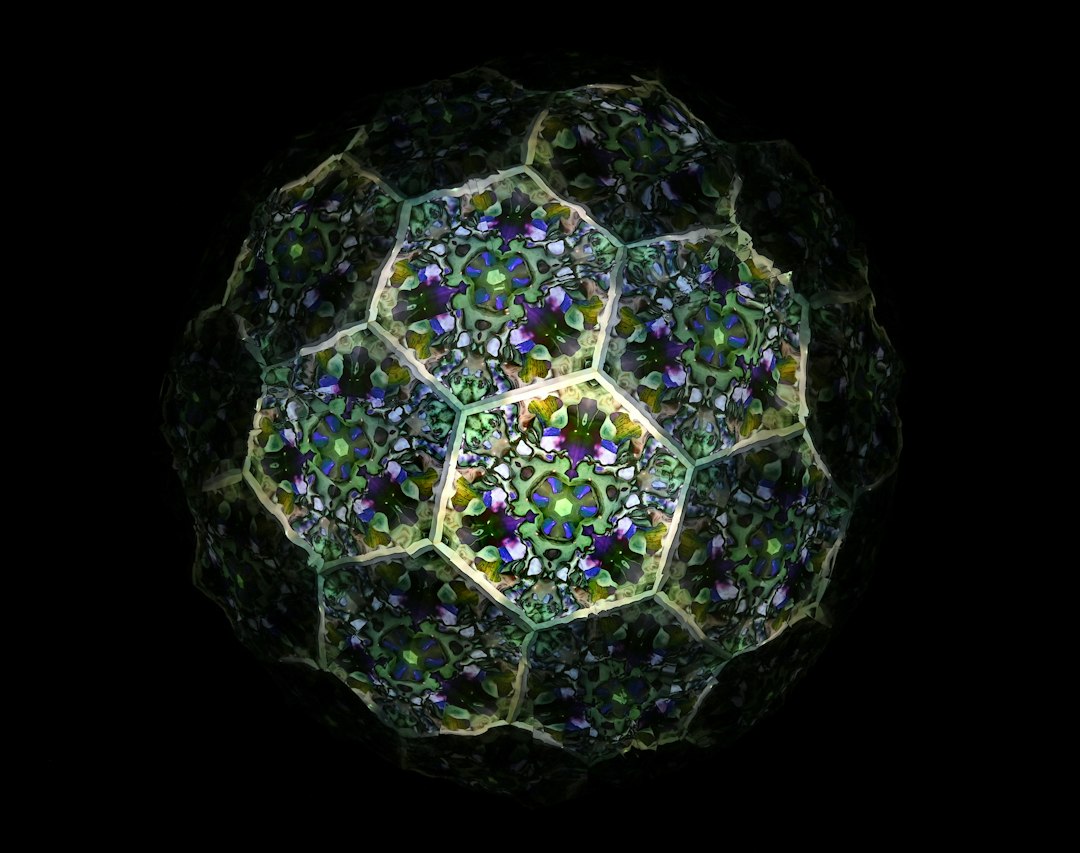
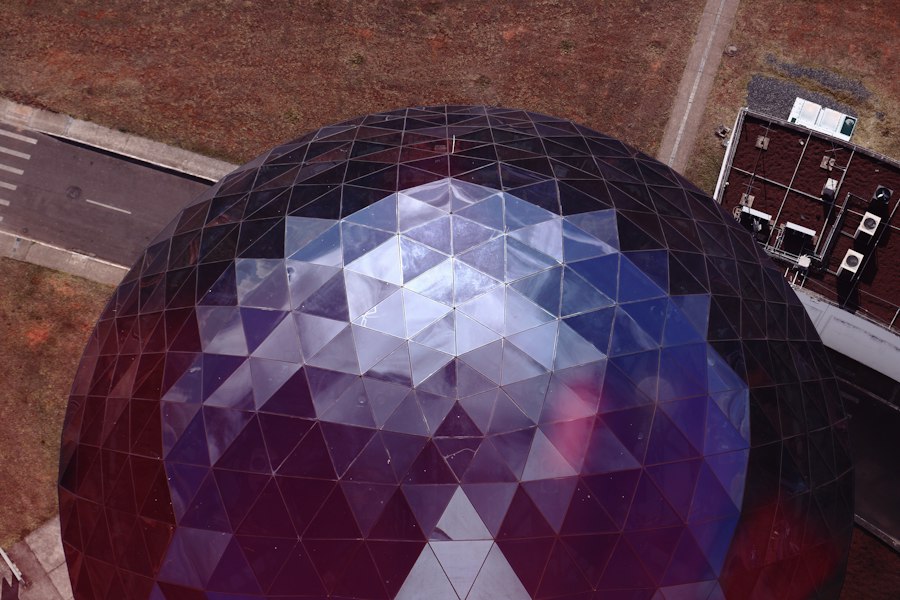
The core of the controversy lies in a specific image, allegedly accessed by McKinnon during his hacking activities, which purportedly depicts a striking anomaly on the lunar surface. Details about the exact image and its location are often fluid and subject to interpretation within online communities dedicated to examining these claims. However, the consistent element across various discussions is the presence of what appears to be a large, artificially constructed geodesic sphere. Geodesic domes, characterized by their strong, lightweight, and efficient spherical structure composed of interconnected triangular elements, are a marvel of modern engineering. Their application in space exploration, particularly for habitats, has been theorized for decades. The suggestion that such a sophisticated structure could exist on the Moon, predating or existing independently of human presence, is profoundly significant.
The Nature of the Alleged Structure
The description of the geodesic sphere in McKinnon’s alleged findings often highlights its immense scale, suggesting a structure far larger than any human-made edifice on Earth. Its geometric precision, the characteristic interlocking triangles forming a perfect or near-perfect sphere, is frequently emphasized as evidence of intelligent design. Unlike natural geological formations, which tend to exhibit irregular shapes and erosion patterns, this purported structure is described as possessing a clear, deliberate geometry. The surface texture, as inferred from the imagery, is also a point of discussion, with some suggesting it appears smooth and manufactured, while others interpret subtle variations as indicative of advanced materials or technology. The sheer presence of such an object on the Moon, if real, would necessitate a radical re-evaluation of lunar formation and the potential for non-terrestrial engineering.
McKinnon’s Own Accounts and Motivations
Gary McKinnon’s journey into the digital archives of NASA was not driven by idle curiosity. He has consistently stated that his goal was to find irrefutable proof of UFOs and extraterrestrial intelligence. He described himself as a seeker of truth, believing that governments were withholding crucial information from the public. His alleged discovery of the geodesic sphere was, for him, a vindication of his beliefs and a powerful piece of evidence that alien civilizations had visited and potentially established presences on our closest celestial neighbor. His narrative, though controversial, has resonated with many who harbor similar skepticism about official explanations and are open to the possibility of extraterrestrial contact. McKinnon’s detailed accounts of navigating NASA systems and the specific nature of the files he claimed to have accessed have been meticulously dissected and debated within the online communities that follow his story.
NASA’s Official Stance and Counter-Explanations
Understandably, NASA has maintained a steadfast position regarding McKinnon’s claims. The agency has consistently denied that any unauthorized access yielded evidence of alien structures, or indeed, any evidence of extraterrestrial visitation or life. Their official stance is that all images and data released to the public are thoroughly scrutinized and represent accurate portrayals of celestial bodies. When anomalies are identified, they are typically attributed to natural geological processes, imaging artifacts, or misinterpretations of data. The possibility of a massive, artificial geodesic sphere on the Moon, visible in any NASA image, would represent a monumental scientific discovery, and its subsequent suppression or denial would have profound implications for the agency’s credibility and the scientific community at large.
The “Artifact” Hypothesis: Natural Explanations for Anomalies
NASA and proponents of conventional astronomical explanations often attribute purported anomalies in lunar imagery to a variety of natural phenomena. These can include unusual lighting conditions that create shadows resembling artificial structures, unique rock formations sculpted by eons of micrometeorite bombardment and seismic activity, or even pareidolia – the psychological phenomenon where the mind perceives a familiar pattern where none exists. In the context of the geodesic sphere, explanations might involve specific arrangements of lunar craters, mountain ranges, or lava tubes that, when viewed from a particular angle and under specific lighting, create the illusion of geometric regularity. Imaging artifacts, such as pixelation, digital noise, or stitching errors from composite images, can also contribute to the perception of artificiality in natural formations.
The Question of Image Tampering and Redaction
A recurring theme in the discussion surrounding McKinnon’s alleged discovery is the potential for NASA to have tampered with or redacted images to conceal evidence. Skeptics of NASA’s official narrative often point to instances where images have been released in different formats or resolutions, or where certain areas appear to have been digitally altered. While NASA maintains that any alterations are for clarity or to remove distracting artifacts, some interpret these actions as deliberate attempts to hide information. The idea that a structure as significant as a geodesic sphere would be deliberately obscured or digitally erased fuels the conspiracy theories that surround McKinnon’s story and the broader search for extraterrestrial evidence. The difficulty lies in proving such tampering definitively, as it requires access to original, unadulterated data that may no longer exist or be accessible.
The Impact on Public Perception and the UFO Community
Gary McKinnon’s story, and his alleged discovery of the geodesic sphere, has had a significant and lasting impact on the public perception of UFOs and extraterrestrial intelligence. For many, he became a symbol of the determined truth-seeker, a lone individual battling against a powerful and secretive establishment. His case brought the abstract concept of government cover-ups regarding alien life into the mainstream consciousness, sparking countless discussions and inspiring further investigations by amateur researchers. The purported geodesic sphere, in particular, became a focal point for those convinced that humanity is not alone and that evidence of advanced alien civilizations is readily available, if only one knows where to look.
Fueling Amateur Astronomy and Citizen Science
McKinnon’s alleged findings have inadvertently, or perhaps intentionally, spurred a wave of interest in amateur astronomy and citizen science initiatives. The idea that ordinary individuals, armed with the right tools and determination, can uncover extraordinary truths hidden within publicly available data, is a powerful motivator. Online forums, dedicated websites, and social media groups have become hubs for individuals sharing and analyzing images from space, scrutinizing every crater, shadow, and anomaly for signs of artificiality. The geodesic sphere, as a specific and compelling example, serves as a touchstone for these discussions, encouraging a deeper engagement with astronomical data and a critical examination of scientific pronouncements. This grassroots movement, while often operating outside formal scientific channels, contributes to a broader public discourse about our place in the universe.
The Enduring Mystery and the Search for Proof
Despite decades of denial from official sources and the lack of conclusive, independently verifiable evidence, the mystery surrounding Gary McKinnon’s alleged geodesic sphere persists. The story continues to capture the imagination, feeding a deep-seated human curiosity about the unknown and the possibility of life beyond Earth. For believers, the lack of definitive proof is not an absence of evidence but rather a testament to the effectiveness of the cover-up. For skeptics, it remains a compelling anecdote but ultimately unsubstantiated speculation. Regardless of one’s stance, the narrative of McKinnon and the geodesic sphere serves as a powerful reminder of the ongoing quest for understanding our universe and our place within it, a quest that often thrives in the liminal spaces between established fact and tantalizing possibility. The enduring nature of this mystery underscores the human desire to find answers to the grandest questions, even when those answers may lie just beyond our current grasp.
Gary McKinnon, known for his infamous hacking of NASA’s computer systems, claimed to have discovered images of geodesic spheres that he believed were evidence of extraterrestrial life. His assertions have sparked considerable interest and debate within the UFO community. For those looking to delve deeper into similar topics, an intriguing article can be found on XFile Findings, which explores various aspects of UFO sightings and government cover-ups. You can read more about these fascinating subjects in the article here.
The Future of Lunar Exploration and the Search for Artificiality
| Metric | Details |
|---|---|
| Subject | Gary McKinnon NASA Image Geodesic Spheres |
| Gary McKinnon | British hacker known for accessing NASA and US military computers in 2001-2002 |
| NASA Image | Images related to geodesic spheres or structures found in hacked NASA files |
| Geodesic Spheres | Geometric structures composed of triangular elements forming a spherical shape |
| Relevance | McKinnon claimed to have found images of UFOs and geodesic spheres in NASA files |
| Year of Incident | 2001-2002 |
| Impact | Raised public interest in NASA’s hidden files and alleged extraterrestrial technology |
The ongoing exploration of the Moon, through both robotic missions and the burgeoning private space industry, continues to offer new opportunities for investigation. Future lunar missions, equipped with more advanced imaging technology and sensor capabilities, could potentially provide clearer, higher-resolution data of areas previously obscured by shadow or limited by technological constraints. This increased access to pristine lunar imagery might offer fresh perspectives on anomalies, potentially confirming or definitively refuting claims of artificial structures. The ongoing scientific endeavor to understand the Moon’s geological history and potential for resource utilization also involves a constant analysis of its surface features, making it fertile ground for the detection of any unusual formations.
Advancements in Imaging and Data Analysis
As technology progresses, the ability to analyze lunar imagery becomes increasingly sophisticated. New algorithms and artificial intelligence tools are being developed that can sift through vast datasets, identify subtle patterns, and potentially distinguish between natural formations and artificial constructs with greater accuracy. The development of hyperspectral imaging, which captures a broader spectrum of light than traditional cameras, could reveal material compositions that differ from natural lunar regolith, offering clues about manufactured surfaces. Furthermore, the increasing transparency of some space agencies, coupled with the rise of independent research initiatives, means that more data is becoming accessible to a wider audience. This democratization of data analysis could lead to unexpected discoveries, regardless of whether they confirm or deny existing theories.
The Philosophical and Existential Implications of Discovery
The confirmation of any artificial structure on the Moon, particularly one as significant as a geodesic sphere, would have profound philosophical and existential implications for humanity. It would shatter the notion of Earth as the sole cradle of intelligent life and force a re-evaluation of our place in the cosmos. The discovery would raise a multitude of questions: Who built it? When? For what purpose? Was it a scouting outpost, a dormant base, or a relic of a long-vanished civilization? Such a finding would necessitate a paradigm shift in scientific understanding, prompting a renewed and perhaps more urgent search for extraterrestrial intelligence. It would also serve as a powerful catalyst for global cooperation, as humanity collectively grappled with the implications of sharing the universe with other intelligent beings. The very idea of such a discovery underscores the boundless potential of exploration and the enduring human drive to understand the mysteries that lie beyond our terrestrial home.

The Man Who Hacked NASA’s Deepest Secret
FAQs
What is the significance of the geodesic spheres in the NASA images?
The geodesic spheres in the NASA images are structures that have been linked to conspiracy theories and claims of extraterrestrial activity. Some believe that these spheres are evidence of alien technology or bases on the moon.
Who is Gary McKinnon and what is his connection to the NASA images?
Gary McKinnon is a British hacker who gained unauthorized access to NASA and other government computer systems in search of evidence of UFOs and free energy suppression. He claims to have found images of geodesic spheres on the moon among other controversial information.
Are the geodesic spheres on the moon confirmed to be of alien origin?
No, the geodesic spheres on the moon have not been confirmed to be of alien origin. While some conspiracy theorists believe they are evidence of extraterrestrial activity, mainstream science and NASA have not provided any evidence to support these claims.
What do scientists and experts say about the geodesic spheres in the NASA images?
Scientists and experts dismiss the claims of alien origin regarding the geodesic spheres in the NASA images. They attribute the formations to natural geological processes, impact craters, or image artifacts rather than extraterrestrial activity.
Has NASA commented on the allegations surrounding the geodesic spheres in the images?
NASA has not officially commented on the allegations surrounding the geodesic spheres in the images. The agency typically does not engage with conspiracy theories or unverified claims, focusing instead on scientific research and exploration.