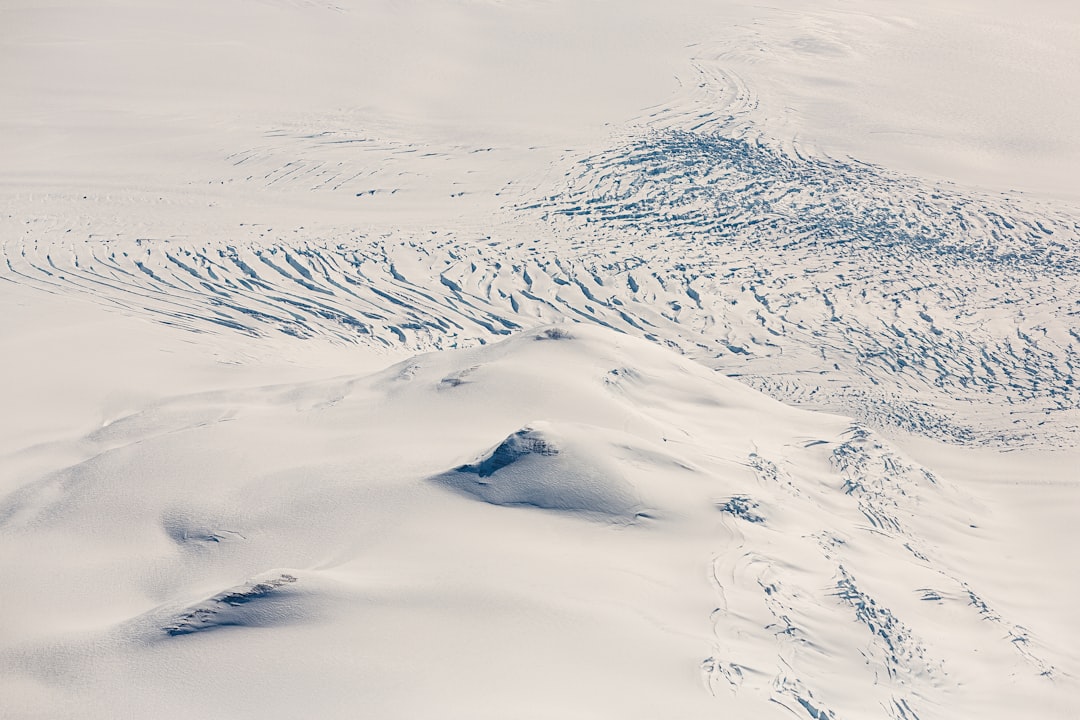
Geometric lattice structures are ordered, repeating molecular arrangements found in crystalline materials that determine their physical and mechanical properties. In Antarctic ice, these lattice structures directly control characteristics such as mechanical strength, deformation behavior, and thermal response. Research into ice crystal lattice structures is fundamental to glaciology, climate science, and sea level prediction models.
Antarctic ice formations represent complex crystalline systems formed under specific temperature and pressure conditions over extended time periods. The ice sheets and glaciers contain polycrystalline ice with varying crystal orientations, grain sizes, and lattice defects that influence bulk ice behavior. The hexagonal ice I structure, which comprises most natural ice on Earth, exhibits anisotropic properties that affect ice flow dynamics and mechanical failure modes.
Analysis of Antarctic ice lattice structures provides quantitative data on ice deformation mechanisms, including dislocation movement, grain boundary sliding, and recrystallization processes. These microscale properties scale up to influence macroscale phenomena such as glacier flow rates, ice sheet stability, and response to temperature changes. Understanding these structure-property relationships is essential for accurate modeling of ice sheet dynamics and their contribution to global sea level change.
Key Takeaways
- Antarctic ice exhibits a unique geometric lattice structure influenced by extreme temperature and pressure conditions.
- The lattice structure significantly impacts the mechanical properties and deformation behavior of Antarctic ice.
- Understanding this structure is crucial for predicting ice flow and responses to climate change.
- Studying the lattice helps improve models related to ice dynamics and global sea-level rise.
- Future research faces challenges but is essential for advancing knowledge of Antarctic ice and its environmental implications.
The Unique Characteristics of Antarctic Ice
Antarctic ice possesses several unique characteristics that set it apart from ice found in other regions. One of the most striking features is its sheer thickness; some areas of the Antarctic ice sheet reach depths of over four kilometers. This immense thickness results from centuries of accumulated snowfall, compacted under its own weight, leading to a dense and robust structure.
The density of Antarctic ice is not uniform; variations occur due to differences in temperature, pressure, and the presence of impurities such as dust and sea salt. These factors contribute to the formation of distinct layers within the ice, each with its own unique properties. Another notable characteristic of Antarctic ice is its remarkable ability to flow and deform under pressure.
Unlike the brittle ice commonly found in colder climates, Antarctic ice exhibits plasticity, allowing it to move slowly over time. This flow is driven by gravitational forces and is influenced by the underlying topography of the land beneath the ice sheet. The interplay between the ice’s geometric lattice structure and its mechanical properties enables this slow movement, which is critical for understanding how glaciers advance and retreat in response to changing environmental conditions.
The Formation of Geometric Lattice Structure in Antarctic Ice
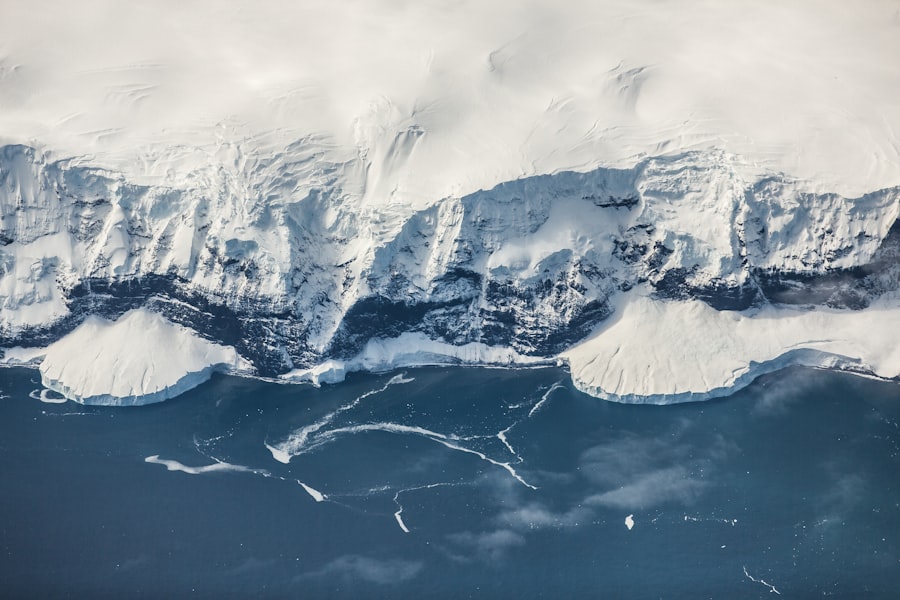
The formation of geometric lattice structures in Antarctic ice is a complex process influenced by various environmental factors. As snow accumulates and compresses over time, it undergoes a transformation into firn—a granular form of ice that serves as a precursor to glacial ice. During this transition, the arrangement of water molecules begins to adopt a more ordered structure, leading to the development of a geometric lattice.
This process is further enhanced by temperature fluctuations and pressure changes that occur as layers of snow are added. As firn continues to compact under the weight of overlying snow, it eventually transforms into solid glacial ice. The geometric lattice structure becomes more pronounced during this phase, as the molecules align themselves into a stable configuration that maximizes hydrogen bonding.
This ordered arrangement not only contributes to the strength and stability of the ice but also influences its thermal conductivity and optical properties. Understanding how these lattice structures form is essential for predicting how Antarctic ice will respond to future climate changes.
The Role of Temperature and Pressure in Shaping the Lattice Structure
Temperature and pressure are two critical factors that significantly influence the geometric lattice structure of Antarctic ice. As temperatures fluctuate, they affect the kinetic energy of water molecules within the ice. At lower temperatures, molecular motion decreases, allowing for tighter packing and a more stable lattice structure.
Conversely, as temperatures rise, increased molecular motion can lead to disruptions in the lattice arrangement, potentially weakening the ice’s overall integrity. Pressure also plays a vital role in shaping the lattice structure. As layers of snow accumulate on top of one another, the weight creates immense pressure that compacts the underlying layers.
This compression forces water molecules closer together, promoting the formation of a more ordered geometric lattice. The interplay between temperature and pressure is particularly important in understanding how Antarctic ice behaves under different environmental conditions. For instance, during periods of warming, changes in both temperature and pressure can lead to alterations in the lattice structure that may affect the stability and flow dynamics of glaciers.
The Importance of Studying Geometric Lattice Structure in Antarctic Ice
| Metric | Description | Value | Unit |
|---|---|---|---|
| Lattice Type | Geometric arrangement of ice crystals | Hexagonal close-packed (HCP) | – |
| Crystal Size | Average size of ice crystals in Antarctic ice | 1-5 | mm |
| Porosity | Volume fraction of air pockets within the ice lattice | 10-20 | % |
| Density | Mass per unit volume of Antarctic ice lattice | 0.85-0.92 | g/cm³ |
| Thermal Conductivity | Heat transfer capability through the ice lattice | 2.1 | W/m·K |
| Elastic Modulus | Stiffness of the ice lattice structure | 9-11 | GPa |
| Grain Boundary Angle | Average misorientation between adjacent ice crystals | 15-30 | Degrees |
Studying the geometric lattice structure of Antarctic ice is crucial for several reasons. First and foremost, it provides insights into the fundamental processes governing ice formation and behavior. By understanding how these structures develop and change over time, scientists can better predict how Antarctic ice will respond to climate change.
This knowledge is essential for assessing potential impacts on global sea levels, as melting glaciers contribute significantly to rising ocean levels. Moreover, investigating the geometric lattice structure can help researchers understand the mechanical properties of ice, including its strength and flow behavior. These properties are critical for modeling glacier dynamics and predicting how they will evolve in response to changing environmental conditions.
Additionally, studying these structures can shed light on past climate conditions by analyzing trapped air bubbles within the ice cores, providing valuable data on historical atmospheric composition and temperature fluctuations.
Applications of Understanding Geometric Lattice Structure in Antarctic Ice
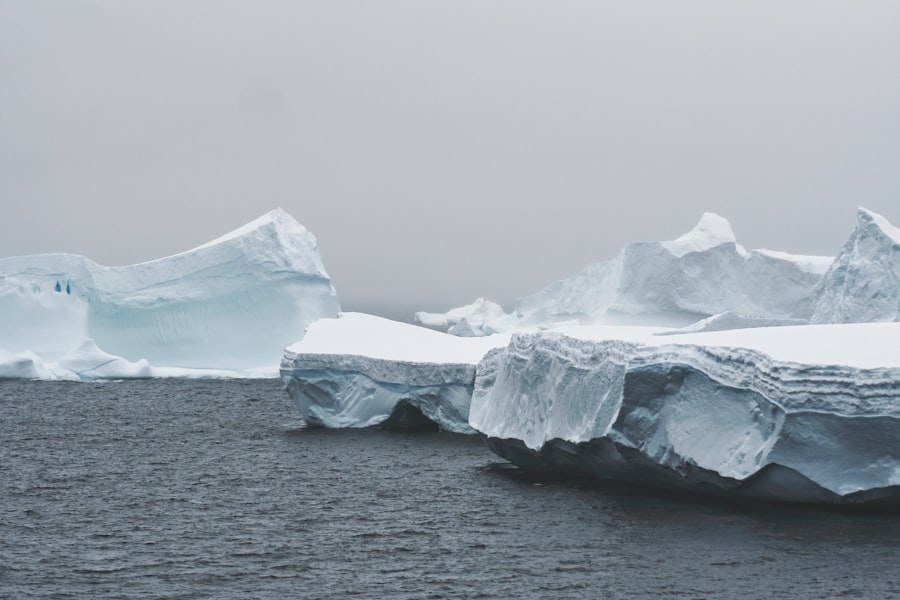
The knowledge gained from studying geometric lattice structures in Antarctic ice has numerous applications across various fields. In glaciology, understanding these structures aids in developing accurate models for predicting glacier movement and stability. This information is vital for assessing potential hazards associated with glacier retreat or collapse, which can have significant implications for coastal communities.
In addition to glaciology, insights into the geometric lattice structure can inform climate science by enhancing models that predict future climate scenarios. By incorporating data on how these structures respond to temperature and pressure changes, scientists can create more accurate projections regarding sea-level rise and its potential impacts on ecosystems and human populations. Furthermore, this understanding can also contribute to advancements in materials science, where principles derived from natural lattice structures may inspire innovative designs for synthetic materials with enhanced strength or thermal properties.
The Influence of Geometric Lattice Structure on Antarctic Ice’s Mechanical Properties
The mechanical properties of Antarctic ice are profoundly influenced by its geometric lattice structure. The arrangement of water molecules within this lattice determines how the ice responds to stress and strain. For instance, a well-ordered lattice typically exhibits greater strength and resistance to deformation compared to a disordered structure.
This characteristic is particularly important when considering how glaciers behave under gravitational forces as they flow down slopes or interact with underlying bedrock. Moreover, the geometric lattice structure affects other mechanical properties such as tensile strength and ductility. Ice with a more stable lattice tends to be less brittle, allowing it to deform gradually rather than fracture suddenly under stress.
By studying these mechanical properties in relation to lattice structure, researchers can gain valuable insights into how Antarctic ice will respond to ongoing climate changes.
How Geometric Lattice Structure Affects the Flow and Deformation of Antarctic Ice
The flow and deformation of Antarctic ice are intricately linked to its geometric lattice structure. As glaciers move under their own weight, they experience internal stresses that can lead to deformation. The arrangement of water molecules within the lattice influences how these stresses are distributed throughout the ice mass.
A well-defined geometric lattice allows for more efficient load distribution, enabling the ice to flow smoothly over underlying terrain. Conversely, disruptions in the lattice structure can lead to localized weaknesses within the ice. These weaknesses may result in increased rates of deformation or even fracture under certain conditions.
Understanding how geometric lattice structures affect flow dynamics is essential for predicting glacier behavior in response to environmental changes such as warming temperatures or increased precipitation. By modeling these interactions, scientists can better anticipate how Antarctic glaciers will evolve over time.
The Relationship Between Geometric Lattice Structure and Climate Change
The relationship between geometric lattice structure and climate change is a critical area of research with far-reaching implications. As global temperatures rise due to anthropogenic influences, changes in temperature and pressure will inevitably affect the geometric lattice structures within Antarctic ice. These alterations may lead to increased melting rates or changes in flow dynamics that could accelerate glacier retreat.
Furthermore, understanding this relationship is vital for predicting future sea-level rise scenarios. As glaciers melt at an accelerated pace due to climate change, their contributions to rising ocean levels could have devastating effects on coastal communities worldwide.
Challenges and Future Research Directions in Studying Geometric Lattice Structure in Antarctic Ice
Despite significant advancements in understanding geometric lattice structures in Antarctic ice, several challenges remain for researchers in this field. One major challenge is obtaining high-resolution data on these structures across vast and remote regions of Antarctica. Traditional methods such as drilling ice cores can provide valuable information but are often limited in spatial coverage.
New technologies such as remote sensing and advanced imaging techniques may offer solutions for overcoming these limitations. Future research directions should focus on integrating multidisciplinary approaches that combine glaciology, materials science, and climate modeling. By fostering collaboration among experts from various fields, researchers can develop comprehensive models that account for complex interactions between geometric lattice structures and environmental factors.
Additionally, continued monitoring of Antarctic ice through satellite observations will be crucial for tracking changes over time and refining predictive models related to climate change impacts.
Implications of Geometric Lattice Structure in Antarctic Ice
In conclusion, the study of geometric lattice structures in Antarctic ice holds significant implications for understanding both past and future climate dynamics. These structures play a pivotal role in determining the mechanical properties of ice, influencing its flow behavior and response to environmental changes. As global temperatures continue to rise due to climate change, understanding how these lattice structures evolve will be essential for predicting potential impacts on sea levels and ecosystems worldwide.
The insights gained from this research extend beyond glaciology; they have applications across various fields including climate science and materials engineering. By unraveling the complexities of geometric lattice structures within Antarctic ice, scientists can contribute valuable knowledge that informs policy decisions aimed at mitigating climate change effects. Ultimately, continued exploration into this fascinating aspect of glaciology will enhance our understanding of Earth’s climate system and its intricate connections with polar regions.
Recent studies on the geometric lattice structure of Antarctic ice have revealed fascinating insights into its formation and stability. These findings are crucial for understanding climate change and its impact on polar regions. For more in-depth information on related research, you can read the article available at XFile Findings.
WATCH THIS! 🚨 They Hid This: The Missing CIA Page That Warns About Antarctica
FAQs
What is a geometric lattice structure in the context of Antarctic ice?
A geometric lattice structure refers to the regular, repeating arrangement of molecules or crystals within Antarctic ice. This structure influences the physical properties of the ice, such as its strength, density, and how it interacts with light and heat.
How does the lattice structure affect the properties of Antarctic ice?
The lattice structure determines the ice’s mechanical strength, thermal conductivity, and optical characteristics. Variations in the lattice arrangement can impact how ice deforms under pressure and how it melts or refreezes in the Antarctic environment.
What types of lattice structures are found in Antarctic ice?
Antarctic ice primarily consists of hexagonal crystalline structures, known as ice Ih, which is the most common form of ice on Earth. Under certain conditions, other forms like cubic ice (ice Ic) may also form, but these are less common in natural Antarctic ice.
Why is understanding the lattice structure of Antarctic ice important?
Understanding the lattice structure helps scientists predict how Antarctic ice will respond to environmental changes, such as temperature fluctuations and pressure variations. This knowledge is crucial for climate modeling, glaciology studies, and assessing sea-level rise.
How is the lattice structure of Antarctic ice studied?
Researchers use techniques like X-ray diffraction, electron microscopy, and spectroscopy to analyze the lattice structure of ice samples. These methods allow detailed examination of the molecular arrangement and any defects or variations within the ice crystals.
Does the lattice structure of Antarctic ice change over time?
Yes, the lattice structure can change due to factors like temperature changes, pressure from overlying ice layers, and impurities within the ice. These changes can lead to recrystallization or the formation of different ice phases.
Can impurities affect the geometric lattice structure of Antarctic ice?
Impurities such as dust, salts, and gases trapped within the ice can disrupt the regular lattice structure, creating defects or altering the crystal growth patterns. These impurities can influence the physical and chemical properties of the ice.
What role does the lattice structure play in the melting and freezing of Antarctic ice?
The lattice structure determines the melting point and freezing behavior of ice. A stable lattice requires specific energy to break, so changes in the lattice can affect how easily the ice melts or refreezes under Antarctic conditions.