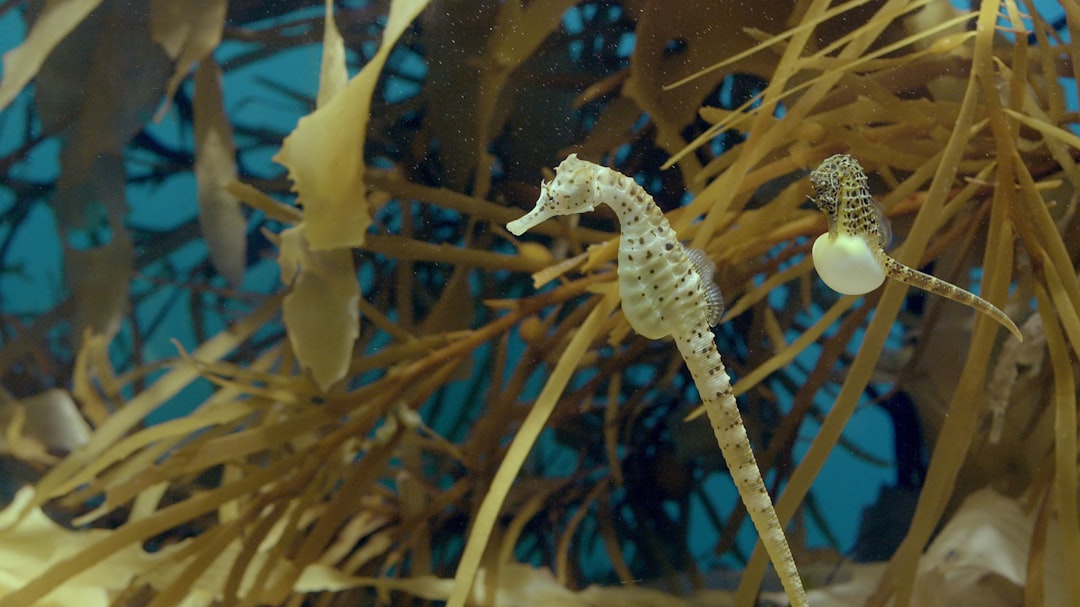
The hippocampus, a seahorse-shaped structure nestled deep within the temporal lobe of the brain, serves as a pivotal hub for memory formation and retrieval. Its intricate circuitry and remarkable plasticity make it indispensable for navigating the complexities of our past, present, and future. Understanding the hippocampus is like unlocking a crucial blueprint for the human mind, revealing the mechanisms by which experiences are transformed into lasting imprints on our consciousness. This article delves into the multifaceted role of the hippocampus, exploring its anatomy, function in memory encoding, and the implications of its dysfunction.
The hippocampus is not a monolithic entity but rather a complex anatomical region composed of several interconnected subfields, each with specialized roles. These subfields work in concert, much like an orchestra playing a symphony, to process and store information. To appreciate its function, one must first understand its physical structure. You can watch the documentary about the concept of lost time to better understand its impact on our lives.
Dentate Gyrus: The Entryway to the Hippocampal Circuit
The dentate gyrus (DG) is often characterized as the “gateway” to the hippocampal formation. It is a region known for its continuous neurogenesis, meaning the birth of new neurons throughout adulthood. This continuous creation of new cells is thought to be crucial for adaptability and learning.
Granule Cells: The Primary Information Processors
The primary neurons of the dentate gyrus are the granule cells. These cells receive input from the entorhinal cortex, a critical relay station for sensory and spatial information. The DG’s unique trisynaptic circuit, involving mossy fibers, CA3 pyramidal cells, and Schaffer collaterals, allows for complex pattern separation and pattern completion, two vital processes in memory.
Neurogenesis: A Wellspring of New Memories
The generation of new neurons in the DG is a fascinating aspect of hippocampal plasticity. These new neurons integrate into existing circuits, potentially contributing to the formation of new memories and the refinement of existing ones. Imagine these new neurons as fresh pages in a notebook, ready to receive new information.
Cornu Ammonis (CA) Regions: The Core of Hippocampal Processing
The Cornu Ammonis (CA) regions, further subdivided into CA1, CA2, and CA3, represent the core of the hippocampal circuit. These areas are densely packed with pyramidal neurons, the workhorses of hippocampal information processing.
CA3: The Auto-associative Network
The CA3 region is characterized by extensive recurrent connections, meaning neurons within CA3 have strong connections to each other. This creates an auto-associative network, allowing the CA3 to act like a sophisticated filing system. If you recall even a small piece of a memory, the CA3 can retrieve the entire associated memory. This is thought to be the primary locale for pattern completion, where a partial cue can trigger the retrieval of a complete memory.
CA2: A Specialized Node
The CA2 region, while smaller than CA1 and CA3, plays a distinct role, particularly in social recognition and emotional memories. Its unique cellular properties and connections suggest it specializes in processing salient social cues and their associated emotional valence.
CA1: The Output Hub
The CA1 region is the major output of the hippocampus, projecting back to the entorhinal cortex and other cortical areas. It receives input from CA3 and the entorhinal cortex, integrating information to form robust memory traces. CA1 is crucial for the initial encoding of new information and its consolidation into long-term storage.
Subiculum: The Bridge to the Cortex
The subiculum, located below the CA1 region, acts as a crucial bridge between the hippocampus and various cortical areas. It receives heavily processed information from the hippocampus and projects to numerous cortical structures, including the prefrontal cortex and parietal cortex.
Entorhinal Cortex: The Gateway to the Hippocampus
While not strictly part of the hippocampus, the entorhinal cortex is inextricably linked to its function. It acts as the primary interface between the hippocampus and the neocortex, conveying processed sensory information into the hippocampal formation and relaying hippocampal outputs back to the cortex.
Recent studies have highlighted the crucial role of the hippocampus in memory encoding, shedding light on how this brain structure processes and stores information. For a deeper understanding of the mechanisms involved in hippocampal function and its implications for memory, you can refer to a related article that explores these concepts in detail. To learn more, visit this article.
Memory Encoding: The Hippocampus as the Scribe
The hippocampus is not the ultimate storage site for all memories, but it is indispensable for the initial stages of memory encoding, particularly for declarative memories – memories of facts and events. It acts as a temporary workspace where these memories are assembled before being transferred to more permanent storage in the neocortex.
The Process of Encoding: From Experience to Trace
Memory encoding is a dynamic process that begins with sensory input and culminates in a neural representation of that experience. The hippocampus plays a critical role in binding together the disparate elements of an experience – visual, auditory, emotional, and spatial – into a coherent memory.
Sensory Input and Initial Processing
Information from the external world first arrives at sensory cortices and is then relayed to the entorhinal cortex, which serves as the gateway to the hippocampus. This initial processing involves filtering and organizing sensory data.
Binding Elements: The Hippocampus as a Master Weaver
Upon entering the hippocampus, information is processed through its subfields. The hippocampus excels at binding together different sensory modalities and contextual information. Imagine you are at a concert. The hippocampus doesn’t just store the sound of the music; it binds together the sights of the stage, the feeling of the crowd, and the emotions you experienced into a single, rich memory.
Long-Term Potentiation (LTP): Strengthening the Connections
A key cellular mechanism underlying memory encoding is Long-Term Potentiation (LTP). This is a persistent strengthening of synapses based on recent patterns of activity. When neurons that are frequently activated together tend to remain connected, their communication becomes more efficient. It’s like repeatedly taking the same path through a forest; the path becomes more worn and easier to traverse. This strengthening of neural connections is believed to form the physical basis of memory.
New Memories: The Hippocampus as a Temporary Holding Cell
The hippocampus is crucial for forming new episodic memories (memories of specific events) and semantic memories (memories of facts and generalized knowledge). However, its capacity for holding these memories is limited.
Episodic Memory Formation: Recalling Your Day
When you recall what you had for breakfast, where you went yesterday, or a significant life event, you are accessing episodic memories. The hippocampus is vital for encoding these personal experiences, capturing the who, what, when, and where.
Semantic Memory Formation: Accumulating Knowledge
While semantic memories are eventually stored in widespread cortical networks, the hippocampus plays a role in their initial formation and consolidation. It helps in acquiring new factual knowledge and integrating it into your existing understanding of the world.
The Role of Sleep in Consolidation: Replaying and Reinforcing
Sleep is critically important for memory consolidation, a process by which fragile, short-term memories are transformed into stable, long-term memories. During sleep, the hippocampus appears to “replay” neural patterns associated with recent experiences, effectively transferring this information to the neocortex for permanent storage. This is akin to a diligent student reviewing their notes overnight to solidify their understanding.
Memory Retrieval: The Hippocampus as a Navigator

While the hippocampus is crucial for encoding, its role in retrieval is also significant, particularly for recent memories. It acts as a navigator, allowing us to access and reconstruct past experiences.
Retrieving Recently Encoded Memories
For memories that have been recently encoded, the hippocampus is heavily involved in their retrieval. It allows us to bring these experiences back into conscious awareness.
The Sparse Coding Hypothesis: Efficient Memory Access
The hippocampus is thought to employ a sparse coding strategy, meaning only a small subset of neurons is activated for any given memory. This sparse representation allows for efficient retrieval and reduces interference between memories. Imagine a library where each book has a unique, concise identifier, making it easy to locate.
The Role of Context: Re-experiencing the Past
The hippocampus is excellent at recalling the context in which a memory was formed. This contextual recall is essential for understanding nuanced memories and re-experiencing the past in a rich, multidimensional way.
The Transition to Cortical Storage: Memories Becoming Independent
Over time, memories become less dependent on the hippocampus for retrieval. They are gradually transferred to and consolidated within distributed cortical networks. This process, known as systems consolidation, means that even if the hippocampus is damaged, older, well-established memories may still be accessible.
The Standard Model of Consolidation
The standard model of consolidation proposes that the hippocampus acts as a temporary index, binding together different cortical representations of an event. With repeated reactivation, these cortical representations become directly linked, rendering the hippocampus unnecessary for retrieval.
Trace Transformation
As memories become consolidated in the cortex, they may also transform. New information is integrated, and the memory itself can be updated and refined, becoming less dependent on the precise details of the original event.
The Hippocampus and Spatial Navigation: A Biological GPS

Beyond its role in declarative memory, the hippocampus is fundamental to our ability to navigate our environment. It contains specialized neurons that act as a remarkable internal mapping system.
Place Cells: The Brain’s Internal GPS
Within the hippocampus, particularly in the CA1 region, are “place cells.” These neurons fire when an animal (or human) is in a specific location in its environment. Each place cell represents a unique spatial location, and collectively, they form a cognitive map of the surroundings.
Creating Cognitive Maps: Navigating the World
The formation and updating of these cognitive maps are essential for spatial learning and navigation. When you learn a new route or find your way around a familiar city, your hippocampus is actively engaged in constructing and maintaining this internal representation of space.
Path Integration: Keeping Track of Your Movement
The hippocampus also contributes to path integration, the ability to estimate one’s current position based on a sequence of movements from a known starting point. This sophisticated internal calculation allows us to track our progress through an environment.
Grid Cells and Border Cells: Complementing the Map
In addition to place cells, other hippocampal-related neurons, such as grid cells in the entorhinal cortex, provide complementary spatial information. Grid cells fire in a hexagonal grid pattern across the environment, providing a sense of metric space. Border cells fire when an animal is near the boundaries of its environment. Together, these cells create a rich and comprehensive spatial representation.
Recent studies have shed light on the intricate processes involved in hippocampus memory encoding, revealing how this crucial brain region facilitates the formation and retrieval of memories. For those interested in exploring this topic further, a related article discusses the latest findings on the neural mechanisms that underpin memory functions. You can read more about these fascinating insights by visiting this article, which delves into the complexities of memory formation and the role of the hippocampus in our cognitive processes.
When the Hippocampus Falters: The Consequences of Impairment
| Metric | Description | Typical Value/Range | Relevance to Memory Encoding |
|---|---|---|---|
| Long-Term Potentiation (LTP) | Strengthening of synapses based on recent patterns of activity | Increase in synaptic strength by 150-300% | Key mechanism underlying memory formation and encoding in the hippocampus |
| Neurogenesis Rate | Generation of new neurons in the dentate gyrus | Approximately 700 new neurons per day in adult humans | Supports pattern separation and memory encoding |
| Theta Rhythm Frequency | Oscillatory brain wave frequency in hippocampus during encoding | 4-8 Hz | Associated with active encoding and retrieval of memories |
| Place Cell Firing Rate | Neuronal firing rate of hippocampal place cells during spatial encoding | 5-20 Hz during active exploration | Encodes spatial context of memories |
| NMDA Receptor Activation | Activation level of NMDA receptors critical for synaptic plasticity | Variable; essential for LTP induction | Facilitates calcium influx necessary for memory encoding |
Damage to the hippocampus, whether due to injury, disease, or neurodegenerative conditions, can have profound and debilitating effects on memory and navigation. The study of individuals with hippocampal lesions has provided invaluable insights into its functions.
Anterograde Amnesia: The Inability to Form New Memories
One of the most striking consequences of severe hippocampal damage is anterograde amnesia, the inability to form new declarative memories after the injury. Patients with this condition can often recall events from before their injury but struggle to remember anything that happens afterward. This was famously illustrated by the case of patient H.M., whose bilateral hippocampal resection led to profound anterograde amnesia.
The Case of H.M.: A Landmark Study
The study of H.M. provided crucial evidence for the hippocampus’s role in memory encoding. Despite his profound amnesia, H.M. retained his ability to learn new motor skills, highlighting the hippocampus’s specific involvement in declarative memory rather than procedural (skill-based) memory.
Retrograde Amnesia: The Loss of Past Memories
Depending on the extent and location of damage, retrograde amnesia – the loss of memories formed before the injury – can also occur. However, the temporal gradient often observed in retrograde amnesia, where older memories are more easily retained than newer ones, supports the idea of systems consolidation, where memories become independent of the hippocampus over time.
Spatial Disorientation: Losing Your Way
When the hippocampus’s spatial navigation functions are impaired, individuals can experience severe spatial disorientation. They may struggle to find their way around familiar environments, get lost easily, and have difficulty creating or updating mental maps. This can significantly impact their independence and quality of life.
Neurodegenerative Diseases: The Impact on the Hippocampus
The hippocampus is particularly vulnerable to neurodegenerative diseases, most notably Alzheimer’s disease. In Alzheimer’s, the hippocampus is one of the first brain regions to be affected, leading to early memory loss and cognitive decline. The characteristic tau tangles and amyloid plaques that define Alzheimer’s disease preferentially damage hippocampal neurons, disrupting the crucial encoding and retrieval processes.
The hippocampus, therefore, stands as a testament to the brain’s extraordinary capacity for learning and memory. Its complex architecture and dynamic functionality underscore its central role in shaping our understanding of ourselves and the world around us. By unraveling its secrets, we gain deeper insights into the very essence of human consciousness and pave the way for potential therapeutic interventions for memory-related disorders.
WATCH THIS 🔥LOST 8 HOURS: What Hospitals Won’t Tell You About Missing Time
FAQs
What is the role of the hippocampus in memory encoding?
The hippocampus is a critical brain structure involved in the formation and encoding of new memories. It helps convert short-term memories into long-term memories by processing and organizing information for storage.
How does the hippocampus contribute to different types of memory?
The hippocampus primarily supports declarative memory, which includes facts and events. It is essential for episodic memory (personal experiences) and spatial memory (navigation and location), enabling individuals to remember specific details and contexts.
What happens to memory encoding if the hippocampus is damaged?
Damage to the hippocampus can result in difficulties forming new memories, a condition known as anterograde amnesia. Individuals may struggle to encode new information while often retaining older memories formed before the damage.
How does the hippocampus interact with other brain regions during memory encoding?
The hippocampus works closely with the prefrontal cortex, amygdala, and other parts of the medial temporal lobe to encode and consolidate memories. It integrates sensory input and emotional context to create rich, detailed memories.
Can the hippocampus change or adapt to improve memory encoding?
Yes, the hippocampus exhibits neuroplasticity, meaning it can form new neural connections in response to learning and experience. This adaptability supports memory encoding and can be enhanced through activities like learning, exercise, and adequate sleep.