Ingo Swann, a name that echoes through the annals of parapsychology, stands as a pivotal figure in the history of remote viewing, particularly in its ambitious application to celestial bodies. His work, often shrouded in a blend of scientific inquiry and esoteric fascination, fundamentally shaped the methodologies and popular understanding of this controversial phenomenon. Swann’s most celebrated and perhaps most impactful endeavor was his engagement with the concept of lunar remote viewing, a pursuit that aimed to extend the reach of consciousness beyond Earth’s confines and into the vastness of our nearest celestial neighbor.
The burgeoning field of parapsychology in the mid-20th century was characterized by a fervent desire to explore the boundaries of human perception and consciousness. While early remote viewing experiments focused on terrestrial targets – geographical locations, objects, and even individuals – the imagination of researchers and practitioners alike soon turned towards the heavens. The allure of exploring distant realms, shrouded in mystery and scientific curiosity, presented a formidable challenge and an irresistible frontier.
Early Forays into Extraterrestrial Remote Viewing
Before Swann’s directed lunar endeavors, there were scattered, less formalized instances of individuals claiming to perceive distant planets or even extraterrestrial environments. These early accounts, though anecdotal, fueled the notion that consciousness might not be strictly bound by physical proximity. The concept of “astral projection” and “out-of-body experiences” had long been part of various spiritual traditions, and some saw remote viewing as a more systematic and potentially verifiable extension of these phenomena.
The Role of Scientific Curiosity and Government Interest
The Cold War era provided an unexpected impetus for the exploration of psychic phenomena. Both the United States and the Soviet Union, driven by a desire for any potential technological or strategic advantage, began to secretly investigate parapsychology. This governmental interest, particularly the U.S. government’s funding of programs like Project Stargate, inadvertently legitimized the pursuit of abilities like remote viewing, shifting it from the fringes of pseudoscience towards a more structured, albeit still controversial, area of research. It was within this context that the potential for remote viewing of extraterrestrial targets, including the Moon, began to be seriously considered.
Ingo Swann’s Unique Background and Aptitude
Ingo Swann was not merely a participant in these experiments; he was a visionary and a highly capable remote viewer. His background, which included experiences in both artistic and unconventional fields, seemed to have uniquely prepared him for the challenges of remote viewing. He possessed an innate ability to describe sensory details and a keen intuition that researchers found particularly compelling. This inherent talent, combined with his intellectual curiosity and willingness to push boundaries, made him an ideal candidate to explore the uncharted territory of lunar remote viewing.
Ingo Swann’s pioneering work in lunar remote viewing has sparked significant interest in the intersection of consciousness and extraterrestrial exploration. For those looking to delve deeper into this fascinating subject, a related article can be found at X-Files Findings, which explores the implications of Swann’s findings and their impact on our understanding of the universe.
Project ION: The Birth of Systematic Lunar Remote Viewing
The formalization of lunar remote viewing is inextricably linked to Ingo Swann’s involvement with the Stanford Research Institute (SRI) and the subsequent development of specific protocols. While the exact origins of the term “lunar remote viewing” might be debated, it was Swann’s direct and often surprising successes that cemented its place in the narrative of remote viewing research.
The Stanford Research Institute (SRI) and Remote Viewing Protocols
SRI, under the guidance of scientists like Harold Puthoff and Russell Targ, was at the forefront of developing systematic methods for remote viewing. They sought to move beyond mere anecdotal claims and establish empirical evidence for the phenomenon. This involved creating controlled experimental conditions, blind protocols (where neither the viewer nor the experimenter knew the target beforehand), and standardized methods for data collection and analysis.
Swann’s Early Experiments and the ‘Blind’ Target
Swann’s participation in early SRI experiments quickly demonstrated his exceptional abilities. He was able to describe targets with a remarkable level of detail, often including features that were subsequently verified. This success led to a natural progression: if he could view objects and locations on Earth, could he also perceive places far beyond?
The Lunar Target: A Leap of Faith and Scientific Ambition
The idea of viewing the Moon was a natural, albeit ambitious, next step. The Moon, being Earth’s closest celestial neighbor, presented a target that was both scientifically intriguing and, in the context of remote viewing, a significant challenge. It was not just about seeing a vague shape; it was about perceiving geological formations, potential structures, or even evidence of past or present activity. This was a monumental leap, moving from earthly perceptions to cosmic ones, and Ingo Swann was positioned to be the pioneer.
The Apollo Missions and Swann’s Lunar Observations
Swann’s most famous and arguably most controversial lunar remote viewing sessions occurred in conjunction with the Apollo missions. These were not clandestine experiments conducted in isolation, but rather an attempt to integrate his unique abilities with the ongoing scientific exploration of the Moon.
The “Blind” Moon Target and the GRS Experiment
One of the most significant incidents involved a specific “blind” target within the Great Rectangular System (GRS) on the Moon. The GRS is a series of geological features, and Swann was tasked with viewing a specific location within it without any prior knowledge. His descriptions were reportedly detailed and included observations that were initially puzzling to the scientists involved.
Describing Lunar Features: Shadows, Structures, and Anomalies
According to reports and Swann’s own accounts, his lunar remote viewing sessions yielded descriptions of various features. These included observations about the lunar surface, the nature of light and shadow on the Moon, and, most intriguingly, descriptions of what he perceived as potential artificial structures or anomalies. These claims, often sensationalized, generated significant interest and debate.
The Challenge of Verification: “Remote Sensing” vs. “Remote Viewing”
The crucial element in assessing Swann’s lunar remote viewing lies in the challenge of verification. While his descriptions were detailed, the scientific community faced the dilemma of how to definitively confirm or refute them. Traditional scientific methods relied on physical evidence gathered by spacecraft and astronauts. The question became whether Swann’s subjective perceptions could be considered a form of “remote sensing” that complemented or even preceded direct observation.
Controversies and Criticisms: The Skeptical Lens on Lunar Visions

Despite the compelling nature of Swann’s accounts and the scientific curiosity they sparked, lunar remote viewing, like remote viewing in general, has been subject to considerable skepticism and criticism. The very nature of the phenomenon, its reliance on subjective experience, and the difficulty in establishing objective proof have been central to these debates.
The Problem of Ambiguity and Subjective Interpretation
One of the primary criticisms leveled against remote viewing, including Swann’s lunar sessions, is the inherent ambiguity of the descriptions. Critics argue that descriptions can be vague enough to be interpreted in multiple ways, allowing for post-hoc matching with existing knowledge or subsequent discoveries. The human brain is adept at pattern recognition, and some believe that viewers might be unconsciously projecting their own expectations or prior knowledge onto the target.
The “Confirmation Bias” and Experimenter Effect
Another significant concern is the potential for confirmation bias, both on the part of the remote viewer and the researchers involved. If there is an expectation that certain features or anomalies will be observed, individuals may be more likely to interpret ambiguous data in a way that supports those expectations. The experimenter effect, where the subtle cues or expectations of the experimenter can influence the participant’s responses, is also a factor often cited in the critique of parapsychological research.
The Lack of Reproducibility and Peer Review
A persistent challenge for remote viewing in general, and lunar remote viewing in particular, is the difficulty in achieving consistent, reproducible results that can withstand rigorous peer review. While proponents point to individual successes, critics emphasize the lack of consistent, independent replication of findings across different research teams and under varying conditions. This lack of robust, widely accepted scientific validation has led many to remain unconvinced.
Alternative Explanations: Psychological and Environmental Factors
Skeptics often propose alternative explanations for the seemingly accurate descriptions provided by remote viewers. These can include:
- Unconscious Information Acquisition: The viewer might have inadvertently picked up subtle cues or information from the environment or through other means, which their subconscious then processed and presented as a remote viewing experience.
- Memory Reconstruction and Suggestibility: Memories are not always perfect recordings. Individuals can unconsciously reconstruct memories, and the process of reporting a remote viewing experience might involve a degree of suggestibility, where the viewer is influenced by leading questions or the desire to please the experimenters.
- Statistical Anomalies and “Hits”: In any probabilistic system, even with low probability events, a certain number of “hits” or seemingly accurate predictions are bound to occur purely by chance, especially when considering a large number of trials or a wide range of potential interpretations.
Ingo Swann’s groundbreaking work in lunar remote viewing has sparked significant interest in the field of parapsychology and beyond. His experiences and findings have been documented in various articles, one of which can be found on a website dedicated to exploring such phenomena. For those intrigued by the implications of Swann’s research, you can read more about it in this insightful piece on XFile Findings, which delves into the mysteries of remote viewing and its potential applications.
The Legacy of Ingo Swann’s Lunar Remote Viewing: Enduring Enigma and Influence
| Metrics | Data |
|---|---|
| Target | Lunar surface |
| Remote Viewer | Ingo Swann |
| Accuracy | Claimed to be high |
| Method | Remote viewing |
| Outcome | Controversial |
Regardless of the controversies, Ingo Swann’s work on lunar remote viewing has left an indelible mark on the field of parapsychology and popular culture. His daring explorations into the cosmos, utilizing the power of consciousness, continue to inspire debate, research, and imagination.
The Expansion of Remote Viewing’s Horizons
Swann’s attempts at lunar remote viewing undeniably pushed the boundaries of what was considered possible for the phenomenon. It demonstrated a willingness to apply remote viewing to targets that were not only geographically distant but also scientifically significant. This broadened the perceived scope of human consciousness and its potential reach.
The “Structures” on the Moon: A Persistent Myth or Unacknowledged Reality?
The most enduring and captivating aspect of Swann’s lunar remote viewing is his description of potential artificial structures on the Moon. These claims, whether interpreted as genuine observations of alien artifacts or as the product of a highly imaginative mind, have fueled speculation and conspiracy theories for decades. The allure of hidden alien bases or forgotten lunar civilizations, sparked by Swann’s visions, continues to resonate.
Continued Interest and Modern Applications
While the specific protocols and contexts of Swann’s original experiments may have evolved, the spirit of his lunar remote viewing endeavors continues to influence contemporary parapsychological research. The idea of exploring celestial bodies through consciousness, even if not as a primary focus, remains an intriguing theoretical possibility for some. Furthermore, the methodologies and theoretical frameworks developed during the era of Project Stargate and SRI continue to be explored and refined by independent researchers.
The Unresolved Question: Consciousness Beyond Earth
Ingo Swann’s lunar remote viewing ultimately leaves us with a profound and enduring question: what are the true limits of human consciousness? Can it transcend the physical constraints of our bodies and our planet? While definitive proof of lunar structures observed through remote viewing remains elusive, Swann’s work serves as a testament to the human drive to explore the unknown, both in the external universe and within the mysterious landscape of the mind. His legacy is that of a pioneer who dared to look beyond Earth and ask: what else is out there, and can we perceive it? The enigma of Ingo Swann’s lunar remote viewing continues to fascinate, challenging our understanding of reality and the potential of consciousness itself.
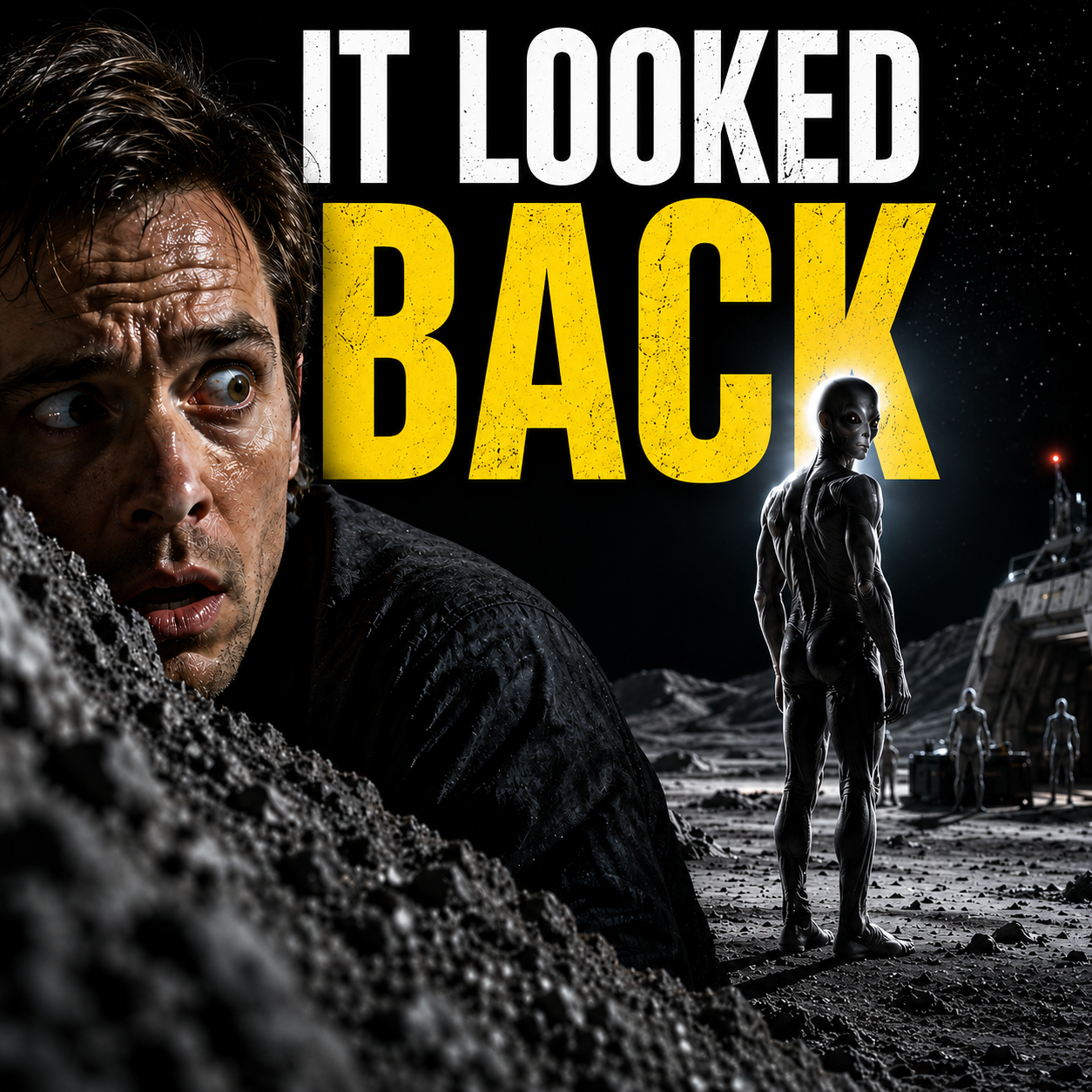
He Remote Viewed the Moon. Then Something Saw Him.
FAQs
What is Ingo Swann lunar remote viewing?
Ingo Swann lunar remote viewing refers to the alleged psychic ability of Ingo Swann to perceive and describe details about the moon’s surface and its surroundings without physically being present at the location.
Who is Ingo Swann?
Ingo Swann was a parapsychology researcher and artist known for his work in the field of remote viewing. He gained attention for his claimed ability to remote view distant locations, including the moon.
What is remote viewing?
Remote viewing is the practice of seeking impressions about a distant or unseen target using paranormal means, such as extrasensory perception (ESP) or “sensing” with the mind. It is often associated with psychic phenomena and has been the subject of scientific research.
What did Ingo Swann claim to have seen on the moon through remote viewing?
Ingo Swann claimed to have remote viewed the moon and reported seeing various structures, anomalies, and activities on the lunar surface. These claims have been a topic of controversy and skepticism within the scientific and paranormal communities.
What is the scientific consensus on Ingo Swann’s lunar remote viewing claims?
The scientific consensus on Ingo Swann’s lunar remote viewing claims is that they lack empirical evidence and are not supported by mainstream scientific research. Remote viewing as a phenomenon remains a topic of debate and skepticism within the scientific community.