
The twilight of the Late Bronze Age stands as one of history’s most profound enigmas. Across the Eastern Mediterranean, a tapestry of interconnected civilizations, flourishing for centuries, unraveled with astonishing speed. The intricate networks of trade, diplomacy, and cultural exchange that characterized this era – encompassing Minoan Crete, Mycenaean Greece, the Hittite Empire, Ugarit, Cyprus, and Egypt – fractured and crumbled. Cities were sacked and abandoned, writing systems disappeared, and established power structures dissolved, leaving behind a landscape of ruin and a collective amnesia for generations. While numerous theories have been proposed to explain this dramatic collapse, ranging from climate change and seismic activity to internal rebellions and widespread warfare, a more speculative yet compelling hypothesis suggests an external, non-human influence: an “Alien Signal Reset.”
The Late Bronze Age was a period of remarkable sophistication. Grand palaces, monumental architecture, and advanced metallurgical techniques all attest to the complex societal organization and technological prowess of the era. The extensive trade routes facilitated the movement of goods, ideas, and people across vast distances, fostering a shared cultural identity among disparate peoples. However, beneath this veneer of prosperity, vulnerabilities were present.
Unraveling the Interconnectedness
This interconnectedness, while a source of strength, also represented a critical fragility. An interruption at a key node could have cascading effects throughout the entire system. The reliance on specific trade routes for vital resources, such as tin for bronze production, meant that disruptions in one region could have far-reaching consequences for others. The political landscape, characterized by a delicate balance of power among regional heg])/empires, was susceptible to destabilization.
The Suddenness of the Disruption
What distinguishes the Late Bronze Age collapse from more gradual societal declines is its apparent abruptness. Archaeological evidence abounds with layers of destruction, often rapidly superimposed upon thriving urban centers. This suggests a sudden, overwhelming force rather than a slow erosion of existing structures. The rapid abandonment of settlements, the disappearance of writing, and the subsequent “Dark Ages” in many regions point to a catastrophic event that fundamentally altered the trajectory of civilization.
The Mystery of the “Sea Peoples”
The enigmatic “Sea Peoples,” mentioned in Egyptian inscriptions as a confederation of invaders who ravaged the Near East and Egypt around the late 13th and early 12th centuries BCE, remain a central, albeit ill-defined, element in discussions of the collapse. Their origins are debated, their identity fluid, and their motives unclear. Were they a symptom of the existing societal breakdown, or were they the primary catalyst? Their widespread and coordinated attacks on diverse regions suggest a level of organization and coordination that defies simple explanation as mere migratory groups or opportunistic raiders.
The Late Bronze Age collapse remains one of the most intriguing mysteries in ancient history, with various theories attempting to explain the sudden decline of several advanced civilizations around 1200 BCE. One fascinating perspective is presented in the article “Alien Signal Reset: A New Theory on the Late Bronze Age Collapse,” which explores the possibility that extraterrestrial signals may have influenced societal changes during this tumultuous period. This thought-provoking piece delves into the intersection of archaeology, history, and speculative science, suggesting that external factors could have played a role in the dramatic shifts of the era. For more insights, you can read the article [here](https://www.xfilefindings.com/).
Echoes in the Void: The Search for an Anomalous Cause
The conventional explanations, while offering partial insights, often struggle to account for the sheer scale and simultaneity of the collapse. Climate change, while a significant factor in regional agricultural productivity, does not fully explain the widespread destruction of fortified cities simultaneously across different environmental zones. Earthquakes could cause localized devastation, but multiple, coordinated seismic events across the entire Levant and Aegean are highly improbable. Internal strife and warfare, while endemic, typically played out over longer periods and did not necessarily result in the wholesale abandonment of established power structures. This persistent gap in understanding opens the door to more unconventional hypotheses.
The Limits of Terrestrial Explanations
The limitations of applying purely terrestrial explanations become more apparent when considering the multifaceted nature of the collapse. The simultaneous cessation of trade, the loss of literacy, and the destruction of elaborate infrastructure across distinct geographical areas suggest a force that transcended regional boundaries. The swiftness with which established societal norms and knowledge were erased points towards a disruption that directly impacted the very fabric of human organization and communication.
The “Out-of-Place” Artifacts and Records
While not widely accepted within mainstream archaeology, some researchers point to anomalies in the archaeological record that could be interpreted as evidence of something unusual. These are often subtle, like the seemingly inexplicable presence of certain materials in locations where they should not logically exist or the abrupt cessation of specific artistic or craft traditions. The lack of clear, unifying explanations for the Sea Peoples’ movements and motivations also contributes to this sense of “otherness.”
The Pattern of Disruption
The pattern of disruption itself is curious. While some regions were more severely impacted than others, the collapse was not a uniform implosion. Certain areas, like mainland Greece, experienced a more profound and prolonged “dark age” than others, like Egypt, which, while weakened, largely maintained its core civilization. This differential impact, or lack thereof, challenges the idea of a single, undifferentiated cause like a localized natural disaster.
The “Alien Signal Reset” Hypothesis: A Premise of Extraterrestrial Intervention

The “Alien Signal Reset” hypothesis, while highly speculative, proposes that an external, non-terrestrial intelligence may have played a role in the Late Bronze Age collapse. This hypothesis posits that an advanced extraterrestrial civilization, for reasons unknown, deliberately interfered with Earth’s nascent complex societies. The intervention was not necessarily one of benevolent guidance or outright conquest, but rather a form of system reset.
The Nature of the Intervention
The nature of this hypothetical intervention is crucial. It is not imagined as a fleet of spacecraft raining down destruction, but rather as a subtle yet impactful manipulation of the prevailing societal structures. This could have involved the disruption of communication networks, the incapacitation of leadership, or even a targeted dissemination of information or misinformation that led to widespread confusion and social breakdown. The idea is not that aliens conquered the world, but that they deactivated its complex systems.
A Targeted Disabling of Complexity
The hypothesis suggests that this intervention was designed to disable the rapidly developing complexity of Late Bronze Age societies. Perhaps the growth of these civilizations was viewed as a potential threat, or perhaps the aliens were engaged in some form of cosmic gardening, pruning nascent civilizations to a more manageable developmental stage. The collapse, in this view, was not a punishment, but a deliberate reformatting.
The “Reset” Mechanism
The term “reset” implies a deliberate act aimed at returning the system – in this case, human civilization – to a simpler state. This could have involved disrupting the advanced technologies of the time, such as sophisticated navigation or metallurgy, perhaps by introducing a specific form of interference that rendered their tools and knowledge useless. The aim would be to prevent further rapid, and potentially uncontrolled, advancement and to foster a period of rebuilding from a less complex foundation.
Implications of the Reset: Reshaping the Ancient World
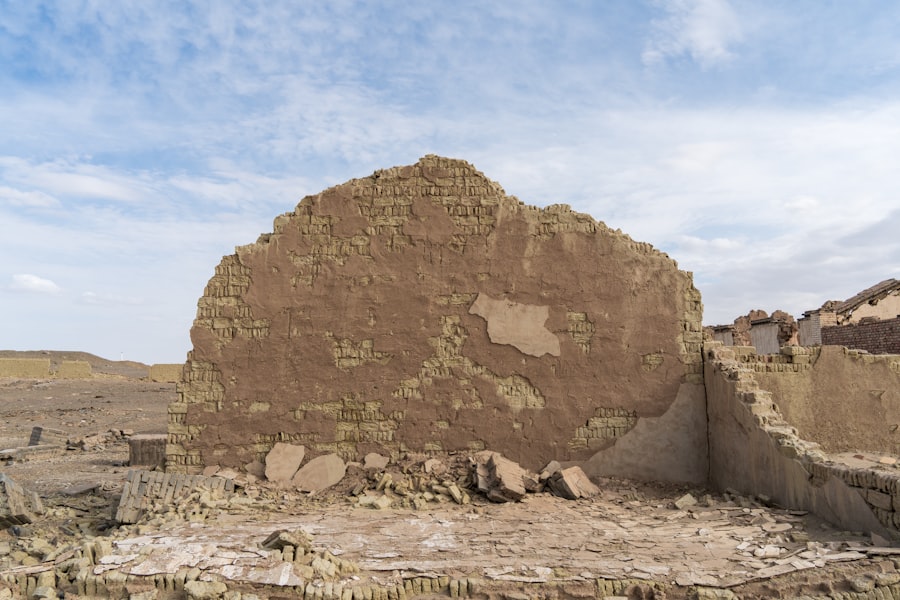
If an “Alien Signal Reset” did occur, its implications for our understanding of the Late Bronze Age collapse are profound. It suggests that the era’s end was not merely a consequence of internal human failings or natural phenomena, but a result of an external agency. This reframes the subsequent development of human civilization, implying that the subsequent Bronze Age was not a natural progression but a re-emergence after an imposed interruption.
The Loss of Knowledge and the “Dark Ages”
The hypothesis offers a potential, albeit controversial, explanation for the widespread loss of literacy and advanced knowledge that characterized the ensuing “Dark Ages.” If the signal or intervention disrupted communication and the transmission of information, it would naturally lead to the erosion of complex intellectual and technical traditions. The subsequent rediscovery and re-establishment of these systems would then be seen as the result of a new, independent growth process, uninfluenced by the previous trajectory.
The Seeds of New Civilizations
The “reset” could also explain the emergence of new cultural and political entities after the collapse. With the old systems dismantled, new pathways for development were forged. The shift from the palace-centered economies of the Mycenaeans and Hittites to the more decentralized and trade-oriented societies of the early Iron Age could be interpreted as a consequence of this reset, allowing for the development of different societal models.
Reinterpreting the “Sea Peoples”
Within this framework, the “Sea Peoples” might be reinterpreted not as mere human invaders, but as either agents of the alien intervention (perhaps a manipulated human population) or as an incidental byproduct of the disruption. Their coordinated movements and the inability to definitively identify their origins could be seen as a consequence of their role in a larger, extraterrestrial agenda, rather than a purely terrestrial migration or conquest.
The Late Bronze Age collapse remains one of the most intriguing mysteries in ancient history, with various theories attempting to explain the sudden decline of once-thriving civilizations. Some researchers have even suggested that an alien signal could have played a role in this dramatic reset of societal structures. For those interested in exploring this unconventional perspective further, a related article delves into the potential implications of extraterrestrial influences on historical events. You can read more about this fascinating topic in the article found here.
The Enduring Mystery: A Call for Unconventional Inquiry
| Event | Impact |
|---|---|
| Late Bronze Age Collapse | Disruption of trade routes, decline of civilizations |
| Alien Signal | Mysterious transmission from outer space |
| Reset | Reboot or restart of a system or civilization |
The Late Bronze Age collapse remains an open wound in the academic and historical consciousness. While conventional explanations provide valuable pieces of the puzzle, they often fall short of a comprehensive account for the sheer scale and abruptness of the event. The “Alien Signal Reset” hypothesis, however unconventional, offers a framework for considering possibilities that lie beyond our immediate terrestrial experiences. It compels us to acknowledge the potential limitations of our current understanding and to remain open to the idea that history might hold secrets far stranger than we currently imagine.
The Necessity of Interdisciplinary Approaches
To truly grapple with the enigmas of the Late Bronze Age collapse, a continued commitment to interdisciplinary approaches is essential. Archaeologists, historians, climatologists, geologists, and even astrophysicists might find common ground in exploring the multifaceted factors that contributed to this pivotal moment. Such collaboration, even when venturing into speculative territory, is crucial for pushing the boundaries of our knowledge.
Embracing the Unknown
Ultimately, the Late Bronze Age collapse serves as a powerful reminder of the fragility of even the most advanced civilizations. The “Alien Signal Reset” hypothesis, in its most extreme form, highlights the potential for external forces to shape human history in ways we are only beginning to contemplate. While direct evidence remains elusive, the persistent unanswered questions surrounding this epoch demand that we remain open to the possibility that the answers may lie, not just in the dust of ancient ruins, but in the vast, unexplored expanse beyond our solar system. The universe, after all, may hold keys to our past that we have yet to discover.
FAQs
What is the Late Bronze Age Collapse?
The Late Bronze Age Collapse refers to a period of time around 1200 BCE when major civilizations in the Mediterranean and Near East, such as the Hittite Empire, Mycenaean Greece, and the New Kingdom of Egypt, experienced a sudden and widespread societal collapse.
What is the “Alien Signal Reset” theory in relation to the Late Bronze Age Collapse?
The “Alien Signal Reset” theory is a speculative hypothesis that suggests an extraterrestrial event, such as a cosmic signal or intervention, may have played a role in triggering the societal collapse during the Late Bronze Age. This theory is not supported by mainstream archaeological or historical evidence.
What are the main theories proposed by scholars to explain the Late Bronze Age Collapse?
Scholars have proposed various theories to explain the Late Bronze Age Collapse, including invasions by the Sea Peoples, climate change, internal rebellions, and socioeconomic factors. These theories are based on archaeological evidence, historical records, and environmental data from the period.
Is there any scientific evidence to support the “Alien Signal Reset” theory?
As of now, there is no scientific evidence to support the “Alien Signal Reset” theory in relation to the Late Bronze Age Collapse. The theory falls outside the realm of mainstream scholarly research and is considered speculative and not based on empirical evidence.
What are some key factors that are known to have contributed to the Late Bronze Age Collapse?
Key factors that are known to have contributed to the Late Bronze Age Collapse include the migrations and invasions of the Sea Peoples, internal unrest and rebellions within the major civilizations, as well as environmental and climate changes that may have impacted agricultural productivity and trade networks. These factors are supported by archaeological and historical evidence.