
The crimson dust of Mars has long captivated humanity, fueling imaginations with tales of ancient civilizations and the tantalizing possibility of extraterrestrial life. While robotic explorers have diligently probed the Martian surface, revealing a world sculpted by eons of geological and atmospheric processes, a recent and deeply intriguing discovery has begun to challenge conventional understanding. Scattered across various regions of the Red Planet, anomalous formations bearing a striking resemblance to terrestrial megalithic structures have been identified, sparking a fervent debate within the scientific community and igniting the public’s fascination with a potentially long-lost Martian past. These formations, characterized by their immense scale, precise geometric arrangements, and apparent artificial origins, present a profound enigma that demands rigorous investigation.
The seeds of this extraordinary revelation were sown through the meticulous work of planetary scientists and astute amateur observers poring over the vast archives of imagery transmitted by NASA’s Mars reconnaissance missions, particularly the Mars Reconnaissance Orbiter (MRO) and the Curiosity rover. Initially, these anomalies were often dismissed as curious geological formations – unusual rock outcrops, wind-eroded features, or intriguing shadows cast by the Martian sun. However, as more data became available and analytical tools evolved, distinct patterns began to emerge, defying simple geological explanations.
The Enigmatic “Face” of Cydonia
Perhaps the most iconic precursor to this broader discovery was the infamous “Face on Mars” in the Cydonia region, first captured by the Viking 1 orbiter in 1976. While later, higher-resolution imagery revealed it to be a mesa eroded by natural processes, the initial image sparked intense speculation about artificial origins and the existence of a Martian civilization. This early fascination, though ultimately debunked in its original interpretation, paved the way for a more critical and open-minded examination of other unusual formations.
Beyond Cydonia: A Wider Distribution
The current wave of discovery is not confined to a single region. Similar structures, exhibiting characteristics that strongly suggest artificial construction, have been identified in diverse locations across Mars. These include areas like the Elysium Planitia, the Arabia Terra, and even within the depths of some Martian canyons. The widespread nature of these formations implies that if they are indeed artificial, they were the product of a civilization with a significant presence across the planet.
Recurring Geometric Signatures
A critical aspect driving the current interest is the recurring presence of specific geometric arrangements. Many of these formations exhibit remarkably straight edges, right angles, and parallel alignments that are rarely observed in natural geological processes. Some appear as vast, interconnected structures, while others take the form of colossal, individual monoliths or carefully arranged clusters of stones. The sheer precision of these arrangements, often visible only at high resolutions, is what lends significant weight to the hypothesis of intelligent design.
Recent discussions surrounding megalithic structures on Mars have sparked intrigue among researchers and enthusiasts alike. These formations, reminiscent of ancient Earth monuments, have led to various theories about the possibility of extraterrestrial life and advanced civilizations. For a deeper exploration of this fascinating topic, you can read a related article that delves into the implications of these structures and their potential origins. Check it out here: Megalithic Structures on Mars.
Unpacking the Evidence: Characteristics of Martian Megaliths
The term “megalithic” evokes images of Stonehenge, the Pyramids of Giza, and other monumental stone structures created by ancient human societies. The newly identified Martian formations share a startling array of similarities with these terrestrial counterparts, prompting careful consideration of their potential origin.
Colossal Scale and Material Composition
The sheer size of these Martian structures is astounding. Some appear to be composed of massive, quarried blocks of rock, weighing hundreds or even thousands of tons. The material itself, based on spectroscopic analysis from orbital instruments, is consistent with Martian basaltic rock, a common volcanic rock found on the planet. However, the sheer effort required to quarry, transport, and precisely position such colossal blocks speaks volumes about the capabilities of any civilization that might have accomplished it.
Precision in Alignment and Arrangement
One of the most compelling pieces of evidence is the extraordinary precision observed in the alignment and arrangement of these structures. Many exhibit an uncanny adherence to geometric principles. For instance, certain formations appear to be aligned with cardinal directions, or with specific celestial bodies, reminiscent of ancient astronomical observatories found on Earth. The regularity of their spacing, the straightness of their edges, and the deliberate nature of their placement are all hallmarks that are difficult to attribute solely to natural forces.
Straight Edges and Right Angles
The presence of exceptionally straight edges and precisely formed right angles is a recurring feature. While natural erosion can sometimes create flat surfaces, the consistent presence of these features across multiple structures, and their apparent deliberate interconnection, suggests an artificial hand. Wind erosion, while a powerful force on Mars, typically creates rounded and irregular shapes.
Parallelism and Spacing
In some instances, multiple elements of a formation are found to be perfectly parallel to each other, with remarkably consistent spacing between them. This suggests a deliberate design and construction process rather than a random geological occurrence. The uniformity in spacing, particularly over large distances, points towards sophisticated surveying and construction techniques.
Apparent Purpose and Functionality
While speculative, the arrangement of some of these structures hints at potential functionalities. Some appear to form complex geometric patterns that could have served as markers, astronomical tools, or even defensive structures. The very act of constructing such massive edifices implies a purpose, whether it be religious, social, scientific, or practical.
Challenging the Paradigm: Geological Explanations and Their Limitations
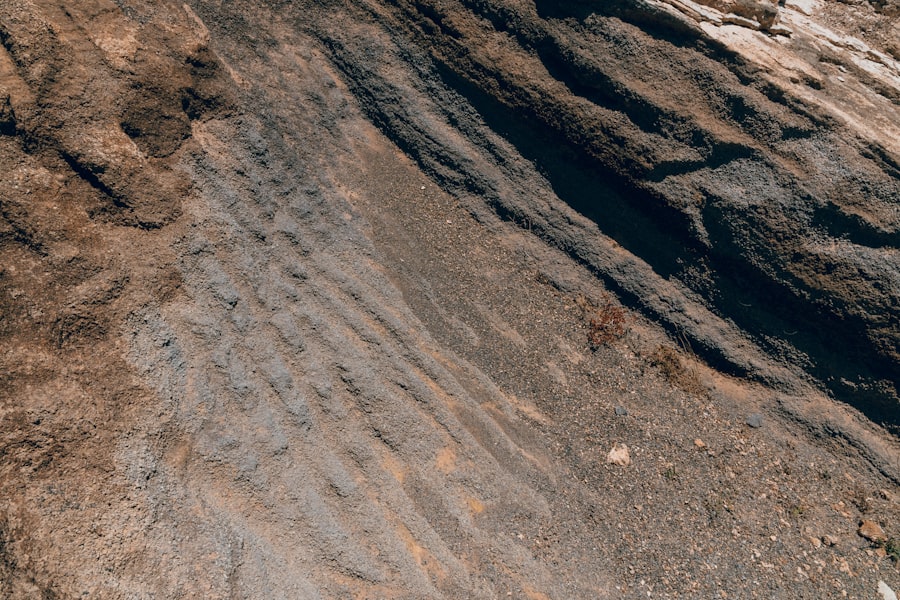
Naturally, any claim of artificial structures on Mars must be met with rigorous scientific scrutiny. The prevailing scientific consensus rightly emphasizes geological explanations for Martian landforms. However, as the evidence for these megalithic structures accumulates, the limitations of purely geological explanations become increasingly apparent.
The Role of Erosion and Weathering
Mars’ surface is undeniably shaped by a variety of erosional forces, including wind, dust storms, and past hydrological activity. Scientists have proposed that wind erosion, through aeolian processes like sandblasting and abrasion, could theoretically sculpt rock formations into unusual shapes. However, the consistent regularity, precise angles, and deliberate alignments observed in the candidate megaliths are difficult to reconcile with the typically chaotic and unpredictable nature of natural erosion.
Wind-Sculpted Features: A Counterpoint
While wind can create impressive rock formations, such as yardangs and ventifacts, these typically exhibit a degree of asymmetry and irregularity. The candidate Martian megaliths, in contrast, often display a remarkable degree of symmetry and geometric precision that strains the limits of what wind erosion can achieve alone.
Volcanic and Tectonic Activity
Volcanic eruptions and tectonic shifts are also significant geological forces that shape planetary surfaces. While these processes can create large-scale features and expose underlying rock strata, they do not typically result in the formation of precisely aligned, geometric stone structures. The arrangement and composition of the alleged megaliths do not readily align with known volcanic or tectonic phenomena.
Pseudo-Geological Anomalies: The Burden of Proof
The scientific community rightly demands a high burden of proof for extraordinary claims. Many initial anomalies are indeed resolved by identifying them as natural geological formations when subjected to closer examination and higher-resolution imaging. The ongoing debate hinges on whether the current collection of evidence for these particular structures can withstand such scrutiny.
The “Pareidolia” Argument
A common counterargument is the phenomenon of pareidolia – the tendency to perceive familiar patterns, such as faces or objects, in random or ambiguous stimuli. While pareidolia undoubtedly plays a role in some interpretations of Martian imagery, the sheer number and consistency of geometric features across these candidate megaliths suggest something beyond mere random perception.
The Search for Answers: Future Research and Methodologies

The discovery of these enigmatic Martian structures necessitates a multi-faceted approach to future research, employing advanced technologies and interdisciplinary collaboration. Unraveling this mystery will likely require more than just orbital imagery.
In-Situ Exploration and Sample Analysis
The ultimate validation or refutation of the megalithic hypothesis will likely require direct in-situ exploration. Future robotic missions equipped with sophisticated drills, spectrometers, and imaging systems capable of close-up analysis of rock composition, stratification, and structural integrity will be crucial.
Advanced Robotic Rovers and Landers
Next-generation rovers and landers could be deployed to areas where these structures are concentrated. Their instruments could perform detailed geological mapping, analyze the texture and composition of the stones, and even attempt to identify evidence of tool marks or other signs of artificial manipulation.
Subsurface Exploration
If these structures are indeed artificial, there is a possibility of buried components or foundations. Future missions could incorporate ground-penetrating radar or drilling capabilities to explore beneath the surface, potentially revealing more about the extent and nature of these formations.
Comparative Planetary Geology and Astrobiology
The study of these Martian megaliths will undoubtedly benefit from comparative approaches. Examining similar geological processes on other planets and moons could provide valuable context. Furthermore, the implications for astrobiology are immense, potentially pointing towards past life on Mars.
Modeling Natural Formation Processes
Continued efforts to meticulously model natural geological processes on Mars are essential. This will help establish clearer boundaries for what can be explained by natural forces and what might require an alternative explanation.
Searching for Biosignatures
The presence of such complex, organized structures would significantly elevate the search for biosignatures – evidence of past or present life. If these are artificial, they imply a level of intelligence and technological capability that would revolutionize our understanding of life beyond Earth.
Recent discussions surrounding megalithic structures on Mars have sparked intrigue among researchers and enthusiasts alike. These fascinating formations have led to various theories about the possibility of ancient civilizations existing on the Red Planet. For those interested in delving deeper into this topic, a related article can be found at XFile Findings, which explores the implications of these structures and their potential significance in understanding Mars’ history. The ongoing exploration of these enigmatic sites continues to fuel speculation and debate within the scientific community.
Broader Implications: A Paradigm Shift in Our Cosmic Perspective
| Structure | Location | Size | Description |
|---|---|---|---|
| Face on Mars | Cydonia region | 1.5 miles across | Controversial formation resembling a human face |
| Pyramid on Mars | Elysium region | About 2.5 miles tall | Structure with four triangular sides and a square base |
| City on Mars | Various locations | N/A | Alleged urban-like formations seen in satellite images |
The confirmation of intelligent, artificial megalithic structures on Mars would represent a paradigm shift of unprecedented proportions. It would fundamentally alter humanity’s place in the cosmos and ignite a profound reevaluation of our understanding of life, intelligence, and the universe itself.
The Question of Martian Civilizations
The most immediate implication is the undeniable evidence of a past intelligent civilization on Mars. This would necessitate a complete rewriting of our understanding of Martian history and the potential for life to evolve and develop complex societies on other worlds.
Who Were They? What Happened?
The questions that would arise are boundless: Who were these beings? What were their motivations for constructing such monumental edifices? What led to their eventual demise or departure from Mars? The answers to these questions would be among the most significant discoveries in human history.
The Search for Extraterrestrial Intelligence (SETI) Reimagined
The discovery of past Martian civilizations would invigorate the Search for Extraterrestrial Intelligence (SETI) with a newfound urgency and a wealth of new possibilities. It would suggest that intelligence may not be a rare cosmic accident but a more common occurrence, and that ancient civilizations may have left behind detectable remnants across the galaxy.
Lessons from a Lost Civilization
Studying the remnants of a Martian civilization could offer invaluable insights into the trajectory of technological development, societal evolution, and the challenges that intelligent species might face. It could provide a cautionary tale or a roadmap for our own future.
A Unified Humanity in the Face of the Unknown
Confronted with such a profound discovery, humanity might find itself united by a shared sense of wonder, curiosity, and perhaps even a touch of existential introspection. The vastness of space, once perceived as a void, would suddenly feel more populated, and our own existence would be placed within a grander, more complex cosmic narrative. The red dust of Mars, once a symbol of distant solitude, might now whisper tales of a shared, albeit ancient, galactic heritage. The journey to understand these megalithic marvels is far from over, but the potential for discovery promises to be truly astronomical.

The CIA Asked a Man to Look at Mars 1 Million Years Ago
FAQs
What are megalithic structures on Mars?
Megalithic structures on Mars are large, ancient stone formations that have been observed on the surface of the planet. These structures are similar to megalithic monuments found on Earth, such as Stonehenge, and have sparked speculation about the possibility of past civilizations on Mars.
How were megalithic structures on Mars discovered?
Megalithic structures on Mars were first discovered through images captured by spacecraft and rovers exploring the planet. These images, taken by NASA’s Mars Reconnaissance Orbiter and other missions, show formations that appear to be artificially constructed, leading to speculation about their origins.
What do scientists think about megalithic structures on Mars?
While some scientists and researchers believe that the megalithic structures on Mars could be evidence of past civilizations or intelligent life, the majority of the scientific community maintains that these formations are likely the result of natural geological processes. They argue that the human brain is wired to recognize patterns, leading to the perception of familiar shapes in random formations.
What is the significance of megalithic structures on Mars?
The significance of megalithic structures on Mars lies in the ongoing exploration and study of the planet’s surface. These formations have sparked interest in the possibility of ancient civilizations on Mars and have fueled debates about the potential for extraterrestrial life. They also serve as a reminder of the mysteries that still exist beyond Earth.
Are there any plans to further investigate megalithic structures on Mars?
NASA and other space agencies have ongoing missions to explore Mars, including the search for signs of past life and the potential for human colonization. While the investigation of megalithic structures on Mars is not a primary focus of these missions, the continued exploration of the planet’s surface may yield further insights into these enigmatic formations.