
The Michigan UFO Radar Case: Unexplained Aerial Phenomena Investigated
The Dawn of a Mystery
The late evening of November 7, 1991, would become etched in the annals of unexplained aerial phenomena for the state of Michigan. What began as a routine observation by experienced air traffic controllers at the Battle Creek Air National Guard Station rapidly escalated into a baffling encounter with what eyewitnesses described as an enormous, silent, and intelligently controlled object. The incident, which unfolded over several hours and involved multiple radar systems and visual sightings, continues to be a focal point for researchers investigating the enduring enigma of UFOs. This event, often referred to as the “Michigan UFO Radar Case,” stands out due to the confluence of credible witnesses, sophisticated tracking technology, and the sheer perplexing nature of the observed phenomena.
The initial report emerged from the Battle Creek Air National Guard Station, a facility accustomed to monitoring the skies for aircraft. Air traffic controllers, individuals trained in identifying and tracking aerial targets, were the first to register the anomaly. Their professional skepticism, honed by years of experience, was soon tested. The object in question defied conventional explanation, exhibiting characteristics that were not aligned with any known aircraft, meteorological event, or terrestrial phenomenon. This immediate discrepancy between the observed data and expected parameters set the stage for an investigation that would span decades and involve a diverse array of experts.
The environment on that November night was reportedly clear, with good visibility. This clarity was crucial, as it allowed for reliable visual confirmation of the object’s presence, corroborating the radar data. The lack of adverse weather conditions eliminated atmospheric clutter or optical illusions as potential explanations for the observed radar returns. The air traffic controllers, accustomed to distinguishing between genuine targets and false positives, were adamant that what they were seeing was real and extraordinary. Their training emphasized a rigorous process of verification and cross-referencing, a process that only deepened their puzzlement as the incident progressed. The fact that multiple controllers independently observed and reported the same phenomena lent significant weight to their testimony.
Initial Radar Contacts and Controller Accounts
The first definitive radar contact was made around 9:30 PM Eastern Standard Time. Controllers at Battle Creek detected a large, slow-moving object on their primary radar screen. Unlike conventional aircraft, which have predictable flight paths and speeds, this target displayed erratic behavior. It would hover for extended periods, then move with remarkable speed and agility, executing maneuvers that were impossible for any known conventional aircraft. The object’s radar signature was also unusual; it was large, suggesting a significant physical presence, yet it produced no corresponding transponder code, a requirement for all registered aircraft.
Several controllers, including experienced personnel, were directly involved in tracking the object. Their accounts, later compiled and analyzed by various investigative bodies, paint a consistent picture of disbelief and professional bewilderment. They described the object as immense, far larger than any military or civilian aircraft they typically tracked. Its movement was fluid and silent, a stark contrast to the familiar sounds and engine exhaust associated with conventional flight. The lack of noise was particularly noteworthy, as the object was observed at relatively low altitudes at times, where the sound of aircraft would normally be readily audible. This silence, coupled with its advanced maneuvering capabilities, contributed to the growing sense that they were witnessing something entirely unprecedented.
The controllers attempted to communicate with the object, hailing it on standard aviation frequencies. There was no response. They also tried to identify it by cross-referencing with other air traffic control facilities, but the object did not appear on their radar screens. This isolation of the tracking within the Battle Creek radar system, while simultaneously being visually confirmed, added another layer of complexity to the puzzle. The controllers were witnessing something that seemed to exist outside the established norms of air traffic and communication. Their rigorous professional protocols were being challenged by an anomaly that defied their training and experience.
The Michigan UFO radar case has intrigued both enthusiasts and skeptics alike, shedding light on the complexities of unidentified aerial phenomena. For those interested in exploring more about similar incidents and the ongoing investigations into UFO sightings, a related article can be found at XFile Findings, which delves into various accounts and analyses surrounding unexplained aerial encounters.
The Object’s Peculiar Behavior

As the event unfolded, the unidentified aerial object engaged in a series of perplexing maneuvers that further confounded the observers. It was not merely an anomaly of detection; it was an anomaly of behavior, displaying characteristics that seemed to transcend known aerodynamic principles. The object’s ability to accelerate, decelerate, and change direction with such abruptness and precision suggested a level of control and propulsion far beyond contemporary human technology.
The radar data indicated that the object could remain stationary for extended periods, seemingly defying gravity, before suddenly darting off at high speed. These rapid accelerations and decelerations were not smooth, gradual transitions but abrupt shifts that would have subjected any conventional aircraft to immense G-forces, likely resulting in structural failure. Yet, the object appeared to execute these maneuvers with effortless ease, demonstrating a mastery of physics that was both awe-inspiring and deeply unsettling to those witnessing it.
Unconventional Maneuvers and Silent Flight
Witnesses, including the air traffic controllers and later civilian observers, consistently reported the object’s silent operation. This lack of auditory presence was a recurring theme. For an object of its reported size, the absence of engine noise, air displacement sounds, or any other audible indication of propulsion was highly unusual. This silence further amplified the sense of the unnatural and the unknown. Unlike the roar of a jet engine or the whirring of propellers, the object moved through the sky as if it were an apparition, a silent specter against the night.
The object also demonstrated an uncanny ability to appear and disappear from radar screens. At times, it would be a strong, persistent target, meticulously tracked by multiple radar systems. At other moments, it would vanish entirely, only to reappear minutes or hours later, sometimes in a different location. This intermittent radar visibility added to the difficulty of establishing a continuous narrative of its movements and further fueled speculation about its nature. Some theorized it might have cloaking capabilities, or the ability to somehow disrupt or avoid radar detection at will.
Furthermore, the object was observed engaging in synchronized movements with other unidentified lights in the sky. While the primary focus was on the large radar target, multiple visual sightings reported smaller, luminous objects accompanying the main entity. These smaller lights would sometimes flank the larger object, or perform independent maneuvers in formation, suggesting a coordinated effort. This element of multiple, interacting objects added another dimension to the mystery, hinting at a potential fleet or a complex operational deployment. The sheer coordination and apparent intelligence behind these movements were particularly striking and difficult to reconcile with natural phenomena or random airborne objects.
Visual Corroboration and Civilian Sightings
The radar anomaly was not confined to the sterile environment of the air traffic control center. As the incident progressed into the early morning hours of November 8, 1991, numerous civilian reports began to pour in from across southwestern Michigan. These independent sightings, often from individuals with no prior interest in the UFO phenomenon, provided crucial visual corroboration for the radar data and offered a more visceral, ground-level perspective of the extraordinary events unfolding above.
The consistency in the descriptions provided by these civilian witnesses was striking. Despite varying locations and perspectives, they reported seeing a large, silent, disc-shaped or triangular object exhibiting unusual flight characteristics. Many described the object as emitting a soft, pulsating light, often white or yellow, and noted its slow, deliberate movement across the sky before it would suddenly accelerate and disappear.
Multiple Independent Eyewitness Accounts
Across a wide geographical area, residents reported observing the same phenomena. From small towns to more populated areas, the sightings were remarkably similar. People described standing in their yards, looking up at the sky, and being confronted by a sight that defied their understanding. Many initially dismissed what they saw as a conventional aircraft or a weather balloon, but the object’s size, silence, and impossible maneuvers quickly dispelled such mundane explanations.
The psychological impact on these individuals was evident. Many reported feeling a sense of awe, wonder, and even fear. The sheer scale of the object and its silent, purposeful movement created an experience that was both captivating and unsettling. Some attempted to photograph or film the object, though the technological limitations of the time often resulted in blurry or inconclusive evidence. Nevertheless, the sheer volume of eyewitness accounts, coming from diverse backgrounds and geographical locations, created a compelling narrative of a shared, anomalous experience.
The consistency of these reports is a significant factor in the enduring interest in the Michigan UFO Radar Case. When multiple, independent individuals report seeing the same unusual phenomenon, it strengthens the credibility of their accounts. The lack of any widespread public announcement or official explanation at the time of the sightings meant that these individuals were reporting what they genuinely observed, without external influence or suggestion. Their honest accounts, when pieced together, form a powerful testament to the reality of their encounters.
Official Investigations and Subsequent Analysis
The significance of the Michigan UFO Radar Case was not lost on official channels. While there was no immediate public announcement by military or government authorities, the incident triggered internal investigations. The unusual nature of the radar contacts, combined with the numerous civilian reports, necessitated a response from those responsible for air defense and airspace security.
The primary investigative effort was spearheaded by individuals within the military and aviation communities. Air traffic controllers provided detailed logs and debriefings. Radar data was meticulously reviewed. Reports from other military installations and civilian aviation authorities were cross-referenced to determine if there were any conventional explanations that had been overlooked.
Military and Aviation Community Involvement
The Battle Creek Air National Guard Station, being the epicenter of the initial radar detection, was the focal point of these internal inquiries. Controllers who had witnessed the events were interviewed extensively. Their professional accounts, characterized by their firsthand experience and understanding of aviation protocols, were taken very seriously. The lack of any discernible conventional explanation from within their ranks underscored the anomalous nature of the incident.
Furthermore, independent researchers and organizations dedicated to the study of Unidentified Aerial Phenomena also began to investigate the case. They meticulously collected witness testimonies, analyzed available radar data (often through Freedom of Information Act requests), and sought to establish connections between the various sightings and radar contacts. These groups often brought a multidisciplinary approach, enlisting the expertise of former military pilots, radar technicians, and scientists to interpret the evidence.
The analysis of the radar data itself proved to be a critical element of the investigation. The sophisticated radar systems employed by the Air National Guard were capable of detecting even small aerial targets. The fact that these systems registered a large, unusually behaving object suggested a tangible physical presence. The difficulty in categorizing this presence within known parameters led to considerable deliberation and a lack of definitive conclusions from official sources.
The Michigan UFO radar case has intrigued both enthusiasts and skeptics alike, shedding light on the complexities of unidentified aerial phenomena. For those interested in exploring more about similar incidents and the ongoing investigation into UFO sightings, a related article can provide further insights. You can read more about it in this detailed analysis that delves into various encounters and the implications they hold for our understanding of the skies.
Lingering Questions and Enduring Significance
| Metric | Details |
|---|---|
| Incident Name | Michigan UFO Radar Case |
| Date | March 8, 1966 |
| Location | Oakland County, Michigan |
| Radar Detection | Unidentified object detected on radar at Selfridge Air Force Base |
| Duration of Radar Contact | Approximately 20 minutes |
| Visual Confirmation | Multiple eyewitnesses reported seeing bright lights in the sky |
| Military Response | F-106 interceptor jets scrambled to investigate |
| Outcome | Object disappeared from radar and visual range without explanation |
| Official Explanation | No conclusive identification; case remains unexplained |
Despite the passage of time, the Michigan UFO Radar Case remains a compelling and unresolved mystery. The confluence of credible radar data, experienced eyewitness testimony, and the sheer baffling nature of the observed phenomena continues to fascinate researchers, ufologists, and the public alike. The case serves as a potent reminder that despite our advancements in technology and our understanding of the universe, there are still profound enigmas that challenge our comprehension.
The lack of a definitive official explanation has allowed for a wide range of theories to emerge. These range from secret military projects or advanced drone technology to more speculative explanations involving extraterrestrial visitation. Each theory, while attempting to rationalize the observed events, encounters its own set of challenges when confronted with the totality of the evidence. The object’s advanced maneuverability, its silent operation, and its apparent ability to evade conventional tracking methods all point towards a technology that was, and in many ways still is, beyond our current understanding.
Unanswered Questions and Future Research
The core questions surrounding the Michigan UFO Radar Case persist: What was the object? Where did it come from? What was its purpose? The recorded data, while extensive, leaves much to interpretation. The object’s immense size, its silent and agile flight, and its ability to interact with radar systems in such an unconventional manner continue to be the subject of intense scrutiny.
The significance of this case extends beyond the specific events of November 1991. It is a testament to the fact that even in our hyper-connected, technologically advanced world, there are still phenomena that defy easy categorization. The Michigan UFO Radar Case serves as a touchstone for discussions about the nature of intelligence, the limits of human understanding, and the possibility of phenomena that exist beyond our current scientific paradigms. As technology continues to advance, and our ability to detect and analyze aerial phenomena improves, it is possible that future investigations may shed new light on this enduring mystery, or perhaps, reveal even more perplexing encounters in the skies above Michigan and beyond. The ongoing pursuit of answers underscores the enduring human desire to comprehend the unknown, especially when it manifests so dramatically in our own skies.
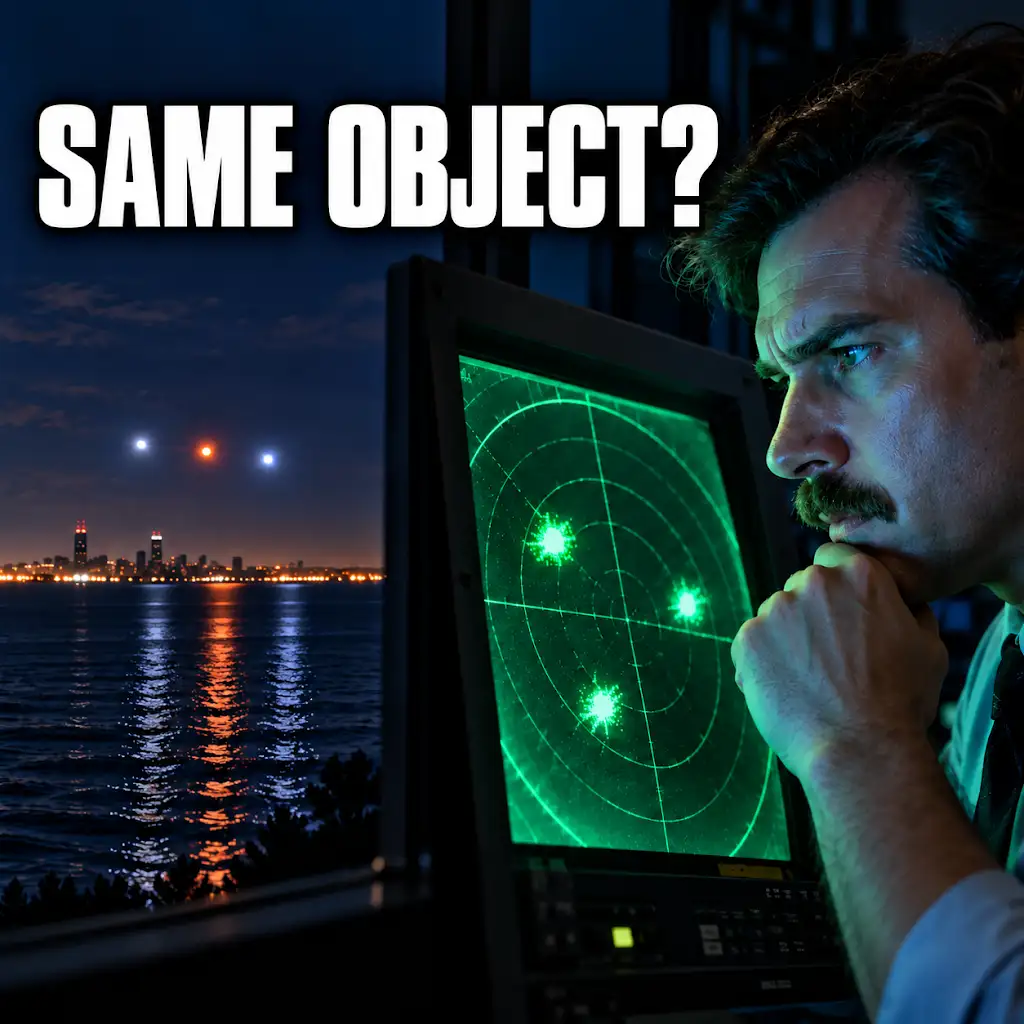
The 911 Calls Reported UFOs. What Did the Radar Actually Show?
FAQs
What is the Michigan UFO radar case?
The Michigan UFO radar case refers to an incident in which unidentified flying objects were detected on radar by the United States Air Force in Michigan in 1966.
What happened during the Michigan UFO radar case?
During the Michigan UFO radar case, multiple witnesses, including law enforcement officers and Air Force personnel, reported seeing strange lights in the sky and radar operators detected unknown objects moving at high speeds.
Was there any physical evidence collected during the Michigan UFO radar case?
No physical evidence was collected during the Michigan UFO radar case, as the objects detected on radar were not visible to the naked eye and did not leave behind any tangible proof of their presence.
Were there any official explanations provided for the Michigan UFO radar case?
Official explanations for the Michigan UFO radar case varied, with some suggesting that the objects were simply misidentified aircraft or weather phenomena, while others believed they could have been extraterrestrial in nature.
Has the Michigan UFO radar case been officially solved?
The Michigan UFO radar case remains officially unsolved, with no conclusive explanation for the unidentified objects detected on radar during the incident in 1966.