
You may have heard the term “Mitochondrial Eve” in discussions about human ancestry and evolution. This concept refers to the most recent common matrilineal ancestor of all living humans, traced through mitochondrial DNA (mtDNA). Unlike nuclear DNA, which is inherited from both parents, mtDNA is passed down exclusively from mothers to their offspring.
This unique inheritance pattern allows scientists to trace maternal lineages back through generations, ultimately leading to a single woman who lived in Africa approximately 150,000 to 200,000 years ago. The idea of Mitochondrial Eve has sparked significant interest and debate within the scientific community and beyond, as it raises questions about our origins and the journey of humanity. Understanding Mitochondrial Eve is not just about identifying a single individual; it is about unraveling the complex tapestry of human evolution.
You might find it fascinating that this concept intertwines with various fields, including genetics, anthropology, and even philosophy. As researchers delve deeper into our genetic past, they uncover insights that challenge traditional narratives about human migration and adaptation. The story of Mitochondrial Eve serves as a reminder of our shared ancestry and the interconnectedness of all humans, regardless of geographical or cultural differences.
Key Takeaways
- Mitochondrial Eve represents the most recent common maternal ancestor of all humans, traced through mitochondrial DNA.
- Mitochondrial DNA is crucial for studying human evolution and migration patterns due to its unique inheritance.
- Some theories controversially suggest extraterrestrial origins for Mitochondrial Eve, linking her to ancient alien hypotheses.
- There is significant skepticism and criticism regarding claims of extraterrestrial influence on human ancestry.
- Ongoing research aims to clarify Mitochondrial Eve’s origins and her role in understanding human evolutionary history.
The Search for Extraterrestrial Origins
The quest for understanding human origins has led some researchers to explore the possibility of extraterrestrial influences on our evolution. You may wonder how this idea gained traction in scientific circles. The search for extraterrestrial origins is fueled by the notion that life on Earth may have been influenced or even seeded by life forms from other planets.
This hypothesis, often referred to as panspermia, suggests that microbial life could have traveled through space and eventually found its way to Earth, potentially contributing to the development of complex organisms. As you delve into this topic, you might find it intriguing that some scientists propose that Mitochondrial Eve’s lineage could be linked to extraterrestrial origins. They argue that certain genetic markers in human DNA exhibit anomalies that cannot be easily explained by terrestrial evolution alone.
This line of thinking opens up a realm of possibilities regarding how life on Earth began and evolved. While the idea may seem far-fetched to some, it invites you to consider the broader implications of our existence and the potential for life beyond our planet.
Mitochondrial DNA and its Significance
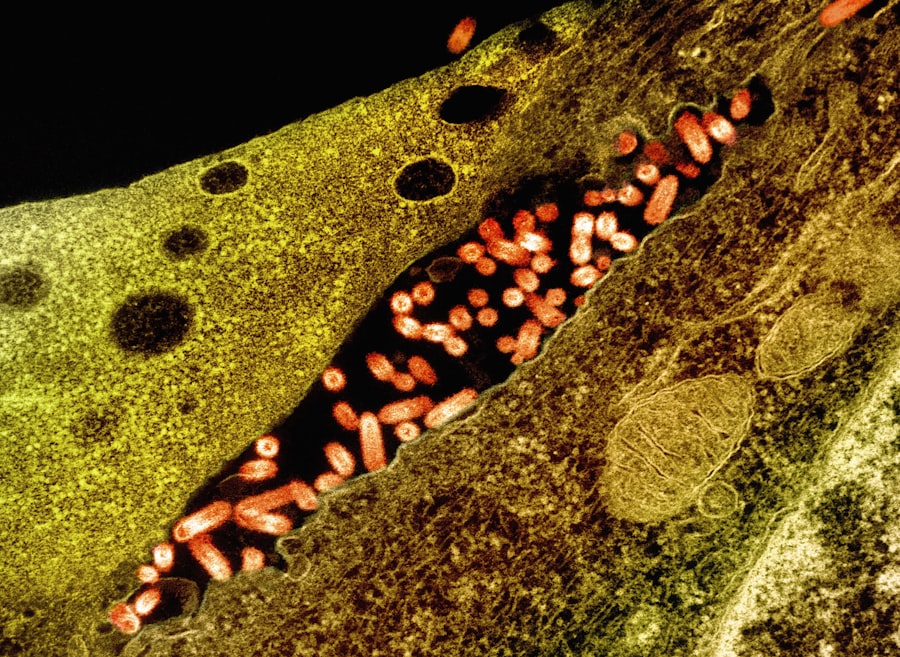
Mitochondrial DNA plays a crucial role in understanding human evolution and ancestry. As you explore this topic further, you’ll discover that mtDNA is not only vital for energy production within cells but also serves as a powerful tool for tracing lineage. The significance of mtDNA lies in its relatively stable mutation rate, which allows scientists to estimate the time frame for evolutionary events.
By analyzing variations in mtDNA among different populations, researchers can construct a genetic tree that illustrates how humans have migrated and diversified over time. You may find it particularly interesting that mtDNA analysis has provided insights into various aspects of human history, including migration patterns and population bottlenecks. For instance, studies have shown that certain mtDNA haplogroups are associated with specific geographic regions, revealing how ancient humans spread across continents.
This genetic evidence complements archaeological findings and helps paint a more comprehensive picture of our ancestors’ journeys. As you consider the implications of mtDNA research, you may begin to appreciate how it connects us to our past and informs our understanding of human diversity today.
Controversies Surrounding Mitochondrial Eve
| Controversy | Description | Implications | Key Critics |
|---|---|---|---|
| Misinterpretation of “Eve” as the only woman alive | Some misunderstand Mitochondrial Eve as the only woman alive at her time, rather than the most recent common matrilineal ancestor. | Leads to confusion about human ancestry and population diversity. | Geneticists and anthropologists emphasizing population genetics complexity. |
| Dating Accuracy | Disputes over the estimated age of Mitochondrial Eve, with estimates ranging from 100,000 to 200,000 years ago. | Impacts theories on human migration and evolution timelines. | Researchers debating molecular clock calibration methods. |
| Exclusion of Paternal Lineage | Mitochondrial Eve traces only maternal lineage, ignoring paternal genetic contributions. | Provides an incomplete picture of human ancestry. | Critics advocating for inclusion of Y-chromosome and autosomal DNA studies. |
| Overemphasis on Single Ancestor | Focus on Mitochondrial Eve may overshadow the complexity of human genetic diversity and multiple ancestors. | May lead to oversimplified narratives about human origins. | Evolutionary biologists promoting broader genetic perspectives. |
| Public Misconceptions and Media Sensationalism | Media sometimes portrays Mitochondrial Eve as a literal “first woman,” causing public misunderstanding. | Distorts scientific facts and fuels myths about human evolution. | Science communicators urging accurate representation. |
Despite its significance, the concept of Mitochondrial Eve is not without controversy. You might encounter debates surrounding the interpretation of genetic data and the implications of identifying a single matrilineal ancestor. Critics argue that labeling one woman as “Eve” oversimplifies the complexities of human ancestry.
They contend that while Mitochondrial Eve represents a common ancestor for all living humans today, she was not the only woman alive at her time. Instead, there were likely many other women whose lineages did not survive through generations due to various factors such as environmental changes or population dynamics. Additionally, some researchers question the methodology used in mtDNA studies, pointing out potential biases in sampling and interpretation.
As you navigate these controversies, it’s essential to recognize that science is an evolving field where new discoveries can reshape our understanding. The debates surrounding Mitochondrial Eve highlight the importance of critical thinking and open dialogue in scientific inquiry. You may find yourself pondering how these discussions contribute to a more nuanced understanding of human evolution.
Evidence Supporting Extraterrestrial Origins
The idea that extraterrestrial influences may have played a role in human evolution is supported by various lines of evidence. As you explore this topic, you might come across studies suggesting that certain genetic traits in humans are remarkably similar to those found in extremophiles—organisms that thrive in extreme environments on Earth. Some researchers propose that these similarities could indicate a shared ancestry with life forms that originated elsewhere in the universe.
Moreover, you may find it intriguing that advancements in astrobiology have led scientists to identify potentially habitable exoplanets where life could exist. The discovery of organic molecules in space and the presence of water on celestial bodies like Mars further fuel speculation about extraterrestrial life. As you consider these findings, you might begin to appreciate how they intersect with the narrative of Mitochondrial Eve and the broader question of humanity’s origins.
The Impact of Mitochondrial Eve on Human Evolution
Mitochondrial Eve’s significance extends beyond her role as a common ancestor; she represents a pivotal moment in human evolution. You may find it fascinating that her existence coincided with a period of significant environmental changes in Africa, which likely influenced the development of early Homo sapiens.
The impact of Mitochondrial Eve on human evolution can also be seen in the genetic diversity present in modern populations. As you explore this topic further, you’ll discover that her lineage contributed to the rich tapestry of genetic variation we observe today. This diversity is crucial for understanding how humans have adapted to different environments and challenges throughout history.
By studying Mitochondrial Eve’s legacy, you gain insight into the resilience and adaptability of our species.
The Role of Mitochondrial Eve in Understanding Human Migration
Mitochondrial Eve serves as a key figure in unraveling the story of human migration across the globe. As you delve into this aspect of her legacy, you’ll find that her lineage provides valuable clues about how early humans spread from Africa to other continents. Genetic studies have revealed distinct mtDNA haplogroups associated with specific geographic regions, allowing researchers to trace migration routes and timelines.
You may be intrigued by how this genetic evidence aligns with archaeological findings and historical records. For instance, studies suggest that early humans migrated out of Africa in multiple waves, adapting to diverse environments along the way. By examining Mitochondrial Eve’s lineage, you can better understand the complex interplay between genetics and migration patterns throughout history.
This knowledge not only enriches your understanding of human ancestry but also highlights the shared heritage that connects us all.
The Connection Between Mitochondrial Eve and Ancient Alien Theories
The concept of Mitochondrial Eve has also found its way into discussions surrounding ancient alien theories. You might encounter claims suggesting that extraterrestrial beings played a role in shaping human evolution or even directly influencing Mitochondrial Eve herself. Proponents of these theories often point to unexplained genetic anomalies or rapid advancements in human civilization as evidence of alien intervention.
While these ideas can be captivating, it’s essential to approach them with a critical mindset. As you explore this connection further, you may find that many scientists remain skeptical about linking Mitochondrial Eve to extraterrestrial influences. They argue that evolutionary processes can explain the complexities of human development without invoking alien involvement.
Nevertheless, these theories continue to capture public imagination and spark discussions about humanity’s place in the universe.
Criticisms and Skepticism Regarding Extraterrestrial Origins
As you navigate the landscape of theories surrounding extraterrestrial origins, it’s crucial to consider the criticisms and skepticism expressed by many within the scientific community. While some researchers advocate for exploring unconventional ideas about human evolution, others caution against jumping to conclusions without robust evidence. You may find it interesting that skepticism often stems from a desire for rigorous scientific inquiry grounded in empirical data.
Critics argue that while intriguing, claims about extraterrestrial influences lack sufficient support from established scientific methodologies. They emphasize the importance of relying on well-documented evidence when drawing conclusions about our origins. As you engage with these differing perspectives, you may develop a deeper appreciation for the complexities involved in studying human evolution and the need for careful consideration when evaluating extraordinary claims.
Future Research and Exploration in Understanding Mitochondrial Eve
The study of Mitochondrial Eve is far from complete; ongoing research continues to shed light on her significance within the broader context of human evolution. As you look ahead, you might be excited by advancements in genetic technologies that allow for more precise analyses of mtDNA and its variations across populations. These innovations hold promise for uncovering new insights into our shared ancestry and migration patterns.
Moreover, interdisciplinary approaches combining genetics with archaeology and anthropology are likely to yield richer narratives about human history. You may find it fascinating how collaborations among scientists from diverse fields can lead to breakthroughs in understanding our origins. As research progresses, you can anticipate new discoveries that challenge existing paradigms and deepen your understanding of Mitochondrial Eve’s role in shaping humanity.
The Ongoing Debate about Mitochondrial Eve’s Origins
In conclusion, the story of Mitochondrial Eve encapsulates both the wonders and complexities of human evolution. As you reflect on her significance, it’s clear that she represents more than just a single ancestor; she embodies a rich tapestry woven from countless lives and experiences throughout history. The ongoing debates surrounding her legacy—whether related to extraterrestrial origins or controversies within genetic research—highlight the dynamic nature of scientific inquiry.
As you continue your exploration into this fascinating topic, remember that understanding our origins is an evolving journey filled with questions yet to be answered. The discussions surrounding Mitochondrial Eve invite you to ponder not only where we come from but also what it means to be part of a shared human experience that transcends time and space.
The concept of Mitochondrial Eve, often discussed in the context of human evolution, has sparked intriguing theories about our origins, including the possibility of extraterrestrial influences. For those interested in exploring this idea further, a related article can be found at XFile Findings, which delves into various hypotheses surrounding human ancestry and the potential connections to extraterrestrial life.
WATCH THIS! The DNA Evidence That Proves Humans Are NOT From Earth
FAQs
What is Mitochondrial Eve?
Mitochondrial Eve refers to the most recent common matrilineal ancestor of all living humans. She is identified through mitochondrial DNA (mtDNA), which is passed from mother to offspring. Mitochondrial Eve is estimated to have lived approximately 100,000 to 200,000 years ago in Africa.
What does “extraterrestrial origin” mean in this context?
“Extraterrestrial origin” suggests that a particular entity or phenomenon originated outside of Earth. In the context of Mitochondrial Eve, it would imply a hypothesis that the genetic lineage or human ancestors have origins beyond our planet.
Is there scientific evidence supporting an extraterrestrial origin of Mitochondrial Eve?
No, there is currently no credible scientific evidence supporting the idea that Mitochondrial Eve or human ancestors have an extraterrestrial origin. The consensus among scientists is that humans evolved on Earth through natural evolutionary processes.
How is Mitochondrial Eve identified?
Mitochondrial Eve is identified through the analysis of mitochondrial DNA, which is inherited maternally. By comparing mtDNA sequences from diverse human populations, scientists trace back to a common ancestor who lived in Africa.
Why is Mitochondrial Eve important in human evolutionary studies?
Mitochondrial Eve provides a genetic reference point for understanding human evolution and migration patterns. Her existence supports the “Out of Africa” theory, which posits that modern humans originated in Africa before dispersing globally.
Are there alternative theories about human origins involving extraterrestrials?
While some speculative or fringe theories propose extraterrestrial involvement in human origins, these are not supported by mainstream science. The overwhelming evidence supports human evolution through natural processes on Earth.
Can mitochondrial DNA provide information about extraterrestrial life?
Mitochondrial DNA is specific to Earth-based life forms and does not provide information about extraterrestrial life. Studies of extraterrestrial life would require direct evidence from space exploration or astrobiology research.
Where can I learn more about Mitochondrial Eve and human evolution?
Reliable information can be found in scientific literature, textbooks on genetics and anthropology, and reputable websites such as those of universities, the Smithsonian Institution, and organizations like the National Geographic Society.