
The phenomenon of lunar recession describes the Moon’s gradual movement away from Earth at approximately 3.8 centimeters per year. This process results from tidal interactions between Earth and the Moon, where gravitational forces create ocean tides that generate friction and transfer rotational energy from Earth to the Moon’s orbital motion. The Moon’s orbital dynamics are governed primarily by Earth’s gravity, with secondary influences from the Sun and other celestial bodies.
As the Moon orbits Earth, its gravitational pull creates tidal bulges in Earth’s oceans. The friction generated by these moving water masses against Earth’s surface causes a transfer of angular momentum from Earth’s rotation to the Moon’s orbit, gradually increasing the Moon’s orbital radius. This energy transfer mechanism demonstrates fundamental principles of celestial mechanics, where tidal forces redistribute energy within gravitationally bound systems.
The recession rate, while small on human timescales, produces substantial changes over geological periods. Measurements using lunar laser ranging experiments have confirmed this recession rate and provide precise data for understanding the Earth-Moon system’s evolution. The study of lunar recession has implications for understanding Earth’s rotational history, the evolution of tidal patterns, and the long-term stability of the Earth-Moon system.
These observations also inform models of planetary formation and the dynamics of other satellite systems throughout the solar system.
Key Takeaways
- The Moon is gradually moving away from Earth due to tidal interactions, a process known as moon orbit recession.
- Historical and modern observations have confirmed the steady increase in the Moon’s orbital distance over time.
- Factors such as Earth’s rotation, tidal friction, and gravitational forces contribute to the Moon’s recession.
- Moon orbit recession affects Earth’s rotation speed and can influence ocean tides and climate patterns.
- Ongoing scientific research and international collaboration are crucial for monitoring, understanding, and potentially mitigating the long-term effects of this phenomenon.
Historical Observations of Moon Orbit
Historical observations of the Moon’s orbit date back thousands of years, with ancient civilizations documenting its phases and movements. Early astronomers, such as those in Babylon and Greece, noted the Moon’s regular cycles and its influence on tides and agricultural practices. However, it wasn’t until the advent of modern astronomy that more precise measurements of the Moon’s distance from Earth became possible.
The invention of telescopes and advancements in observational techniques allowed scientists to track the Moon’s orbit with greater accuracy. In the 20th century, laser ranging experiments provided concrete evidence of moon orbit recession. By bouncing laser beams off retroreflectors left on the lunar surface by Apollo missions, scientists were able to measure the distance to the Moon with remarkable precision.
These measurements confirmed that the Moon is indeed moving away from Earth at a consistent rate, providing a clearer understanding of its orbital dynamics and reinforcing theories about tidal forces and angular momentum conservation.
Factors Contributing to Moon Orbit Recession

Several factors contribute to moon orbit recession, with tidal forces being the most significant. As the Earth rotates, it creates bulges in its oceans due to gravitational attraction from the Moon. These tidal bulges do not align perfectly with the Moon due to Earth’s rotation, resulting in a gravitational tug that pulls the Moon slightly forward in its orbit.
This interaction causes energy to be transferred from Earth’s rotation to the Moon’s orbital motion, leading to an increase in distance over time. In addition to tidal forces, other factors such as gravitational interactions with other celestial bodies can also play a role in moon orbit recession. The Sun’s gravitational pull affects both Earth and the Moon, contributing to complex orbital dynamics.
Furthermore, variations in Earth’s rotation speed due to geological and climatic changes can influence how energy is transferred between the two bodies. Understanding these factors is essential for developing a comprehensive model of moon orbit recession and its implications for both Earth and lunar dynamics.
Impact of Moon Orbit Recession on Earth
The gradual recession of the Moon has several significant impacts on Earth. One of the most notable effects is on ocean tides. As the Moon moves farther away, tidal forces will weaken over time, leading to changes in tidal patterns and potentially affecting marine ecosystems.
The alteration of tidal ranges could have profound implications for coastal regions, influencing everything from sediment transport to nutrient cycling in marine environments. Moreover, moon orbit recession affects Earth’s rotational dynamics. The transfer of angular momentum from Earth to the Moon results in a gradual slowing of Earth’s rotation.
This deceleration has long-term implications for day length and climate patterns. As days become longer over geological timescales, it could influence biological rhythms and ecosystems that have evolved under specific day-night cycles.
Scientific Studies and Research on Moon Orbit Recession
| Metric | Value | Unit | Description |
|---|---|---|---|
| Moon Orbit Recession Rate | 4 | cm/year | Average rate at which the Moon is moving away from Earth annually |
| Current Average Distance to Moon | 384,400 | km | Mean distance from Earth to Moon |
| Time for 1 cm Recession | 0.25 | years | Time taken for the Moon to move 1 cm further from Earth |
| Annual Increase in Orbital Radius | 0.00004 | km/year | Equivalent increase in kilometers per year |
| Effect on Length of Day | ~2.3 | milliseconds/century | Increase in Earth’s day length due to tidal friction |
| Cause | Tidal Interaction | – | Gravitational forces causing energy transfer and orbital change |
Scientific studies on moon orbit recession have evolved significantly over recent decades, driven by advancements in technology and observational techniques. Researchers utilize a combination of laser ranging, satellite data, and computer modeling to analyze the dynamics of the Earth-Moon system. These studies aim to refine measurements of moon orbit recession and understand its underlying mechanisms more thoroughly.
One notable area of research involves examining historical data on lunar distances and comparing it with current measurements. By analyzing this data, scientists can identify trends and patterns that may provide insights into long-term changes in lunar dynamics. Additionally, interdisciplinary collaborations between astronomers, geophysicists, and oceanographers are becoming increasingly common as researchers seek to understand the broader implications of moon orbit recession on Earth’s systems.
Future Projections of Moon Orbit Recession
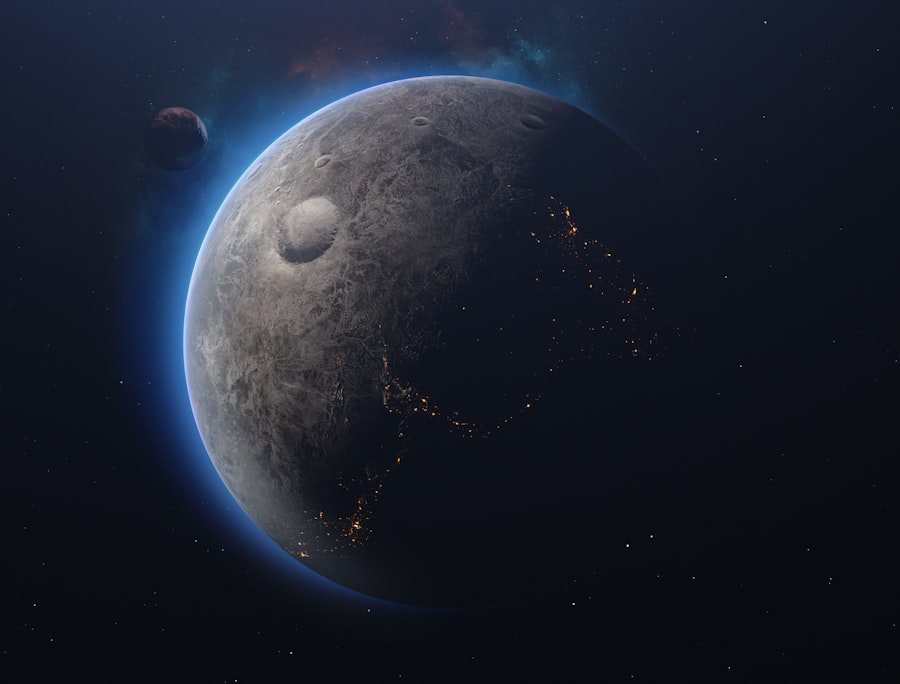
Future projections of moon orbit recession suggest that this phenomenon will continue at its current rate for millions of years to come. However, as scientists gather more data and refine their models, they may uncover variations in this rate due to changing gravitational influences or shifts in Earth’s rotational dynamics. Some projections indicate that if current trends continue, the Moon could eventually drift far enough away that its influence on tides will be significantly diminished.
Moreover, understanding future projections is essential for anticipating potential changes in Earth’s environment and ecosystems. As researchers develop more sophisticated models that incorporate various factors influencing moon orbit recession, they can better predict how these changes will unfold over geological timescales. This knowledge is vital for preparing for potential impacts on marine life, coastal communities, and even climate patterns.
Potential Consequences of Accelerated Moon Orbit Recession
If moon orbit recession were to accelerate beyond current projections, it could lead to several significant consequences for Earth. One immediate concern would be an even more pronounced weakening of tidal forces, which could disrupt marine ecosystems that rely on regular tidal cycles for nutrient distribution and habitat stability. Such disruptions could have cascading effects on food webs and biodiversity in coastal regions.
Additionally, an accelerated recession could further impact Earth’s rotation speed, leading to longer days and altered climate patterns. Changes in day length could affect biological rhythms in both flora and fauna, potentially disrupting seasonal behaviors such as migration and reproduction. Understanding these potential consequences is crucial for developing strategies to mitigate adverse effects on ecosystems and human societies.
Theoretical Solutions to Slow Down Moon Orbit Recession
While moon orbit recession is a natural process driven by gravitational interactions, some theoretical solutions have been proposed to slow down this phenomenon. One idea involves altering Earth’s rotational dynamics through large-scale engineering projects aimed at redistributing mass within the planet. Such projects could theoretically influence tidal forces and energy transfer between Earth and the Moon.
Another approach could involve harnessing advanced technologies to create artificial gravitational fields or other mechanisms that could counteract some effects of tidal forces. However, these solutions remain largely speculative at this stage and would require significant advancements in technology and a deep understanding of complex gravitational interactions.
Practical Applications of Understanding Moon Orbit Recession
Understanding moon orbit recession has practical applications beyond theoretical considerations; it informs various fields such as navigation, satellite technology, and even climate science. For instance, precise knowledge of lunar distances is essential for accurate satellite positioning systems like GPS, which rely on precise calculations involving celestial mechanics. Furthermore, insights gained from studying moon orbit recession can enhance our understanding of tidal patterns and their implications for coastal management and marine conservation efforts.
By predicting how tides may change over time due to lunar movements, scientists can better inform policies aimed at protecting vulnerable ecosystems and communities.
Collaborative Efforts in Studying Moon Orbit Recession
The study of moon orbit recession has become increasingly collaborative as researchers from diverse fields come together to tackle complex questions about celestial mechanics and planetary science. Interdisciplinary teams often include astronomers, geophysicists, oceanographers, and climate scientists who share expertise and resources to develop comprehensive models.
Joint missions involving multiple space agencies aim to gather data on lunar geology and gravitational interactions while fostering knowledge exchange among researchers worldwide.
Importance of Continued Monitoring and Analysis of Moon Orbit Recession
Continued monitoring and analysis of moon orbit recession are vital for advancing scientific knowledge about our planet’s dynamics and its relationship with celestial bodies. As technology improves, researchers can gather more precise data that will enhance our understanding of this phenomenon over time. Moreover, ongoing studies will help refine predictions about future changes in lunar dynamics and their potential impacts on Earth’s environment.
By maintaining a focus on this area of research, scientists can ensure that society remains informed about long-term changes that may affect everything from coastal ecosystems to climate patterns—ultimately contributing to a more sustainable future for both humanity and our planet.
The phenomenon of the Moon’s orbit recession, which occurs at a rate of approximately four centimeters per year, has significant implications for our understanding of lunar dynamics and Earth-Moon interactions. For a deeper exploration of this topic, you can read more in the related article found at this link. This article delves into the scientific principles behind the Moon’s gradual drift away from Earth and its potential effects on our planet over geological timescales.
FAQs
What does “moon orbit recession” mean?
Moon orbit recession refers to the gradual increase in the distance between the Earth and the Moon over time. Specifically, the Moon is slowly moving away from the Earth at a measurable rate.
How fast is the Moon moving away from the Earth?
The Moon is receding from the Earth at an average rate of about four centimeters per year.
How is the recession of the Moon’s orbit measured?
Scientists measure the Moon’s recession using laser ranging experiments. They bounce laser beams off retroreflectors left on the Moon’s surface by Apollo missions and measure the time it takes for the light to return.
Why is the Moon moving away from the Earth?
The Moon’s recession is primarily caused by tidal interactions between the Earth and the Moon. Earth’s rotation causes tidal bulges that exert gravitational forces on the Moon, transferring angular momentum and causing the Moon to slowly spiral outward.
Does the Moon moving away affect Earth in any way?
Yes, the Moon’s recession affects Earth’s rotation, causing it to slow down gradually. This leads to longer days over very long timescales. It also influences tides and the stability of Earth’s axial tilt.
Is the Moon’s recession rate constant?
The average recession rate is about four centimeters per year, but it can vary slightly due to changes in Earth’s oceans, tides, and geological activity.
How long has the Moon been moving away from Earth?
The Moon has been gradually moving away since its formation about 4.5 billion years ago, but the current recession rate has been measured over the past few decades with high precision.
Will the Moon eventually leave Earth’s orbit?
In theory, if the recession continues for billions of years, the Moon could move far enough to escape Earth’s gravitational influence. However, this process would take an extremely long time, and other cosmic events may occur before that happens.
What scientific importance does studying the Moon’s recession have?
Studying the Moon’s recession helps scientists understand Earth-Moon dynamics, tidal forces, Earth’s rotational history, and the long-term evolution of the Earth-Moon system. It also provides insights into planetary formation and orbital mechanics.