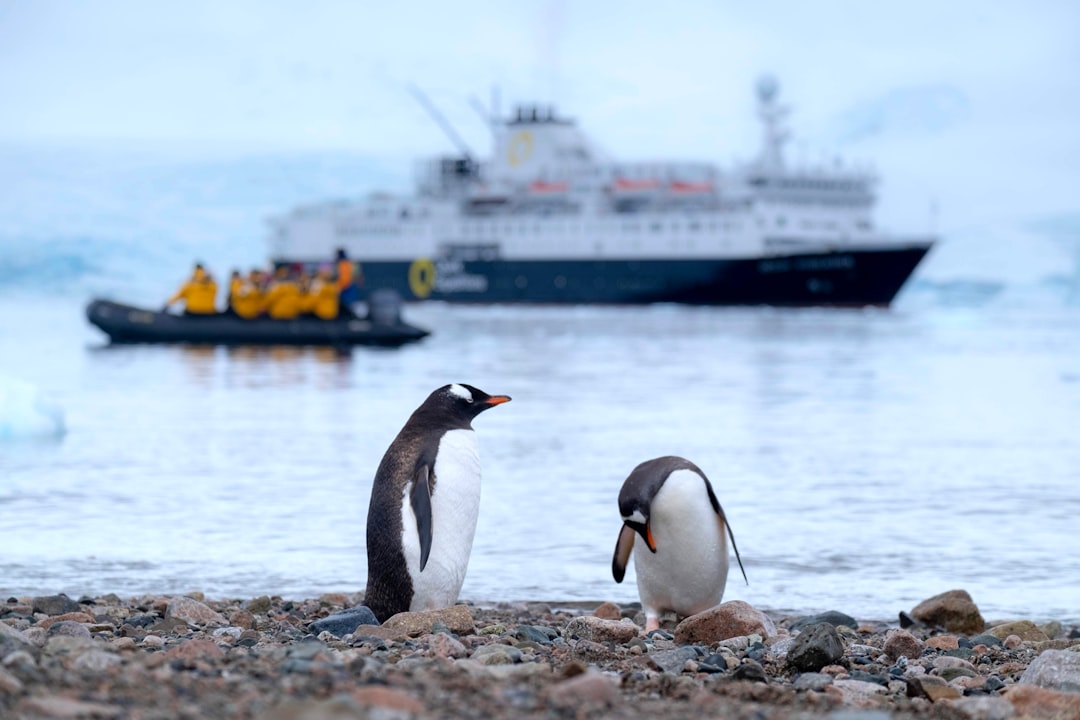
You stand at the edge of the known world, or rather, a sliver of it. The Antarctic continent, a vast white expanse that has captivated imaginations for centuries, holds secrets deeper than its glacial ice. And beneath the veneer of scientific exploration, you’ll find whispers of a mysterious collaboration, one that skirts the edges of public knowledge and brushes against the walls of government secrecy. This isn’t a tale spun from fiction, but a sober examination of intriguing, and often elusive, activities occurring in the Earth’s southernmost reaches.
Before delving into the shadowy corners, it’s crucial to understand the bedrock upon which any significant Antarctic endeavor is built: international cooperation. The Antarctic Treaty System, established in 1959 and entering into force in 1961, is the cornerstone. It’s a remarkable testament to human diplomacy, setting aside territorial claims and dedicating the continent to peace and scientific research. You can see it as a carefully constructed ice bridge, allowing nations to traverse the harsh environment and conduct vital research without the friction of geopolitical disputes. However, the very success of this treaty, the way it opens doors for research and logistical support, also creates a fertile ground for covert operations, shielded by the legitimacy of scientific pursuits.
The Treaty’s Architects and Their Intentions
The signatories of the Antarctic Treaty – twelve nations at its inception, now expanded to fifty-four – were primarily driven by a desire to prevent military conflict and to foster scientific collaboration. Figures like Robert D. Murphy from the United States and Valerian Zorin from the Soviet Union, though on opposing sides of the Cold War, found common ground in the frozen south. Their intention was to create a unique regime where science, not ideology, held sway. This aspiration, while noble, doesn’t preclude the possibility that some nations might seek to leverage the treaty’s architecture for purposes beyond pure scientific inquiry. They established a world apart, a continent where the usual rules of engagement are suspended, but this very suspension can create blind spots.
Beyond the Ice: The Pre-Treaty Era and its Legacy
The period leading up to the treaty was characterized by a race for territorial claims. Nations like Norway, the United Kingdom, and Australia established various claims, all of which were effectively frozen by the treaty. This era of national ambition cast a long shadow, and while overt claims are no longer pursued, the historical investment and existing infrastructure might still inform strategic thinking. You can imagine this as the lingering scent of fuel on a frozen wind, a reminder of past intentions. The scientific stations established during and before this era, some still active, serve as silent witnesses to the evolving relationship between nations and this unique continent.
The topic of secret government collaboration in Antarctica has garnered significant attention, particularly in light of recent revelations about undisclosed research projects and international agreements. For those interested in exploring this subject further, a related article can be found at XFile Findings, which delves into the mysterious activities taking place on the continent and the implications of such collaborations for global security and scientific advancement.
The Veil of Secrecy: Why Antarctica?
The sheer remoteness and inhospitable nature of Antarctica make it an ideal location for activities that benefit from a lack of scrutiny. It’s a canvas so vast and so barren that even the most significant brushstrokes can be lost in the white. Any government seeking to conduct sensitive operations would find the continent’s inherent isolation a powerful ally. The logistical challenges alone act as a natural deterrent to unwanted attention, and the legal framework of the treaty, while promoting transparency in science, also creates a unified front that can obscure individual agendas.
Strategic Significance: More Than Just Ice Cores
While the scientific value of studying climate change, geology, and biology is undeniable, Antarctica also possesses strategic significance that extends beyond academic pursuits. Its location is pivotal, offering potential advantages in global communication, satellite tracking, and even resource potential, however speculative. The sheer scale of the continent means that vast areas remain largely unexplored and unmonitored, providing a quiet sanctuary for clandestine operations. You can liken this to a vast, locked chest, the key to which is hidden in plain sight within the broader framework of scientific exploration.
The Double-Edged Sword of Scientific Expeditions
Scientific expeditions, with their extensive logistical networks and government backing, provide a perfect cover. Teams of researchers, specialized equipment, and regular supply lines are all necessary components of Antarctic science. For a nation intent on masking other activities, these expeditions offer an unparalleled opportunity to move personnel and equipment discreetly. The scientific reports that emerge often focus on their specific areas of research, leaving other aspects of an expedition’s operations in the shadows. It’s like observing a meticulously curated exhibit while the backstage operations remain entirely hidden from view.
Whispers of Unseen Projects: Beyond the Ice

The term “mysterious collaboration” suggests a shared undertaking, and in Antarctica, this often manifests as joint projects or shared logistical support between nations. However, the nature of these collaborations can be opaque. When you hear reports of joint research stations or shared aircraft operations, it’s worth asking what else might be shared, or facilitated, under the guise of cooperation. The lines between scientific exchange and broader strategic interests can become blurred in this remote environment.
Shared Infrastructure: A Network of Access
Many nations share vital infrastructure in Antarctica, from runways and fuel depots to communication facilities. This shared reliance creates a complex web of interdependencies. While this is essential for operational efficiency, it also means that a nation with a particular agenda could potentially leverage this shared infrastructure for purposes beyond the stated scientific objectives. The access granted through these cooperative ventures can become a conduit for more discreet activities. Imagine a series of interconnected tunnels beneath a city, where many citizens use them for legitimate travel, but a few might exploit them for clandestine movement.
The “Black Projects” Hypothesis: Speculation and Evidence
The idea of “black projects” – highly classified government operations – operating in Antarctica is a persistent theme in speculative discussions. While concrete evidence is scarce, the conditions present on the continent lend themselves to such theories. The lack of independent observation, the reliance on encrypted communication, and the sheer expense involved in Antarctic operations all contribute to the allure of secrecy. You must approach these theories with a critical eye, separating substantiated fact from conjecture, but also acknowledging that the conditions allow for such possibilities to persist.
Beyond the Horizon: Unconfirmed Transports and Encounters
Anecdotal accounts and occasional declassified documents hint at activities that go beyond routine scientific endeavors. These might include the presence of unmarked vessels or aircraft, unusual personnel movements, or even brief, unexplained encounters. While such incidents can often be attributed to logistical errors or misidentification, their recurrence in the context of a continent known for its secrecy fuels further speculation. These are like faint signals picked up on a radio, too indistinct to fully decipher, but enough to suggest the presence of something more.
Navigating the Legal Labyrinth: Exploiting the Loopholes

The Antarctic Treaty is a masterpiece of international law, but like any legal framework, it has its nuances and potential points of exploitation. The very spirit of cooperation it fosters can, paradoxically, be used to shield activities that might not fully align with that spirit, provided they technically adhere to the treaty’s letter.
The Role of National Legislation and Oversight
Within the broader treaty framework, each signatory nation maintains its own national legislation governing its activities in Antarctica. The effectiveness of oversight and the transparency of these national regulations vary significantly. A nation with less stringent oversight might find it easier to mask non-scientific activities under the umbrella of its national Antarctic program. You can view this as different countries having varying levels of security on their own properties, even if they all agree to a neighborhood watch.
The Interpretation of “Peaceful Purposes”
The treaty explicitly dedicates Antarctica to “peaceful purposes.” However, the interpretation of what constitutes peaceful can be subject to national perspectives and evolving geopolitical landscapes. Military personnel might be present on scientific stations for logistical support or training, which could be deemed “peaceful” in a broad sense, but their presence also provides a ready resource for other, less transparent, operations. It’s a nuanced distinction, like the difference between observing a parade and actively participating in a covert maneuver during the same public event.
The Data Gap: What Isn’t Reported
The scientific reporting requirements of the treaty are extensive, but they focus primarily on scientific findings. Information regarding operational logistics, personnel movements, and the precise nature of equipment deployment is often less detailed or not publicly disclosed. This data gap is precisely where whispered collaborations and secret projects can take root, unobserved by the wider world.
Recent discussions surrounding secret government collaboration in Antarctica have sparked interest in various conspiracy theories and hidden agendas. For those intrigued by the mysteries of this icy continent, an insightful article can be found that delves deeper into the implications of such covert operations. You can explore more about these intriguing topics in the article available at XFile Findings, which examines the potential connections between government activities and the enigmatic environment of Antarctica.
Implications and the Future: The Unveiling?
| Metric | Details |
|---|---|
| Project Name | Operation Ice Shield |
| Participating Governments | USA, UK, Russia, China |
| Start Year | 2015 |
| Primary Objective | Climate research and resource exploration |
| Estimated Budget | Confidential |
| Number of Research Stations | 5 |
| Personnel Involved | Approx. 200 scientists and military staff |
| Key Technologies Used | Subsurface radar, autonomous drones, satellite surveillance |
| Known Outcomes | Discovery of subglacial lakes, new mineral deposits |
| Secrecy Level | Top Secret |
The existence of secret collaborations, if they indeed occur, has significant implications for the future of governance and scientific endeavor in Antarctica. Understanding these potential hidden currents is crucial for maintaining the integrity of the continent’s unique status.
Maintaining the Scientific Sanctuary
The primary concern is that clandestine activities, if widespread, could jeopardize Antarctica’s standing as a continent dedicated to peace and science. Any perception of military buildup or exploitation of resources for non-scientific gain could unravel the delicate balance established by the treaty. You want to protect a pristine garden from being seeded with invasive species, no matter how subtly they are introduced.
The Quest for Transparency
The ongoing challenge is to enhance transparency within the Antarctic Treaty System without stifling legitimate scientific research. This may involve improving mechanisms for independent observation, strengthening reporting requirements for logistical and operational aspects of expeditions, and fostering a culture of even greater openness amongst the signatory nations. Imagine polishing the glass of a display case so that viewers can see every detail within.
The Unseen Iceberg: What Lies Beneath the Surface?
Ultimately, your journey into the mysterious collaborations of Antarctica is a journey into the unknown. The vast majority of activities on the continent are undoubtedly driven by genuine scientific curiosity and a commitment to international cooperation. However, the unique environment, coupled with the inherent complexities of international governance, creates fertile ground for speculation and, potentially, for activities that lie beyond the public’s gaze. You are left with the unsettling awareness that the iceberg you see – the visible scientific enterprise – might be only a fraction of its true presence, with much more hidden beneath the surface of the frigid waters. The continued vigilance and critical examination of activities in this remote frontier are essential for ensuring that the promise of Antarctica as a continent for peace and science remains uncompromised.

▶️ WARNING: The CIA Just Lost Control of the Antarctica Signal
FAQs
What is the nature of the secret government collaboration in Antarctica?
The secret government collaboration in Antarctica typically involves multiple countries working together on scientific research, environmental monitoring, and sometimes strategic or military interests, all conducted under the framework of international treaties like the Antarctic Treaty System.
Which countries are involved in these secret collaborations?
Countries with active research stations and interests in Antarctica, such as the United States, Russia, China, the United Kingdom, and others, are often involved in collaborative efforts. The exact details of secret collaborations are not publicly disclosed, but these nations are known to have significant presence and activities on the continent.
Why is Antarctica a focus for secret government collaborations?
Antarctica is a unique environment with valuable scientific data related to climate change, geology, and biology. Additionally, its strategic location and untapped natural resources make it a point of interest for governments seeking to advance scientific knowledge and maintain geopolitical influence.
Are these secret collaborations legal under international law?
Yes, as long as the activities comply with the Antarctic Treaty System, which prohibits military activity, mineral mining, and nuclear testing, and promotes scientific cooperation and environmental protection. Secret collaborations must adhere to these regulations to be considered legal.
How can the public learn about these secret collaborations?
Information about secret collaborations is often classified, but some details may be revealed through government disclosures, scientific publications, or investigative journalism. Public knowledge is generally limited, and much of the collaboration remains confidential to protect national interests and research integrity.