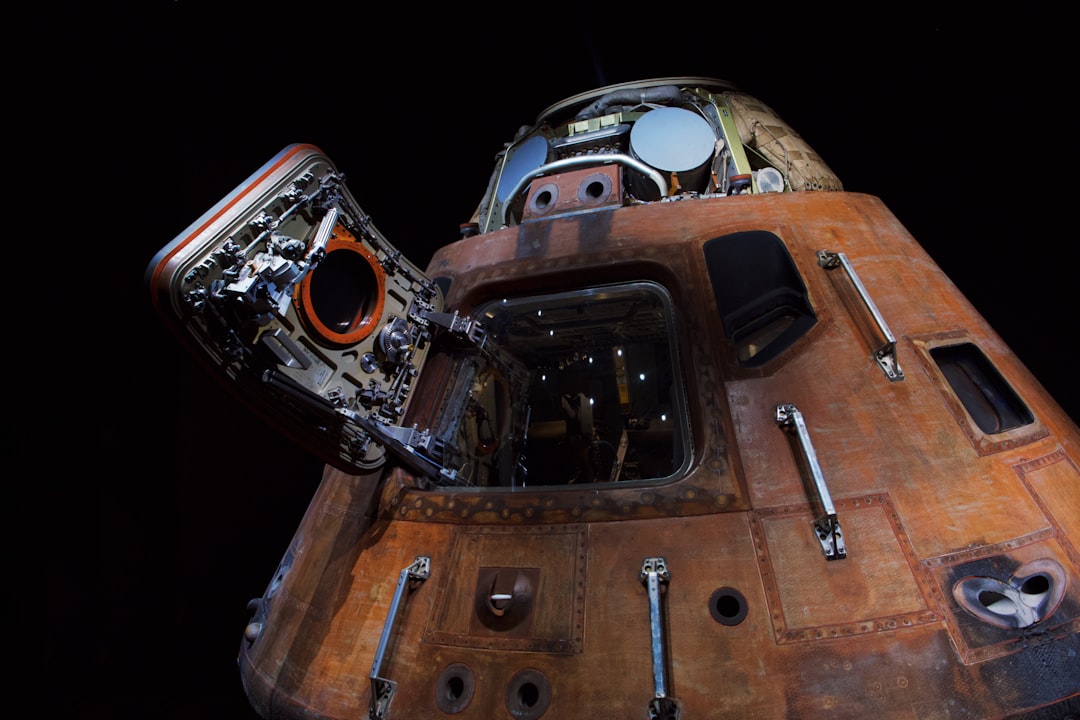
Lunar exploration has been a subject of scientific interest for decades, with technological advances enabling the deployment of robotic and crewed missions to Earth’s natural satellite. Lunar spacecraft serve multiple purposes, including scientific data collection, surface mapping, resource assessment, and technology demonstration for future human missions. These vehicles incorporate specialized instrumentation, communication systems, and propulsion mechanisms designed to operate in the vacuum of space and the Moon’s low-gravity environment.
The Moon presents distinct navigational conditions compared to Earth-based operations. With a gravitational acceleration of 1.62 m/s² (approximately one-sixth of Earth’s gravity) and no atmospheric interference, spacecraft experience different orbital dynamics and trajectory requirements. The absence of atmospheric drag eliminates certain complications present in Earth orbit, but requires precise computational modeling for orbital insertion, station-keeping, and landing procedures.
Current and planned lunar missions by national space agencies and commercial entities necessitate advanced navigation capabilities to achieve mission objectives safely and efficiently.
Key Takeaways
- Moon spacecraft must navigate complex and frozen orbital lanes to ensure mission success.
- Frozen orbital lanes present unique challenges requiring advanced technology and precise maneuvering.
- Effective communication and coordination are critical for safe navigation in these orbital paths.
- Emerging tools and techniques are improving the ability to traverse frozen orbital lanes around the Moon.
- Case studies highlight successful strategies and future developments in lunar orbital navigation.
Understanding Orbital Lanes around the Moon
Orbital lanes around the Moon refer to the specific paths that spacecraft can take as they orbit the lunar body. These paths are influenced by the Moon’s gravitational pull, which varies depending on the spacecraft’s altitude and trajectory. Understanding these orbital lanes is crucial for mission planners, as they dictate how spacecraft can efficiently enter and exit lunar orbits, as well as how they can maneuver between different altitudes and inclinations.
The Moon’s gravitational field is not uniform; it has regions of varying strength that can affect a spacecraft’s trajectory. This variability necessitates careful planning and execution of orbital maneuvers. For instance, a spacecraft may need to adjust its orbit to avoid gravitational anomalies or to optimize its position for scientific observations.
By comprehensively understanding these orbital lanes, mission planners can enhance the efficiency of their missions and ensure that spacecraft remain on course.
Challenges of Navigating Frozen Orbital Lanes
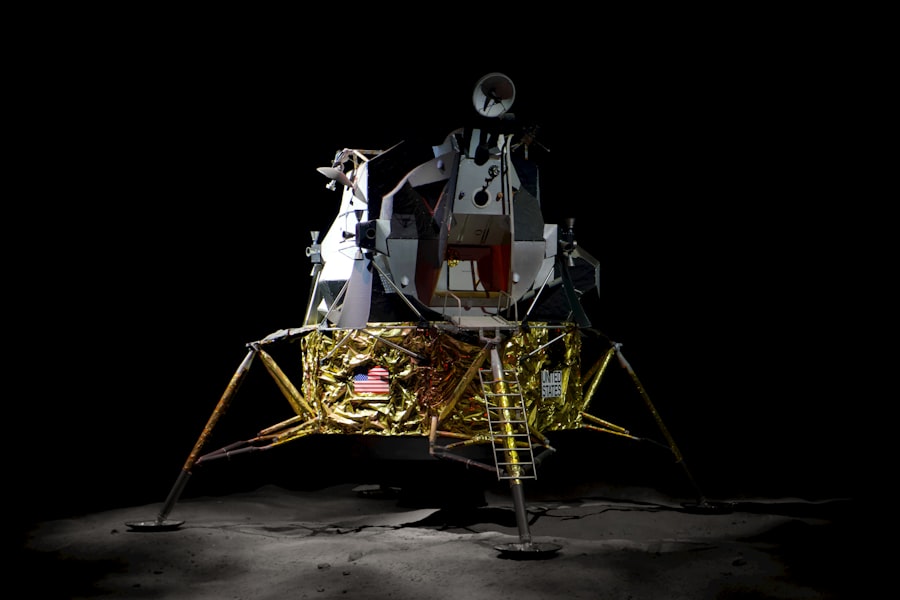
Navigating frozen orbital lanes presents unique challenges that require innovative solutions. The term “frozen” refers to specific orbits that are stable over long periods, making them ideal for certain types of missions. However, these orbits can also be difficult to maintain due to gravitational perturbations from both the Earth and other celestial bodies.
Spacecraft must be equipped with precise navigation systems to account for these perturbations and make necessary adjustments. Another challenge lies in the limited visibility of certain orbital paths. Unlike Earth, where satellites can rely on a network of ground stations for guidance, lunar spacecraft often operate in isolation.
This lack of real-time data can complicate navigation efforts, as spacecraft must rely on pre-programmed trajectories and onboard sensors. As a result, mission planners must anticipate potential issues and develop contingency plans to ensure successful navigation through these frozen orbital lanes.
Importance of Navigation for Moon Spacecraft
Effective navigation is paramount for the success of any lunar mission. The ability to accurately determine a spacecraft’s position and trajectory directly impacts its ability to complete its objectives, whether that involves landing on the lunar surface, conducting scientific experiments, or returning safely to Earth. Poor navigation can lead to mission failure, loss of valuable data, or even catastrophic accidents.
Moreover, as more nations and private entities venture into lunar exploration, the need for precise navigation becomes even more critical. With multiple spacecraft potentially operating in close proximity, the risk of collisions increases. Therefore, establishing reliable navigation protocols is essential not only for individual missions but also for ensuring the safety and sustainability of lunar operations as a whole.
Technology and Tools for Navigating Frozen Orbital Lanes
| Parameter | Description | Typical Value | Unit |
|---|---|---|---|
| Orbit Type | Type of frozen orbit around the Moon | Frozen Orbital Lane | – |
| Altitude | Average orbital altitude above lunar surface | 100 – 200 | km |
| Inclination | Orbital inclination relative to lunar equator | 27 – 30 | degrees |
| Eccentricity | Measure of orbit’s deviation from circularity | 0.0 – 0.01 | dimensionless |
| Argument of Perilune | Angle of closest approach point in orbit | 90 or 270 | degrees |
| Orbital Period | Time taken to complete one orbit | 2 – 3 | hours |
| Stability Duration | Time orbit remains stable without maneuvers | Months to Years | – |
| Typical Spacecraft Mass | Mass of spacecraft operating in frozen lunar orbit | 500 – 1500 | kg |
| Delta-V Requirements | Velocity change needed for orbit maintenance | 5 – 20 | m/s per year |
| Applications | Common mission types using frozen lunar orbits | Reconnaissance, Communication, Science | – |
Advancements in technology have significantly enhanced the capabilities of moon spacecraft when it comes to navigation. Modern spacecraft are equipped with a variety of tools designed to facilitate accurate positioning and trajectory adjustments. These include star trackers, inertial measurement units (IMUs), and GPS-like systems tailored for lunar conditions.
Star trackers utilize celestial bodies as reference points to determine a spacecraft’s orientation in space. This technology is particularly useful in the absence of a robust satellite network around the Moon. Inertial measurement units provide real-time data on a spacecraft’s acceleration and rotation, allowing for precise calculations of its trajectory.
Together, these tools enable mission planners to navigate frozen orbital lanes with greater accuracy than ever before.
Considerations for Safe Navigation in Frozen Orbital Lanes
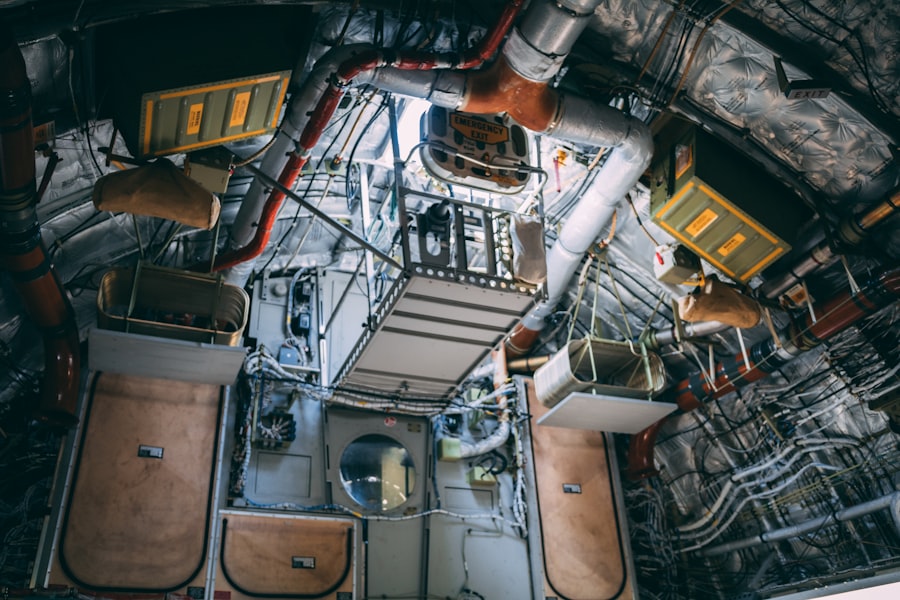
When navigating frozen orbital lanes, several considerations must be taken into account to ensure safety and mission success. One critical factor is the potential for gravitational perturbations from both the Earth and other celestial bodies. These perturbations can alter a spacecraft’s trajectory unexpectedly, necessitating timely adjustments to maintain its intended path.
Additionally, mission planners must consider the thermal environment of lunar orbits. The Moon experiences extreme temperature fluctuations between day and night, which can affect spacecraft systems and instruments. Ensuring that navigation systems remain operational under these conditions is vital for maintaining accurate positioning and trajectory control.
By addressing these considerations proactively, mission planners can enhance the safety and reliability of lunar navigation efforts.
Maneuvering Techniques for Moon Spacecraft
Maneuvering techniques play a crucial role in navigating frozen orbital lanes around the Moon. Spacecraft must be capable of executing precise maneuvers to enter or exit specific orbits or adjust their trajectories as needed. One common technique involves using propulsion systems to perform burns at calculated intervals, allowing for gradual changes in velocity and direction.
Another technique involves gravity assists, where a spacecraft uses the Moon’s gravitational field to gain speed or alter its trajectory without expending significant fuel. This method requires careful planning and timing but can be highly effective in optimizing fuel efficiency during long missions. By mastering these maneuvering techniques, mission planners can enhance their spacecraft’s ability to navigate frozen orbital lanes successfully.
Communication and Coordination in Frozen Orbital Lanes
Effective communication and coordination are essential components of navigating frozen orbital lanes around the Moon. Given the limited visibility and isolation experienced by lunar spacecraft, maintaining contact with mission control is critical for ensuring successful navigation. This communication allows for real-time updates on trajectory adjustments, potential hazards, and other important information.
Coordination among multiple spacecraft operating in close proximity is equally important. As more missions are launched to explore the Moon, establishing protocols for communication between different entities becomes vital for preventing collisions and ensuring safe operations. By fostering collaboration among various space agencies and private companies, the risk of accidents can be minimized while maximizing the potential for scientific discovery.
Future Developments in Navigating Frozen Orbital Lanes
As lunar exploration continues to evolve, future developments in navigation technology are expected to enhance capabilities further. Innovations such as autonomous navigation systems may allow spacecraft to make real-time adjustments based on environmental conditions without relying on ground control input. This autonomy could significantly improve response times during critical maneuvers.
Additionally, advancements in artificial intelligence (AI) could play a pivotal role in optimizing navigation strategies. AI algorithms could analyze vast amounts of data from previous missions to identify patterns and predict potential challenges in navigating frozen orbital lanes. By integrating these technologies into lunar missions, space agencies can enhance their ability to navigate effectively while reducing risks associated with human error.
Case Studies of Successful Navigation in Frozen Orbital Lanes
Examining case studies of successful navigation in frozen orbital lanes provides valuable insights into best practices and lessons learned from past missions. One notable example is NASA’s Lunar Reconnaissance Orbiter (LRO), which has been operating since 2009. The LRO has successfully navigated various lunar orbits while capturing high-resolution images of the Moon’s surface, contributing significantly to our understanding of its geology and topography.
The Chang’e 4 mission made history by landing on the far side of the Moon in 2019, showcasing advanced navigation techniques that allowed it to overcome unique challenges associated with this unexplored region.
Navigating Frozen Orbital Lanes for Moon Spacecraft
In conclusion, navigating frozen orbital lanes around the Moon is a complex yet essential aspect of lunar exploration. As humanity continues to push the boundaries of space travel, understanding the intricacies of lunar navigation will be crucial for ensuring mission success and safety. The challenges posed by gravitational perturbations, limited visibility, and extreme environmental conditions require innovative solutions and advanced technology.
As space agencies and private companies prepare for future lunar missions, they must prioritize effective navigation strategies that incorporate cutting-edge tools and techniques. By learning from past successes and failures while embracing new technologies such as AI and autonomous systems, they can enhance their ability to navigate frozen orbital lanes with precision and confidence. Ultimately, mastering these navigation challenges will pave the way for a new era of exploration on our nearest celestial neighbor, unlocking its mysteries and potential for future generations.
Recent advancements in space exploration have brought attention to the concept of frozen orbital lanes, particularly in relation to moon spacecraft. These designated paths could significantly enhance the efficiency and safety of lunar missions. For a deeper understanding of the implications and potential of these orbital lanes, you can read more in this related article: here.
FAQs
What are frozen orbital lanes around the Moon?
Frozen orbital lanes are specific orbital paths around the Moon where a spacecraft’s orbit remains stable over long periods without requiring frequent adjustments. These orbits minimize perturbations caused by the Moon’s uneven gravitational field, allowing spacecraft to maintain consistent trajectories.
Why are frozen orbits important for lunar spacecraft?
Frozen orbits reduce the need for fuel-consuming maneuvers to correct orbital drift, thereby extending the operational life of lunar spacecraft. They provide predictable and stable paths for satellites and landers, which is crucial for communication, observation, and navigation around the Moon.
How are frozen orbital lanes determined?
Frozen orbital lanes are identified through detailed analysis of the Moon’s gravitational field, including its mass concentrations (mascons) and irregularities. Scientists use mathematical models and simulations to find orbital parameters—such as altitude, inclination, and eccentricity—that result in minimal orbital perturbations.
What types of missions benefit from frozen lunar orbits?
Missions involving lunar reconnaissance, communication satellites, scientific observation, and relay satellites benefit from frozen orbits. These orbits help maintain consistent coverage and reduce operational costs by limiting the need for orbit maintenance.
Are frozen orbital lanes unique to the Moon?
No, frozen orbits exist around other celestial bodies as well, including Earth and Mars. However, the specific parameters for frozen orbits depend on each body’s gravitational field and topography. The Moon’s unique mascon distribution makes frozen orbits particularly valuable for lunar missions.
Can spacecraft in frozen lunar orbits avoid all orbital decay?
While frozen orbits minimize orbital perturbations, they do not eliminate all forces acting on a spacecraft. Factors such as solar radiation pressure and gravitational influences from Earth and the Sun can still cause minor changes, but these orbits significantly reduce the need for corrective maneuvers.
How do frozen orbital lanes impact future lunar exploration?
Frozen orbital lanes enable more efficient and sustainable lunar operations by providing stable platforms for satellites and spacecraft. This stability supports continuous communication networks, scientific data collection, and navigation systems essential for long-term lunar exploration and potential colonization.