
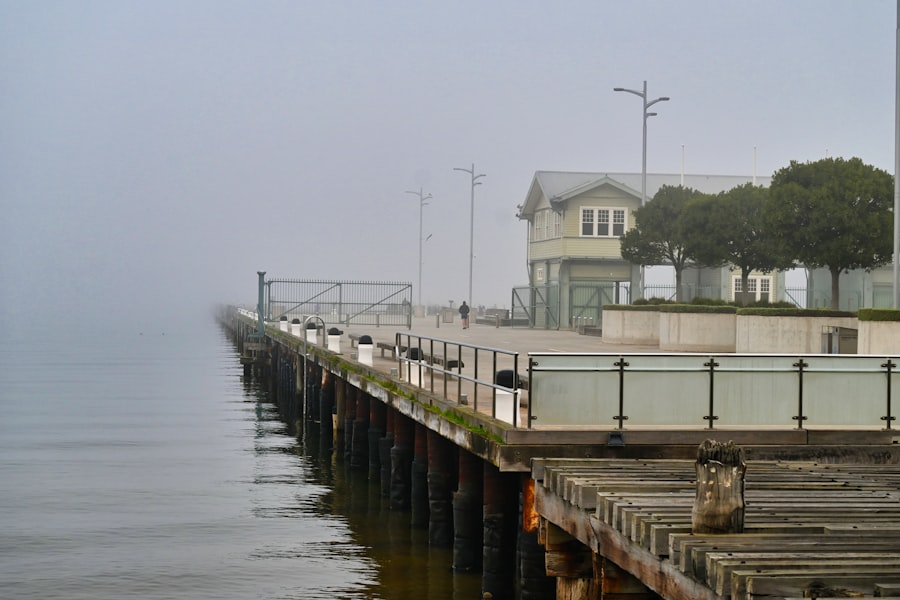
Navigating in fog presents significant operational challenges for maritime professionals. Reduced visibility impairs the ability to detect other vessels, navigation markers, and coastal features. This visibility reduction can cause disorientation as landmarks become obscured.
The psychological effects of low-visibility navigation are measurable; uncertainty can affect decision-making quality and increase the likelihood of unsafe actions. Fog also distorts spatial perception. Vessels may appear farther away than their actual distance, elevating collision risk.
Sound propagation changes in foggy conditions, making foghorn signals and engine noise unreliable for distance assessment. Mariners must depend on training, established protocols, and navigational instruments to maintain safety in these conditions.
Key Takeaways
- Navigating in fog requires understanding visibility challenges and relying on technology like radar, GPS, depth sounders, and sonar.
- Maintaining a proper lookout and using sound signals are critical for safe communication with other vessels.
- Adhering to maritime rules of the road and using proper navigation lights help prevent collisions in fog.
- Effective communication and strategic maneuvering are essential to avoid accidents in low visibility.
- Regular equipment maintenance and thorough training prepare mariners for safe navigation through foggy conditions.
Using Radar and GPS to Navigate in Low Visibility Conditions
In the face of reduced visibility, radar and GPS technology have become indispensable tools for modern navigation. Radar systems allow mariners to detect other vessels and obstacles even when they are obscured by fog. By emitting radio waves that bounce off objects, radar provides a visual representation of the surrounding area on a screen, enabling navigators to assess their environment with greater accuracy.
This technology is particularly useful for identifying the proximity of other vessels, allowing for timely course adjustments to avoid potential collisions. GPS, on the other hand, offers precise positioning information that is crucial when visibility is compromised. With GPS, mariners can determine their exact location on the water, ensuring they remain on course even when traditional visual cues are unavailable.
The integration of radar and GPS systems enhances situational awareness, allowing navigators to make informed decisions based on real-time data. However, it is essential for mariners to understand the limitations of these technologies, as reliance solely on electronic aids can lead to complacency. You can watch fascinating underwater UFO sightings by clicking underwater UFO sightings.
Importance of Maintaining a Proper Lookout While Navigating in Fog

Even with advanced technology at their disposal, maintaining a proper lookout remains a fundamental principle of safe navigation in foggy conditions. The human element cannot be underestimated; vigilant watchkeeping is crucial for detecting potential hazards that may not be picked up by radar or GPS. A dedicated lookout can spot changes in the environment, such as the silhouette of another vessel or the outline of land, which may provide critical information for safe navigation.
In addition to visual observation, auditory awareness is equally important. The sounds of other vessels, such as engines or foghorns, can provide valuable clues about their proximity and movement. By combining visual and auditory cues, mariners can create a more comprehensive understanding of their surroundings.
This proactive approach not only enhances safety but also fosters a culture of responsibility among crew members, emphasizing the importance of teamwork in navigating through challenging conditions.
Communicating with Other Vessels in Foggy Conditions
Effective communication is paramount when navigating through foggy conditions. The inability to see other vessels necessitates clear and concise communication to prevent misunderstandings that could lead to dangerous situations. Mariners should utilize radio communication to announce their position and intentions, ensuring that nearby vessels are aware of their presence.
This practice not only promotes safety but also fosters a sense of community among mariners who share the same waterways. In addition to radio communication, visual signals such as navigation lights and sound signals play a crucial role in conveying information during foggy conditions. Mariners must be familiar with the appropriate signals to use in various situations, as these signals serve as a means of alerting others to their presence and intentions.
By prioritizing communication, mariners can significantly reduce the risk of collisions and enhance overall safety on the water.
Understanding the Rules of the Road in Fog
| Metric | Value | Unit | Description |
|---|---|---|---|
| Visibility Range | 50 | meters | Distance at which the ferry horizon fog wall reduces visibility |
| Fog Density | 0.8 | kg/m³ | Density of the fog in the fog wall area |
| Temperature | 12 | °C | Ambient temperature near the ferry horizon fog wall |
| Humidity | 95 | % | Relative humidity contributing to fog formation |
| Wind Speed | 5 | km/h | Wind speed affecting fog dispersion |
| Ferry Speed Reduction | 30 | % | Percentage reduction in ferry speed due to fog wall |
Navigating through fog requires a thorough understanding of the “Rules of the Road,” which govern maritime navigation and establish protocols for safe passage. These rules dictate how vessels should interact with one another in various situations, including those involving reduced visibility. For instance, vessels under power must give way to sailing vessels, while larger vessels must take precautions when navigating near smaller craft.
In foggy conditions, these rules become even more critical as visibility is compromised. Mariners must be aware of their responsibilities and rights under these regulations to ensure safe navigation. Understanding the nuances of these rules allows mariners to make informed decisions when encountering other vessels, ultimately reducing the likelihood of accidents and promoting a safer maritime environment.
Utilizing Sound Signals to Communicate with Other Vessels
Sound signals are an essential component of maritime communication, particularly in foggy conditions where visibility is limited. The International Regulations for Preventing Collisions at Sea (COLREGs) outline specific sound signals that vessels must use to indicate their presence and intentions. For example, a vessel underway may sound one prolonged blast every two minutes to signal its position to nearby vessels.
Mariners must familiarize themselves with these sound signals and their meanings to ensure effective communication on the water. Additionally, understanding how sound travels in fog is crucial; it can be distorted or muffled, making it difficult for vessels to determine the direction from which a sound originates. By using sound signals appropriately and attentively listening for responses from other vessels, mariners can enhance safety and reduce the risk of collisions in low visibility conditions.
Importance of Proper Navigation Lights in Foggy Conditions
Proper navigation lights are vital for safe navigation in foggy conditions, serving as a visual cue for other vessels in low visibility situations. These lights indicate a vessel’s size, type, and activity, allowing nearby mariners to assess potential risks and make informed decisions about their own navigation. In foggy weather, where visibility may be severely limited, these lights become even more critical for preventing collisions.
Mariners must ensure that their navigation lights are functioning correctly and are visible from all angles. Regular maintenance checks should be conducted to confirm that lights are clean and operational. Additionally, understanding the specific lighting requirements for different types of vessels is essential; for instance, fishing boats have distinct lighting configurations compared to cargo ships.
By adhering to proper lighting protocols, mariners can significantly enhance safety on the water during foggy conditions.
Strategies for Maneuvering Through Fog to Avoid Collisions
Maneuvering through fog requires careful planning and execution to avoid collisions with other vessels or obstacles. One effective strategy is to reduce speed; this allows for greater reaction time if an unexpected situation arises. Slowing down also minimizes the risk of overestimating distances or speeds due to visual illusions created by fog.
Another important strategy is to maintain a steady course while remaining alert for changes in the environment. Sudden course changes can lead to confusion among nearby vessels and increase the likelihood of accidents. Additionally, using radar and GPS effectively can aid in identifying potential hazards ahead.
By combining these strategies with vigilant lookout practices and effective communication with other vessels, mariners can navigate through fog with greater confidence and safety.
Using Depth Sounders and Sonar to Navigate in Foggy Conditions
Depth sounders and sonar technology play a crucial role in navigating through foggy conditions by providing essential information about underwater topography and potential hazards beneath the surface. These tools allow mariners to determine water depth accurately and identify submerged obstacles that may not be visible from above water. In foggy conditions where visual cues are limited, depth sounders become invaluable for ensuring safe passage.
Sonar technology further enhances navigational capabilities by providing detailed images of underwater features and structures. This information is particularly useful when navigating near shorelines or in areas with complex underwater terrain. By utilizing depth sounders and sonar effectively, mariners can make informed decisions about their course while minimizing the risk of grounding or colliding with submerged objects.
Importance of Properly Maintaining Navigation Equipment for Foggy Conditions
The importance of properly maintaining navigation equipment cannot be overstated when it comes to navigating through foggy conditions. Equipment such as radar systems, GPS units, depth sounders, and communication devices must be regularly inspected and serviced to ensure optimal performance. Malfunctioning equipment can lead to critical errors in navigation that may have dire consequences in low visibility situations.
Regular maintenance checks should include testing all electronic systems for functionality, ensuring that batteries are charged or replaced as needed, and verifying that all connections are secure. Additionally, mariners should familiarize themselves with troubleshooting procedures for their equipment so they can quickly address any issues that arise while at sea. By prioritizing maintenance and ensuring that all navigation equipment is in top working condition, mariners can significantly enhance their safety while navigating through fog.
Training and Preparation for Navigating Through Foggy Conditions
Training and preparation are essential components of safe navigation through foggy conditions. Mariners should engage in regular training sessions that focus on navigating in low visibility scenarios, including practical exercises that simulate real-life situations they may encounter at sea. This hands-on experience helps build confidence and reinforces critical skills necessary for effective navigation.
Furthermore, mariners should stay informed about advancements in navigation technology and best practices for operating in foggy conditions. Attending workshops or seminars on maritime safety can provide valuable insights into new techniques or equipment that may enhance navigational capabilities.
In conclusion, navigating through fog presents numerous challenges that require a combination of technology, communication skills, adherence to regulations, and proactive strategies. By understanding these challenges and employing effective techniques such as maintaining a proper lookout, utilizing radar and GPS systems, communicating clearly with other vessels, and ensuring proper maintenance of navigation equipment, mariners can significantly enhance their safety while traversing through low visibility conditions. Ultimately, thorough training and preparation will empower them to navigate confidently through even the thickest fog.
The concept of the ferry horizon fog wall has intrigued many, particularly in its implications for navigation and safety at sea. For those interested in exploring more about maritime phenomena and their effects, a related article can be found at this link. This article delves into various aspects of maritime navigation, including the challenges posed by fog and other environmental factors.
WATCH THIS! 🚢 THEY KNOW: What The Navy Has Hidden For 50 Years 🔒
FAQs
What is the Ferry Horizon Fog Wall?
The Ferry Horizon Fog Wall is a safety feature designed to improve visibility and navigation for ferries operating in foggy conditions. It typically involves advanced technology such as radar, lighting systems, or physical barriers to help guide vessels safely.
How does the Ferry Horizon Fog Wall work?
The fog wall uses a combination of sensors, radar, and lighting to create a visible or detectable boundary that helps ferry operators maintain their course and avoid collisions. It may also include automated alerts or signals to warn of nearby obstacles.
Where is the Ferry Horizon Fog Wall commonly used?
This system is commonly implemented in ferry routes that frequently experience dense fog, especially in coastal or river areas with heavy maritime traffic. It is used to enhance safety during low-visibility conditions.
Is the Ferry Horizon Fog Wall effective in preventing accidents?
Yes, the Ferry Horizon Fog Wall has been shown to significantly reduce the risk of accidents by providing clearer navigation cues and improving situational awareness for ferry operators during foggy weather.
Can the Ferry Horizon Fog Wall be used in all weather conditions?
While it is specifically designed for foggy conditions, the technology can also assist in other low-visibility situations such as heavy rain or snow, but its primary function is to mitigate risks associated with fog.
Who is responsible for maintaining the Ferry Horizon Fog Wall?
Maintenance is typically the responsibility of the ferry operators or the maritime authorities overseeing the ferry routes. Regular inspections and upkeep are necessary to ensure the system functions correctly.
Does the Ferry Horizon Fog Wall require special training for ferry operators?
Yes, ferry operators usually receive training on how to interpret and respond to the signals or guidance provided by the fog wall system to maximize safety and effectiveness.
Is the Ferry Horizon Fog Wall a physical structure or a technological system?
It can be either or a combination of both. Some fog walls are physical barriers or markers, while others rely on technological systems like radar and lighting to create a virtual boundary for navigation.