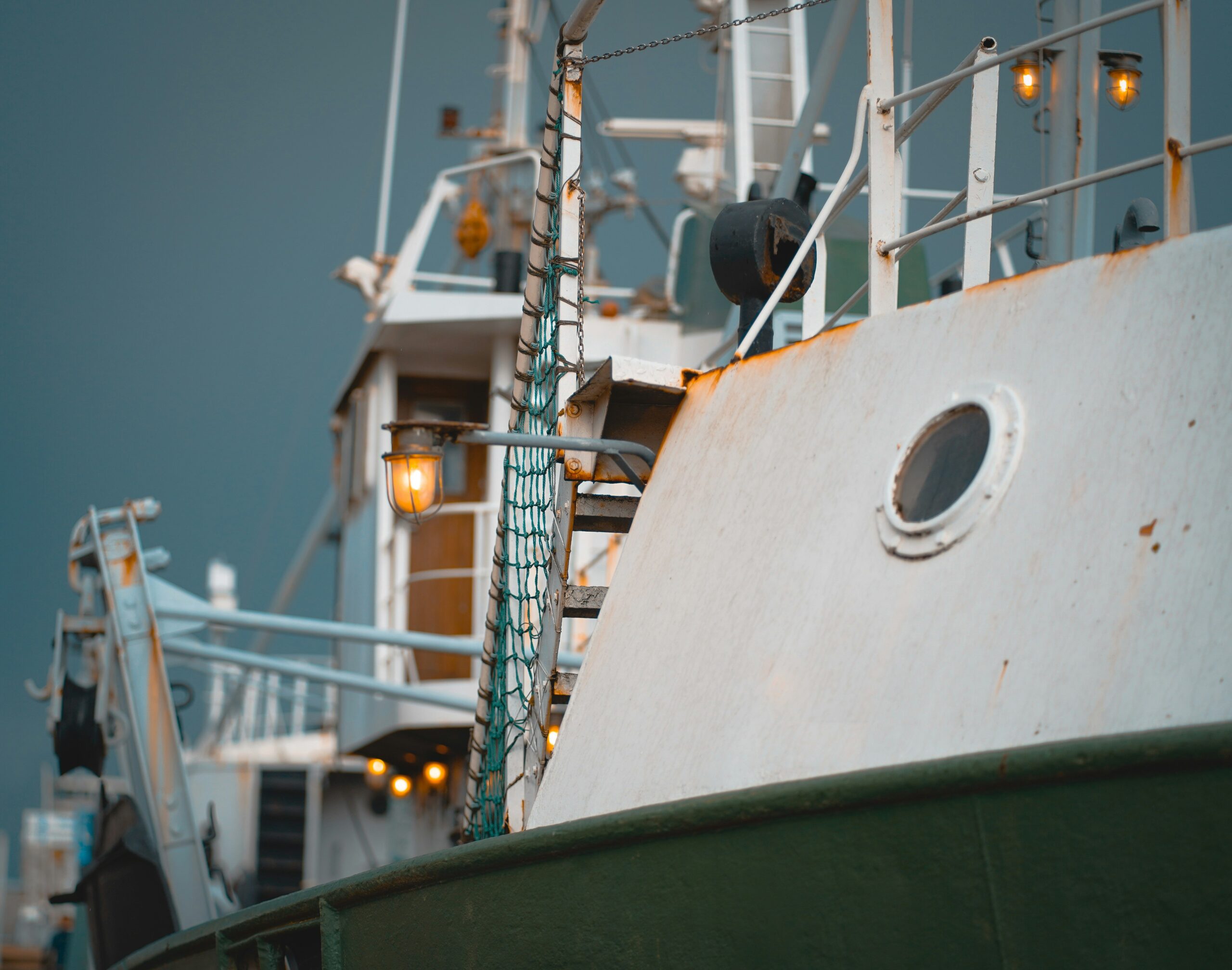
Trawling, by its very nature, subjects vessels to significant and dynamic forces. The continuous operation of dragging heavy nets through water, combined with prevailing weather conditions, creates a complex interplay of stresses on the hull. While the overall structural integrity of a trawler is designed to withstand these demands, understanding the localized points of maximum strain, often referred to as pressure seams, is crucial for effective course correction and the long-term health of the vessel. Ignoring these critical areas can lead to gradual degradation, performance inefficiencies, and, in extreme cases, structural failure. This article delves into the practical implications of recognizing and responding to pressure seam dynamics for efficient and safe trawler operation.
The concept of pressure seams is not exclusive to trawlers but is particularly relevant due to the sustained, directional loads imposed by net deployment. These seams represent areas where concentrated forces converge, leading to higher localized stress than in surrounding areas of the hull. Identifying and managing these stresses is a fundamental aspect of maintaining optimal performance and preventing detrimental wear. Course correction, in the context of trawling, often involves subtle adjustments to mitigate these forces, ensuring the net fishes effectively while minimizing undue strain on the hull.
The Physics of Trawling Forces
The act of trawling involves a continuous application of force. The primary force is the hydrodynamic drag exerted by the net and its associated gear as it is towed through the water. This drag is not uniform; it varies with net design, mesh size, towing speed, and the nature of the seabed. Furthermore, the net itself is subject to internal pressures from the water flow and the weight of accumulated catch.
Understanding Hydrodynamic Drag
Hydrodynamic drag is a complex phenomenon. It comprises both friction drag, caused by the water’s viscosity moving over the net’s surfaces, and form drag, resulting from the shape of the net and the displacement of water. For a trawler, the cumulative drag from a fully deployed net can be substantial, translating directly into a towing force that the vessel must overcome. This force acts predominantly horizontally, pulling the vessel forward.
- Net Configuration: The way a net is rigged and the speed at which it is towed significantly influence its drag. A loosely bagged net will generally have lower drag than a tightly packed or distorted net.
- Water Density and Currents: Changes in water density (due to temperature or salinity) and the presence of ocean currents can alter the effective drag experienced by the net and thus the towing load on the vessel.
- Seabed Interactions: If the net contacts the seabed, especially in rough or uneven terrain, additional resistance is generated. This can cause sudden spikes in drag, translating into jolts and increased localized stresses on the hull.
Tensional Loads and Hull Interactions
Beyond the direct drag of the net, the tensional loads on the towing warps (ropes) are transmitted to the trawler’s structure. The points where these warps are secured, typically at the towing posts or fairleads, are natural focal points for these forces. However, these forces don’t remain localized. They propagate through the hull’s plating and framing, distributing themselves according to the hull’s structural design.
- Warp Angle: The angle of the towing warps relative to the vessel’s centerline significantly impacts the distribution of forces. A wider tow angle, for example, can create shear forces on the towing posts and transmit lateral pressures to the hull sides.
- Net Digging or Snagging: When a net digs into the seabed or snags on an obstruction, the tension in the warps increases dramatically. This sudden surge in tension generates powerful dynamic loads that can overwhelm the hull’s designed capacity if not managed.
In the context of maritime navigation, understanding the intricacies of trawler course correction pressure seam is essential for ensuring safe and efficient fishing operations. A related article that delves deeper into this topic can be found at this link. This resource provides valuable insights into the mechanics of course adjustments and the impact of pressure seams on trawler performance, making it a useful read for both novice and experienced fishermen alike.
Identifying Pressure Seams on a Trawler Hull
Pressure seams are not always clearly demarcated lines but rather zones of increased stress. Their identification relies on a combination of theoretical understanding of force distribution, practical observation of the vessel’s behavior, and, in more advanced scenarios, specialized analysis.
Primary Force Application Points
The most obvious pressure seams originate at the points where the towing forces are directly applied to the vessel. These are the initial entry points for the loads that will subsequently propagate through the hull.
- Towing Posts and Fairleads: These are the primary interfaces between the towing warps and the vessel. They are engineered to withstand significant tension, but the forces are concentrated here. Fatigue and wear are common in these areas.
- Gantry and A-Frame Structures: For vessels deploying mid-water trawls or using specialized gantry systems, the supporting structures and their connection points to the hull are critical pressure zones.
Hull Plating and Framing Distribution
Once applied, the forces are distributed through the hull’s plating and framing system. Understanding how these forces travel reveals the secondary and tertiary pressure seams.
- Generators of Stress: Longitudinal framing members, transverse bulkheads, and the shell plating itself all play a role in distributing and resisting these forces. The junctions between these components can become areas of concentrated stress.
- Hull Shape and Appendages: The curvature of the hull, the presence of chines, keel structures, and even minor appendages can influence how pressure waves propagate. Areas where plating transitions rapidly in curvature can exhibit higher stress concentrations.
- Waterline and Bow Sections: The bow section, constantly encountering the forward surge of water and potential wave impacts, is inherently a high-stress area. The dynamic pressure of water impacting the hull at speed exacerbates this.
The Role of Pressure Seams in Course Correction
The concept of pressure seams is directly relevant to how a trawler’s course is adjusted during fishing operations. Instead of merely steering the vessel in a desired direction, course correction in trawling involves managing the forces acting upon the hull to achieve optimal net deployment and minimize structural strain.
Directing the Towing Force
The primary objective of course correction during trawling is to guide the net to fish effectively. This often means subtly altering the vessel’s heading to compensate for currents, wind, or the tendency of the net to sheer.
- Sheering Tendencies: Nets can develop a tendency to sheer to one side due to uneven tow speeds, net distortion, or seabed topography. A course correction can counteract this by applying a counteracting lateral force from the hull’s movement through the water.
- Current Compensation: To maintain a desired track over the ground, the vessel must often deviate from a simple compass heading to counteract the effect of currents. This course correction, though seemingly straightforward, influences the way towing forces interact with the hull.
Mitigating Hull Stress Through Steering
The way a trawler is steered can actively help to manage pressure seam stress. A skilled skipper will use subtle steering inputs not just for direction but also to relieve or redistribute localized loads.
- Counteracting Asymmetrical Loading: If the net is consistently fishing heavier on one side, a slight helm adjustment can be used to induce a counteracting force that aims to equalize the loading on the towing warps or the hull itself.
- Hull Interaction with Towing Forces: The lateral resistance of the hull to forward motion plays a vital role. A deliberate turn, even a slight one, introduces side forces that can interact with the towing tension, potentially altering the distribution of stress at the pressure seams. For instance, a gentle turn might slightly increase the tension on the outer warp, but it also introduces a centrifugal force on the hull that can, under certain circumstances, help to rebalance the overall load.
Consequences of Neglecting Pressure Seam Dynamics
Ignoring the forces acting on pressure seams can lead to a cascade of negative consequences, impacting both the operational efficiency and structural integrity of the trawler.
Gradual Hull Degradation and Fatigue
Over time, the repeated application of stress cycles, particularly at concentrated points, can lead to material fatigue. This weakens the hull structure, making it more susceptible to damage from future stresses.
- Micro-Fractures: Repeated loading and unloading can initiate microscopic cracks within the metal plating or welds. These cracks, though initially undetectable, can propagate over time.
- Corrosion Enhancement: Stressed areas can also be more prone to corrosion. Micro-movements within stressed joints can break down protective coatings, exposing bare metal to the corrosive marine environment. This is particularly true at connection points of framing and plating.
Reduced Operational Efficiency and Performance
When pressure seams are subjected to excessive or unbalanced loads, it can translate into measurable performance deficits.
- Increased Towing Resistance: Hull deformation or localized structural inefficiencies caused by unchecked stress can increase the overall towing resistance, requiring more engine power and leading to higher fuel consumption.
- Net Distortion and Fishing Effectiveness: If significant lateral forces are being transmitted to the net due to hull stress, it can cause the net to distort, reducing its fishing efficiency and potentially leading to damage to the net itself.
Safety Risks and Potential for Catastrophic Failure
In the most severe cases, neglecting pressure seam dynamics can lead to serious safety hazards.
- Sudden Hull Weakening: A particularly severe snag or a period of extreme weather can exploit pre-existing weaknesses in stressed areas, leading to sudden structural compromise.
- Warp Breakage: Overloading of towing points due to unbalanced pressure can indirectly lead to warp breakage, posing a significant risk to the crew and the vessel.
In the realm of maritime navigation, understanding the intricacies of trawler course correction pressure seams is crucial for ensuring safe and efficient fishing operations. A related article that delves deeper into this topic can be found on Xfile Findings, which explores the various factors influencing course adjustments and the technology used to enhance accuracy. For those interested in expanding their knowledge, the article can be accessed through this link, providing valuable insights into the challenges faced by trawlers in maintaining their intended paths.
Best Practices for Managing Pressure Seams
Effective management of pressure seam dynamics is an ongoing process that integrates operational practices, observational vigilance, and regular maintenance.
Skillful Tiller Work and Tow Path Management
The skipper’s direct control over the vessel’s movement is the primary tool for managing these forces.
- Anticipatory Steering: Rather than reacting to problems, a skilled skipper anticipates potential stress build-ups and makes small, proactive adjustments to the course to prevent them. This involves understanding the vessel’s behavior under specific towing conditions and seabed types.
- Varying Tow Paths: If possible, veering away from consistently fishing the same section of seabed or consistently towing in a direction that exacerbates a particular stress can be beneficial. This allows for more even distribution of wear and tear.
- Speed Adjustments: Modulating towing speed can also influence pressure. Higher speeds generally increase hydrodynamic forces, which in turn can amplify stress on pressure seams.
Regular Inspections and Maintenance
Proactive identification and remediation of potential issues are essential.
- Visual Hull Inspections: Routine visual checks of the hull, particularly around towing points, gantry supports, and any areas known to be susceptible to stress, are crucial. Look for signs of deformation, cracking, or excessive wear.
- Weld and Seam Integrity Checks: The junctions between hull plates and framing are prime locations for stress concentration. Regular inspection of welds for hairline cracks or signs of fatigue is vital.
- Structural Reinforcement: In older vessels or those subjected to particularly heavy use, reinforcing known pressure seams with additional plating or bracing may be a necessary consideration to prolong their operational life.
Understanding Vessel Design and Limitations
Different trawler designs will have varying inherent strengths and weaknesses regarding pressure seam management.
- Hull Form Influence: A vessel with a fine hull form might experience different stress distributions compared to a fuller-bodied design. Understanding these differences informs how best to operate each specific vessel.
- Material Properties: The type of steel used in the hull construction and the quality of welding will influence its susceptibility to fatigue and stress cracking.
- Load Capacity Awareness: It is imperative for operators to be aware of the designed load capacities of their vessel, particularly concerning towing forces. Exceeding these limits, even temporarily, can have significant long-term consequences.
By integrating an understanding of pressure seams into daily operations and maintenance routines, trawler masters and crews can ensure safer, more efficient, and ultimately, more enduring fishing ventures. This is not about reacting to failures but proactively managing the inherent physical forces that define the operational environment of a working trawler.
FAQs
What is a trawler course correction pressure seam?
A trawler course correction pressure seam is a seam on a trawler vessel that is designed to withstand the pressure and forces encountered during course corrections and changes in direction while at sea.
How does a trawler course correction pressure seam work?
The trawler course correction pressure seam is typically reinforced and constructed to handle the stress and strain of the vessel’s movement, ensuring that the hull remains intact and the vessel remains seaworthy during course corrections.
Why is a trawler course correction pressure seam important?
A trawler course correction pressure seam is important because it helps maintain the structural integrity of the vessel during maneuvers, reducing the risk of hull damage or failure during course corrections and changes in direction.
What materials are used to construct a trawler course correction pressure seam?
Trawler course correction pressure seams are often constructed using heavy-duty materials such as reinforced steel, aluminum, or composite materials that can withstand the pressure and forces encountered during course corrections at sea.
How can trawler operators ensure the integrity of the course correction pressure seam?
Trawler operators can ensure the integrity of the course correction pressure seam by regularly inspecting and maintaining the seam, following manufacturer guidelines for usage and maintenance, and addressing any signs of wear or damage promptly.