
Orbital anomaly tracking involves monitoring and analyzing unexpected deviations in the trajectories of space objects. As space activities expand, accurate tracking of satellites, space debris, and celestial bodies has become essential. Orbital anomalies result from gravitational forces, collisions, solar radiation pressure, or atmospheric drag, which can alter an object’s predicted path.
Detecting and responding to these anomalies is necessary for maintaining safe space operations. Orbital anomaly tracking serves practical purposes beyond observation, including protection of operational satellites and crewed missions. With thousands of objects in Earth orbit, collision risks are significant, requiring effective monitoring and predictive systems.
As orbital congestion increases, tracking challenges will intensify, demanding continued technological development and international coordination to manage space sustainability effectively.
Key Takeaways
- Orbital anomaly tracking is crucial for maintaining the safety and functionality of satellites and space missions.
- Technological advancements, including improved sensors and data analytics, have enhanced the accuracy of tracking orbital anomalies.
- International collaboration is essential to effectively monitor and manage orbital anomalies on a global scale.
- Predictive analytics are emerging as a key tool for anticipating orbital anomalies and mitigating potential risks.
- Effective orbital anomaly tracking supports space debris management and ensures the sustainability of future space exploration.
The Importance of Monitoring Orbital Anomalies
Monitoring orbital anomalies is paramount for several reasons, primarily concerning safety and operational integrity. The increasing number of satellites and space debris in Earth’s orbit raises the likelihood of collisions, which can have catastrophic consequences. By closely tracking these anomalies, space agencies and private companies can take proactive measures to avoid potential collisions, thereby protecting valuable assets and ensuring the continuity of services that rely on satellite technology.
Moreover, understanding orbital anomalies is essential for scientific research and exploration. Anomalies can provide insights into the dynamics of celestial mechanics and the behavior of objects in space. By studying these deviations from expected trajectories, scientists can refine their models of orbital mechanics and improve predictions for future missions.
This knowledge not only enhances safety but also contributes to the broader understanding of space phenomena, paving the way for more ambitious exploration endeavors. You can learn more about the Patrick Jackson theory by watching this detailed explanation on Patrick Jackson theory.
Advancements in Technology for Tracking Orbital Anomalies
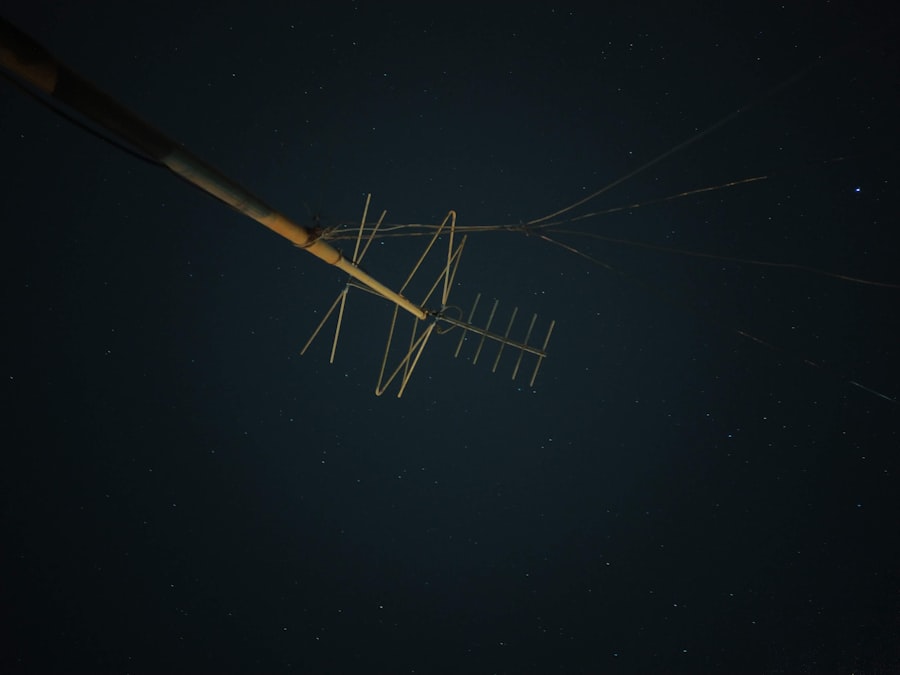
The field of orbital anomaly tracking has witnessed significant technological advancements in recent years. Innovations in radar and optical tracking systems have improved the accuracy and reliability of monitoring objects in space. Ground-based radar systems can detect and track objects as small as a few centimeters, while optical telescopes equipped with advanced imaging technology can provide detailed information about an object’s size, shape, and trajectory.
In addition to traditional tracking methods, the integration of artificial intelligence (AI) and machine learning algorithms has revolutionized the way orbital anomalies are analyzed. These technologies enable the processing of vast amounts of data collected from various sources, allowing for real-time predictions and assessments of potential collisions. By automating data analysis, AI can identify patterns and trends that may not be immediately apparent to human operators, enhancing the overall efficiency of anomaly tracking systems.
The Role of Satellites in Orbital Anomaly Tracking
Satellites themselves play a crucial role in the monitoring of orbital anomalies. Dedicated tracking satellites equipped with advanced sensors can provide continuous surveillance of space debris and other objects in orbit. These satellites can relay data back to ground stations, where it is analyzed to assess potential risks and inform decision-making processes.
Furthermore, some satellites are designed specifically for collision avoidance maneuvers. By utilizing onboard propulsion systems, these satellites can adjust their orbits in response to predicted anomalies, thereby minimizing the risk of collision with other objects. This proactive approach not only enhances the safety of individual satellites but also contributes to the overall stability of the space environment by reducing the likelihood of debris generation from collisions.
International Collaboration in Orbital Anomaly Tracking
| Metric | Value | Unit | Description |
|---|---|---|---|
| Number of Anomalies Detected | 1,250 | count | Total orbital anomalies tracked in 2025 |
| Average Detection Time | 12 | hours | Average time from anomaly occurrence to detection |
| False Positive Rate | 3.5 | % | Percentage of anomalies incorrectly flagged |
| Tracking Accuracy | 98.7 | % | Accuracy of orbital anomaly position and trajectory tracking |
| Number of Satellites Monitored | 1,800 | count | Satellites under surveillance for anomaly detection |
| Response Time to Critical Anomalies | 30 | minutes | Average time to initiate response after critical anomaly detection |
| Data Volume Processed | 5.2 | terabytes | Amount of data analyzed for anomaly tracking in 2025 |
The global nature of space activities necessitates international collaboration in orbital anomaly tracking. No single nation can effectively monitor all objects in orbit; therefore, partnerships between countries and organizations are essential for comprehensive tracking efforts. Initiatives such as the Space Data Association (SDA) facilitate information sharing among satellite operators, enabling them to collaborate on tracking efforts and improve situational awareness.
International agreements also play a vital role in establishing standards for tracking and managing orbital anomalies. Treaties such as the Outer Space Treaty emphasize the importance of responsible behavior in space activities, encouraging nations to work together to mitigate risks associated with orbital anomalies. By fostering a spirit of cooperation, countries can collectively enhance their capabilities to monitor and respond to potential threats in space.
Potential Risks Associated with Orbital Anomalies
The risks associated with orbital anomalies are multifaceted and can have far-reaching consequences. One of the most pressing concerns is the potential for collisions between satellites or between satellites and space debris. Such collisions can result in significant damage or destruction of valuable assets, leading to financial losses and disruptions in services that rely on satellite technology.
In addition to immediate physical risks, orbital anomalies can also pose long-term challenges for space sustainability. The creation of additional debris from collisions exacerbates the already crowded environment around Earth, increasing the likelihood of future incidents. This cascading effect highlights the importance of effective monitoring and management strategies to mitigate risks associated with orbital anomalies.
The Future of Orbital Anomaly Tracking: Predictive Analytics
As technology continues to evolve, predictive analytics is poised to play a transformative role in orbital anomaly tracking. By leveraging vast datasets collected from various sources, predictive models can forecast potential anomalies with greater accuracy than ever before. These models can incorporate factors such as historical data on object trajectories, environmental influences, and even human activities that may impact orbital paths.
The integration of predictive analytics into tracking systems will enable operators to anticipate potential collisions well in advance, allowing for timely interventions. This proactive approach not only enhances safety but also optimizes resource allocation for collision avoidance maneuvers. As predictive analytics becomes more sophisticated, it will empower space agencies and private companies to make informed decisions that prioritize both safety and operational efficiency.
Orbital Anomaly Tracking and Space Debris Management
Orbital anomaly tracking is intrinsically linked to effective space debris management strategies. As the number of satellites and debris continues to grow, monitoring these objects becomes essential for maintaining a sustainable space environment. Tracking systems provide critical data that informs debris mitigation efforts, helping operators identify high-risk areas and develop strategies to minimize debris generation.
Moreover, understanding orbital anomalies allows for better planning regarding end-of-life procedures for satellites. By accurately predicting when a satellite will re-enter Earth’s atmosphere or when it may become non-operational, operators can implement deorbiting plans that reduce the risk of creating additional debris. This proactive approach is vital for preserving the long-term usability of Earth’s orbital environment.
The Impact of Orbital Anomalies on Space Exploration
Orbital anomalies have significant implications for future space exploration endeavors.
Anomalies can affect not only satellite operations but also crewed missions that rely on precise navigation and timing.
For instance, during interplanetary missions, spacecraft must navigate through complex gravitational fields and avoid potential hazards posed by other celestial bodies or debris. Effective anomaly tracking will be essential for mission planners to devise safe trajectories and ensure that spacecraft remain on course throughout their journeys. As exploration efforts expand into deeper space, the need for robust anomaly tracking systems will only grow more pronounced.
Regulatory Framework for Orbital Anomaly Tracking
A comprehensive regulatory framework is essential for effective orbital anomaly tracking and management. Governments and international organizations must establish guidelines that promote responsible behavior in space activities while facilitating collaboration among stakeholders. Such regulations should address issues such as data sharing protocols, collision avoidance procedures, and standards for debris mitigation.
Additionally, regulatory bodies must adapt to the rapidly evolving landscape of space activities, including the rise of commercial satellite operators and new technologies. By fostering an environment that encourages innovation while prioritizing safety and sustainability, regulatory frameworks can help ensure that orbital anomaly tracking remains effective in addressing emerging challenges.
The Need for Continued Vigilance in Orbital Anomaly Tracking
In conclusion, orbital anomaly tracking is an indispensable component of modern space operations that requires ongoing attention and investment. As humanity’s presence in space continues to grow, so too does the complexity of monitoring and managing orbital anomalies. The risks associated with these anomalies underscore the importance of robust tracking systems, international collaboration, and effective regulatory frameworks.
Looking ahead, advancements in technology will play a pivotal role in enhancing anomaly tracking capabilities, enabling more accurate predictions and timely interventions. However, continued vigilance is essential to ensure that both current operations and future exploration endeavors remain safe and sustainable. By prioritizing orbital anomaly tracking as a fundamental aspect of space activities, stakeholders can work together to protect valuable assets while fostering a responsible approach to exploring the final frontier.
In the realm of space exploration and monitoring, the concept of orbital anomaly tracking is becoming increasingly vital, especially as we approach 2025. A related article that delves into the advancements and challenges in this field can be found on XFile Findings. For more insights, you can read the article here: