
Philip K. Dick’s exploration of divergent realities, often characterized as “Track A” and “Track B,” is a cornerstone of his philosophical and literary output. These concepts, deeply embedded within his narratives, represent more than just fantastical plot devices; they are profound inquiries into the nature of perception, the fluidity of identity, and the very fabric of existence. Dick, a writer perpetually haunted by questions of what is real, utilized these parallel tracks not as separate universes in the traditional sci-fi sense, but as different states of awareness, fractured reflections, or even alternative historical trajectories that bleed into one another. Understanding Track A and Track B is crucial to appreciating the disorienting, yet often deeply resonant, worlds he constructed.
The Genesis of Divergence: When Reality Splits
Philip K. Dick’s fascination with multiple realities wasn’t a sudden revelation but a gradual immersion, fueled by his own experiences and a persistent philosophical skepticism. The idea of a singular, objective reality was, for Dick, a highly suspect notion. His personal life, marked by loss, profound spiritual experiences, and bouts of paranoia, undoubtedly contributed to his thematic preoccupations. He often spoke of encountering what he termed “the VALIS system” – a divine, sentient entity that he believed communicated with him, altering his perception of time and reality. This personal epistemological crisis found its artistic outlet in the recurring motif of a fractured or dual existence.
The “Pink Beam” and the Gnostic Undertones
A significant moment in Dick’s conceptualization of parallel realities, particularly his famous 1974 experience, involved what he described as a “pink beam” of light. This event, he claimed, momentarily dissolved the boundaries of his perceived reality, revealing a glimpse of a previous existence or a more fundamental truth. This experience, intertwined with Gnostic philosophy – which posits a material world created by a lesser, often flawed deity, and a true, spiritual realm beyond – deeply informed his ideas. Track A, in this context, can be seen as the conventional, material reality we perceive, while Track B represents a more authentic, perhaps spiritual or forgotten, state of being that occasionally intrudes or can be accessed. The “pink beam” acted as a catalyst, a perceived fissure in the illusion of Track A, opening a window into the potential for Track B.
Subjectivity as the Architect of Worlds
For Dick, the distinction between Track A and Track B was not necessarily an objective, external phenomenon but an internal, subjective one. His characters often grapple with their own sanity and the reliability of their senses. What one character perceives as reality might be a delusion to another, or a fleeting glimpse of an alternate truth. This emphasis on subjectivity means that the “tracks” are not always distinct geographical locations but rather different modes of consciousness, different interpretations of the same underlying information, or even divergent timelines experienced by the same individual at different points in their personal history. The very act of perception, filtered through individual memory, trauma, and belief, becomes the mechanism by which these parallel realities are constructed or experienced.
Philip K. Dick’s exploration of alternate realities and the nature of consciousness is vividly illustrated in his works, particularly in the context of “Track A” and “Track B.” For those interested in delving deeper into the themes of his narratives, a related article that discusses the intricacies of his storytelling and philosophical inquiries can be found at this link. This article provides valuable insights into how Dick’s concepts resonate with contemporary discussions on reality and perception.
Defining the Tracks: The Familiar and the Other

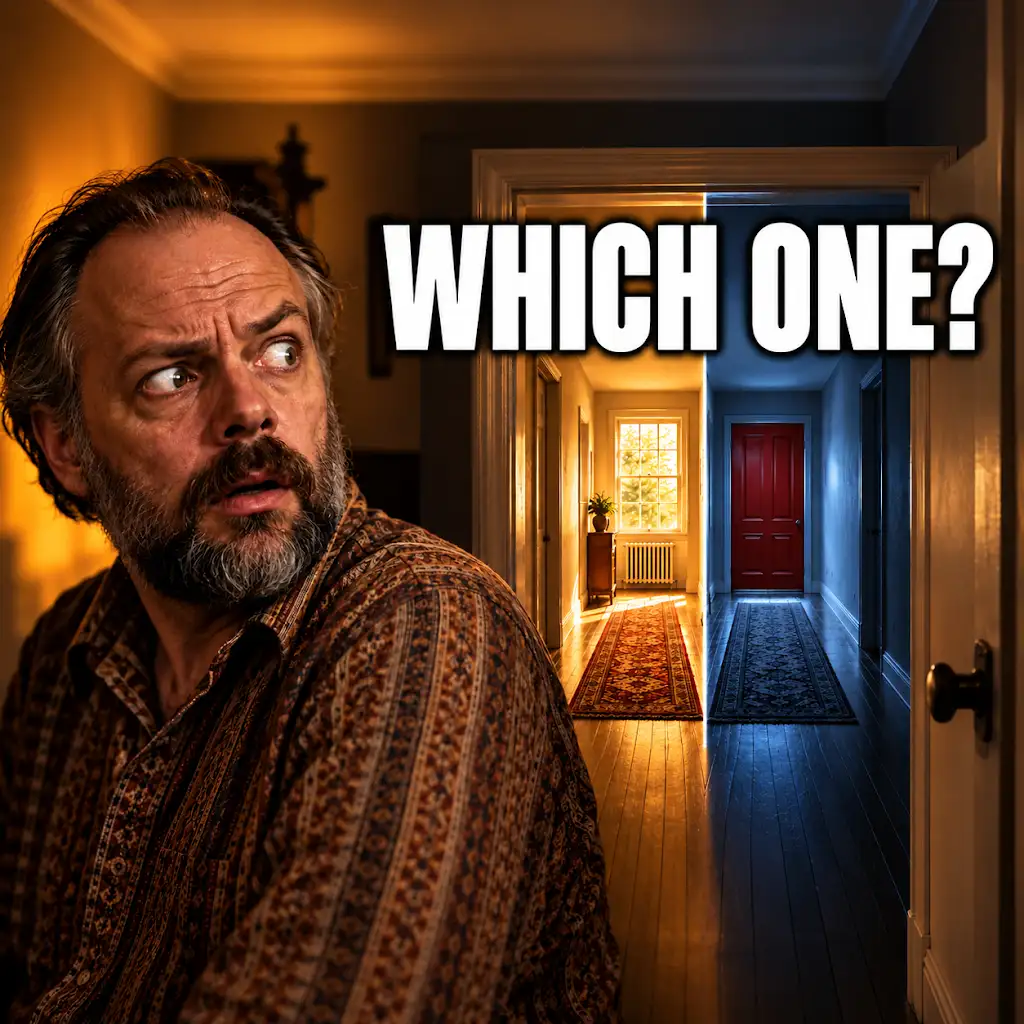
The conceptualization of Track A and Track B, while fluid and often overlapping in Dick’s work, generally refers to two distinct but interconnected modes of existence or perception. Track A represents the mundane, the everyday, the reality most people inhabit without question. Track B, conversely, is the “other,” the suppressed, the forgotten, or the potential, which disrupts or challenges the status quo of Track A. The interplay between these two is the engine of conflict and philosophical inquiry in many of his novels.
Track A: The Mundane and the Manufactured
Track A is the reality most readily identifiable by the reader. It is the world of bureaucratic oppression, technological surveillance, consumerism gone awry, and the general anxieties of modern, and often futuristic, life. This is the world where characters struggle with identity theft, oppressive regimes, and the mundane struggle for survival. It is a reality that often feels off, subtly wrong, or lacking in some essential quality, a feeling that hints at the existence of something more or something lost. The manufactured nature of much of Track A is also a key element; societies in Dick’s novels often construct elaborate illusions, fake histories, or engineered social structures to maintain control, further blurring the lines between genuine experience and artifice. This is the reality of the “product,” the “pre-cog,” the “android” who believes they are human, all existing within a framework that often feels like a carefully constructed cage.
Track B: The Echo, the Dream, the Potential
Track B is the more elusive and multifaceted of the two. It can manifest as a forgotten memory, a latent ability, a glimpsed alternate history, or a more profound, spiritual reality. It is the realm of the “original” humanity that has been suppressed, the true self that has been buried under layers of conditioning, or a future that could have been. Track B is often characterized by a sense of longing, a yearning for authenticity, or a disruptive element that challenges the foundations of Track A. It might be the faint echo of a past life, the premonition of a different future, or the subconscious awareness of a larger, more benevolent (or malevolent) intelligence. It is the space where the true nature of existence, or at least a more authentic version of it, might reside, waiting to be rediscovered or reasserted.
The Blurring of Boundaries: Interpenetration and Confusion

One of the most potent aspects of Dick’s parallel realities is their tendency to bleed into one another. The separation between Track A and Track B is rarely absolute. Instead, there are constant moments of overlap, confusion, and existential dread as the established order of Track A is challenged by incursions from Track B. This blurring is not just a plot device; it’s a reflection of Dick’s belief that reality itself is permeable and that our perception of it is a fragile construct.
Glitches in the Matrix: Anomalies and Dejavu
Dick’s characters frequently experience “glitches” in the fabric of their reality. These can manifest as moments of intense déjà vu, inexplicable coincidences, or sensory anomalies that hint at a deeper, underlying strangeness. These are the moments when the veil between Track A and Track B thins, allowing glimpses of what lies beyond or beneath. A character might suddenly recall a past life with vivid detail, encounter an object that shouldn’t exist in their timeline, or experience a dream that feels more real than their waking life. These anomalies are not necessarily random; they are often signposts, guiding the characters toward a greater understanding of their predicament and the true nature of their existence. They are the subtle tremors that precede the earthquake of a paradigm shift.
The Role of Technology and Psionics
Technology and psionic abilities often play a crucial role in bridging or exploiting the gap between Track A and Track B. Advanced technologies, such as time travel devices, reality-altering machines, or sophisticated simulation systems, can directly manipulate or create parallel realities. Similarly, characters with psionic abilities, like precognition or telepathy, can tap into information or consciousness that transcends the limitations of Track A. These abilities are not always benign; they can be used for control, deception, or to further destabilize the perceived order. The line between what is technologically induced and what is a genuine manifestation of Track B becomes increasingly difficult to discern.
Identity in Flux: Who Am I When Reality Shifts?
The concept of parallel realities is inextricably linked to the question of identity. If reality itself is fluid and can shift, then what does that mean for the individual? Dick’s characters are perpetually grappling with their own sense of self, their memories, and their authenticity. The existence of Track B often forces them to confront the possibility that their identity, as they understand it in Track A, is incomplete, manufactured, or even entirely false.
The Android’s Dilemma: Authenticity vs. Simulation
A recurring theme in Dick’s work, particularly in novels like Do Androids Dream of Electric Sheep?, is the struggle to distinguish between authentic humanity and artificial simulation. This directly relates to the Track A/Track B dichotomy. Are the androids, living their programmed lives in Track A, merely sophisticated simulations of beings who once existed in a more “real” Track B? Or is their manufactured existence just as valid, as “real,” as that of the humans? The empathy test, designed to differentiate humans from androids, becomes a flawed metric in a world where empathy itself might be a learned behavior or a suppressed instinct from a forgotten Track B. The androids’ longing for genuine experience, their burgeoning emotions, can be seen as an unconscious pull towards their lost “Track B” existence, a yearning for authenticity.
Reincarnation and Fragmented Selves
In some of Dick’s narratives, parallel realities manifest as echoes of past lives or fragmented selves from different timelines. Characters might experience memories or feelings that do not belong to their current existence, suggesting a form of reincarnation or a fractured consciousness spread across multiple temporal dimensions. This challenges the notion of a singular, linear identity. Who is the “real” person when they are a composite of multiple souls, each with their own history and experiences? The challenge is to integrate these fragmented selves, to understand the overarching narrative that connects these disparate existences, and to forge a cohesive identity from these echoes of parallel lives.
Philip K. Dick’s exploration of alternate realities and the nature of consciousness in his works has sparked numerous discussions among fans and scholars alike. A fascinating article that delves into the intricacies of his themes can be found at XFile Findings, where the concepts of Track A and Track B are examined in detail. This analysis not only highlights the complexities of Dick’s narratives but also invites readers to reflect on their own perceptions of reality.
The Philosophical Core: Meaning in a Multiverse
| Track | Title | Duration | Genre | Release Year | Artist |
|---|---|---|---|---|---|
| Track A | Philip K. Dick | 4:32 | Electronic | 2019 | Artist Name A |
| Track B | Philip K. Dick | 5:10 | Electronic | 2019 | Artist Name B |
Beyond the intricate plots and mind-bending concepts, Philip K. Dick’s exploration of parallel realities serves a profound philosophical purpose. It is a radical questioning of the nature of reality, truth, and meaning in a universe that appears increasingly complex and potentially illusory. His work invites readers to scrutinize their own perceptions and to consider the possibility that the reality they inhabit is not the only one, or even the most fundamental.
The Search for the Real: Epistemological and Ontological Doubt
Dick’s relentless inquiry into parallel realities is a direct challenge to positivist and empiricist views of the world. He suggests that “reality” is not a fixed, objective entity waiting to be discovered but a subjective construct, influenced by perception, memory, and even external forces. The constant uncertainty and doubt experienced by his characters reflect a deeper epistemological and ontological struggle: how can we know what is real? And if reality is fluid, what is the ultimate nature of existence? The “real” for Dick is often something elusive, something glimpsed in moments of profound insight or fractured perception, a truth that lies beyond the easily graspable conventions of Track A.
Gnosticism, VALIS, and the Ultimate Truth
The influence of Gnosticism and Dick’s own experiences with VALIS cannot be overstated in understanding his parallel realities. He often portrayed the material world as a prison, an illusion created by a demiurge, and hinted at a higher, benevolent intelligence or a true reality that lies beyond. Track B, in this context, can be seen as a connection to this ultimate truth, a pathway back to the divine or the primordial state of being. The struggle between Track A and Track B is then a cosmic battle between illusion and truth, between entrapment and liberation. Dick’s work offers not just stories of shifting realities, but allegories for the human condition, a perpetual search for meaning and authenticity in a world that often feels like a sophisticated, and sometimes malevolent, simulation. His legacy lies in his courage to confront these unsettling questions, leaving us to ponder the unsettling possibility that our own perceived reality might just be one track among many.
Philip K. Dick Remembered an America Where Nixon Never Resigned
FAQs
What is Philip K. Dick’s “Track A and Track B”?
“Track A and Track B” is a concept introduced by science fiction author Philip K. Dick in his novel “VALIS.” It refers to two parallel realities or timelines that exist simultaneously.
How does “Track A and Track B” relate to Philip K. Dick’s other works?
Philip K. Dick often explored themes of alternate realities, identity, and perception in his writing. The concept of “Track A and Track B” is a recurring motif in his work, reflecting his interest in the nature of reality and the human experience.
What is the significance of “Track A and Track B” in Philip K. Dick’s writing?
“Track A and Track B” symbolize the duality of existence and the idea that multiple realities or possibilities can coexist. It reflects Dick’s philosophical inquiries into the nature of reality, consciousness, and the boundaries of human perception.
How does “Track A and Track B” impact the characters in Philip K. Dick’s stories?
In Philip K. Dick’s stories, characters often grapple with the implications of living in a world where multiple realities or timelines are possible. The concept of “Track A and Track B” can lead to existential crises, identity confusion, and a sense of disorientation for the characters.
What is the legacy of “Track A and Track B” in science fiction literature?
Philip K. Dick’s exploration of parallel realities and the concept of “Track A and Track B” has had a lasting impact on science fiction literature. It has inspired other authors to delve into similar themes of alternate dimensions, subjective reality, and the nature of existence.