
The Piri Reis Map, a parchment housed in the Topkapi Palace Museum in Istanbul, Turkey, presents a cartographic enigma that has captivated scholars and enthusiasts for decades. Created in 1513 by the Ottoman admiral and geographer Piri Reis, its meticulous detail and accuracy, particularly concerning the coastlines of South America and Africa, are remarkable for its time. However, it is a specific, and arguably the most controversial, feature of the map that has fueled debate and speculation: the depiction of a landmass that many interpret as an ice-free Antarctica.
The creation of the Piri Reis Map was not an isolated incident but the culmination of Piri Reis’s lifelong dedication to cartography and exploration. He meticulously documented his findings and compiled them into a comprehensive work known as the Kitab-ı Bahriye (Book of Navigation), which included this world map.
Admiral Piri Reis: A Navigator’s Legacy
Piri Reis, born Ahmed Muhiddin Piri in Gallipoli, Ottoman Empire, around 1465, was a prominent figure in the Ottoman navy. His dual role as a military commander and a skilled cartographer provided him with unique access to a wealth of geographical knowledge. He participated in naval campaigns across the Mediterranean, encountering various cultures and surveying coastlines. His naval experience undoubtedly informed the accuracy of the nautical charts he consulted and created.
The Source Materials: Ghosts of Lost Knowledge?
Piri Reis himself stated in the map’s preamble that he had utilized over twenty different source maps, some of which were ancient. He claimed to have consulted maps drawn by Alexander the Great’s time, as well as charts from Arab, Portuguese, and Genoese navigators. This assertion has been a cornerstone of the Piri Reis Map’s mystique, suggesting that Piri Reis may have incorporated geographical information from sources now lost to history.
The Cartographic Techniques of the Early 16th Century
Understanding the cartographic conventions of the early 16th century is crucial to appreciating the Piri Reis Map. Maps of this era were often produced using a combination of astronomical observations, dead reckoning, and information gleaned from travelers and mariners. Projections were less standardized than they are today, and depictions of lands beyond known European exploration were often based on conjecture and fragmented reports. The Piri Reis Map, despite its anomalies, adheres to many of these conventions, making its uncanny detail all the more striking.
The Piri Reis map has long fascinated historians and researchers, particularly due to its depiction of Antarctica in a way that suggests the continent was ice-free at some point in history. This intriguing possibility has led to various theories about ancient civilizations and their knowledge of geography. For further exploration of this topic, you can read a related article that delves into the evidence surrounding the Piri Reis map and its implications regarding Antarctica’s past climate by visiting this link.
The Controversial Southern Landmass
The most hotly debated aspect of the Piri Reis Map is the presence of a landmass in the southern hemisphere that bears a striking resemblance to the continent of Antarctica. The debate centers on whether this depiction accurately represents Antarctica in an ice-free state, challenging conventional timelines of geographical discovery.
Identifying the Southern Continent: A Glimpse of Terra Australis Incognita?
For centuries, European cartographers hypothesized the existence of a large southern continent, Terra Australis Incognita (the Unknown Southern Land), to balance the presumed mass of the Northern Hemisphere. This theoretical landmass was often depicted vaguely and erratically on maps. However, the segment of the Piri Reis Map depicting a southern landmass exhibits a level of detail that far surpasses these speculative renderings. It shows a coastline with bays, inlets, and mountain ranges that, when superimposed on modern Antarctic topography, exhibit remarkable alignment.
The Mouth of the Amazon: A Precision Puzzle
One of the most compelling arguments for the map’s accuracy comes from the depiction of the mouth of the Amazon River. On the Piri Reis Map, the Amazon’s estuary is shown with a level of precision that was not achieved by European cartographers until the late 18th century. This detail, found on a map from 1513, suggests that its creator possessed knowledge of geographical features that were not formally documented by European explorers for another two centuries. This might be akin to finding a perfectly preserved flower in a sealed tomb, hinting at a much earlier bloom.
The Oronoco River: Another Accurate Feature
Similarly, the Piri Reis Map accurately depicts the Oronoco River in South America. Its course and confluence with other bodies of water are rendered with a fidelity that is again anachronistic for the early 16th century. These accurate depictions of South American features lend credence to the idea that the creator had access to reliable, perhaps even pre-Columbian, cartographic data.
The Antarctica Hypothesis: An Ice-Free Continent?
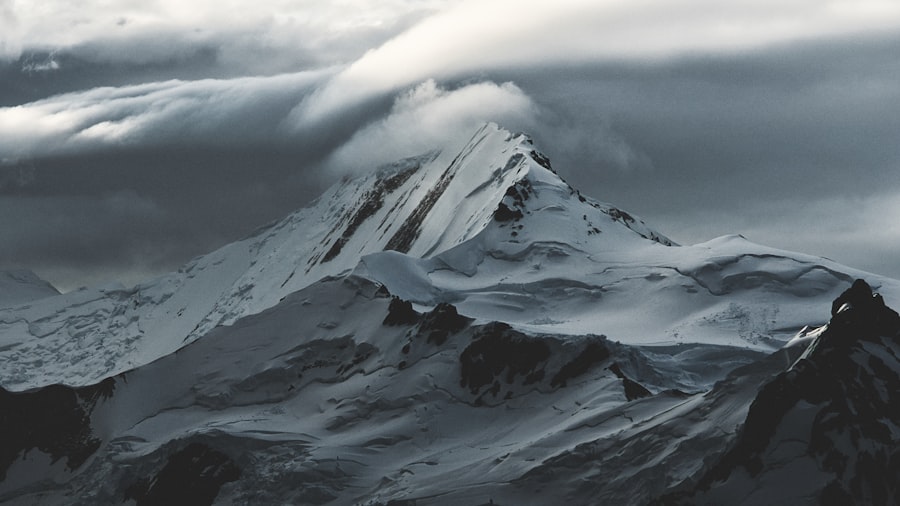
The core of the controversy lies in the interpretation of the southern landmass as Antarctica, specifically in an ice-free state, which would predate the official discovery and detailed charting of the continent by millennia.
The Ice-Free Antarctica Argument: A Geological Timeline Challenge
The prevailing scientific understanding is that Antarctica has been covered in ice for millions of years. The sheer volume and thickness of the ice sheet mean that the underlying landmass is rarely visible in its natural form. The Piri Reis Map, proponents argue, depicts a coastline that matches the subglacial topography of Antarctica, as revealed by modern seismic surveys and radar mapping. This suggests that the map represents Antarctica before it was encased in its icy mantle.
The Subglacial Topography: A Striking Resemblance
When the Piri Reis Map’s southern landmass is mathematically projected onto a modern map of Antarctica, particularly the Queen Maud Land region, an astonishing correlation emerges. The indentations, peninsulas, and mountain ranges on Piri Reis’s map mirror the outlines of the land beneath the ice. This correlation is too precise to be dismissed as mere coincidence, leading some to believe that the map is a window into a forgotten Antarctican geography.
The Implications for Historical Timelines: Rewriting the Past?
If the Piri Reis Map indeed depicts an ice-free Antarctica, it would necessitate a radical reevaluation of human history and technological capabilities. It would imply that an ancient, advanced civilization possessed the knowledge and means to map the continent millennia before its supposed “discovery” by Western explorers. This challenges the established narrative of exploration and discovery, suggesting that our understanding of human antiquity may be incomplete.
Explaining the Anomaly: Theories and Counterarguments

The remarkable accuracy of parts of the Piri Reis Map has naturally led to various theories, each attempting to reconcile the map’s existence with historical and scientific knowledge. However, these theories often face significant challenges and criticisms.
Theory 1: Prehistoric Maps and Lost Civilizations
One popular theory suggests that Piri Reis incorporated information from maps created by a highly advanced prehistoric civilization that predates recorded history. This civilization, proponents argue, may have possessed sophisticated cartographic techniques and understood the geography of Antarctica before the onset of glaciation. The Piri Reis Map then becomes a surviving artifact, a whisper from a forgotten epoch.
Theory 2: Advanced Navigational Knowledge and Surviving Charts
Another theory posits that Piri Reis, through his extensive research, accessed a collection of ancient charts that were remarkably accurate, perhaps passed down through generations of Arab or possibly even Phoenician mariners. These charts, it is argued, contained detailed geographical information that had been lost to most of the world by the 16th century. This theory avoids invoking lost civilizations directly but still requires the existence of incredibly accurate and enduring ancient maritime records.
Counterargument 1: Misinterpretation and Pareidolia
Skeptics argue that the perceived accuracy of the southern landmass is a result of misinterpretation and pareidolia – the tendency to see familiar patterns in random data. They suggest that by selectively aligning parts of the map with modern Antarctic features, and by ignoring discrepancies, proponents create an illusion of accuracy. They emphasize that the map also contains significant distortions and inaccuracies, particularly in its depiction of the continents’ proportions and relative positions, which are not explained by this hypothesis.
Counterargument 2: Modern Forgery or Later Additions
A more extreme counterargument suggests that the Antarctic portion of the map may be a later addition or a deliberate forgery, inserted to create a sensation. However, the ink and parchment analysis generally support the map’s claimed age, making this theory less plausible without further concrete evidence. The consistency of the ink and the aging of the parchment are strong indicators of its authenticity as a 16th-century document.
Counterargument 3: Confused Accounts and Blurry Lines
Some scholars propose that the southern landmass on the Piri Reis Map is not Antarctica at all but rather a confused and distorted representation of the southern coast of South America or perhaps a fictional amalgamation of coastlines based on fragmented and unreliable reports of lands far to the south. The lack of definitive proof of Piri Reis consulting actual pre-glacial Antarctic maps leaves room for alternative interpretations of his sources.
The Piri Reis map has long intrigued historians and researchers due to its detailed depiction of parts of the world that were not officially discovered until centuries later. One of the most compelling aspects of this ancient map is the suggestion that it shows Antarctica in a time when it was ice-free, leading to various theories about ancient civilizations and their knowledge of geography. For those interested in exploring this topic further, an insightful article can be found at XFile Findings, which delves into the evidence supporting the idea of an ice-free Antarctica and its implications for our understanding of history.
The Scientific Scrutiny: Modern Analysis and Interpretation
| Metric | Data / Description |
|---|---|
| Map Name | Piri Reis Map |
| Date Created | 1513 |
| Region Depicted | Western coasts of Europe and North Africa, and part of South America; includes a controversial depiction of Antarctica |
| Antarctica Representation | Shown without ice cover, suggesting an ice-free coastline |
| Evidence for Ice-Free Antarctica | Map’s coastline matches some hypothesized ice-free coastal outlines beneath the ice sheet |
| Controversy | Scholars debate whether the map shows Antarctica or misinterpreted South America coastlines |
| Source of Data | Compiled from older maps and charts, possibly including ancient sources |
| Significance | Used as evidence by some to suggest ancient advanced knowledge of Antarctica’s geography |
| Scientific Consensus | No conclusive proof that Antarctica was ice-free in historical times; most scientists consider the map inaccurate for Antarctica depiction |
The Piri Reis Map has been subjected to rigorous scientific analysis, with researchers from various disciplines attempting to unravel its secrets. However, the interpretation of these findings remains a subject of ongoing debate.
Cartographic Projections: Aligning the Ancient with the Modern
Scientists have employed advanced computational methods to analyze the map’s projection and compare it with modern cartographic representations of Antarctica. These studies attempt to determine if the map’s features can be accurately superimposed onto the Antarctic continent using established projection systems. The results of these analyses are often complex, with some showing notable correlations and others highlighting significant discrepancies.
Geographical Feature Identification: Mountains, Bays, and Rivers
Researchers meticulously compare the geographical features depicted on the Piri Reis Map – bays, inlets, mountain ranges, and river mouths – with known features on the Antarctic continent, particularly the subglacial topography. Their success in finding correlations often depends on the specific section of Antarctica being examined and the accepted method of map projection. This process is like piecing together a jigsaw puzzle where some pieces fit perfectly, while others seem to belong to a different picture entirely.
The Role of Seismology and Radar Mapping
Modern geophysical techniques, such as seismic surveys and radar mapping, have allowed scientists to peer beneath the Antarctic ice sheet and reveal the underlying landforms. This subglacial topography data is crucial for testing the Piri Reis Map’s Antarctica hypothesis. When these newly revealed landforms are compared with the Piri Reis Map, the uncanny resemblances become a significant point of contention.
Conclusion: An Enduring Mystery of the Southern Seas
The Piri Reis Map remains an artifact of profound historical and cartographic significance. While the exact nature of its southern depiction continues to be a source of fascination and contention, the map undeniably challenges our assumptions about the extent of geographical knowledge in the early 16th century.
The Piri Reis Map as a Catalyst for Debate
Regardless of whether the southern landmass is definitively proven to be an ice-free Antarctica, the Piri Reis Map has served as a powerful catalyst for interdisciplinary discussion. It has pushed historians, geographers, cartographers, and geologists to question established timelines and explore the possibility of lost knowledge. It stands as a testament to the enduring human quest to understand our planet.
The Unanswered Questions and Future Research
The Piri Reis Map’s mysteries are far from solved. Future research may involve more advanced techniques in digital cartography, analysis of Piri Reis’s own writings for further clues about his sources, and perhaps comparative studies with other disputed ancient maps. The map continues to whisper its secrets across the centuries, inviting us to listen and reconsider the narratives we have inherited.
A Legacy of Wonder and Inquiry
Ultimately, the Piri Reis Map is more than just an old parchment; it is a portal to contemplation. It reminds us that history is not always a neatly packaged story but a complex tapestry woven with threads of both known facts and intriguing enigmas. The debate it ignites is a vital part of the scientific and historical process, urging us to remain open to possibilities that lie beyond our current understanding. The ice-free Antarctica theory, as illuminated by the Piri Reis Map, serves as a powerful reminder that the Earth’s past may hold more wonders than we have yet uncovered.
FAQs
What is the Piri Reis map?
The Piri Reis map is a world map created in 1513 by the Ottoman admiral and cartographer Piri Reis. It is notable for its detailed depiction of parts of Europe, Africa, and the Americas, and it has attracted attention for its portrayal of the southern regions, including Antarctica.
Does the Piri Reis map show Antarctica without ice?
Some interpretations of the Piri Reis map suggest that it depicts the coastline of Antarctica free of ice. However, this claim is debated among historians and cartographers, as the map’s accuracy and the sources used by Piri Reis remain uncertain.
What evidence supports the idea that the Piri Reis map shows an ice-free Antarctica?
Proponents argue that the map’s southern landmass resembles the Antarctic coastline as it would appear without its ice sheet, implying knowledge of the continent’s geography before modern exploration. They cite the map’s detailed coastal outlines and the absence of ice coverage as evidence.
Is the Piri Reis map considered reliable for historical geography?
While the Piri Reis map is an important historical artifact, its reliability for precise geographical information is limited. It was compiled from various earlier maps and reports, some of which may have been inaccurate or speculative, making it difficult to confirm its depiction of Antarctica.
What is the scientific consensus on the Piri Reis map and Antarctica?
The scientific community generally views the Piri Reis map as a fascinating historical document but does not accept it as definitive evidence of an ice-free Antarctica in ancient times. Modern geological and climatological studies indicate that Antarctica has been covered by ice for millions of years.