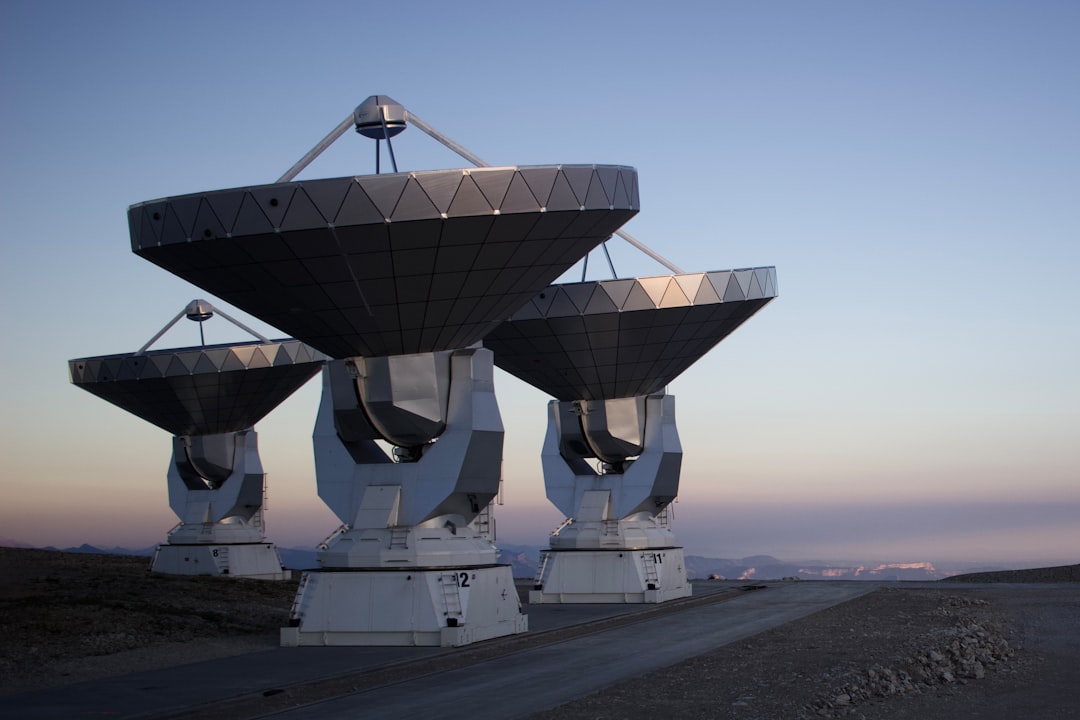
The specter of cosmic impact, once confined to the realm of science fiction, has steadily moved into the domain of scientific and geopolitical concern. Humanity’s burgeoning technological capabilities and a deeper understanding of orbital mechanics and celestial mechanics have fostered a realistic appreciation for the potential devastation posed by Near-Earth Objects (NEOs). This acknowledgment has spurred the development of what is known as Planetary Defense Infrastructure—a multi-faceted, international endeavor aimed at detecting, tracking, and ultimately mitigating the threat of asteroid and comet collisions with Earth. This article will delve into the various components of this crucial infrastructure, examining its current state, future trajectories, and the complex challenges it faces.
The history of Earth is punctuated by catastrophic impact events, from the Chicxulub impactor that precipitated the demise of the dinosaurs to smaller, yet still regionally devastating, events like the Tunguska explosion. While these events are statistically rare on human timescales, their potential consequences are so immense as to warrant continuous vigilance.
Historical Precedents and Their Lessons
Past impact events, both direct and inferred, serve as stark reminders of Earth’s vulnerability. The geological record is a chronicle of cosmic bombardment, demonstrating that impacts are not merely theoretical possibilities but historical realities.
- The Chicxulub Impactor: This K-Pg (Cretaceous-Paleogene) boundary event, approximately 66 million years ago, provides the most compelling evidence of a global catastrophe caused by an extraterrestrial object. The impact triggered widespread fires, tsunamis, and a prolonged “impact winter” due to ejected dust and aerosols, fundamentally altering Earth’s climate and ecosystems.
- The Tunguska Event (1908): This aerial burst over Siberia, attributed to a stony asteroid or cometary fragment, flattened an estimated 2,000 square kilometers of forest. Had this relatively small object impacted a densely populated area, the human cost would have been catastrophic. It serves as a chilling reminder that even objects considerably smaller than the Chicxulub impactor can cause regional devastation.
- Chelyabinsk Meteor (2013): This superbolide, approximately 20 meters in diameter, entered Earth’s atmosphere over Russia. While it disintegrated before reaching the surface, the atmospheric shockwave caused widespread property damage and injured over 1,600 people, primarily from glass shattered by the blast. This event underscored the reality that even objects previously considered “too small to worry about” can pose significant threats and that current detection capabilities still have blind spots.
These historical events, particularly Tunguska and Chelyabinsk, have acted as crucial catalysts in galvanizing international attention and funding for planetary defense initiatives. They represent not merely academic curiosities but concrete lessons etched into Earth’s history, signaling the need for active protective measures.
Recent advancements in planetary defense infrastructure have highlighted the importance of preparedness against potential asteroid threats. An insightful article discussing these developments can be found at this link, which outlines various strategies and technologies being implemented to safeguard Earth from celestial impacts. The article emphasizes the collaborative efforts of international space agencies and the necessity of continuous research in enhancing our detection and deflection capabilities.
Pillars of Detection and Characterization
The foundation of any effective planetary defense strategy lies in the ability to detect and characterize potential threats long before they pose an imminent danger. This involves a global network of observatories and sophisticated data analysis.
Ground-Based Survey Telescopes
Terrestrial telescopes form the frontline of NEO detection. These instruments systematically scan the skies for moving objects, compiling vast databases of positional data.
- Automated Survey Programs: Projects such as the Catalina Sky Survey (CSS), NEOWISE (originally an infrared space telescope, but its data is integrated), and the Pan-STARRS (Panoramic Survey Telescope and Rapid Response System) are dedicated to discovering and tracking NEOs. These programs utilize robotic telescopes with wide fields of view to maximize sky coverage.
- Dedicated Impact Hazard Observatories: Some observatories are specifically designed and funded with planetary defense as their primary mission. These facilities often employ advanced imaging and spectroscopic capabilities to not only detect but also characterize the physical properties of NEOs.
- Data Analysis Pipelines: Raw observational data must be meticulously processed to identify potential NEOs, distinguish them from known objects, and calculate their trajectories. This involves sophisticated algorithms and high-performance computing. Identifying a potential threat is akin to finding a needle in a cosmic haystack, requiring computational power and human discernment.
Space-Based Observatories
While ground-based telescopes are crucial, space-based observatories offer unique advantages, particularly for objects that might be difficult to observe from Earth due to atmospheric interference or their orbital geometry.
- Infrared Detection: NEOWISE, for instance, operated in the infrared spectrum, which is particularly effective for detecting dark asteroids that reflect little visible light. Infrared surveys are also less susceptible to atmospheric scattering and can operate unimpeded by daytime or weather conditions.
- Improved Orbital Determination: Observations from space can provide different viewing angles and longer observational baselines, leading to more accurate orbital determinations for distant objects. This “triangulation from afar” enhances the precision of trajectory predictions.
- Early Warning Systems: Future space-based telescopes designed specifically for planetary defense could provide earlier warning for objects approaching from the Sun’s direction, a blind spot for many ground-based instruments. Such objects, like the Chelyabinsk meteor, are challenging to detect due to solar glare.
Trajectory Prediction and Risk Assessment

Once an NEO is detected, the next critical step is to accurately predict its future trajectory and assess the probability and consequences of an impact. This involves sophisticated orbital mechanics and statistical analysis.
Orbital Mechanics and Perturbations
Predicting the path of a celestial body is a complex endeavor, influenced by numerous gravitational forces.
- Gravitational Influence of Planets: The primary factor in an asteroid’s trajectory is the gravitational pull of the Sun and the major planets. Even subtle gravitational nudges over long periods can significantly alter an object’s path.
- Non-Gravitational Forces (Yarkovsky Effect): The Yarkovsky effect, a tiny thermal force caused by the uneven re-emission of solar radiation from a rotating asteroid, can subtly but significantly alter an asteroid’s orbit over decades or centuries. Accounting for this effect is crucial for highly accurate long-term predictions, as it can cause an asteroid to “drift” into or out of an impact trajectory.
- Refined Orbit Determination: As more observational data becomes available, the uncertainty in an object’s orbit diminishes. This iterative process of observation and calculation allows for increasingly precise predictions, often narrowing down potential impact “keyholes” in Earth’s orbital path.
Impact Probability Scales
To communicate risk effectively, standardized scales have been developed to quantify the probability and potential severity of impacts.
- Torino Scale: This scale, ranging from 0 to 10, categorizes the impact hazard primarily based on kinetic energy and impact probability. A “0” indicates no hazard, while a “10” signifies a certain global catastrophe. It is designed to be easily understood by the public and policymakers.
- Palermo Technical Impact Hazard Scale: This more complex scale is used by experts. It takes into account the impact probability, the object’s estimated kinetic energy, and the time remaining until potential impact, comparing it to the background risk of similar events. A value of 0 indicates no elevated risk, while positive values represent increasing levels of concern.
These scales provide a common language for assessing impact risk, allowing scientists and emergency planners to prioritize resources and develop appropriate response strategies.
Mitigation Strategies: Awaiting the Cosmic Punch

Should a credible impact threat emerge, a range of mitigation strategies are being researched and developed, each with its own advantages and limitations. The “best” approach depends heavily on the object’s size, composition, and the warning time available.
Kinetic Impactor
The kinetic impactor concept involves directly colliding a spacecraft with an asteroid to alter its trajectory. This is currently the most mature and explored mitigation technique.
- Momentum Transfer: The principle is simple: a high-velocity spacecraft impacts the asteroid, transferring momentum and slightly changing its velocity vector. Over sufficiently long periods, even a small change in velocity can translate into a significant change in the asteroid’s position, causing it to miss Earth. This is akin to a gentle nudge rather than a forceful shove.
- DART Mission (Double Asteroid Redirection Test): NASA’s DART mission, which successfully impacted the asteroid dimorphos (the moonlet of Didymos) in September 2022, demonstrated the viability of the kinetic impactor technique. The mission successfully altered Dimorphos’ orbital period around Didymos, providing invaluable data for future planetary defense missions. This mission was a landmark achievement, moving planetary defense from theoretical discussions to practical demonstration.
Gravitational Tractor
The gravitational tractor is a more sophisticated and non-contact method, ideal for smaller or more fragile asteroids where direct impact might cause fragmentation.
- Gentle Persistent Nudge: A spacecraft would fly in close proximity to the asteroid for an extended period, using its own minuscule gravitational pull to slowly but persistently tug the asteroid off course. This method avoids direct contact and the potential for breaking the asteroid into multiple, still dangerous, fragments.
- Long Lead Times Required: This method requires significant lead time—decades, perhaps even centuries—as the gravitational forces involved are extremely weak. It is analogous to steering a massive ocean liner with a small tugboat; it’s effective, but it takes time.
Nuclear Detonation (Standalone or Standoff)
Nuclear weapons represent a more controversial but potentially necessary option for short-notice threats from very large objects.
- Standoff Detonation: The preferred approach is a standoff detonation, where a nuclear device is detonated near the asteroid, not on its surface. The intense X-rays and neutron flux from the detonation would ablate material from the asteroid’s surface, creating a jet of plasma that would slowly push the asteroid off course. This method aims to alter the asteroid’s trajectory without fragmenting it.
- Surface Detonation (Last Resort): A direct surface detonation is generally considered a last resort due to the high risk of fragmenting the asteroid into multiple hazardous pieces, potentially creating an even more complex threat scenario. The goal is always deflection, not pulverization.
- Political and Ethical Considerations: The use of nuclear weapons, even in space, carries significant political and ethical implications. International treaties and agreements would need to be navigated, and public opinion would play a crucial role. This option remains firmly in the realm of emergency last resort.
Recent advancements in planetary defense infrastructure have highlighted the importance of collaborative efforts to safeguard Earth from potential asteroid impacts. A compelling article on this topic can be found at XFile Findings, which discusses innovative technologies and international partnerships aimed at enhancing our detection and mitigation capabilities. As the threat of near-Earth objects continues to grow, understanding these developments becomes crucial for ensuring the safety of our planet.
The Future of Planetary Defense Infrastructure
| Metric | Description | Current Status | Source/Agency |
|---|---|---|---|
| Number of Near-Earth Objects (NEOs) Detected | Total count of asteroids and comets tracked within 1.3 AU of Earth | Over 30,000 | NASA NEO Observations Program |
| Percentage of Potentially Hazardous Asteroids (PHAs) Cataloged | Proportion of PHAs identified out of estimated total | Approximately 40% | ESA Space Situational Awareness |
| Number of Ground-Based Telescopes Dedicated to NEO Tracking | Facilities actively monitoring space for hazardous objects | 15+ | International Astronomical Union (IAU) |
| Planetary Defense Coordination Office (PDCO) Established | Official NASA office coordinating planetary defense efforts | Established 2016 | NASA |
| Number of Simulated Impact Exercises Conducted | Drills and simulations to prepare for potential asteroid impact scenarios | 5 major international exercises | United Nations Office for Outer Space Affairs (UNOOSA) |
| Active Deflection Missions Launched | Space missions aimed at testing asteroid deflection techniques | 1 (DART Mission) | NASA & ESA |
| Global Early Warning Systems Operational | Systems in place to detect and alert about incoming hazardous objects | Yes, multiple systems | International Asteroid Warning Network (IAWN) |
Planetary defense is an evolving field, driven by technological advancements and a growing appreciation for the cosmic environment. The future holds promises of enhanced capabilities and international cooperation.
Enhanced Survey Capabilities
The quest for earlier and more comprehensive detection is ongoing.
- NEO Surveyor (NASA): This planned space telescope, designed to operate in the infrared, aims to detect a far greater percentage of potentially hazardous asteroids, especially those that are faint or approaching from difficult angles. It represents a significant leap forward in our ability to create a near-complete catalog of NEOs.
- International Collaborations: Projects like the International Asteroid Warning Network (IAWN) facilitate global cooperation in data sharing and analysis, creating a more robust and unified front against cosmic threats. This collaborative spirit is essential, as no single nation can shoulder this immense responsibility alone.
Advanced Mitigation Technologies
Research into novel deflection techniques continues, pushing the boundaries of what is possible.
- Laser Ablation: High-powered lasers could potentially vaporize material from an asteroid’s surface, creating a small thrust that gradually alters its trajectory. This is a non-contact method with the advantage of precise control.
- Mass Drivers: While highly conceptual, a mass driver could theoretically excavate material from an asteroid and eject it into space, providing a continuous thrust. This concept would require landing on the asteroid and establishing a mining operation, posing significant engineering challenges.
- Artificial Swarms and Distributed Systems: The idea of using multiple smaller impactors or gravitational tugs, possibly in coordinated swarms, could offer greater flexibility and robustness in deflection efforts.
The Role of International Collaboration and Governance
Planetary defense is inherently an international endeavor, as the threat is global and transcends national borders.
- United Nations Office for Outer Space Affairs (UNOOSA): UNOOSA plays a vital role in coordinating international efforts, facilitating data sharing, and developing guidelines for planetary defense. It acts as a central hub for communication and policy development.
- The International Asteroid Warning Network (IAWN): IAWN, established under the auspices of UNOOSA, is a global network of astronomical observatories and institutions dedicated to detecting, tracking, and characterizing NEOs. It serves as a crucial information exchange and communication hub.
- Space Mission Planning Advisory Group (SMPAG): SMPAG, also under UNOOSA, is responsible for developing plans and recommendations for international responses to asteroid impact threats. It brings together experts from space agencies and governments to ensure a coordinated and effective global response.
The continued success of planetary defense hinges on vigorous international cooperation, transparent information sharing, and the development of robust governance structures to guide potentially complex and time-sensitive decisions. Just as humanity pulled together to explore space, so too must it unite to protect its home from the hazards that inevitably drift through the solar system. The investment in planetary defense infrastructure is not merely a scientific endeavor; it is an act of proactive self-preservation, a testament to humanity’s growing capacity to understand and shape its own destiny in the vast and often perilous cosmos.
FAQs
What is planetary defense infrastructure?
Planetary defense infrastructure refers to the systems, technologies, and strategies developed to detect, track, and potentially mitigate threats from near-Earth objects (NEOs) such as asteroids and comets that could impact Earth.
What types of evidence exist for planetary defense infrastructure?
Evidence includes observational data from telescopes and radar systems, records of international collaboration on space monitoring, documented missions like NASA’s DART asteroid deflection test, and established protocols for impact risk assessment and response.
Which organizations are involved in planetary defense efforts?
Key organizations include NASA, the European Space Agency (ESA), the United Nations Office for Outer Space Affairs (UNOOSA), and various national space agencies and research institutions worldwide that contribute to detection, tracking, and mitigation initiatives.
How do scientists detect potentially hazardous asteroids?
Scientists use ground-based and space-based telescopes equipped with optical and radar technology to scan the sky, identify NEOs, calculate their orbits, and assess the likelihood of Earth impact.
What measures are in place to mitigate asteroid impact threats?
Mitigation strategies include deflection missions (e.g., kinetic impactors), early warning systems, evacuation plans, and international coordination to respond effectively to potential impact scenarios.