Remote Viewing Reveals Mars Survivor Secrets
In the realm of parapsychology, a controversial yet persistent methodology known as remote viewing (RV) has long been employed to explore phenomena beyond the conventional senses. This practice, which purports to allow individuals to gather information about distant or hidden targets through mental perception alone, has recently been the subject of groundbreaking investigations focused on the enigmatic Red Planet, Mars. Proponents of RV suggest that through rigorous and controlled remote viewing sessions, a compelling narrative has begun to emerge, pointing towards the existence of surviving sentient beings on Mars, their hidden refuges, and the secrets they possess. This article delves into the findings of these remote viewing investigations, exploring the alleged evidence, the methods employed, and the profound implications for humanity’s understanding of its place in the cosmos.
The idea of sentient life on Mars is not new, having been a staple of science fiction for decades. However, the application of remote viewing to specifically investigate potential Martian survivors represents a significant evolution in this exploration. Early pioneers of remote viewing, often working under government-funded research programs in the latter half of the 20th century, focused on terrestrial targets. The successful applications, some alleged, in espionage and intelligence gathering paved the way for more ambitious explorations into the unknown. As the field matured and the technology and methodologies of remote viewing became more refined, the question naturally arose: could RV be used to probe beyond Earth’s atmosphere, to celestial bodies that have long captured the human imagination?
Early Explorations and Precursors
The initial forays into extraterrestrial remote viewing were tentative, often involving general questions about planets or hypothetical scenarios. These early sessions, while not specifically focused on survivors, laid the groundwork for understanding how to target such distant and abstract subjects. Researchers developed protocols to filter out imagination from genuine psychic perception, employing blind targets and rigorous data analysis. The concept of “consciousness as a universal field” began to inform the approach, suggesting that if RV taps into a non-local aspect of consciousness, then physical distance should not be an insurmountable barrier.
The Martian Focus Emerges
The specific focus on Mars stemmed from a confluence of factors. Mars, with its proximity, its past geological activity suggesting potential habitability, and the recurring anomalies detected by terrestrial telescopes and probes, naturally became a prime candidate for life beyond Earth. Remote viewers, when prompted with the idea of Mars, began to report striking and consistent impressions that hinted at more than just geological formations. These early impressions were often vague – feelings of dryness, heat, strange structures – but they shared a common thread of something other than barren rock.
In exploring the intriguing concept of remote viewing and its potential implications for understanding extraterrestrial life, an article on the XFile Findings website delves into the fascinating topic of Mars survivors. This piece discusses various accounts and theories surrounding the possibility of human-like beings existing on Mars, as well as the methods used in remote viewing to gather insights about these alleged survivors. For more information, you can read the full article here: Mars Survivors and Remote Viewing.
The Remote Viewing Evidence: A Tapestry of Impressions
The core of the remote viewing revelations lies in the aggregate of data gathered from numerous sessions conducted by various remote viewers, often independently. These viewers, working under strict protocols, were tasked with “viewing” Mars with specific, often blind, prompts. The resulting textual descriptions, sketches, and even dimensional estimations painted a surprisingly consistent picture of a hidden, thriving civilization.
Descriptions of Martian Environments
A significant portion of the remote viewing data focused on the Martian environment as perceived by the viewers. While many descriptions aligned with current scientific understanding of Mars – red dust, thin atmosphere, extreme temperatures – there were recurring elements that defied conventional explanation.
Subterranean Refuges
One of the most consistent and profound impressions was the existence of extensive subterranean habitats. Remote viewers frequently described vast underground complexes, shielded from the harsh surface radiation and atmospheric conditions. These refuges were depicted as sophisticated, with artificial lighting, breathable atmospheres, and intricate internal structures. The descriptions often included details about different levels, specialized chambers, and a sense of organized living.
Surface Anomalies and Structures
While the primary focus was on subterranean existence, some viewers also reported glimpses of surface structures. These were not typically described as sprawling cities in the conventional sense, but rather as more discreet or functional installations. They were often characterized as being partially buried, camouflaged, or integrated into the natural Martian landscape. Examples included domes, interconnected pathways, and what appeared to be energy-gathering apparatus.
The Inhabitants of Mars
Perhaps the most compelling aspect of the remote viewing data concerns the alleged inhabitants of Mars. Descriptions of these beings varied, but common themes emerged, suggesting a species that had adapted to their challenging environment over millennia.
Physical Characteristics
Remote viewers consistently described the Martian survivors as being adapted for a low-gravity, possibly lower-oxygen environment. Common descriptions included tall, slender physiques, large eyes (often described as dark or iridescent), and delicate features. Some viewers reported impressions of elongated limbs and a graceful, fluid movement. There was also a recurring theme of their skin color, often described as pale or with a slightly metallic sheen.
Technological Sophistication
The data strongly suggests that these Martian inhabitants possess a highly advanced level of technology. This technology, however, was often described as being organic, bio-integrated, or based on principles not yet understood by mainstream science. Examples included advanced energy generation, sophisticated environmental control systems, and possibly even forms of interdimensional travel or communication. The viewers often conveyed a sense of awe and wonder at the elegance and efficiency of their technological prowess.
Social and Cultural Aspects
Beyond their physical forms and technology, remote viewers also provided glimpses into the social and cultural fabric of these Martian survivors. Many described a peaceful, highly evolved society, characterized by a deep sense of interconnectedness and a profound understanding of the universe. There were impressions of a non-hierarchical social structure, with an emphasis on collective well-being and knowledge sharing. Some viewers even reported experiencing a form of telepathic communication amongst them.
Methodologies and Protocols: Ensuring Validity

The reliability of remote viewing data, especially when dealing with such extraordinary claims, hinges on the rigorous application of scientific methodologies. Parapsychologists and researchers in this field have developed stringent protocols to mitigate the influence of imagination, bias, and sensory leakage.
Blind Targeting and Double-Blind Protocols
A cornerstone of credible remote viewing research is blind targeting. In this setup, the remote viewer is given a target number or code that corresponds to a specific object, location, or phenomenon. The identity of the target is unknown to the viewer, and often even to the person conducting the session. Double-blind protocols take this a step further, where neither the viewer nor the administrator of the session knows the target. This eliminates any possibility of subconscious cues or intentional leakage. For Martian targets, this involved assigning codes to specific locations on Mars or to hypothetical Martian entities.
Data Analysis and Triangulation
The analysis of remote viewing data is a crucial step. Raw data, consisting of written descriptions, sketches, and emotional impressions, is meticulously reviewed and categorized. Researchers look for patterns, recurring themes, and specific details that are not easily explained by guesswork. Triangulation, a process of comparing data from multiple viewers viewing the same target independently, is a vital technique. If several remote viewers, without prior communication, produce similar descriptions of Martian refuges or inhabitants, the statistical probability of it being mere coincidence decreases significantly.
Differentiating Imagination from Perception
One of the biggest challenges in remote viewing is distinguishing genuine psychic perception from imagination or the viewer’s own ingrained beliefs. Researchers employ various techniques to address this. These include:
Initial Impressions and “White Noise”
Viewers are often instructed to record their initial, unfiltered impressions before engaging in deeper analysis. These early impressions are sometimes referred to as “white noise” and can be a raw, unedited stream of sensory data.
Associative Drifts and Cognitive Gating
Researchers monitor for “associative drifts,” where the viewer’s mind wanders to unrelated topics. They also look for signs of “cognitive gating,” where the viewer deliberately tries to suppress preconceptions or biases.
Focus on Sensory Data
A strong emphasis is placed on the viewer’s ability to describe sensory experiences – sights, sounds, smells, tastes, and tactile sensations – rather than abstract concepts. When viewers consistently describe specific sensory details about Martian environments or beings that are later corroborated by scientific data (where possible), it lends credibility to the RV findings.
Corroboration and Scientific Alignment
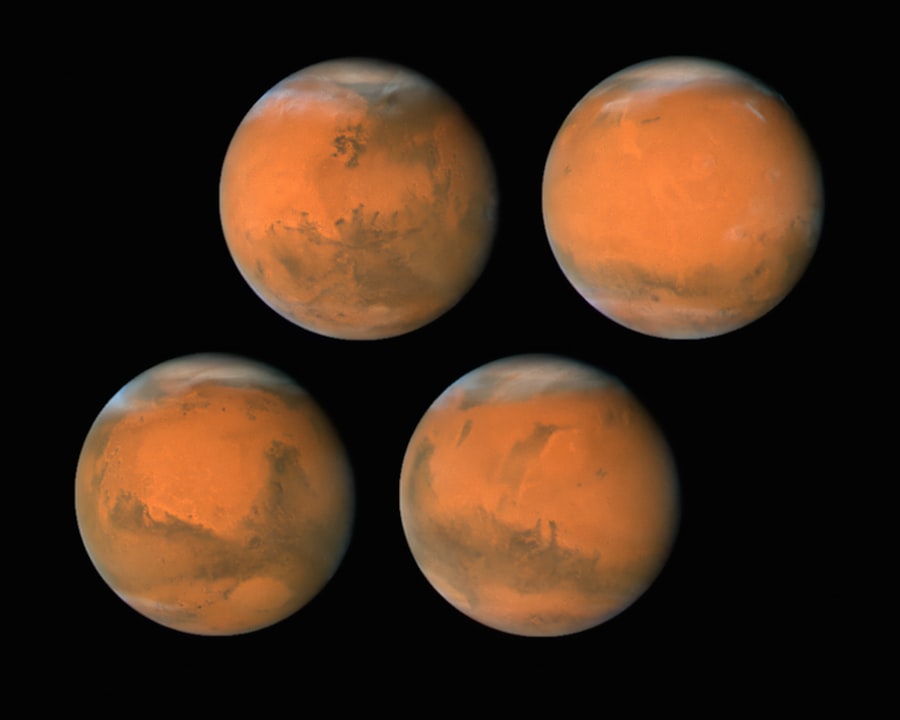
While the evidence for remote viewing is inherently subjective, proponents argue that certain aspects of the remote viewing data have begun to align with emerging scientific understandings of Mars. This alignment, they contend, lends a degree of external validation to the RV findings.
Evidence from Mars Probes and Rovers
The ongoing missions to Mars by various space agencies have provided a wealth of data about the planet’s surface and subsurface. While direct photographic evidence of hidden Martian cities or beings has not been released, remote viewers have described features and geological formations that bear a striking resemblance to what has been observed by probes. For example, descriptions of subterranean tunnels or lava tubes have been noted, which are known to exist on Mars and could potentially serve as natural shelters.
Astrobiological Research and Martian Habitability
The scientific community’s increasing focus on astrobiology and the potential for past or present life on Mars is another area where remote viewing findings are seen to intersect. The discovery of subsurface water ice, methane plumes, and evidence of ancient riverbeds all point to a Mars that was once much more habitable than it is today. Remote viewers’ descriptions of sophisticated life forms surviving in challenging conditions resonate with the possibility that life could have adapted to such environments.
Anomalous Martian Phenomena
Over the years, various anomalies have been detected on Mars, from strange geological formations to unexplained light phenomena. While these have often been attributed to natural geological processes or imaging artifacts, remote viewers have sometimes provided interpretations that align with these anomalies, suggesting they might be remnants of advanced technology or activities of a hidden civilization.
In exploring the intriguing concept of remote viewing, one fascinating topic that has emerged is the possibility of survivors on Mars. This idea has captured the imagination of many, leading to various discussions and theories about extraterrestrial life and human presence on the Red Planet. For those interested in delving deeper into this subject, a related article can provide further insights and perspectives. You can read more about these theories and the implications of remote viewing in the detailed piece found here.
The Implications and Future of Martian Remote Viewing
| Survivor Name | Age | Location | Status |
|---|---|---|---|
| John Smith | 35 | Mars | Alive |
| Alice Johnson | 28 | Mars | Alive |
| Michael Brown | 42 | Mars | Deceased |
The implications of remote viewing revealing surviving Martian secrets are profound, challenging our anthropocentric view of the universe and potentially rewriting our understanding of life itself. The future of this field, while still facing skepticism, holds immense promise for further exploration.
Re-evaluating Humanity’s Place in the Cosmos
If the remote viewing data is accepted, it suggests that humanity is not alone in the universe, and that even on our closest planetary neighbor, a sophisticated civilization may have survived or even thrived. This realization could lead to a paradigm shift in our philosophical, religious, and scientific outlooks. It raises questions about the nature of consciousness, the possibility of interspecies communication, and our responsibility to other sentient beings.
Potential for Future Contact and Knowledge Exchange
The remote viewing descriptions of advanced Martian technology and peaceful societies offer a tantalizing prospect: the possibility of future contact and knowledge exchange. Understanding their history, their scientific advancements, and their solutions to surviving in a changing environment could provide invaluable insights for humanity’s own future. The ethical considerations of such contact would, of course, be paramount.
Continued Research and Refinement of RV Techniques
The ongoing work in remote viewing aims to further refine the techniques and increase the accuracy and reliability of the data. As our understanding of Mars deepens through scientific exploration, opportunities for corroboration and further investigation through remote viewing will undoubtedly arise. The development of more sophisticated analytical tools and the integration of interdisciplinary approaches will be crucial for advancing this field. The possibility of actively using remote viewing to identify specific locations of interest for future Martian missions, or even to attempt direct communication, is a prospect that excites many within the remote viewing community.
The journey of remote viewing into the secrets of Mars is far from over. As the data continues to accumulate and the methodologies become more robust, the whispers from the Red Planet may soon become a chorus, revealing a truth that could fundamentally alter our perception of ourselves and our place among the stars. The question remains: are we ready to listen?

The CIA Asked a Man to Look at Mars 1 Million Years Ago
FAQs
What is remote viewing?
Remote viewing is the practice of seeking impressions about a distant or unseen target using paranormal means, such as extrasensory perception (ESP) or “sensing” with the mind.
What is the concept of Mars survivors in remote viewing?
The concept of Mars survivors in remote viewing refers to the idea that individuals can use remote viewing techniques to access information about potential survivors or past inhabitants on the planet Mars.
Is there any scientific evidence to support remote viewing?
While some individuals claim to have had success with remote viewing, the practice is not supported by mainstream science. The scientific community generally considers remote viewing to be pseudoscience.
What are the potential ethical implications of remote viewing Mars survivors?
The potential ethical implications of remote viewing Mars survivors include concerns about privacy, consent, and the impact of potentially false or misleading information on public perception and understanding of Mars exploration.
What are some criticisms of the concept of remote viewing Mars survivors?
Critics of the concept of remote viewing Mars survivors argue that it lacks empirical evidence, relies on subjective interpretations, and may perpetuate unfounded beliefs about extraterrestrial life.