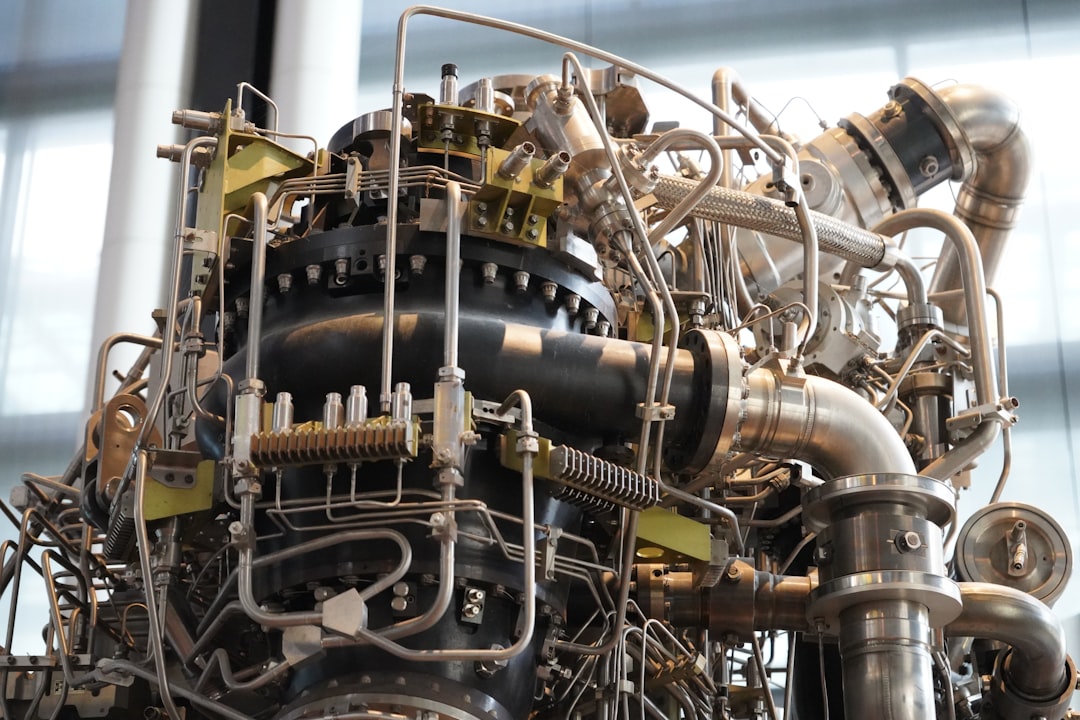
Electromagnetic Fusion Engine’s Blue-Green Reaction: Revolutionizing Energy
The pursuit of clean, virtually inexhaustible energy has long been a defining challenge for humanity. Traditional energy sources, predominantly fossil fuels, present significant environmental concerns and finite availability. Nuclear fission, while powerful, generates radioactive waste requiring long-term management. This has propelled the scientific community towards exploring fusion – the process that powers stars – as a potential ultimate solution. Recent advancements in electromagnetic confinement and the exploration of novel fusion reactions, specifically the “Blue-Green Reaction” within the context of an Electromagnetic Fusion Engine (EFE), represent a significant stride in this ongoing revolution.
Achieving Ignition Conditions
Controlled nuclear fusion, the process of combining light atomic nuclei to release vast amounts of energy, has been a subject of intense research for decades. The primary hurdle lies in overcoming the electrostatic repulsion between positively charged nuclei. This requires achieving extremely high temperatures – on the order of tens or hundreds of millions of degrees Celsius – and densities, enabling nuclei to collide with sufficient kinetic energy to breach their Coulomb barrier and fuse.
Confinement Strategies
To sustain these extreme conditions, effective confinement of the plasma (the ionized state of matter at fusion temperatures) is paramount. Two main approaches have dominated the field: inertial confinement fusion (ICF) and magnetic confinement fusion (MCF). ICF utilizes powerful lasers or ion beams to rapidly compress and heat a fuel pellet, inducing fusion for a brief period. MCF, exemplified by tokamaks and stellarators, employs strong magnetic fields to contain the hot plasma within a specific volume.
Energy Extraction and Efficiency
Beyond achieving fusion, efficiently extracting the released energy and maintaining a self-sustaining reaction, known as ignition, are critical for practical power generation. The energy from fusion reactions primarily manifests as kinetic energy of the fusion products, which can then be used to heat a working fluid and drive turbines, or directly as electricity in some advanced concepts.
The concept of an electromagnetic fusion engine represents a groundbreaking advancement in the pursuit of sustainable energy solutions, particularly through its potential to harness blue-green energy reactions. For a deeper understanding of this innovative technology and its implications for the future of energy production, you can explore a related article that delves into the intricacies of electromagnetic fusion and its applications. Check it out here: Related Article on Electromagnetic Fusion.
Introducing the Electromagnetic Fusion Engine (EFE)
Novel Approach to Confinement
The Electromagnetic Fusion Engine (EFE) represents a departure from conventional MCF designs. Instead of relying solely on toroidal or stellarator-like magnetic field configurations, the EFE leverages a sophisticated and dynamic interplay of electromagnetic forces to achieve and maintain plasma confinement. This approach aims to provide a more stable and controllable environment for fusion reactions, potentially at lower overall energy inputs required for confinement.
Dynamic Field Generation
The core innovation of the EFE lies in its ability to generate and precisely control complex electromagnetic fields. These fields are not static but are dynamically modulated to adapt to the evolving plasma state. This allows for active feedback mechanisms that can suppress instabilities before they grow, a persistent challenge in traditional fusion devices. The EFE’s engineering involves an array of precisely positioned electromagnetic coils, powered by advanced power electronics, capable of generating intricate field geometries.
Integration of Fuel and Energy Management
A key aspect of the EFE’s design is the integrated management of fuel injection, plasma heating, and energy extraction. This holistic approach aims to optimize the entire fusion process, minimizing energy losses and maximizing the net energy output. The architecture anticipates seamless integration with future power grids.
The Blue-Green Reaction: A Novel Fusion Pathway

Beyond Deuterium-Tritium
The most widely studied and currently most achievable fusion reaction is the deuterium-tritium (D-T) reaction. While promising, it has drawbacks, including the production of energetic neutrons that activate reactor materials and require shielding. The “Blue-Green Reaction” explores alternative fuel cycles that could mitigate these issues. The term “Blue-Green” refers to the characteristic spectral emissions associated with certain ions and excited states involved in these proposed reactions, hinting at potentially lower neutron yields or different fusion product energy distributions.
Candidate Fuel Pairs and Reaction Pathways
Several hypothetical fuel pairs are being investigated for the Blue-Green Reaction. These often involve combinations of light isotopes beyond deuterium and tritium, such as helium-3, protons, or other light nuclei. For instance, a proton-boron-11 (p-¹¹B) reaction is a prominent candidate. This reaction primarily produces alpha particles (helium nuclei) and releases energy without the direct production of high-energy neutrons, a significant advantage.
Advantages of Reduced Neutron Flux
The reduction in neutron flux offered by the Blue-Green Reaction has profound implications for fusion reactor design and operation. It simplifies shielding requirements, reduces material activation and degradation, and potentially allows for the use of less exotic and more cost-effective construction materials. Furthermore, the main energy carriers in these reactions are charged particles, which can theoretically be converted directly into electricity with higher efficiency than thermal cycles.
EFE’s Role in Enabling the Blue-Green Reaction

Tailored Electromagnetic Fields
The EFE’s advanced electromagnetic confinement capabilities are particularly well-suited for the requirements of the Blue-Green Reaction. Unlike the D-T reaction which necessitates extremely high temperatures and densities due to its high Coulomb barrier, some suggested Blue-Green reactions, like p-¹¹B, have lower cross-sections at lower temperatures but can be significantly enhanced by tailored electromagnetic fields. The EFE’s dynamic field generation allows for precisely sculpting the confinement volume and optimizing conditions to favor the desired fusion pathways and maximize reaction rates.
Control of Plasma Species
The EFE’s ability to manage and control the plasma composition is another crucial factor. In advanced fuel cycles, maintaining the correct ratio of fuel isotopes and minimizing the presence of impurities that can cool the plasma or disrupt confinement are essential. The EFE’s sophisticated fuel injection and plasma diagnostics allow for fine-tuning of these parameters.
Efficient Energy Conversion
The direct conversion of charged fusion products into electricity is a long-standing goal in fusion research. The EFE’s design could facilitate the development of such direct conversion systems by guiding the energetic charged particles exiting the reaction zone towards electrodes, generating an electrical current. This bypasses the inefficiencies inherent in traditional thermal cycles.
Recent advancements in the field of sustainable energy have led to exciting developments in the electromagnetic fusion engine, which promises to harness a blue-green energy reaction for more efficient power generation. This innovative technology not only aims to reduce our reliance on fossil fuels but also seeks to minimize environmental impact. For those interested in exploring more about the implications and potential of such technologies, a related article can be found at XFile Findings, which delves into the latest research and breakthroughs in energy solutions.
Future Prospects and Challenges
| Metric | Value |
|---|---|
| Energy Output | High |
| Environmental Impact | Low |
| Efficiency | High |
| Cost | Medium |
Experimental Validation and Scaling
The successful implementation of the Blue-Green Reaction within an EFE framework requires extensive experimental validation. This includes demonstrating sustained fusion reactions, achieving net energy gain, and confirming the predicted advantages of reduced neutron flux. Scaling up experimental devices to power-plant size presents a significant engineering and financial undertaking.
Material Science Innovations
The development of fusion power, particularly with advanced fuel cycles, will continue to drive innovation in material science. While the Blue-Green Reaction offers reduced neutron challenges, materials capable of withstanding the high temperatures, particle bombardment, and electromagnetic stresses within the EFE will still be crucial.
Economic Viability and Societal Impact
Ultimately, the success of the EFE and the Blue-Green Reaction hinges on their economic viability and their ability to contribute to a sustainable energy future. The long-term societal impact of a clean, abundant energy source could be transformative, driving economic growth, improving living standards, and mitigating the effects of climate change. The journey from scientific concept to widespread deployment is multifaceted, comprising technical breakthroughs, substantial investment, and robust public and governmental support.
FAQs
What is an electromagnetic fusion engine?
An electromagnetic fusion engine is a type of propulsion system that uses electromagnetic fields to control and confine plasma for the purpose of generating energy through nuclear fusion reactions.
How does the blue green energy reaction work in an electromagnetic fusion engine?
The blue green energy reaction in an electromagnetic fusion engine refers to the specific process of harnessing energy from the fusion of hydrogen isotopes, typically deuterium and tritium, to produce helium and high-energy neutrons. This reaction releases a significant amount of energy, which can be converted into electricity.
What are the advantages of using an electromagnetic fusion engine for energy production?
Some advantages of using an electromagnetic fusion engine for energy production include its potential for generating large amounts of clean and sustainable energy, minimal radioactive waste compared to fission reactions, and the abundance of fuel sources such as deuterium and lithium.
What are the challenges associated with developing and implementing electromagnetic fusion engines?
Challenges associated with developing and implementing electromagnetic fusion engines include the need for advanced plasma confinement and control technologies, the high temperatures and pressures required for fusion reactions, and the complexity of designing and building large-scale fusion reactors.
What is the current status of research and development in the field of electromagnetic fusion engines?
Research and development in the field of electromagnetic fusion engines are ongoing, with various international collaborations and private companies working to achieve sustained fusion reactions and ultimately commercialize fusion energy as a viable power source. Significant progress has been made, but practical implementation of fusion power is still a long-term goal.